


Among the many frozen treats found across regional cuisines of India, kulfi holds a place of its own as the country’s original milk-based ice cream. Made by slowly reducing milk until it thickens and concentrates, then freezing it without churning, kulfi carries a density and richness that sets it apart from Western-style ice creams. It is sold from handcarts on city streets, served in elegant restaurants, and prepared at home during summer gatherings, spanning every level of Indian food culture. Its flavors range from plain malai to pistachio, saffron, and almond, each rooted in the same patient technique of transforming milk into something indulgent. This guide traces the history, method, flavors, and cultural meaning of kulfi, showing how a simple dairy preparation became one of India’s most cherished desserts.
Quick Facts
| Detail | Information |
|---|---|
| Type | Frozen milk-based dessert |
| Main Ingredient | Reduced (thickened) milk |
| Common Flavors | Malai, pista, kesar, badam |
| Popular Pairing | Falooda |
| Preparation Style | Slow-frozen, unchurned |
| Traditional Serving | Cone or matka, sliced or scooped |
Origins and History of Kulfi
Kulfi occupies a distinctive place in the history of Indian frozen desserts, its roots often traced to the refined milk-based cooking associated with royal kitchens of the northern subcontinent. Unlike frozen desserts introduced through later colonial trade, kulfi grew out of indigenous methods of reducing milk over slow heat, a technique long used in Indian kitchens for sweets such as khoya and rabri. Early preparations involved pouring sweetened, thickened milk into sealed metal cones that were then packed in a mixture of ice and salt, allowing the mixture to freeze gradually without any mechanical churning. This unhurried freezing process is central to kulfi’s dense, creamy character, distinguishing it from lighter, aerated frozen desserts. Over time, the preparation moved beyond royal households into towns and villages across the subcontinent, adapting to local tastes and available ingredients. Today kulfi is widely regarded as one of the oldest frozen desserts native to India, and its connection to reduced milk remains central to how it is made and understood.
What Makes Kulfi Different from Ice Cream
Kulfi and Western-style ice cream share an obvious kinship as sweetened, frozen dairy treats, yet the two are prepared in fundamentally different ways. Ice cream is churned as it freezes, a process that incorporates air and produces a light, fluffy texture that scoops easily. Kulfi, by contrast, is frozen without churning, which means very little air is worked into the mixture and the result is dense, smooth, and closer in feel to a solid custard than a whipped confection. This density also affects how kulfi behaves once served: it melts more slowly than aerated ice cream, holding its shape longer in warm weather. The absence of churning further concentrates the flavor of the reduced milk, giving kulfi a richer, more pronounced dairy taste. These differences are not incidental but the direct result of two distinct culinary traditions, each shaped by the equipment, ingredients, and techniques available when the desserts first developed, and each valued today for the particular experience it offers.
Traditional Preparation Method
The traditional preparation of kulfi begins with milk simmered gently over a long period, stirred frequently so it does not scorch, until it reduces significantly in volume and thickens into a rich, pale base. Sugar is added during this reduction, along with any flavoring such as saffron strands, ground cardamom, or crushed nuts, allowing the taste to infuse fully into the milk as it cooks. Once thickened, the mixture is cooled and poured into narrow conical molds, which are then sealed and immersed in a chilling mixture, traditionally a combination of crushed ice and salt that lowers the temperature enough for slow freezing. This gradual freeze, rather than a rapid mechanical one, is what produces kulfi’s characteristic dense texture. To serve, the sealed molds are dipped briefly in warm water, loosening the frozen kulfi so it slides out cleanly and can be sliced into rounds or served whole on a stick, ready to be enjoyed as is or alongside other traditional accompaniments.
The Role of Milk and Reduction
At the heart of kulfi lies the same technique that produces other classic Indian milk sweets, the slow reduction of milk until its water content evaporates and its natural solids and sugars concentrate. This process closely relates kulfi to preparations like khoya and rabri, both of which depend on patient simmering rather than added thickeners to achieve their richness. As milk reduces, its flavor deepens and takes on a faintly caramelized, nutty quality that no amount of added cream can fully replicate, which is why kulfi tastes distinctly different from ice creams thickened with cream or stabilizers. This shared technique also explains why kulfi fits so naturally within the broader family of Indian milk-based desserts, drawing on the same dairy expertise found in mithai-making traditions across the country. The reliance on reduction rather than aeration or heavy cream is, in many ways, the defining culinary choice that gives kulfi its identity and separates it from other frozen desserts found around the world.
Classic Kulfi Molds and Shapes
The traditional cone-shaped metal mold, often simply called a kulfi mould, is one of the most recognizable tools associated with this dessert, its narrow tapering shape allowing the frozen kulfi to be released easily and sliced into neat rounds. These molds are typically made of metal for efficient heat transfer, which helps the milk mixture freeze evenly during the slow chilling process. In some regions, kulfi is instead set in small earthenware pots, known as matkas, which are porous enough to allow some evaporation and are thought by many to lend a subtly different texture and earthy aroma to the finished dessert. The choice of mold also shapes how kulfi is served, whether sliced into discs that reveal a smooth, dense cross-section, or presented whole in its small clay vessel for scooping. Though the exact vessel varies from place to place, the underlying idea remains consistent: a mold that supports slow, even freezing so the milk can set into kulfi’s distinctive firm yet creamy form.
Popular Traditional Flavors
Among the many kulfi varieties enjoyed across India, a handful of traditional flavors remain especially beloved. Malai kulfi, made purely from reduced milk with only sugar and perhaps a touch of cardamom, is often considered the purest expression of the dessert, letting the flavor of concentrated dairy stand on its own. Pista kulfi incorporates crushed pistachios into the milk during reduction, lending a subtle nuttiness and flecks of green throughout. Kesar kulfi is infused with saffron, which imparts both a golden hue and a delicate floral aroma prized in festive contexts. Badam kulfi relies on ground almonds for a similarly nutty richness with a slightly different character than pistachio. Each of these flavors depends on the same careful reduction process, with the added ingredient blended in early enough to distribute evenly through the thickened milk. Together, they form the core repertoire found at most traditional kulfi shops, even as newer, more inventive variations continue to appear alongside them.
Regional Variations Across India
As kulfi spread across the subcontinent, different regions shaped it according to local tastes, available ingredients, and existing dessert traditions. In parts of northern India, kulfi is closely tied to bustling market culture, sold from carts in narrow lanes where vendors have refined their own recipes over generations. In western India, kulfi sometimes appears alongside other milk-based sweets at festive occasions, prepared with regional variations in sweetness and flavoring. Elsewhere, kulfi is served in combination with local specialties, adapting to the broader dessert landscape of the area rather than standing entirely apart from it. These regional differences are generally subtle, since the fundamental technique of milk reduction and slow freezing remains constant, but they show how a single dessert can be reinterpreted many times over without losing its essential identity. This adaptability has helped kulfi remain relevant and well loved across a country as culturally and geographically diverse as India, each region adding its own small signature to a shared tradition.
Kulfi Falooda: A Beloved Pairing
One of the most popular ways to enjoy kulfi is alongside falooda, a chilled dessert drink built from delicate vermicelli noodles, basil or sabja seeds, rose syrup, and milk, all layered together in a tall glass. When a scoop or slice of kulfi is added on top, the combination becomes kulfi falooda, a dessert that balances the dense richness of the milk-based ice cream with the lighter, syrupy sweetness and gentle textures of the falooda beneath it. This pairing is especially popular during warmer months, offered at sweet shops, restaurants, and street stalls throughout many Indian cities. The contrast of textures, from the smooth kulfi to the slightly chewy vermicelli and the small pop of basil seeds, makes kulfi falooda a multisensory treat rather than a simple dessert. Its popularity reflects a broader tendency in Indian sweets to layer contrasting elements together, and it remains one of the most requested items on dessert menus wherever kulfi is served.
Kulfi in Mughal and Royal Culinary Heritage
Kulfi is frequently associated with the refined culinary traditions of royal and courtly kitchens in the northern subcontinent, where skilled cooks were tasked with transforming everyday ingredients like milk into elaborate, labor-intensive delicacies. In such settings, the patience required to reduce milk slowly and freeze it without modern refrigeration would have been seen as a mark of culinary sophistication, reserved for special occasions and honored guests. This association with hospitality and refinement has stayed attached to kulfi even as it became widely accessible to ordinary households and street vendors. The dessert’s presence at celebratory meals and festive spreads today still carries an echo of this heritage, offered as a gesture of generosity and care. While much about the exact historical details of royal kitchens remains part of oral tradition rather than precise record, the broad association between kulfi and courtly refinement continues to shape how the dessert is perceived, lending it a sense of heritage that distinguishes it from more casual frozen treats.
Street Food Culture and Kulfiwalas
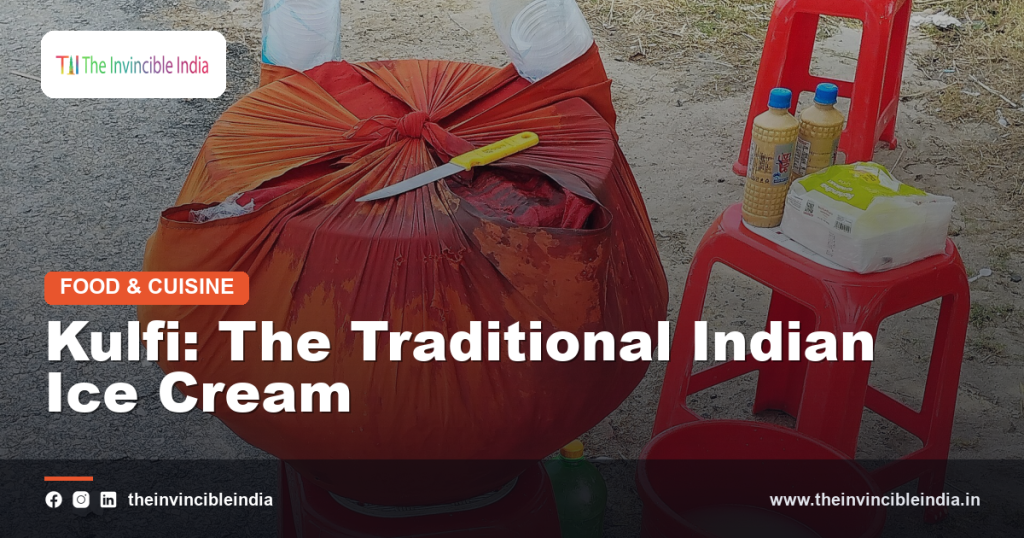
For generations, kulfi has been closely tied to India’s vibrant street food culture through the figure of the kulfiwala, an itinerant vendor who transports kulfi in insulated containers or ice-packed carts through neighborhoods and marketplaces. These vendors often call out to announce their presence, drawing children and families out of their homes for a cooling treat, particularly in the heat of summer afternoons and evenings. The kulfiwala’s cart, simple as it is, represents a form of everyday commerce and community interaction that has persisted even as more formal ice cream shops and packaged desserts have become widely available. For many people, memories of kulfi are inseparable from these encounters on the street, tied to specific sounds, routes, and familiar faces rather than any particular shop or brand. This informal distribution network has helped kulfi remain deeply embedded in local life across cities, towns, and villages, sustaining its popularity through direct, personal connections between vendor and customer rather than large-scale commercial marketing.
Kulfi in Festivals and Celebrations
Kulfi frequently appears at festive gatherings and celebrations, particularly those held during the warmer months when a cooling dessert is especially welcome. Weddings, family functions, and community events often include kulfi among their dessert offerings, sometimes alongside falooda or other traditional sweets, reflecting its status as a treat suitable for special occasions rather than only everyday consumption. Its association with celebration is reinforced by the effort traditionally required to prepare it, since the slow reduction and freezing process was historically more labor-intensive than simply serving fruit or ready-made sweets. Serving kulfi at a gathering can therefore carry a small sense of hospitality and generosity, offering guests something that required time and care to prepare. Even as commercially produced kulfi has made the dessert more convenient to source, its symbolic role at festive occasions has persisted, and it continues to be chosen deliberately for celebrations rather than treated as an ordinary, everyday dessert in many households.
Nutritional Character and Ingredients
At its core, kulfi is a dairy-based dessert, built primarily from milk that has been reduced to concentrate its natural fats, proteins, and sugars. Because it relies on reduction rather than large amounts of added cream, kulfi’s richness comes mainly from the milk itself, along with whatever sugar and flavoring ingredients, such as nuts or saffron, are added during preparation. Nuts like pistachio and almond contribute not only flavor but also a certain textural richness and a small amount of natural oils, while saffron and cardamom add aromatic depth without significantly altering the dessert’s basic dairy character. As with any dessert, kulfi is best understood as an occasional indulgence rather than a everyday health food, valued for its taste and cultural significance rather than any specific dietary benefit. Its relatively simple ingredient list, centered on milk and natural flavorings rather than artificial stabilizers, is often highlighted as a point of contrast with some mass-produced frozen desserts, reinforcing its identity as a traditional, minimally processed sweet.
Modern and Contemporary Kulfi Innovations
While traditional flavors remain the backbone of kulfi’s appeal, contemporary confectioners and dessert shops have increasingly experimented with new interpretations of the classic dessert. Chocolate, fruit-based, and even tea-infused kulfi variations have appeared alongside the traditional malai, pista, and kesar options, catering to changing tastes and a growing interest in dessert fusion. Some vendors now offer kulfi sandwiched between biscuits or wafers, creating a portable treat inspired by ice cream sandwiches, while others serve kulfi skewers or bite-sized versions suited to modern snacking habits. Packaged kulfi has also become widely available in supermarkets and grocery stores, allowing the dessert to be enjoyed at home without the traditional preparation process. These innovations have not replaced classic kulfi but have instead expanded its presence, introducing it to new audiences and contexts while the original slow-reduced, unchurned versions continue to be made and appreciated in their traditional form, particularly by dedicated sweet shops that have specialized in kulfi for generations.
Kulfi Versus Western Ice Cream: A Cultural Contrast
Placing kulfi alongside Western-style ice cream highlights not only technical differences but also distinct cultural contexts in which each dessert developed. Ice cream, particularly in its industrial form, is often associated with rapid churning, standardized production, and a wide variety of flavors designed for mass appeal and quick consumption. Kulfi, by contrast, emerged from a tradition centered on patience, slow transformation, and the concentration of a single core ingredient, milk, into something deeply flavorful. This difference reflects broader patterns in how each culinary tradition approached dessert-making, one favoring speed and variety, the other favoring depth and continuity with older techniques. Despite these contrasts, both desserts fulfill a similar role as cooling, indulgent treats enjoyed especially in warm weather, and both have absorbed influences from each other over time, as seen in kulfi shops offering ice-cream-style presentations and ice cream brands occasionally referencing kulfi flavors. The comparison ultimately illustrates how similar culinary needs can be met through very different, culturally specific methods.
Kulfi in Indian Households and Family Traditions
Beyond its presence in shops and on the street, kulfi holds a meaningful place in home cooking traditions across many Indian families. Preparing kulfi at home, though more time-consuming than buying it ready-made, is often treated as a seasonal ritual, particularly during hot months when families gather to reduce milk, choose flavorings, and set the mixture in molds to freeze overnight. Recipes and techniques are frequently passed down informally from one generation to the next, with small variations in sweetness, flavoring, or reduction time reflecting individual family preferences. This homemade tradition contributes to a strong sense of nostalgia surrounding kulfi, with many people associating its flavor with childhood memories of a particular relative’s kitchen rather than any commercial product. Even as store-bought and restaurant kulfi have become widely available, the practice of making it at home persists in many households, valued both for the quality of the result and for the shared experience of preparing a traditional dessert together.
Kulfi's Place in India's Culinary Identity
Kulfi stands as one of the clearest examples of indigenous Indian dessert-making, distinct from sweets that arrived through later trade or colonial influence. Its reliance on slow milk reduction connects it to a broader family of Indian dairy-based sweets, reflecting a shared culinary logic that prizes patience and concentrated flavor over speed and lightness. This heritage gives kulfi a symbolic weight beyond its taste alone, positioning it as a dessert that speaks to long-standing skills in transforming a humble ingredient, milk, into something celebratory and rich. Its continued popularity, from roadside carts to upscale restaurant menus, demonstrates how a traditional preparation can remain relevant across very different social and economic contexts without losing its essential character. As Indian cuisine continues to be explored and appreciated both domestically and internationally, kulfi is often highlighted as a signature example of the country’s distinct approach to frozen desserts, standing apart from global ice cream traditions while still fulfilling the same basic desire for a sweet, cooling treat.
Kulfi Today
Today, kulfi continues to thrive across a wide spectrum of settings, from traditional sweet shops that have specialized in it for generations to contemporary dessert parlors experimenting with new flavors and presentations. It remains a familiar sight on the street, sold by vendors much as it has been for a long time, while also appearing on the menus of fine dining restaurants that reinterpret it alongside other classic Indian desserts. Packaged versions in supermarkets have made kulfi more accessible for home consumption, even as many families continue to prepare it themselves using traditional methods passed down over generations. Its enduring popularity among the Indian diaspora has also helped introduce kulfi to international audiences, often served alongside falooda or other familiar pairings. Whether enjoyed in its purest malai form or in one of its many contemporary variations, kulfi remains firmly rooted in the techniques and cultural meanings that have shaped it for so long, a dessert that continues to evolve while staying recognisably true to its origins.
Sources & Further Reading
- Ministry of Food Processing Industries, Government of India (mofpi.gov.in).
- Ministry of Culture, Government of India (indiaculture.gov.in).
Frequently Asked Questions
What is kulfi made of?
Kulfi is traditionally made from milk that is slowly reduced and thickened, then sweetened and flavored with ingredients such as pistachio, saffron, or cardamom before being frozen without churning.
How is kulfi different from ice cream?
Kulfi is frozen slowly without churning, so it stays dense and creamy rather than light and airy, and it melts more slowly than typical churned ice cream.
What are the most common kulfi flavors?
Malai (plain), pista, kesar, and badam are among the most traditional and widely available kulfi flavors, though many contemporary variations now exist as well.
What is kulfi falooda?
Kulfi falooda combines a scoop or slice of kulfi with falooda, a chilled dessert drink made of vermicelli, basil seeds, rose syrup, and milk, served together in a tall glass.
Is kulfi a modern dessert or an old tradition?
Kulfi is considered one of the oldest frozen desserts native to the Indian subcontinent, with roots in older milk-reduction techniques used long before industrial ice cream became common.