


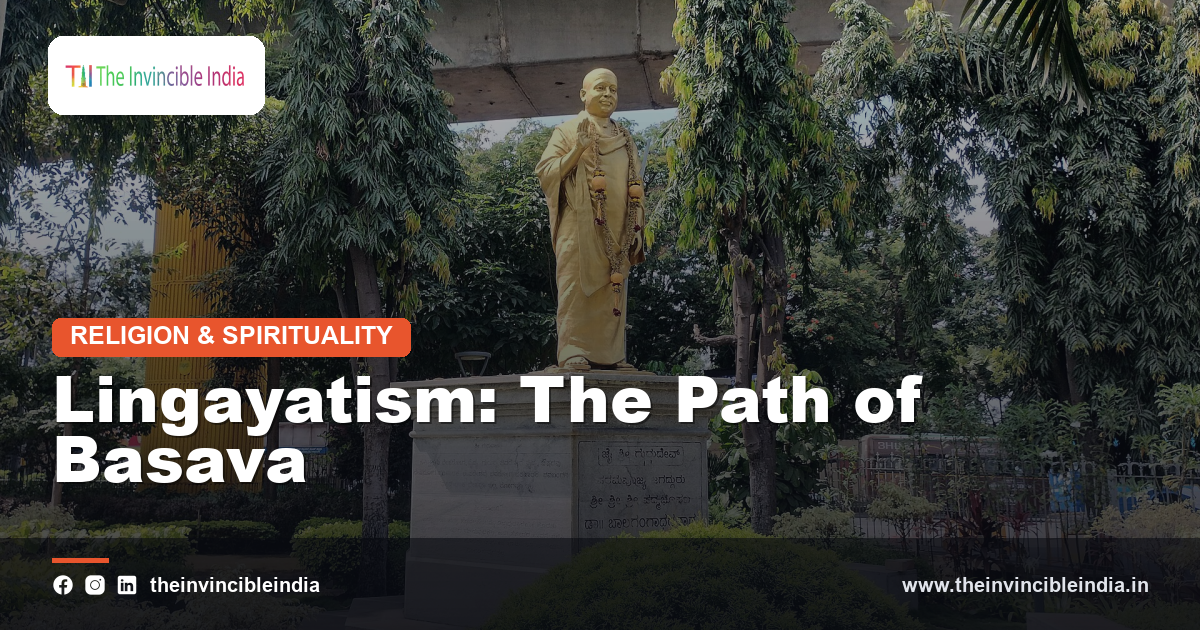
Lingayatism, sometimes referred to as Veerashaivism, developed in medieval Karnataka as both a devotional path within the broader current of Shaiva worship and a far-reaching social reform movement associated with the philosopher-saint Basava. Its followers, known as Lingayats, worship Shiva in the personal form of the Ishtalinga, a small emblem carried on the body rather than housed exclusively within a temple, reflecting the tradition’s emphasis on direct, individual devotion. Basava and his fellow Vachana poets challenged rigid social hierarchies of their time, advocating equality, dignity of labor, and direct access to the divine regardless of birth or social standing. Their devotional verses, composed in the Kannada language, remain celebrated as both spiritual literature and social commentary. This guide introduces Lingayatism’s origins, core beliefs, distinctive practices, and its enduring literary and cultural legacy.
Quick Facts
| Detail | Information |
|---|---|
| Tradition | Lingayatism (Veerashaivism) |
| Key Figure | Basava |
| Region of Origin | Medieval Karnataka |
| Sacred Symbol | Ishtalinga |
| Literary Form | Vachana poetry |
| Core Value | Social equality and dignity of labor |
Origins in Medieval Karnataka
Lingayatism took shape in medieval Karnataka, a period of considerable social stratification during which existing religious institutions faced growing criticism for their rigid hierarchies and elaborate ritualism. The movement emerged from a circle of devotional poets and reformers who sought a more direct, personal, and egalitarian relationship with the divine, rejecting many of the ritual and social distinctions maintained by established religious authorities of the time. Its early growth was closely tied to the court and community life of the region, drawing followers from across a wide range of social and occupational backgrounds. The movement’s combination of devotional intensity and social reform distinguished it from many contemporary religious currents, giving it a distinctive character from its earliest years. Over succeeding generations, Lingayatism developed its own institutions, literature, and communal identity, becoming a lasting and influential tradition within Karnataka’s religious and cultural landscape.
Basava: Life and Reformist Vision
Basava, the central figure associated with the movement’s founding, is remembered as a philosopher, poet, and social reformer whose teachings emphasized devotion to Shiva alongside a firm commitment to social equality and ethical living. He is remembered for holding positions of administrative responsibility while using his influence to promote reformist religious and social ideas among a broad public audience. His own devotional verses, composed in accessible Kannada rather than classical Sanskrit, conveyed profound spiritual insight in language understandable to ordinary people regardless of education or social standing. Basava is closely associated with efforts to gather reform-minded thinkers and devotees into shared community structures for spiritual and social discussion. His combined legacy as devotional poet and social reformer continues to define the character of the tradition that grew from his teaching, and he remains venerated as its foundational figure.
Core Beliefs and Philosophy
At the core of Lingayat belief lies devotion to Shiva as the sole supreme reality, approached directly by the individual devotee without dependence on temple priesthood or elaborate ritual intermediaries. The tradition teaches that sincere personal devotion, ethical conduct, and honest labor together constitute the true path to spiritual realization, in contrast to approaches that emphasize birth status or ritual purity. Lingayat philosophy generally rejects rigid distinctions of caste and gender in matters of spiritual capacity, teaching that devotion and ethical living are accessible to all individuals regardless of social background. This emphasis on direct, personal, and egalitarian devotion gives Lingayatism a distinctive theological character within the broader landscape of Indian devotional traditions. Such beliefs continue to shape both individual practice and community identity among Lingayats today.
The Ishtalinga and Personal Worship
A defining feature of Lingayat practice is the Ishtalinga, a small personal emblem representing Shiva that is worn on the body, typically in a pendant, and worshipped directly by the individual rather than exclusively through visits to a fixed temple. This practice reflects the tradition’s emphasis on constant, personal access to the divine, allowing devotion to be carried into every aspect of daily life rather than confined to specific times or places. Daily worship of the Ishtalinga typically involves cleaning, anointing, and reciting sacred verses, forming an intimate ritual of personal devotion. The portability of the Ishtalinga also carries symbolic significance, suggesting that the divine is not distant or confined but immediately present with the devotee at all times. This distinctive form of personal worship sets Lingayatism apart from many other Shaiva traditions that center devotion primarily on fixed temple installations.
Rejection of Caste Hierarchy
Among Lingayatism’s most significant contributions was its outspoken rejection of caste-based social hierarchy, a stance that distinguished the movement sharply from many established religious institutions of its era. Basava and his fellow reformers taught that spiritual worth was determined by sincere devotion and ethical conduct rather than by birth, encouraging fellowship and shared worship across social groups that were otherwise kept strictly separate. This egalitarian teaching extended into practical community life, with shared meals and communal gatherings that deliberately crossed traditional social boundaries. Such positions provoked considerable resistance from established social and religious authorities of the period, reflecting the genuinely reformist character of the movement. The tradition’s continued emphasis on social equality remains one of its most widely recognized and historically significant features, distinguishing it within the broader landscape of medieval Indian religious reform movements.
Vachana Literature
Lingayat spiritual and social teaching found its most enduring expression in Vachana literature, a body of short, direct devotional verses composed in Kannada prose-poetry by Basava and his fellow poet-saints. Unlike more formal classical literary forms, Vachanas were composed in plain, conversational language, making profound spiritual and ethical teaching accessible to audiences regardless of formal education. These verses address themes ranging from personal devotion and divine longing to sharp social critique of ritualism, hypocrisy, and inequality. Vachana poets frequently employed vivid, everyday imagery drawn from occupations, nature, and daily life to convey their spiritual insights. This body of literature remains highly regarded within Kannada literary history, valued both for its spiritual depth and for its direct, unpretentious literary style. Vachana poetry continues to be studied, recited, and celebrated as a foundational contribution to Kannada devotional and social literature.
The Concept of Kayaka (Work as Worship)
The concept of kayaka, meaning dedicated work or vocation performed as an offering to the divine, occupies a central place in Lingayat ethical teaching, elevating everyday labor to the status of spiritual practice regardless of the type of occupation involved. This principle taught that sincere, honest work in any legitimate occupation, whether skilled craft, agriculture, or trade, held equal spiritual dignity, directly challenging hierarchies that ranked certain occupations as more or less worthy. Many of the movement’s early Vachana poets themselves practiced ordinary trades and crafts, embodying this teaching through their own working lives alongside their devotional and literary activity. The dignifying of manual and skilled labor as a form of worship represented a significant departure from religious frameworks that privileged ritual specialists over working communities. This teaching remains an important ethical touchstone within Lingayat identity, linking spiritual practice directly to honest, purposeful daily work.
Dasoha: Sharing and Charity
Alongside kayaka, the principle of dasoha, or selfless sharing of the fruits of one’s labor with the wider community, formed another cornerstone of Lingayat ethical teaching, emphasizing charity and communal responsibility as natural extensions of honest work. Followers were encouraged to share food, resources, and hospitality generously, particularly with fellow devotees and those in need, reinforcing a strong sense of communal solidarity. This combination of dedicated labor and generous sharing reflected the movement’s broader vision of a just and cooperative community life grounded in mutual respect. Communal meals and shared hospitality became important practical expressions of dasoha within early Lingayat community gatherings. The enduring emphasis on charitable sharing continues to shape communal practices among Lingayats, who often organize collective meals and charitable activities as expressions of this founding principle.
The Anubhava Mantapa
The Anubhava Mantapa, often translated as the hall of spiritual experience, is remembered as a gathering place established during the movement’s early growth where devotees, poets, and reformers of diverse social backgrounds met to discuss spiritual philosophy, share Vachana poetry, and debate questions of ethics and social reform. This assembly is remembered as remarkably inclusive for its time, welcoming participants regardless of caste, gender, or occupation, reflecting the movement’s broader egalitarian principles in practical form. Vachana poetry associated with the movement’s major figures is closely linked to discussions and exchanges said to have taken place within this setting. The Anubhava Mantapa has since become an important symbol of Lingayatism’s commitment to open spiritual inquiry and social inclusiveness. It continues to be referenced today as an early example of structured, cross-community spiritual dialogue within Indian religious history.
Other Vachanakaras Alongside Basava
While Basava remains the most prominent figure associated with Lingayatism, the movement’s Vachana literary tradition was shaped by numerous other poet-saints, women and men alike, who each contributed distinctive verses and perspectives to the shared devotional and social vision. These accompanying voices enriched the movement’s literary output considerably, offering varied poetic styles and personal experiences of devotion alongside Basava’s own compositions. Some of these Vachanakaras are remembered particularly for their radical personal renunciation and uncompromising devotional intensity, while others are noted for their reflections on labor, community, and social ethics. Together, this wider circle of poet-saints gave Lingayatism a richly collaborative literary and spiritual character rather than one centered on a single founding voice alone. Their combined body of work remains an essential part of the tradition’s enduring literary and spiritual heritage.
Women and Social Equality
Lingayatism is notable among medieval Indian religious movements for its relatively progressive stance toward women, who participated actively as poets, spiritual teachers, and full members of the movement’s devotional and intellectual life. Several women Vachanakaras produced verses of considerable spiritual depth and are remembered among the tradition’s most celebrated poet-saints, their compositions studied alongside those of their male counterparts. This inclusion reflected the movement’s broader teaching that spiritual capacity was not determined by gender, extending its egalitarian principles beyond caste to encompass gender as well. Women’s participation in shared community gatherings and devotional discussion further reflected this inclusive orientation within early Lingayat community life. This historical emphasis on women’s spiritual and intellectual participation remains a notable and frequently highlighted feature of the tradition’s legacy within broader discussions of medieval Indian religious reform.
Lingayat Temples and Worship Practices
Lingayat worship today combines personal devotion centered on the Ishtalinga with communal practices carried out at dedicated temples and community centers known as mathas, which serve as centers of religious instruction, community gathering, and charitable activity. Religious leaders known as jangamas, wandering or settled ascetics associated with the tradition, play an important role in guiding worship, performing rites of initiation, and offering spiritual instruction to lay followers. Communal gatherings for scriptural recitation, devotional singing, and shared meals remain common features of Lingayat religious life, reflecting the tradition’s continued emphasis on communal solidarity. Life-cycle rituals, including initiation into Ishtalinga worship, mark important stages in a follower’s spiritual development within the community. This combination of personal devotional discipline and structured communal practice sustains Lingayat religious identity across generations.
Festivals and Observances
The Lingayat religious calendar includes several important observances, among them festivals commemorating Basava’s life and teaching, celebrated with communal gatherings, devotional singing, and recitation of Vachana poetry at temples and community centers. These occasions often include public programs designed to reinforce awareness of Lingayat ethical teachings, particularly regarding social equality and the dignity of labor. Regional and local Lingayat communities may observe additional festivals connected to Vachanakaras of particular local significance. Community service activities and charitable distributions frequently accompany these festival observances, reflecting the tradition’s founding emphasis on dasoha and shared responsibility. Such communal celebrations serve not only devotional purposes but also function as occasions for reinforcing shared identity and continuity within Lingayat communities across Karnataka and beyond.
Lingayatism and the Bhakti Movement
Lingayatism developed alongside, and contributed significantly to, the broader Bhakti movement that swept across the Indian subcontinent over several centuries, sharing its emphasis on personal, accessible devotion over elaborate ritual and rigid social hierarchy. Vachana poetry’s plain, direct language and social critique closely parallel devotional literature produced by Bhakti poet-saints in other regions of India during the same broad historical period. This shared emphasis on egalitarian devotion connects Lingayatism to a wider pattern of medieval Indian religious reform, even as it retained its own distinctive regional character, symbols, and institutional structures specific to Karnataka. Scholars often discuss Lingayatism alongside other regional Bhakti movements when examining common themes of social reform and devotional accessibility across medieval India. This connection situates Lingayatism within a much broader and historically significant current of devotional reform across the subcontinent.
Literary and Cultural Legacy
The Vachana literary tradition associated with Lingayatism holds an especially prominent place within Kannada literary history, valued for its direct language, vivid imagery, and combination of spiritual depth with pointed social commentary. Modern Kannada literary scholarship continues to study Vachana poetry extensively, recognizing its historical significance as an early example of vernacular devotional and social literature in India. Vachana verses remain widely taught, recited, and referenced within Karnataka’s educational and cultural institutions, sustaining their relevance well beyond a purely religious context. Public monuments, cultural programs, and literary festivals dedicated to Basava and his fellow Vachanakaras further reflect this broad cultural recognition. This enduring literary legacy demonstrates how a devotional and social reform movement can leave a lasting mark on regional language, literature, and cultural identity far beyond its immediate religious community.
Lingayatism in Modern Karnataka
Lingayatism remains a significant religious and social community within contemporary Karnataka, where its followers maintain active networks of temples, mathas, and community organizations engaged in religious, educational, and charitable activity. Contemporary discussions within the community sometimes address questions of religious identity and organizational recognition, reflecting the tradition’s long and sometimes complex historical relationship with the broader Hindu religious landscape. Lingayat community organizations continue to sponsor educational institutions, healthcare initiatives, and cultural programs, extending the movement’s founding emphasis on practical social service into the present day. Public commemoration of Basava and other Vachanakaras remains an active feature of Karnataka’s civic and cultural life. This continued institutional vitality reflects Lingayatism’s ongoing significance as both a living religious tradition and an important thread within Karnataka’s broader social and cultural fabric.
Lingayatism Today
Today, Lingayatism continues to be practiced by a substantial community centered primarily in Karnataka, sustaining its distinctive combination of personal devotion, ethical teaching, and social reform inherited from Basava and the movement’s early Vachana poets. Its emphasis on dignified labor, communal sharing, and equality across caste and gender lines continues to resonate within contemporary discussions of social ethics in the region. Vachana literature remains actively studied and celebrated, ensuring the movement’s literary and philosophical contributions reach new generations of readers and scholars. Community institutions rooted in Lingayat teaching continue to provide education, healthcare, and charitable services, embodying the tradition’s practical, service-oriented character. This combination of devotional continuity, literary legacy, and active social engagement ensures that Lingayatism remains a vibrant and historically significant tradition within India’s diverse religious landscape.
Sources & Further Reading
- Ministry of Culture, Government of India (indiaculture.gov.in).
- Sahitya Akademi.
Frequently Asked Questions
What is Lingayatism?
Lingayatism, also called Veerashaivism, is a devotional and social reform tradition that developed in medieval Karnataka, associated with the philosopher-saint Basava and centered on personal devotion to Shiva through the Ishtalinga.
What is the Ishtalinga?
The Ishtalinga is a small personal emblem of Shiva worn on the body by Lingayat followers, reflecting the tradition’s emphasis on constant, direct, personal devotion rather than worship confined to temple visits alone.
What is kayaka in Lingayat teaching?
Kayaka refers to dedicated work performed as an offering to the divine, a principle that elevated honest labor in any legitimate occupation to the status of spiritual practice within Lingayat ethical teaching.
Did Lingayatism reject the caste system?
Yes. Basava and his fellow reformers taught that spiritual worth came from devotion and ethical conduct rather than birth, promoting fellowship and shared worship across social groups otherwise kept strictly separate.
What is Vachana literature?
Vachana literature is a body of direct, accessible devotional verses composed in Kannada by Basava and fellow poet-saints, combining spiritual reflection with social commentary and remaining central to Kannada literary heritage.