


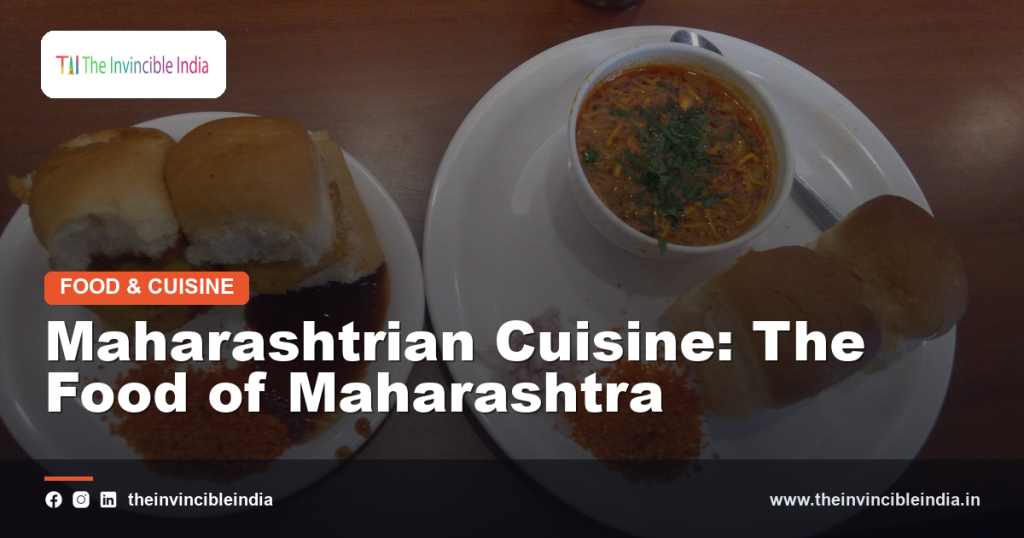
Maharashtrian cuisine is the diverse and flavourful food of Maharashtra, a cuisine that ranges from the coastal Konkan to the spice-loving Kolhapur region and the drier plains of Vidarbha, each contributing its own distinctive dishes and traditions. Famous for the beloved street food vada pav, the festive sweet puran poli and a wonderful array of thalis, curries and snacks, Maharashtrian cooking balances mild, homely fare with fiery, spice-forward regional specialities. Much like the Indian thali tradition found across the country, it finds its own complete expression in the Maharashtrian meal. This guide explores Maharashtrian cuisine, its history, its famous dishes and its enduring place in India’s culinary heritage.
Quick Facts
| Detail | Information |
|---|---|
| Type | The diverse cuisine of Maharashtra |
| Rooted in | Marathi, Konkani and Deccani tradition |
| Famous for | Vada pav, puran poli and Kolhapuri curries |
| Key ingredients | Peanuts, sesame, coconut and jaggery |
| Regional range | Konkan coast, Desh plateau and Vidarbha |
| Character | Homely, varied and often boldly spiced |
The Food of Maharashtra
Maharashtrian cuisine is the diverse and flavourful food of Maharashtra, shaped by the state’s varied geography, which stretches from the coastal Konkan region to the dry plains of Vidarbha and the fertile Desh plateau in between. This geographic diversity gives rise to a cuisine of remarkable range, encompassing coastal seafood dishes, hearty vegetarian thalis and fiery, spice-forward regional specialities, all bound together by shared staples such as rice, wheat, lentils and a distinctive use of peanuts and coconut. This range is the hallmark of the cuisine. As the food of Maharashtra, drawn from coast, plateau and plain alike, this cuisine occupies a rich and varied place among the regional food traditions of India.
A Cuisine of Many Regions
Maharashtrian cuisine is best understood as a cuisine of many regions, with the coastal Konkan, the central Desh plateau, the spice-loving Kolhapur area and the drier Vidarbha each offering their own distinctive dishes and flavours. Coastal Konkani cooking favours fish, coconut and kokum, while the interior regions lean more on peanuts, sesame and dry spice blends, and Kolhapur is famed across India for the fiery heat of its cuisine. This diversity enriches the wider tradition. This wide diversity of Maharashtrian cuisine across its many regions, each with its own character and specialities, is one of the qualities that gives the cuisine its remarkable and often surprising range of flavours.
The Beloved Vada Pav
The most iconic street food of Maharashtra, and one of the most beloved snacks in all of India, is vada pav, a spiced potato fritter served inside a soft bread roll, often accompanied by fiery chutneys and a fried green chilli. Born on the streets of Mumbai and now sold at countless stalls across the state, this humble, inexpensive snack has become a symbol of Maharashtrian street food culture, loved by people of every background. Its simplicity is part of its enduring appeal. This beloved vada pav, humble yet deeply satisfying, has carried the flavour of Maharashtrian street food far beyond the state and remains one of India’s most cherished everyday snacks.
Misal Pav and Spicy Snacks
Alongside vada pav, Maharashtrian street food offers misal pav, a fiery curry of sprouted lentils topped with farsan, onion and lime and served with soft bread rolls, a dish especially beloved for breakfast and as a hearty, spicy snack. This dish, known for its considerable heat and its combination of textures, exemplifies the bold, spice-forward character found in much of Maharashtra’s everyday street food. Its heat is a point of local pride. This misal pav, fiery, textured and immensely satisfying, stands alongside vada pav as one of the great pillars of Maharashtrian street food, cherished for its bold flavour and comforting heartiness.
The Festive Puran Poli
A beloved festive sweet of Maharashtrian cuisine is puran poli, a soft flatbread stuffed with a sweet filling of cooked lentils, jaggery and cardamom, traditionally prepared for festivals and special family occasions. The careful preparation of the filling and the skill needed to roll the stuffed bread thin and even make puran poli a labour of love, often undertaken by the whole family together in the kitchen. Its preparation is considered a cherished tradition. This puran poli, a soft, sweet-stuffed flatbread prepared for festivals with love and care, is one of the most cherished sweets of Maharashtrian cuisine and a fixture of the state’s festive calendar.
The Maharashtrian Thali
The Maharashtrian thali offers a complete and satisfying meal on a single platter, combining rice, bread, a vegetable dish, dal, a tangy accompaniment and often a sweet, showing the balanced and homely character of everyday Maharashtrian cooking. This thali varies from region to region and household to household, but it always aims to balance sweet, sour, salty and spicy flavours in a single satisfying meal, reflecting the broader Indian tradition of the complete platter meal. Its balance is central to its appeal. This Maharashtrian thali, balancing many flavours and dishes on one platter, is a wonderful expression of the state’s home cooking and a fine example of the completeness valued in Maharashtrian meals.
The Fiery Cuisine of Kolhapur
The Kolhapur region of Maharashtra is renowned across India for the fiery heat of its cuisine, with dishes such as Kolhapuri chicken and mutton curries prepared using a distinctive blend of roasted, ground spices known for its considerable heat. This bold, spice-forward style of cooking has become famous well beyond Kolhapur itself, and Kolhapuri-style dishes are now found on restaurant menus across the country. This reputation for heat is a point of regional pride. This fiery cuisine of Kolhapur, built on its own distinctive and powerful spice blend, has become one of the most recognised and admired regional styles within the wider tradition of Maharashtrian cooking.
The Coastal Flavours of Konkan
The Konkan coast of Maharashtra offers its own distinctive coastal cuisine, favouring fresh fish, coconut and the tangy fruit kokum, producing dishes that share much in common with the cuisines of neighbouring coastal Goa and Karnataka. Fish curries, coconut-based gravies and rice form the backbone of Konkani Maharashtrian food, giving this coastal branch of the cuisine a character quite distinct from the interior regions of the state. This coastal style enriches the wider cuisine. This distinctive coastal cuisine of the Konkan, built on fish, coconut and kokum, adds an important and flavourful dimension to Maharashtrian food, broadening it well beyond the vegetarian fare more commonly associated with the interior.
The Use of Peanuts and Sesame
A distinctive feature of interior Maharashtrian cuisine, particularly in the Desh and Vidarbha regions, is the generous use of peanuts and sesame, ground into pastes and used to thicken and enrich curries and chutneys. This use of peanuts and sesame, staple crops of the drier interior, gives many Maharashtrian dishes a distinctive nutty richness not commonly found in the cuisines of other Indian regions. This ingredient choice reflects local agriculture. This generous use of peanuts and sesame throughout interior Maharashtrian cooking, enriching curries and chutneys with their nutty depth, is one of the clearest markers of the cuisine’s distinctive regional character and its close ties to local farming.
Bhakri and Millet Breads
Alongside wheat rotis, Maharashtrian cuisine makes notable use of bhakri, a rustic, unleavened flatbread made from millets such as jowar or bajra, especially popular in the drier interior regions of the state. This hearty, wholesome bread, cooked on a griddle and often enjoyed with a simple vegetable dish and a dab of ghee or oil, reflects the agricultural traditions of Maharashtra’s plains, where millets have long been a staple grain. Its simplicity is part of its enduring appeal. This bhakri, a hearty millet bread central to the food of Maharashtra’s interior, remains a beloved and wholesome staple, reflecting the agricultural heritage of the region’s drier plains.
Modak and Festive Sweets
Maharashtrian cuisine is closely associated with modak, a sweet dumpling filled with coconut and jaggery, steamed or fried and prepared especially during the festival of Ganesh Chaturthi, when it is offered with devotion. This sweet, delicate yet richly flavoured, is considered a favourite of Lord Ganesha and is prepared with particular care and reverence during the festival season. Its preparation is a cherished family tradition. This modak, sweet with coconut and jaggery and prepared with devotion during Ganesh Chaturthi, is one of the most beloved and symbolically significant sweets of Maharashtrian cuisine, uniting food and faith in a single beloved dish.
Solkadhi and Cooling Drinks
A refreshing feature of coastal Maharashtrian cuisine is solkadhi, a cooling pink drink made from coconut milk and kokum, traditionally served after a rich meal to aid digestion and refresh the palate. This drink, tangy and mildly spiced, exemplifies the coastal Konkani use of kokum and coconut and is especially valued after spicy or seafood-rich meals. Its cooling effect is prized in the warm coastal climate. This solkadhi, cooling and tangy, served to close a rich coastal meal, is a distinctive and much-loved feature of Konkani Maharashtrian cuisine and a fine example of the region’s thoughtful approach to balancing flavour and comfort.
Pickles and Chutneys
Maharashtrian cuisine is enriched by a wide array of pickles and chutneys, from fiery thecha, a coarse chutney of green chillies and garlic, to sweet-and-sour mango pickles prepared at home each season. These accompaniments, prepared with care and often stored for months, add sharp bursts of flavour to the milder staples of the meal and reflect the resourceful, seasonal approach to cooking found throughout Maharashtrian homes. Their preparation is a treasured household skill. These Maharashtrian pickles and chutneys, from fiery thecha to seasonal mango pickle, add essential bursts of flavour to the everyday meal and represent a cherished and skilful tradition of home food preservation.
Street Food of Mumbai
Mumbai, the great metropolis of Maharashtra, has become one of the most famous street food cities in India, its bustling stalls offering vada pav, misal pav, pav bhaji and countless other quick, flavourful snacks to workers and visitors alike. This vibrant street food culture, born of the city’s fast pace and diverse population, has helped carry the flavours of Maharashtrian cuisine to a national and even international audience. Its energy reflects the spirit of the city itself. This street food culture of Mumbai, vibrant, fast-paced and endlessly inventive, has done more than perhaps anything else to spread the flavours of Maharashtrian cuisine across India and the wider world.
Maharashtrian Cuisine Today
Today Maharashtrian cuisine is celebrated across India for its remarkable diversity, from the coastal flavours of Konkan to the fiery specialities of Kolhapur and the beloved street food of Mumbai. Puran poli, vada pav, misal pav and the balanced Maharashtrian thali continue to be prepared and enjoyed in homes and restaurants across the state, carrying forward a rich and varied culinary heritage. Its popularity continues to spread beyond Maharashtra’s borders. As the diverse food of Maharashtra, ranging from mild home cooking to fiery regional specialities, Maharashtrian cuisine remains one of the richest and most varied culinary traditions of India.
Sources & Further Reading
- Ministry of Tourism, Government of India, on the cuisines of India (tourism.gov.in).
- Culinary references on the food traditions of Maharashtra.
Frequently Asked Questions
What is Maharashtrian cuisine known for?
Maharashtrian cuisine is known for its remarkable regional diversity, from the coastal seafood dishes of Konkan to the fiery Kolhapuri curries and the beloved street food of Mumbai, such as vada pav and misal pav. It also features festive sweets like puran poli and modak.
What is vada pav?
Vada pav is a spiced potato fritter served inside a soft bread roll, often with fiery chutneys and a fried green chilli. Born on the streets of Mumbai, it is one of the most iconic and beloved street snacks of Maharashtra and of India as a whole.
What is puran poli?
Puran poli is a soft flatbread stuffed with a sweet filling of cooked lentils, jaggery and cardamom, traditionally prepared for festivals and special family occasions. Its preparation, requiring care in both filling and rolling, is considered a cherished culinary tradition.
Why is Kolhapuri food so spicy?
Kolhapuri food from the Kolhapur region of Maharashtra is famous for its heat because of a distinctive blend of roasted, ground spices used in dishes such as Kolhapuri chicken and mutton. This bold, fiery style has become renowned across India and is found on many restaurant menus.
What is a Maharashtrian thali?
A Maharashtrian thali is a complete meal served on a single platter, combining rice, bread, a vegetable dish, dal, a tangy accompaniment and often a sweet. It aims to balance sweet, sour, salty and spicy flavours in one satisfying and homely meal.