


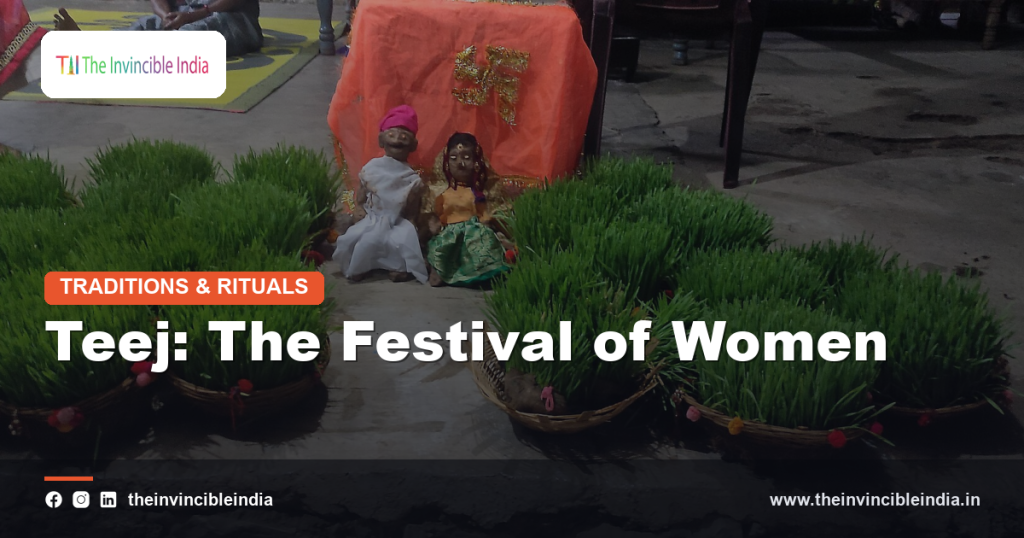
Teej is a monsoon-season festival celebrated predominantly by women across northern India, marked by fasting, decorative henna, swinging on decorated swings and the singing of traditional folk songs. Observed in several related forms through the rainy months, it centres on themes of marital devotion, womanhood and the arrival of the monsoon after the summer heat. In its focus on women’s participation and communal bonding, Teej shares much in spirit with Raksha Bandhan, another festival celebrated around the same monsoon season. This guide explores the meaning, rituals and regional variety of Teej.
Quick Facts
| Detail | Information |
|---|---|
| Also Known As | Hariyali Teej, Kajari Teej, Hartalika Teej (regional forms) |
| Celebrated By | Predominantly women, especially married women |
| Type of Observance | Hindu seasonal and religious festival |
| General Timing | Monsoon month of Shravan (July-September) |
| Key Practices | Fasting, mehendi, swinging, folk singing |
| Region of Prominence | Rajasthan, Uttar Pradesh, Bihar and northern India |
Meaning and Significance
Teej is celebrated as a festival centred on womanhood, marital devotion and the welcome arrival of the monsoon after months of summer heat. Observed predominantly by women, it combines religious fasting with festive customs such as decorative henna, swinging and folk singing, creating an occasion that is both devotional and deeply social.
The festival’s emphasis on female participation and community bonding gives it a distinctive place among Indian festivals, many of which are observed by entire households together. Teej’s focus on women’s shared experience, across generations and communities, has helped sustain its popularity across centuries.
Position in the Hindu Calendar
Teej falls during the monsoon month of Shravan, generally corresponding to a period between July and September on the Gregorian calendar, though the specific timing depends on which of several related Teej observances is being marked. As with other lunar festivals, exact dates vary from year to year.
The placement of Teej within the monsoon season is significant, as much of the festival’s symbolism, from greenery and swings to seasonal food, draws directly on the arrival of the rains after the dry summer months, giving the occasion its strong association with renewal and relief.
The Many Forms of Teej
Teej is observed in several related forms across the monsoon season, generally referred to as Hariyali Teej, Kajari Teej and Hartalika Teej, each falling on a different date and carrying slightly different regional emphasis. Despite these variations, the festivals share a common core of fasting, adornment and celebration of womanhood.
The existence of multiple Teej observances across the monsoon months reflects the festival’s deep roots in regional custom, with different communities emphasising the form most closely tied to their own local tradition. This diversity is part of what gives Teej its wide and varied presence across northern India.
Fasting Traditions and Their Purpose
Fasting is a central practice of Teej, particularly among married women, who traditionally observe a fast for the wellbeing and long life of their husbands, while some unmarried women fast in hope of a favourable future marriage. The strictness of the fast varies by individual and family custom, ranging from complete abstinence to more limited restrictions.
The fast is generally broken the following day after the completion of rituals and prayers, often surrounded by family celebration. As with fasting traditions observed during other festivals, the practice on Teej is understood as an act of devotion and discipline rather than mere restriction.
Mehendi and Adornment Customs
The application of mehendi, or henna, in intricate patterns on the hands and feet is one of the most visible customs associated with Teej, with women often gathering together in the days before the festival to have designs applied. This adornment is considered auspicious and adds to the festive atmosphere of the occasion.
Alongside mehendi, women typically dress in traditional attire, often in shades of green reflecting the monsoon season, and wear bangles and other jewellery associated with married status. This combined emphasis on adornment gives Teej much of its distinctive visual character.
Swings and Seasonal Symbolism
Decorated swings, hung from trees or set up in courtyards, are a defining feature of Teej celebrations, with women and girls gathering to swing together while singing traditional songs. The swing is closely associated with the joy and relief that accompanies the monsoon’s arrival after the harsh summer months.
This custom of communal swinging, often accompanied by group singing, transforms the festival into a shared social occasion beyond its religious observance, allowing women across generations to participate together in a distinctly festive and light-hearted activity.
Songs, Folk Music and Teej Geet
Traditional folk songs known as Teej geet form an integral part of the festival, sung by women gathered together during the swinging and other festivities. These songs often address themes of marital life, longing for one’s parental home, and the joys of the monsoon season.
Passed down largely through oral tradition, these songs represent an important repository of regional folk culture, preserving both language and melody across generations. Their continued performance during Teej keeps this musical heritage alive within contemporary celebration.
Teej and the Monsoon Season
Teej’s timing during the monsoon connects the festival closely to the agricultural and seasonal rhythms of northern India, a period when the arrival of rain brings relief from summer heat and renewed hope for the year’s crops. This seasonal backdrop is reflected throughout the festival’s symbolism, from greenery to swings.
The monsoon’s arrival has historically been a matter of considerable significance for agrarian communities, and Teej’s celebratory tone can be understood partly as an expression of gratitude and optimism tied to this seasonal transition, alongside its more specifically religious and social dimensions.
Celebrations in Rajasthan
Rajasthan is particularly associated with elaborate Teej celebrations, with the city of Jaipur especially known for its large public festivities. The festival there includes grand processions in which a decorated image associated with the occasion is carried through the city streets.
Rajasthani Teej celebrations often feature traditional music, dance and elaborately decorated elephants and floats as part of public processions, drawing large crowds of participants and spectators. This scale of public celebration has made Rajasthan’s Teej observance particularly well known within India’s broader festival calendar.
Celebrations in Bihar and Uttar Pradesh
In Bihar and Uttar Pradesh, Teej, particularly in its Hartalika and Kajari forms, is observed with strong emphasis on fasting and household ritual, alongside community singing and gathering among women. Local variations in songs and specific customs reflect the particular cultural traditions of each region.
Markets in these regions often see a notable rise in activity ahead of Teej, as women shop for new clothes, bangles and other items associated with the festival, reflecting Teej’s role as a significant seasonal occasion within the broader cultural and economic life of these areas.
Teej Processions and Public Celebrations
The city of Jaipur hosts one of the most well-known public Teej processions in India, featuring elaborately decorated palanquins, traditional musicians and dancers moving through the old city’s streets. The event draws both local participants and visitors interested in witnessing the celebration.
This public procession has become closely associated with Rajasthani cultural identity more broadly, contributing to the state’s reputation for vibrant festival traditions. The scale and organisation of the Jaipur procession reflect the festival’s importance within the region’s civic and cultural calendar.
Mythological Associations with Parvati and Shiva
Teej is associated in tradition with the story of the goddess Parvati’s devotion to Shiva, with some forms of the festival specifically commemorating her long period of austerity undertaken to secure him as her husband. This narrative is often recounted during festival observances as a symbol of devotion and perseverance.
This mythological association gives Teej a devotional dimension that complements its social and seasonal aspects, linking the festival’s customs of fasting and prayer to a broader narrative of steadfast commitment celebrated within Hindu tradition.
Teej as a Celebration of Women's Bonds
Beyond its religious and seasonal dimensions, Teej is widely understood as a celebration of the bonds between women, offering an occasion for mothers, daughters, sisters and friends to gather, share food and participate in the festival’s customs together. Many married women traditionally visit their parental homes around this time.
This emphasis on female companionship and support gives Teej a distinctive social function within many communities, providing a recognised and valued occasion for women’s gatherings that stands somewhat apart from festivals observed primarily by mixed households.
Traditional Attire and Adornment
Traditional attire worn during Teej typically features bright colours, particularly green, along with bangles, jewellery and other adornments associated with festive and marital occasions. Specific regional dress customs, such as the lehenga-choli favoured in Rajasthan, are often worn for the occasion.
This attention to dress and adornment reflects the festival’s broader emphasis on visual celebration and communal display, with women often preparing new or special clothing well in advance of the festival day itself.
Food and Sweets of the Teej Season
Food traditions associated with Teej vary by region but often include sweets such as ghevar, a disc-shaped dessert particularly popular in Rajasthan during the monsoon season, alongside various savoury snacks prepared for gatherings and celebrations. These foods are typically shared among family and friends.
The seasonal availability of certain ingredients during the monsoon also shapes festival cuisine in various regions, connecting Teej’s food customs to the same seasonal rhythms that inform its broader symbolism of renewal and abundance following the rains.
Teej and Contemporary Women's Networks
In recent decades, Teej has also become an occasion for women to organise social gatherings, cultural programmes and community events beyond strictly domestic celebration, reflecting changing patterns of urban social life. Community halls and cultural associations in many cities now host organised Teej events open to a wider circle of participants.
These contemporary gatherings often incorporate traditional elements such as folk singing and mehendi alongside newer additions like organised competitions and cultural performances, extending the festival’s long-standing emphasis on women’s companionship into new social settings while retaining its essential character.
Teej Gifts and the Custom of Sindhara
In several northern Indian regions, the days leading up to Teej are marked by a custom known as sindhara, in which parents send gifts of clothing, sweets and mehendi to their married daughters ahead of the festival. This exchange reinforces family ties even after a daughter has moved to her husband’s household.
The custom reflects the broader familial dimension of Teej, extending its themes of women’s bonds beyond the immediate festival day itself into a wider seasonal exchange of affection and support between a woman and her parental family.
Teej Today
In contemporary India, Teej continues to be marked by its traditional combination of fasting, mehendi, swinging and folk singing, even as celebrations have adapted to modern urban life through organised community events and commercial festivities. Beauty salons and markets often see increased activity in the days leading up to the festival.
Social media has also become a significant space for sharing Teej greetings, mehendi designs and festival photographs among family and friends. Despite these contemporary additions, the festival’s core focus, celebrating womanhood, marital devotion and the arrival of the monsoon, remains consistent with its long-standing tradition.
Sources & Further Reading
- Ministry of Culture, Government of India (indiaculture.gov.in).
- Sangeet Natak Akademi (sangeetnatak.gov.in).
Frequently Asked Questions
What is Teej?
Teej is a monsoon-season festival celebrated predominantly by women, marked by fasting, mehendi, swinging and traditional folk songs across northern India.
Why do women fast during Teej?
Married women traditionally fast for their husband’s wellbeing and long life, while some unmarried women fast hoping for a favourable future marriage.
What is Hariyali Teej?
Hariyali Teej is one of the main forms of the festival, observed early in the monsoon month of Shravan and associated with greenery and the arrival of the rains.
Why are swings associated with Teej?
Decorated swings are set up for women to enjoy together during the festival, symbolising the joy and relief that accompanies the monsoon season.
Where is Teej celebrated most elaborately?
Rajasthan, particularly Jaipur, is known for large public Teej processions, though the festival is widely celebrated across northern India.