


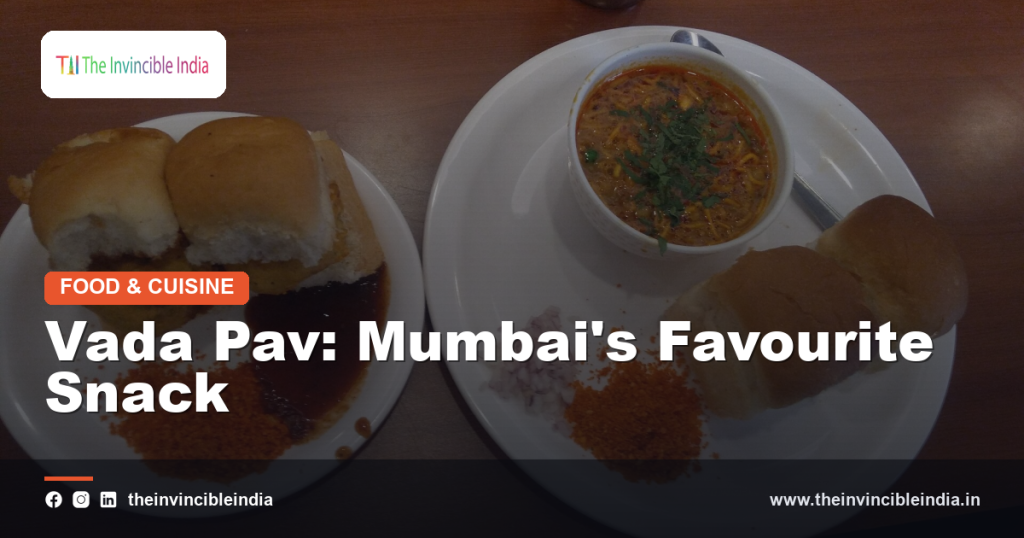
Vada pav is a spiced potato fritter, known as batata vada, sandwiched inside a soft bread roll called pav, and it stands as one of the most iconic and widely loved street food snacks to have emerged from Mumbai. Affordable, filling, and quick to eat, vada pav has become deeply woven into the daily rhythm of the city, sold from roadside stalls, railway stations, and small eateries across every neighbourhood. As part of the wider world of regional cuisines of India, vada pav is often described as a distinctly Mumbai contribution, admired for its simple, satisfying combination of textures and flavours, and it continues to be enjoyed by people across all walks of life throughout the city and increasingly beyond it.
Quick Facts
| Detail | Information |
|---|---|
| Origin City | Mumbai, Maharashtra |
| Main Components | Batata vada and pav bread |
| Key Ingredient | Spiced mashed potato filling |
| Typical Accompaniments | Chutneys and fried green chilli |
| Meal Role | Street food and snack |
| Popularity | Widely sold across Mumbai |
Origins of Vada Pav in Mumbai
Vada pav is generally understood to have emerged in Mumbai during the latter half of the twentieth century, developing as an affordable, quick snack suited to the pace of a rapidly growing industrial and working-class city. It is often associated with the city’s mill workers and commuters, who needed food that was filling, inexpensive, and easy to eat while on the move between work and travel. Street vendors began selling the spiced potato fritter inside bread rolls as a practical alternative to more elaborate meals, and the snack quickly gained popularity across different parts of the city. While exact details of its earliest appearance are difficult to verify precisely, vada pav’s rise is closely tied to Mumbai’s identity as a city defined by movement, work, and inventive street food culture.
Batata Vada: The Potato Fritter Core
At the heart of vada pav lies the batata vada, a ball of spiced, mashed potato coated in a gram flour batter and deep-fried until golden and crisp on the outside. The potato filling is typically seasoned with mustard seeds, turmeric, curry leaves, ginger, and green chilli, giving it a warm, mildly spiced flavour that forms the core taste of the entire snack. Achieving the right texture, a soft, well-seasoned interior contrasted with a crisp fried coating, is considered essential to a good batata vada, and vendors often take pride in their specific seasoning and frying technique. This fritter can also be eaten on its own as a standalone snack, but it is most famously known through its combination with pav bread.
Pav: The Bread That Completes the Dish
Pav, a soft, slightly sweet bread roll introduced to Mumbai through Portuguese colonial influence, provides the essential bread component of vada pav, its pillowy texture offering a gentle contrast to the crisp fried vada inside. The pav is typically split and lightly toasted or warmed, sometimes with a smear of chutney or butter, before the vada is placed inside to create the finished sandwich. This bread’s soft, absorbent quality allows it to soak up flavour from accompanying chutneys without becoming soggy too quickly, an important practical quality for a snack meant to be eaten quickly, often while standing at a stall or walking. Pav’s role in vada pav also links the dish to Mumbai’s broader tradition of pav-based street foods.
Chutneys and Flavour Layers
Chutneys play a crucial role in vada pav, adding layers of flavour that complement the mild, starchy potato filling and the soft bread. A tangy tamarind or date chutney is commonly spread inside the pav for sweetness, while a fiery dry garlic chutney, made from roasted garlic, chilli powder, and often desiccated coconut, provides sharp heat and depth. Some versions also include a green coriander and chilli chutney for additional freshness. The specific combination and proportion of chutneys used can vary from vendor to vendor, giving each stall’s version of vada pav its own subtle character despite sharing the same basic components. These chutneys are essential to elevating vada pav beyond a simple fried potato sandwich into a more complex, flavour-layered snack.
Fried Green Chilli as a Classic Side
A whole fried green chilli, lightly salted, is a classic accompaniment to vada pav, offering an additional burst of heat for those who want it and serving as a visual and flavourful signature of the snack at most stalls. The chilli is typically shallow-fried until its skin blisters slightly, mellowing its rawness while retaining a sharp bite. Eaten alongside the vada pav rather than inside it, the fried chilli allows customers to control their own spice level, adding heat gradually rather than having it baked into the filling itself. This simple but effective side item has become so closely associated with vada pav that many regular customers consider the meal incomplete without it.
Street Vendors and Mumbai's Stall Culture
Vada pav is most authentically experienced at the countless small stalls and carts that line Mumbai’s streets, railway stations, and market areas, many of them run by vendors who have built loyal local followings over years of consistent quality. These stalls typically operate with simple, efficient setups, frying vada in large batches and assembling sandwiches quickly to keep pace with steady customer demand throughout the day. The relationship between regular customers and their preferred vendor is often a point of local pride, with people developing strong loyalty to specific stalls based on taste, consistency, and value. This vibrant stall culture is central to vada pav’s identity, distinguishing it from more standardised or restaurant-based versions of the snack.
Vada Pav and Mumbai's Working-Class Roots
Vada pav’s rise is closely tied to Mumbai’s identity as a city built on industrial labour and constant movement, and it has long been associated with affordability and practicality suited to working people. Its low cost and filling nature made it an accessible meal for mill workers, labourers, and commuters who needed quick, satisfying food without the time or budget for a full sit-down meal. This working-class association has remained an important part of how vada pav is understood culturally, even as the snack has since crossed class lines and become popular among people from a wide range of economic backgrounds across the city. It stands as an example of how a practical, everyday food can carry meaningful social history.
Vada Pav Versus Other Indian Street Snacks
Within the wider landscape of Indian street food, vada pav is often compared to other regional sandwich-style snacks, though it retains a distinct identity shaped by its specific combination of potato fritter, pav bread, and chutneys. Unlike snacks built around layered vegetables or elaborate fillings, vada pav relies on a relatively simple, compact structure that emphasises efficient eating and bold, concentrated flavour in a small package. Its close relative, misal pav, shares the same bread but pairs it with a spicy sprouted lentil curry instead of a fritter, illustrating how Mumbai’s street food culture has built multiple dishes around the versatile pav roll. This comparison highlights vada pav’s particular strength: achieving maximum flavour and satisfaction from a minimal set of components.
Regional Variations of Vada Pav
While the classic Mumbai version of vada pav remains the most recognised, variations have emerged in different parts of Maharashtra and beyond, sometimes incorporating different chutneys, additional stuffing, or regional spice preferences. Some versions add a layer of grated cheese or additional vegetables, moving away from the traditional simplicity of the original snack to cater to changing tastes, particularly among younger customers. Despite these adaptations, the fundamental structure, a spiced potato fritter inside a soft bread roll, remains consistent across most variations, underscoring how strongly this basic format defines the dish. These regional and modern variations demonstrate vada pav’s flexibility as a format that can absorb new influences while still being recognisably itself.
Vada Pav's Spread Beyond Mumbai
Although closely identified with Mumbai, vada pav has spread to other cities across India, carried by migration and the popularity of Maharashtrian food more broadly, and it now appears on street food menus and in casual eateries well beyond its home city. Its affordability and simple preparation have made it relatively easy to replicate in new locations, even if some vendors argue that an authentic vada pav experience is best found on Mumbai’s own streets. This spread reflects a broader pattern seen with many iconic Indian street foods, where a dish closely tied to a specific city’s identity gradually becomes part of a wider, shared national street food vocabulary, while still retaining strong associations with its place of origin.
Vada Pav in Popular Culture and City Identity
Vada pav has come to serve as something of a culinary symbol for Mumbai, frequently referenced in discussions of the city’s food culture, its fast pace, and its ability to offer satisfying food at minimal cost regardless of one’s economic background. It appears regularly in popular writing about Mumbai and in conversations about the city’s street food identity, often mentioned alongside other iconic local dishes as representative of the city’s spirit. This symbolic status goes beyond the dish’s taste alone, reflecting how food can become intertwined with a place’s broader identity and the everyday experiences of the people who live there, making vada pav as much a cultural reference point as a culinary one.
Preparing Vada Pav at Home
Making vada pav at home involves preparing the spiced potato filling, coating it in gram flour batter, and deep-frying it before assembling it inside pav with chutneys, a process that, while straightforward, requires attention to seasoning balance and frying temperature to achieve the right texture. Home cooks often adjust the level of spice, chutney sweetness, or garlic intensity to suit personal preference, resulting in variations that differ subtly from typical stall versions. Making the dish at home also allows for greater control over ingredient freshness and oil quality, appealing to those who enjoy the snack but wish to prepare a version tailored to their own taste. This home cooking tradition exists alongside, rather than replacing, the strong street stall culture associated with the dish.
Vada Pav as an Affordable Everyday Meal
One of vada pav’s most enduring qualities is its affordability, remaining one of the least expensive filling meals available in Mumbai despite decades of change in the city’s food and cost landscape. This low cost, combined with its filling nature, has helped it remain accessible to people across a wide income range, from daily wage workers to office employees looking for a quick, budget-friendly bite. Its price point has also helped it retain its identity as a genuine street food rather than shifting entirely into a premium or specialty category, even as some restaurants have begun offering upscale versions. This continued affordability is central to vada pav’s ongoing popularity and its association with everyday, practical eating in the city.
Health Considerations and Modern Adaptations
As a deep-fried snack, vada pav is generally understood as an occasional indulgence rather than an everyday health food, though its potato and gram flour base does provide a source of carbohydrates and protein. In response to growing interest in lighter eating, some vendors and home cooks have experimented with baked or air-fried versions of the vada, seeking to reduce oil content while preserving the dish’s essential flavour and texture. Such adaptations remain a minority compared to the traditional deep-fried preparation, which continues to be preferred by most for its characteristic crispness. These modern variations reflect a broader, ongoing conversation about how traditional street foods can be adapted for changing dietary preferences without losing their core identity.
Vada Pav Vendors and Franchise Growth
In recent decades, vada pav has moved beyond individual street stalls into more organised formats, with several branded chains and franchises offering standardised versions of the snack across multiple cities. This growth reflects both the dish’s enduring popularity and a broader trend of Indian street foods being formalised into more structured food businesses that maintain consistent quality and hygiene standards. At the same time, independent street vendors continue to thrive alongside these larger operations, often preferred by customers seeking the traditional stall experience and the specific taste of a long-trusted local seller. This coexistence of informal street vending and organised franchise growth illustrates how vada pav has adapted to modern food industry trends while retaining its street food roots.
Vada Pav Today
Today, vada pav remains one of Mumbai’s most enduring and beloved street foods, sold on virtually every street corner and railway station across the city and increasingly available in other parts of India and among the Indian diaspora abroad. Its combination of affordability, convenience, and satisfying flavour continues to make it relevant across generations, from long-time residents to newer visitors experiencing the snack for the first time. As Mumbai’s food culture continues to evolve, vada pav remains a constant, widely regarded as an essential part of understanding the city’s culinary identity. Its continued popularity reflects the lasting appeal of a simple, well-executed street food built around just a few humble ingredients.
Sources & Further Reading
- Ministry of Tourism, Government of India (tourism.gov.in).
- Maharashtra Tourism, Government of Maharashtra (maharashtratourism.gov.in).
Frequently Asked Questions
What is vada pav made of?
Vada pav consists of a spiced, deep-fried potato fritter called batata vada placed inside a soft bread roll known as pav, usually served with chutneys.
Where did vada pav originate?
Vada pav is widely believed to have originated in Mumbai during the twentieth century as an affordable, quick snack suited to the city’s working-class and commuting population.
What chutneys are used in vada pav?
Vada pav is typically served with a tangy tamarind or date chutney and a fiery dry garlic chutney, sometimes alongside a green coriander chutney.
Is vada pav vegetarian?
Yes, vada pav is a vegetarian dish, made from a spiced mashed potato filling coated in gram flour batter and served in bread with chutneys.
What is usually served alongside vada pav?
A fried green chilli is a classic accompaniment to vada pav, offering additional heat that customers can add according to their own taste.