


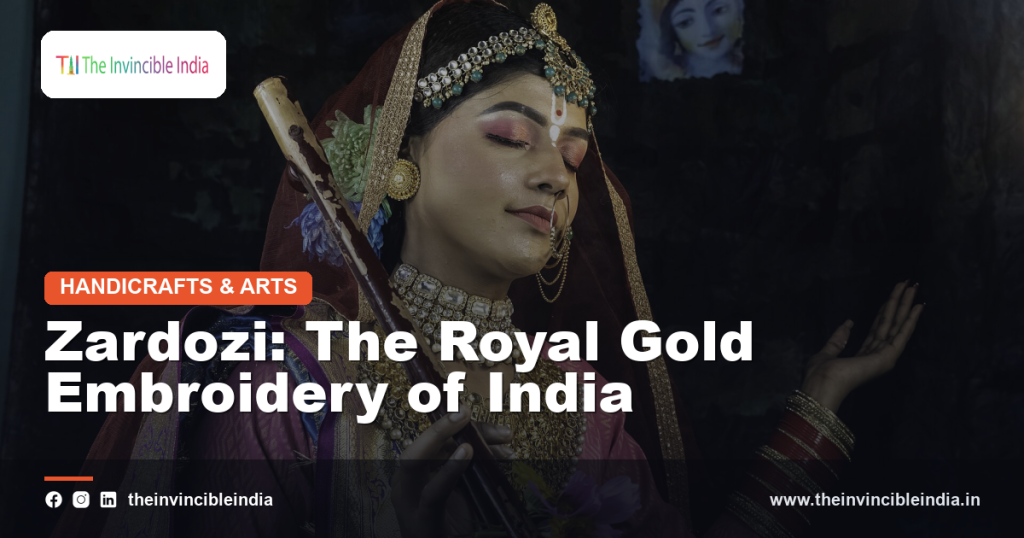
Zardozi is a form of raised metallic embroidery in which gold and silver-toned threads, wires, sequins, and beads are stitched onto fabric to create dense, sculptural surface decoration traditionally associated with royal courts and ceremonial dress. Historically patronised by Mughal rulers, the craft is closely identified with the city of Lucknow, where it developed alongside other refined embroidery traditions such as Chikankari embroidery, though Zardozi’s heavy metallic work stands in deliberate contrast to Chikankari’s light white-on-white stitching. Zardozi pieces, worked by hand over a frame, remain a mainstay of bridal wear, formal attire, and ceremonial textiles across India.
Quick Facts
| Detail | Information |
|---|---|
| Also Known As | Zardosi, Kalabatun work |
| Primary Centres | Lucknow, Bhopal, Farrukhabad, Delhi |
| Core Materials | Metallic thread, wire (badla), sequins, beads |
| Technique | Raised metal-thread embroidery on a frame |
| Historical Patronage | Mughal courts |
| Common Uses | Bridal wear, formal attire, ceremonial textiles |
Origins in the Mughal Courts
Zardozi embroidery is closely associated with the Mughal period, when skilled artisans produced elaborately embroidered garments, tents, and furnishings for the imperial court using gold and silver thread. The craft is believed to have arrived in India through cultural and artistic exchange connected to Persia and Central Asia, where metal-thread embroidery had a long-established tradition, and it was subsequently refined and adapted by artisans working under Mughal patronage.
Royal workshops maintained teams of embroiderers who specialised in different aspects of the craft, from thread preparation to the final stitching of elaborate motifs onto silk and velvet. The lavish use of real gold and silver in early Zardozi work reflected the wealth and status of the court, giving the craft a lasting association with luxury and ceremony that continues to shape how it is used and valued today.
What the Name Means
The word Zardozi is derived from Persian, combining zar, meaning gold, and dozi, meaning embroidery or sewing, together describing the craft’s defining use of gold thread. This etymology reflects the strong historical link between Zardozi and Persian-influenced court culture, which brought both the technique and its vocabulary into the Indian subcontinent.
Over time, the term came to be used more broadly for metallic embroidery generally, including work executed in silver-toned or gilded thread rather than pure gold. Related terms such as kalabatun, referring to a particular type of metallic thread, are sometimes used within the trade to describe specific materials rather than the craft as a whole, reflecting its long development within Indian courts and workshops.
Lucknow as a Centre of the Craft
Lucknow emerged as one of the most important centres for Zardozi embroidery, particularly under the patronage of the Nawabs of Awadh, who supported a wide range of decorative arts alongside the city’s embroidery traditions. Workshops in Lucknow developed a reputation for fine, detailed metal-thread work that complemented the city’s broader identity as a centre of refined craftsmanship.
Generations of artisan families settled in specific neighbourhoods of the city, passing down Zardozi skills much as practitioners of Chikankari embroidery did with their own craft. Today, Lucknow remains strongly identified with Zardozi, alongside other established centres such as Bhopal, Farrukhabad, and parts of Delhi, each with its own workshops and stylistic tendencies.
Materials and Threads
Traditional Zardozi employed threads made by wrapping fine metal wire, historically genuine gold or silver, around a silk or cotton core, producing a thread with a lustrous metallic surface suitable for dense embroidery. Because pure metal thread became expensive and impractical for wider commercial production, most contemporary Zardozi uses metal-coated or synthetic substitute threads that replicate the appearance of gold and silver at a fraction of the cost.
Alongside thread, artisans use a range of supplementary materials including sequins, small metal discs called sitara, coiled wire known as badla, and beads or imitation stones to add texture and sparkle. Selecting and preparing these materials is itself a specialised skill, since their weight, flexibility, and finish affects how the finished embroidery will drape and catch the light.
The Embroidery Frame
Zardozi is worked on fabric stretched tightly across a wooden frame known as an adda, which holds the cloth taut and allows the embroiderer to work with both hands from above and below the surface. This frame-based method is essential given the weight and stiffness of metallic threads and embellishments, which would be difficult to manage on unsupported fabric.
Artisans typically sit on the ground around the frame, working in a group when a large panel or garment is being embroidered, with different individuals sometimes responsible for different sections within the same piece. Working from a fixed frame allows for the exacting control needed to build up dense, raised patterns row by row while keeping the finished surface even.
Stitch Types and Techniques
Zardozi encompasses a range of stitch types and techniques, each contributing a different textural effect to the finished embroidery. Couching, in which metal thread is laid on the fabric surface and secured with fine stitches from beneath, is among the most common methods, allowing artisans to build continuous metallic lines and filled areas.
Other techniques involve threading small sequins or beads directly onto the working thread before stitching them down, or applying coiled wire to create raised, textured surfaces. Complex pieces often combine several techniques within a single design, layering flat couched areas with raised beadwork and sequin detailing to create visual depth while remaining structurally sound.
Designs and Motifs
Zardozi motifs frequently draw on floral and vegetal patterns, paisley forms, and geometric borders, many of which echo design vocabularies found more broadly in Mughal-influenced decorative art. Large panels intended for garments or furnishings often feature a central medallion surrounded by borders of repeating smaller patterns.
The density of the embroidery can vary considerably, from delicate scattered motifs on lighter fabric to fully covered surfaces in which almost no base cloth remains visible. Colour is introduced both through the fabric itself, commonly rich shades of red, maroon, green, or deep blue, and through coloured beads, sequins, or stones incorporated into the design.
Zardozi in Bridal Wear
Bridal wear represents one of the most significant markets for Zardozi embroidery, with heavily worked lehengas, sarees, and blouses commissioned for weddings across many Indian communities. The dense, raised quality of Zardozi work suits the celebratory and formal nature of bridal garments, communicating richness and occasion.
Bridal Zardozi pieces often require weeks or months of work by multiple artisans, given the scale of coverage typically desired, and represent a substantial investment for families commissioning them. The continuing demand for elaborately embroidered bridal wear has helped sustain Zardozi workshops even as everyday use of the embroidery has declined.
Religious and Ceremonial Use
Beyond bridal wear, Zardozi embroidery has long been used to decorate items associated with religious and ceremonial life, including coverings for religious texts, decorative hangings, and cloth used in temple and shrine settings. The association of gold thread with reverence and honour made Zardozi a natural choice for objects intended to convey respect or sanctity.
Ceremonial items such as canopies, banners, and formal presentation cloths have also historically employed Zardozi work. This continued commissioning of Zardozi for such purposes helps preserve specialised skills within the craft that might otherwise see less regular practice.
Zardozi in Menswear
Zardozi embroidery has a long history in menswear as well, particularly in ceremonial garments such as sherwanis, achkans, and formal jackets worn for weddings and state occasions. Historically, richly embroidered coats and robes were an important marker of status among rulers and nobility.
This tradition continues in a modified form today, with grooms and other formal wear customers commissioning Zardozi-embellished jackets and accessories for weddings and festive events. Men’s Zardozi work often favours more restrained placement, such as borders, collars, and cuffs, compared to fuller coverage seen in bridal womenswear.
The Artisan Workshop
Zardozi work is typically produced in workshops known as karkhanas, where teams of artisans, often specialising in particular stitches or materials, collaborate on a single large piece under the guidance of an experienced master craftsperson. This structure allows complex commissions to be completed within a reasonable timeframe.
Skills are typically passed down through apprenticeship, with younger artisans learning by working alongside more experienced embroiderers. Many Zardozi karkhanas are concentrated in specific neighbourhoods of cities such as Lucknow, Delhi, and Bhopal, where generations of artisan families have continued the trade.
Decline and Revival
Zardozi embroidery experienced a decline in the period following the reduction of direct royal patronage, as the courtly demand that had sustained large workshops diminished. Changing fashions and the availability of cheaper machine-made embellishments further challenged the craft during parts of the twentieth century.
Renewed interest in handmade heritage textiles, along with sustained demand from the bridal and formal wear industry, contributed to a revival of Zardozi in subsequent decades, supported by government craft development programmes. Designers incorporating Zardozi into contemporary collections have also reintroduced the embroidery to new audiences.
Zardozi and Other Metal Embroideries
Zardozi is often discussed alongside other Indian metal-thread embroidery traditions, such as the gota patti technique that applies flat metallic ribbon to fabric, and various regional zari-based embellishments used in weaving and embroidery across the country. While these techniques share an emphasis on metallic ornamentation, Zardozi is distinguished by its raised, sculptural stitching and use of varied materials.
Artisans skilled in Zardozi sometimes also practise related techniques, and workshops may combine several metal-embellishment methods within a single elaborate garment, drawing on the full range of decorative possibilities metallic embroidery can offer to formal and ceremonial textiles.
Contemporary Fashion Use
Contemporary fashion designers have continued to draw on Zardozi embroidery, incorporating it into both traditional garments and more experimental western-influenced silhouettes for domestic and international markets. Designers often work directly with established karkhanas, commissioning custom motifs and colour combinations that update traditional techniques for current tastes.
Zardozi has also found its way into accessories, footwear, and home furnishings, extending the craft’s visual language beyond clothing. This continued relevance within the fashion industry provides an important economic bridge for artisan communities connecting traditional workshop skills to contemporary retail and export markets.
Challenges Facing Artisans
Despite continued demand, Zardozi artisans face a number of ongoing challenges, including the physically demanding nature of the work, which can affect eyesight and posture over years of close, detailed embroidery. Competition from machine embroidery has put pressure on prices for genuine handwork.
Irregular commissions, dependent heavily on wedding seasons and festival demand, can also create income instability. Efforts to address these challenges have included craft cooperatives, skill certification programmes, and initiatives connecting artisans more directly with designers and retailers, reducing reliance on intermediaries.
Zardozi Today
Zardozi today remains one of India’s most recognisable forms of embellished embroidery, valued for its ability to transform fabric into richly textured, luminous surfaces suited to celebration and ceremony. Centred historically in Lucknow but practised across several Indian cities, the craft continues to adapt to contemporary fashion, bridal wear, and export markets.
Artisan workshops, often organised as multi-generational family enterprises, remain the backbone of Zardozi production. As long as skilled embroiderers continue to practise and pass on their craft, Zardozi is likely to remain a defining feature of India’s ceremonial and celebratory textile traditions.
Sources & Further Reading
- Ministry of Textiles, Government of India (texmin.nic.in).
- Ministry of Culture, Government of India (indiaculture.gov.in).
Frequently Asked Questions
What does the word Zardozi mean?
Zardozi comes from Persian words meaning gold and embroidery, directly describing the craft’s traditional use of gold and metallic thread to create raised, ornamental designs on fabric.
Which city is most closely associated with Zardozi?
Lucknow is the city most closely associated with Zardozi, having developed as a major centre for the craft under the patronage of the Nawabs of Awadh, alongside centres such as Bhopal, Farrukhabad, and Delhi.
Is real gold used in Zardozi embroidery today?
Most contemporary Zardozi uses metal-coated or synthetic threads rather than pure gold or silver, since genuine metal thread has become expensive and impractical, though the visual effect closely resembles the original technique.
What tool is used to hold fabric while embroidering Zardozi?
Zardozi is worked on fabric stretched across a wooden frame called an adda, which keeps the cloth taut and allows artisans to work the dense, raised stitching with control from both sides.
Where is Zardozi embroidery most commonly used today?
Zardozi is most commonly used today in bridal wear, formal menswear such as sherwanis, and ceremonial textiles, though it also appears in accessories, footwear, and home furnishings.