


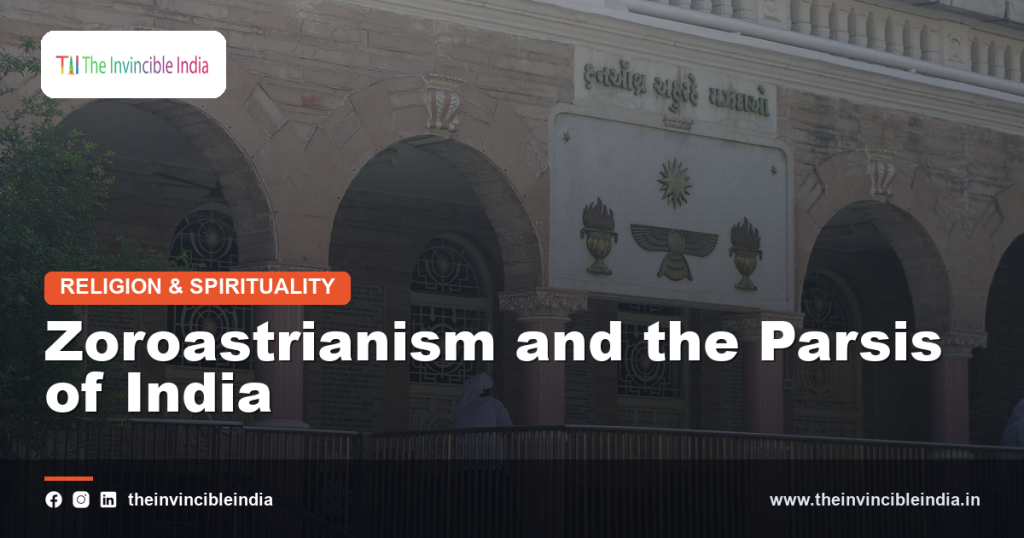
Zoroastrianism is one of the oldest monotheistic religions in the world, founded in ancient Persia and preserved for many centuries in India by a small but remarkably influential community known as the Parsis. Fleeing persecution in their homeland, early Zoroastrian communities migrated by sea to the western coast of India, where they were given shelter and gradually built a distinct religious and cultural identity that endures to this day. Centred on reverence for a single supreme creator and the sacred symbol of fire, tended continuously in dedicated fire temples, Zoroastrianism in India has produced a community renowned for its philanthropy, industry and contribution to religious and civic life. This guide explores the beliefs, history, customs and living heritage of Zoroastrianism and the Parsis of India.
Quick Facts
| Detail | Information |
|---|---|
| Type | An ancient monotheistic faith preserved by the Parsi community |
| Founder | The prophet Zoroaster, in ancient Persia |
| Arrival in India | Zoroastrians migrated from Persia many centuries ago |
| Sacred symbol | Fire, tended continuously in fire temples |
| Community name | Known in India as Parsis, and also as Iranis |
| Character | A small, close-knit and highly influential community |
An Ancient Faith from Persia
Zoroastrianism is one of the oldest religions in the world, tracing its origins to ancient Persia, where it developed as a distinct faith centred on the worship of a single supreme creator. For many centuries it flourished as a major religion of the Persian world, shaping the beliefs, ethics and culture of the region profoundly. Following great political and social upheavals in Persia, many followers of the faith chose to leave their homeland rather than abandon their beliefs, eventually finding their way to the shores of India. This long and ancient heritage, carried across the sea to a new land, gives Zoroastrianism in India a depth of history and continuity that connects the present community to one of the world’s most venerable religious traditions.
The Prophet Zoroaster
Zoroastrianism traces its teachings to the prophet Zoroaster, also known as Zarathustra, revered as the founder who received and proclaimed the faith’s core message in ancient Persia. Zoroaster taught a message centred on the worship of one supreme god, the importance of truth and righteousness, and a clear moral choice between good and evil in human life. His teachings, preserved in the faith’s sacred hymns and texts, laid the foundation for the entire Zoroastrian religious tradition that followed. As the founding prophet of one of the world’s oldest monotheistic faiths, Zoroaster holds a place of profound reverence among Zoroastrians in India and around the world, his teachings continuing to guide the community’s beliefs and values.
Core Beliefs of Zoroastrianism
At the heart of Zoroastrianism lies a set of core beliefs centred on the worship of a single supreme creator and a strong ethical emphasis on truth, righteousness and good conduct. The faith teaches that human beings possess free will and are called to choose good thoughts, good words and good deeds in their daily lives, a simple yet profound ethical framework that has guided the community for centuries. Zoroastrianism also emphasises the importance of maintaining purity, both physical and spiritual, and of contributing positively to the world through honest work and charitable action. These core beliefs, combining monotheistic worship with a clear ethical code, have shaped the distinct character and reputation of the Zoroastrian community throughout its long history.
Ahura Mazda and the Cosmic Struggle
Zoroastrians worship Ahura Mazda, the supreme creator god, understood as the source of all goodness, wisdom and light in the universe. The faith envisions existence as marked by an ongoing struggle between the forces of good, represented by Ahura Mazda, and the forces of falsehood and darkness, with every individual called to align themselves with truth and righteousness through their choices in life. This vision gives Zoroastrian ethics a strongly practical character, encouraging active moral effort in support of goodness rather than passive belief alone. The worship of Ahura Mazda and the call to choose good over evil remain central to Zoroastrian faith and practice, shaping the values and outlook of the community to this day.
The Sacred Fire
Fire holds a place of profound sacredness in Zoroastrianism, regarded as a pure and radiant symbol of Ahura Mazda and of truth and divine light itself. Zoroastrians do not worship fire as a deity but revere it as a sacred symbol and a focus for prayer and devotion, tended with great care and respect in their places of worship. This reverence for fire has given the community a distinctive and widely recognised religious identity, closely associated with the image of the sacred flame. The careful, continuous tending of sacred fire remains one of the most visible and meaningful expressions of Zoroastrian devotion, symbolising the community’s enduring commitment to purity, truth and the presence of the divine.
Fire Temples and Agiaries
Zoroastrian places of worship, known as fire temples or agiaries, house a sacred fire that is tended continuously by dedicated priests according to careful ritual practice. These temples serve as the spiritual centre of Zoroastrian community life, places of prayer, ritual and communal gathering maintained with great reverence and care. Fire temples are found in the cities and towns where Parsi communities have long been established, particularly along India’s western coast, and they remain active centres of worship to this day. The continued presence and careful maintenance of these fire temples reflect the deep devotion of the Zoroastrian community to its ancient faith and its determination to preserve its sacred traditions across the generations.
The Migration to India
Facing profound upheaval and persecution in their Persian homeland, groups of Zoroastrians made the difficult decision to leave rather than abandon their ancient faith, setting out by sea in search of a new home where they could practise their religion freely. This journey, remembered with great reverence in community tradition, brought the early Zoroastrian migrants to the western coast of India, where they sought refuge and the freedom to continue their way of life. The migration marks the beginning of the Parsi community’s long and distinguished history in India, a history built on the preservation of faith through hardship and displacement. This foundational journey remains a cherished and defining part of Parsi collective memory and identity.
Settlement on the Gujarat Coast
According to cherished community tradition, the early Zoroastrian migrants were welcomed by local rulers on the coast of Gujarat, who granted them permission to settle and practise their faith on the condition that they respect and adapt to local customs. The migrants are remembered as having adopted the local language and certain customs of their new home while carefully preserving their distinct religious beliefs and practices. This spirit of peaceful settlement and mutual accommodation set the pattern for the community’s long and harmonious presence in India. The story of this early welcome and settlement remains a foundational and treasured part of Parsi heritage, symbolising the community’s identity as both distinctly Zoroastrian and deeply Indian.
The Parsi Community Emerges
Over the centuries following their settlement, the Zoroastrian migrants and their descendants developed a distinct communal identity in India, coming to be known as Parsis, a name reflecting their Persian origins. The community gradually spread from its early settlements to other parts of western India, eventually establishing a particularly strong presence in the growing city of Mumbai. Despite its relatively small size, the Parsi community developed a strong sense of internal cohesion, shared customs and religious identity that has been carefully preserved across many generations. The emergence of this distinct and enduring Parsi identity within Indian society represents one of the most remarkable stories of religious and cultural continuity anywhere in the country.
Sacred Texts: The Avesta
The sacred scripture of Zoroastrianism is known as the Avesta, a collection of ancient religious texts that includes hymns attributed to the prophet Zoroaster along with other liturgical and ritual material developed over the faith’s long history. These texts preserve the core teachings, prayers and rituals of the Zoroastrian tradition and remain central to religious practice among Parsis in India today. Priests trained in the Zoroastrian tradition continue to study and recite portions of the Avesta as part of temple worship and important religious ceremonies. The careful preservation and continued use of the Avesta across so many centuries and such a long migration is a testament to the community’s deep commitment to safeguarding its ancient religious heritage.
Rituals and Rites of Passage
Zoroastrian religious life in India is marked by a number of important rituals and rites of passage, observed with care by the Parsi community across generations. Among the most significant is the initiation ceremony through which young Zoroastrians are formally welcomed into the practice of their faith, marked by the investing of sacred symbols of belief. Prayers are recited daily and at significant life events, including birth, marriage and death, each accompanied by specific customs rooted in ancient tradition. These rituals, carefully maintained and passed down within families and the wider community, provide the structure through which Zoroastrian faith and identity continue to be transmitted to each new generation of Parsis in India.
The Towers of Silence
Among the most distinctive traditional practices associated with Zoroastrianism is the use of towers of silence, structures traditionally used for a form of funerary practice rooted in the faith’s concern for the purity of the sacred elements of earth, fire and water. This practice reflects deep Zoroastrian beliefs about the treatment of the dead and the avoidance of contaminating what is held sacred. While practices have evolved over time and vary among communities, the towers of silence remain an important part of traditional Parsi heritage in cities such as Mumbai. This distinctive and ancient custom illustrates the depth of Zoroastrian religious philosophy regarding purity and the natural elements, and its continuing, if evolving, place in community life.
Parsi Contributions to Mumbai and India
Despite its small numbers, the Parsi community has made contributions to Indian public life, industry, philanthropy and culture that are widely admired and far exceed its size. Parsi individuals and families have played prominent roles in the growth of Indian industry and commerce, and the community is especially renowned for its tradition of philanthropy, funding hospitals, educational institutions, libraries and public charitable works that continue to serve people of all communities. This spirit of generosity and civic contribution is regarded as a hallmark of Parsi identity in India. The scale and reach of Parsi philanthropic and civic contribution stands as one of the most celebrated aspects of the community’s legacy within modern Indian society.
Parsi Culture and Identity
Beyond religion, the Parsi community has developed a distinctive culture, cuisine, dress and social identity that blends Persian heritage with centuries of life in India. Parsi cuisine, known for its distinctive dishes, and Parsi customs of dress, language and social life reflect this unique blending of Persian and Indian influences developed over many generations. The community is also known for a strong tradition of education and professional achievement, valued highly within Parsi families and passed down across generations. This rich and distinctive cultural identity, at once ancient and thoroughly Indian, is cherished by the Parsi community as an integral part of who they are, alongside their religious faith.
The Irani Community
Alongside the long-established Parsi community, India is also home to a smaller Zoroastrian community known as the Iranis, descendants of a later wave of Zoroastrian migration from Persia in more recent centuries. While sharing the same core Zoroastrian faith and many customs with the Parsis, the Iranis maintain their own distinct community identity and history of settlement, particularly associated with the establishment of restaurants and cafes in cities such as Mumbai that became well known in Indian urban life. The presence of both the Parsi and Irani communities reflects the layered history of Zoroastrian migration to India across different periods, each contributing its own chapter to the story of the faith’s continued life on Indian soil.
A Shrinking but Resilient Community
The Zoroastrian community in India, though historically influential and highly respected, is today a very small minority, and its numbers have been gradually declining over recent generations due to a range of social and demographic factors. This decline has prompted concern within the community and various efforts aimed at supporting its continuity and preserving its distinctive religious and cultural heritage for future generations. Despite these challenges, the community remains remarkably resilient, maintaining its institutions, fire temples and traditions with great dedication and pride. This combination of demographic challenge and enduring cultural resilience characterises the contemporary story of Zoroastrianism in India, a small community determined to preserve an ancient and treasured heritage.
Zoroastrianism in India Today
Today Zoroastrianism continues to be practised in India by the Parsi and Irani communities, chiefly concentrated in Mumbai and parts of Gujarat, where fire temples remain active centres of worship and community life. Though small in number, the community continues to be widely respected for its contributions to philanthropy, industry, education and Indian public life, and its distinctive heritage of faith, culture and cuisine continues to be admired across the country. Efforts to preserve the community’s traditions and support its continuity remain an important focus for Parsi institutions. As one of the world’s oldest religions, preserved with remarkable dedication through centuries of migration and change, Zoroastrianism in India stands as a unique and cherished thread in the nation’s diverse religious heritage.
Sources & Further Reading
- Ministry of Culture, Government of India, on the religious communities of India (indiaculture.gov.in).
- Archaeological Survey of India, on historic fire temples and heritage sites (asi.nic.in).
Frequently Asked Questions
What is Zoroastrianism?
Zoroastrianism is one of the world’s oldest monotheistic religions, founded in ancient Persia by the prophet Zoroaster. It centres on the worship of a single supreme creator, Ahura Mazda, and a strong ethical code of good thoughts, good words and good deeds.
Who are the Parsis?
The Parsis are a Zoroastrian community in India descended from Persian migrants who fled persecution in their homeland many centuries ago and settled on the western coast of India, preserving their ancient faith while adapting to Indian society.
Why did Zoroastrians migrate to India?
Zoroastrians migrated to India after facing great political and social upheaval and persecution in their Persian homeland, choosing to leave rather than abandon their faith, and finding refuge and religious freedom on the western coast of India.
What is the significance of fire in Zoroastrianism?
Fire is revered in Zoroastrianism as a pure symbol of Ahura Mazda, truth and divine light. It is not worshipped as a deity but tended with great care in fire temples as a sacred focus for prayer and devotion.
What are the Towers of Silence?
The Towers of Silence are traditional structures associated with Zoroastrian funerary customs, rooted in the faith’s concern for the purity of sacred elements such as earth, fire and water. Practices have evolved over time within the community.