

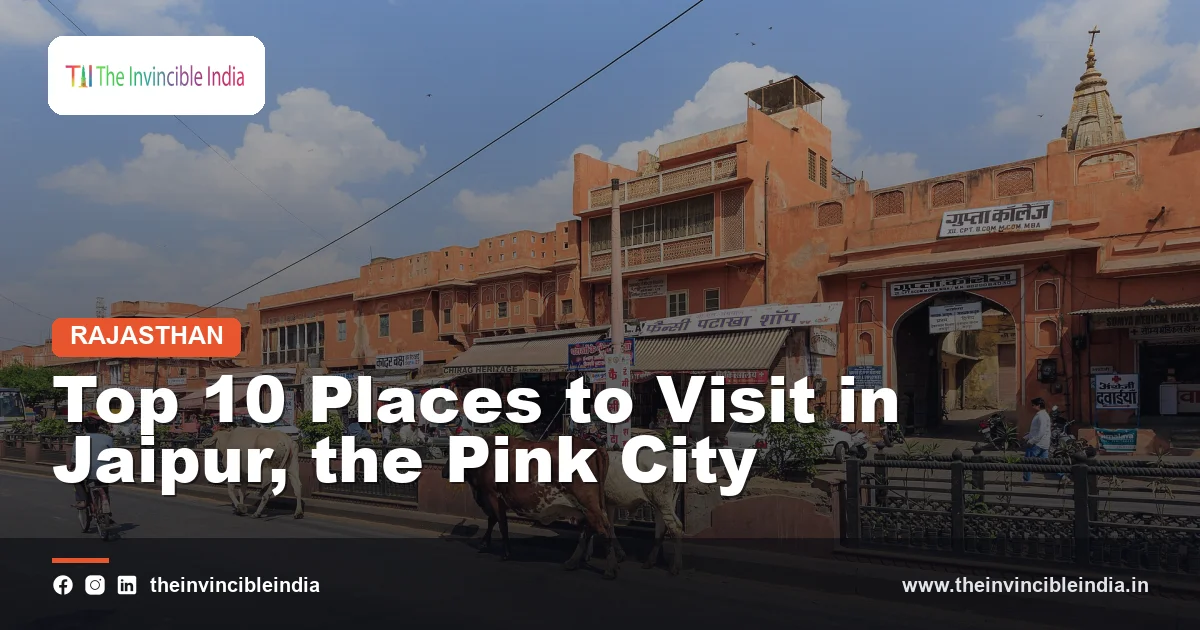
Jaipur, the vibrant capital of Rajasthan, is one of India’s most beloved and beautiful cities. Fondly called the “Pink City” for the rosy terracotta hue of its old town, it was founded in 1727 by Maharaja Sawai Jai Singh II and stands as one of India’s earliest planned cities. A jewel of the popular Golden Triangle tourist circuit alongside Delhi and Agra, and a UNESCO World Heritage city since 2019, Jaipur blends magnificent palaces, hilltop forts, ancient astronomy and bustling bazaars. This detailed guide covers the top places to visit in Jaipur and how to plan your trip.
Quick Facts About Jaipur
| Founded | 1727, by Maharaja Sawai Jai Singh II |
| Nickname | The Pink City |
| State | Rajasthan (capital) |
| UNESCO status | World Heritage city (2019) |
| Best time to visit | October to March |
The Story of the Pink City
Jaipur was conceived by Maharaja Sawai Jai Singh II, a ruler with a passion for astronomy, mathematics and urban planning. Advised by the scholar Vidyadhar Bhattacharya, he laid out the city in 1727 on a precise grid based on ancient Indian architectural principles, with wide, straight streets and rectangular blocks — a remarkable achievement for its time. In 1876, the entire old city was painted pink, the traditional colour of hospitality, to welcome the Prince of Wales (later King Edward VII), and the colour has been lovingly maintained ever since, giving Jaipur its enduring nickname.
Amber Fort
Set on a hill above Maota Lake about 11 kilometres from the city, Amber (Amer) Fort is Jaipur’s crown jewel and a UNESCO World Heritage Site. Built from 1592 in a beautiful blend of Hindu and Mughal styles, it is famous for the dazzling Sheesh Mahal (Mirror Palace), the ornate Ganesh Pol gateway, the Diwan-i-Aam and sweeping courtyards. Visitors can explore its palaces and ramparts and enjoy an evening sound-and-light show recounting the fort’s history.
City Palace
In the heart of the old city stands the City Palace, a magnificent complex of palaces, courtyards, gardens and museums that is still partly home to the erstwhile royal family. Blending Rajput and Mughal architecture, it houses the Chandra Mahal, the Mubarak Mahal and museums displaying royal costumes, weapons and artefacts, offering a fascinating window into Jaipur’s regal heritage.
Hawa Mahal
Perhaps Jaipur’s most iconic image, the Hawa Mahal or “Palace of Winds” was built in 1799. Its striking five-storey pink-sandstone facade is honeycombed with 953 small windows (jharokhas), designed so that the royal ladies could observe street processions and daily life without being seen, while the design also kept the interior cool through the breeze that gave it its name.
Jantar Mantar
A UNESCO World Heritage Site and a testament to Jai Singh II’s scientific genius, the Jantar Mantar is an astronomical observatory built in the 18th century. It houses 19 large stone instruments, including the world’s largest stone sundial, which can measure time to an accuracy of two seconds and track the positions of celestial bodies — a remarkable fusion of science and architecture.
Nahargarh and Jaigarh Forts
Two more forts crown the hills around Jaipur. Nahargarh Fort offers spectacular sunset views over the city and a glimpse of royal retreat life, while the mighty Jaigarh Fort, connected to Amber by subterranean passages, houses Jaivana, once one of the largest cannons on wheels in the world, along with palaces, gardens and reservoirs.
Jal Mahal and Albert Hall Museum
The romantic Jal Mahal, or “Water Palace,” appears to float serenely in the middle of Man Sagar Lake and is especially beautiful at dusk. In the city, the Albert Hall Museum, the oldest museum in Rajasthan, is housed in a magnificent Indo-Saracenic building and displays a rich collection of art, artefacts, textiles and antiquities.
The Bazaars of Jaipur
Jaipur is a shopper’s paradise, famous for its handicrafts and gemstones. The vibrant Johari Bazaar is renowned for jewellery, Bapu Bazaar for textiles and juttis, Tripolia Bazaar for lac bangles and ironware, and Chandpole for marble and handicrafts. Jaipur is a major centre for gemstones, blue pottery, block-printed textiles, meenakari and kundan jewellery, and colourful puppets.
Cuisine and Festivals
Jaipur’s cuisine is quintessentially Rajasthani, with dishes like dal baati churma, laal maas, ghewar and pyaaz kachori. The city’s cultural calendar is rich: the world-famous Jaipur Literature Festival in January draws writers and readers from across the globe, while traditional festivals such as Teej, Gangaur and the Elephant Festival fill the streets with colour, processions and celebration.
Best Time to Visit and How to Reach
The best time to visit Jaipur is between October and March, when the weather is pleasant for sightseeing. Jaipur has its own international airport, is well connected by rail to Delhi, Mumbai and other cities, and lies about 280 kilometres from Delhi via a good highway, making it an easy addition to any north-India itinerary.
Temples and Stepwells
Jaipur’s spiritual and architectural heritage extends to its temples and stepwells. The gleaming white-marble Birla Mandir (Lakshmi Narayan Temple) is beautifully illuminated at night, while the Govind Dev Ji Temple within the City Palace complex is one of the most revered Krishna temples in India, drawing large crowds for its aartis. On the way to Amber, the stunning Panna Meena ka Kund is a symmetrical 16th-century stepwell whose crisscrossing staircases make it one of the most photographed spots in the city, offering a glimpse into Rajasthan’s ingenious traditions of water conservation.
Experiences Around Amber
The area around Amber Fort offers memorable experiences beyond the fort itself. Visitors can explore the atmospheric old town of Amer, with its temples and havelis, and the nearby Anokhi Museum of Hand Printing, which celebrates the craft of block printing. Ethical elephant-care experiences and the Elefantastic sanctuary allow travellers to interact responsibly with elephants, and the panoramic views of the fort reflected in Maota Lake are unforgettable, especially in the soft light of morning.
Day Trips From Jaipur
Jaipur is an excellent base for exploring the wider region. The sacred town of Pushkar, with its holy lake and Brahma temple, and the Sufi shrine city of Ajmer lie within a few hours’ drive. The ancient stepwell of Chand Baori at Abhaneri, one of the deepest and most spectacular in India, is a rewarding excursion, as are the forts and palaces of Samode and the wildlife of Ranthambore, a little further afield.
Shopping in Jaipur
Jaipur is one of India’s greatest shopping destinations, famous above all for its gemstones and jewellery — it is a global hub for cutting and polishing precious and semi-precious stones. Beyond jewellery, look for hand-block-printed textiles, blue pottery, meenakari and lac work, leather juttis, miniature paintings and colourful puppets. Bargaining is expected in the bazaars, while fixed-price government emporiums and workshops offer quality assurance and a chance to see artisans at work.
Where to Stay and Getting Around
Jaipur offers a superb range of accommodation, from opulent heritage palace-hotels such as the Rambagh Palace, once the residence of the Maharaja, to boutique havelis and budget guesthouses. Getting around is easy with app-based cabs, auto-rickshaws and hired cars with drivers, and the city also has a metro. Staying near the walled old city places you close to the main sights, markets and the vibrant street life that makes Jaipur so captivating.
Best Itinerary for Jaipur
To make the most of Jaipur, two full days are ideal. A first day can cover the old city — the City Palace, Jantar Mantar, Hawa Mahal and the bazaars — while a second day is best spent exploring Amber Fort, Jaigarh, Nahargarh and Jal Mahal, ending with a Rajasthani dinner and cultural show at Chokhi Dhani on the outskirts. Adding a third day allows for day trips or a more relaxed pace, letting you soak in the royal atmosphere of the Pink City.
Jaipur for Food Lovers
Jaipur is a paradise for lovers of Rajasthani cuisine. The city is famous for its pyaaz kachori and mirchi bada, best enjoyed at legendary sweet shops, and for hearty dishes such as dal baati churma, gatte ki sabzi, laal maas (a fiery mutton curry) and ker sangri. Do not miss the sweet ghewar, a honeycomb-like disc soaked in syrup, especially during the Teej festival, and the rich lassi served in traditional clay cups. Exploring Jaipur’s food, from street stalls to heritage restaurants, is an essential part of the experience.
Unique Experiences in Jaipur
Beyond its monuments, Jaipur offers memorable experiences. A hot-air balloon ride at dawn provides breathtaking aerial views of forts, palaces and the surrounding countryside. Cooking classes reveal the secrets of Rajasthani cuisine, block-printing and pottery workshops let you try your hand at local crafts, and cultural evenings at Chokhi Dhani recreate a traditional Rajasthani village with folk dance, music, camel rides and a grand thali dinner. These experiences bring the culture of the Pink City vividly to life.
The Living Culture of the Pink City
What makes Jaipur truly special is the way its royal heritage lives on in everyday life. Turbaned locals, camel and elephant processions during festivals, artisans practising centuries-old crafts in the bazaars, and the warm hospitality for which Rajasthan is famous all contribute to the city’s enchanting atmosphere. Jaipur is not a museum piece but a vibrant, living city where tradition and modern life blend seamlessly, making every visit a rich and colourful experience.
Practical Travel Tips for Jaipur
To enjoy Jaipur to the fullest, plan your sightseeing for the cooler mornings and evenings, especially outside the winter months, and stay hydrated as the climate can be dry. Dress modestly when visiting temples, negotiate politely in the bazaars, and be wary of overly persuasive touts around major sites; using official guides and reputable shops ensures a smoother experience. Comfortable walking shoes are essential for the forts, and carrying small change is handy for tips and rickshaws.
The Enduring Magic of the Pink City
Jaipur endures as one of India’s most captivating destinations because it offers something for everyone — grand history in its forts and palaces, scientific wonder at the Jantar Mantar, spiritual depth in its temples, dazzling craftsmanship in its bazaars, and warm Rajasthani hospitality throughout. Whether you are marvelling at the Sheesh Mahal, watching the sun set from Nahargarh, or losing yourself in the colour of Johari Bazaar, the Pink City leaves every visitor with unforgettable memories and a longing to return.
Why Jaipur Belongs on Every India Itinerary
As part of the Golden Triangle and a UNESCO World Heritage city, Jaipur is an essential stop on any journey through northern India. Its combination of accessibility, spectacular monuments, rich shopping, delicious cuisine and colourful culture makes it welcoming for first-time visitors and endlessly rewarding for returning ones. Few cities capture the romance and grandeur of royal India as vividly as the Pink City, and a visit here is sure to be a highlight of any trip to the country.
Frequently Asked Questions
Why is Jaipur called the Pink City?
Jaipur’s old town was painted pink in 1876 to welcome the Prince of Wales, and the colour has been maintained ever since.
Who founded Jaipur?
Jaipur was founded in 1727 by Maharaja Sawai Jai Singh II as a planned city.
Is Jaipur a UNESCO World Heritage Site?
Yes, the walled old city of Jaipur was inscribed as a UNESCO World Heritage city in 2019.
What is Hawa Mahal famous for?
Hawa Mahal is famous for its five-storey facade of 953 small windows, built in 1799.
What is the best time to visit Jaipur?
October to March offers the most pleasant weather for sightseeing.


