

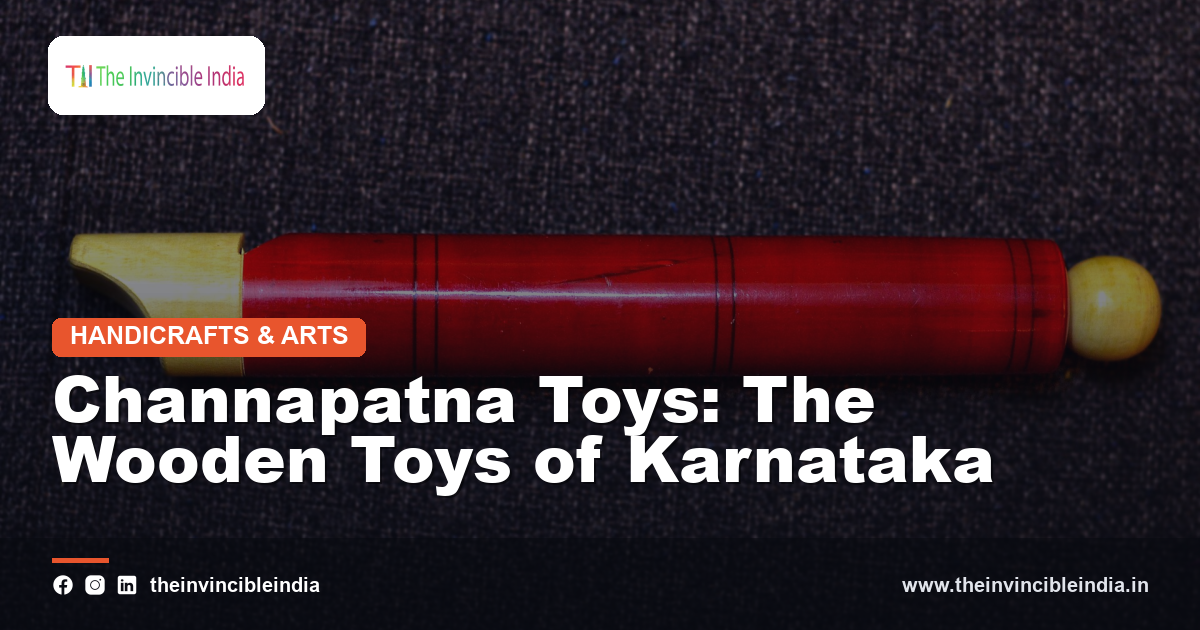
Channapatna toys are the colourful, lacquered wooden toys of Karnataka, made in a small town so famous for them that it is known as the land of toys. Crafted from soft wood, shaped on a lathe and coloured with bright, natural lacquer and dyes, these charming toys, rattles, tops, animals, dolls and educational playthings, are beloved for their beauty, their smooth finish and their safety for children. The craft blends traditional skill with Persian-influenced lacquering, and it is one of the most delightful of India’s handicraft traditions. This guide explores the history of the craft, its famous town, its materials, its making, its safety and appeal, and its living tradition.
Quick Facts
| Detail | Information |
|---|---|
| Type | Lacquered wooden toys and craft objects |
| Region | Channapatna, Karnataka |
| Nickname | Channapatna is known as the town or land of toys |
| Materials | Soft wood, coloured with natural lacquer and dyes |
| Made by | Turning on a lathe and lacquering |
| Recognition | Protected by a Geographical Indication (GI) tag |
The Town of Toys
Channapatna is a small town in Karnataka, on the road between Bengaluru and Mysuru, that has become famous throughout India and beyond for one thing above all: its toys. So central is the craft to the town’s identity that it is affectionately known as the land of toys or the town of toys. For generations, the artisans of Channapatna have crafted colourful wooden toys and objects, and the tradition is woven into the life and economy of the town. This close bond between a place and a craft is at the heart of the Channapatna story, and the town’s name has become synonymous with these charming and beautiful wooden toys.
History and Persian Influence
The craft of lacquered wooden toys at Channapatna has a history reaching back a couple of centuries, and its development is traditionally associated with the influence of Persian artisans and techniques introduced during the rule of the region’s historic rulers. The art of turning and lacquering wood, refined with this Persian influence, took root at Channapatna and grew into the distinctive local craft. Over time the tradition was passed down and developed by generations of local artisans. This blend of introduced technique with local skill and materials created the Channapatna craft as it is known today, a tradition with deep roots in the history of the region.
The Wood
Channapatna toys are traditionally made from a particular soft, light-coloured wood well suited to the craft, easy to turn on a lathe and to shape smoothly. This soft wood takes the lacquer beautifully and can be carved and finished to the smooth surface characteristic of the toys. The choice of the right wood is important to the quality of the finished pieces, and the wood is seasoned and prepared before use. The use of this soft, workable wood is one of the foundations of the craft, allowing the artisans to turn and shape the toys with precision and to achieve the smooth, rounded forms and fine finish for which Channapatna toys are known.
Turning on the Lathe
The characteristic rounded shapes of Channapatna toys are created by turning the wood on a lathe. The artisan mounts a piece of wood on the lathe and, as it spins, shapes it with cutting tools, forming the smooth, symmetrical, rounded forms of tops, rattles, beads, dolls and other objects. This turning is a skilled art, requiring a practised hand and eye to shape the wood accurately and smoothly. Much of the character of Channapatna toys, their rounded, polished forms, comes from this lathe-turning technique. The skill of the turner is central to the craft, and the lathe is the essential tool through which the wooden toys take their shape.
Natural Lacquer and Colour
The bright, glossy colours of Channapatna toys come from lacquer, traditionally coloured with natural dyes and applied in a distinctive way. The lacquer, a natural resinous material, is coloured with vegetable and other natural dyes to produce vivid hues, and it is applied to the wood as the piece spins on the lathe. As the coloured lacquer is held against the turning wood, the friction and heat help it spread and adhere, coating the object in bright, glossy colour. The surface is then polished, often using a leaf, to a smooth shine. This use of natural, coloured lacquer is central to the beauty and the safety of the toys.
The Lacquering Process
The application of the lacquer is a distinctive and skilful part of the Channapatna craft. As the turned wooden object spins on the lathe, the artisan presses sticks of coloured lacquer against it, so that the heat of the friction melts the lacquer and transfers the colour onto the wood, building up a smooth, even coating. Different colours can be applied to create patterns and bands, and the surface is burnished to a glossy finish. This method of lacquering on the lathe, using the spinning motion and friction to apply and smooth the colour, is characteristic of the craft and requires skill and experience to achieve an even, beautiful and durable finish.
Safe Toys for Children
One of the great virtues of Channapatna toys is that they are safe for children, made from natural materials without harmful chemicals. Because the toys use natural wood and natural, non-toxic lacquer and dyes, they are free from the harmful substances found in some other toys, making them safe even for very young children who may put toys in their mouths. This safety, combined with their smooth finish and pleasing forms, has made Channapatna toys especially valued as playthings for babies and small children. In an age of concern about the safety of mass-produced toys, the natural, non-toxic character of Channapatna toys is a major part of their appeal.
The Range of Toys
Channapatna is famous for a delightful range of toys and objects. Traditional products include spinning tops, rattles, stacking and nesting toys, dolls and figures, pull-along toys, beads, and educational toys designed to help children learn colours, counting and coordination. Alongside the toys, the craft also produces decorative and useful objects such as ornaments, keychains, jewellery and home decor. This variety, from playthings for the youngest children to decorative items for adults, gives the craft a broad appeal. The adaptation of the tradition to educational toys and to contemporary decorative products has helped it thrive, while the classic wooden toys remain beloved.
A Craft of the Community
The making of Channapatna toys is deeply woven into the life of the town and supports a large community of artisans and their families. Many households are engaged in the craft, and the work is often shared among family members, with different people carrying out the various stages of turning, lacquering, assembling and finishing. The craft is a vital part of the local economy and identity, and the knowledge and skills are passed down within the community. This community basis, with the craft embedded in the daily life and livelihoods of the town, is central to the tradition, and the well-being of the craft is bound up with the well-being of the artisan community of Channapatna.
Challenges from Mass Production
Like many traditional crafts, Channapatna toys have faced challenges, especially competition from cheap, mass-produced plastic toys, which for a time threatened the livelihoods of the artisans and the survival of the tradition. The influx of inexpensive factory-made toys made it harder for the handmade wooden toys to compete on price. Meeting this challenge has required efforts to promote the special qualities of Channapatna toys, their beauty, their safety and their handmade character, and to find new markets and products. Growing awareness of the value of natural, safe, handmade toys has helped, but competition from mass production remains an ongoing challenge for the craft.
Revival and Innovation
In recent times, the Channapatna craft has been supported and revived through the efforts of designers, organisations and government, who have worked to promote the toys, improve designs and open new markets. Contemporary designers have collaborated with the artisans to create new products and modern designs alongside the traditional toys, appealing to new customers who value handmade, natural and safe goods. The craft has also benefited from the growing appreciation of eco-friendly and non-toxic products. These efforts at revival and innovation, combined with the enduring charm and safety of the toys, have helped the tradition adapt and find new life in the modern market.
Recognition and a GI Tag
Channapatna toys are celebrated as one of the distinctive crafts of Karnataka and of India, and the tradition has been recognised and protected. Channapatna toys have been granted a Geographical Indication (GI) tag, which recognises them as a product distinctive to the region and helps protect their authenticity and the interests of the artisans against imitation. The craft is also supported through crafts promotion and a growing market for handmade, safe, natural toys. This recognition and support help sustain the tradition and the livelihoods of the artisan community, and affirm the value of Channapatna toys as a treasured part of India’s craft heritage.
Learning the Craft
The skills of the Channapatna craft are traditionally learned within the community, passed from experienced artisans to the young over years of practice. A learner must master the turning of the wood on the lathe, developing the practised hand and eye needed to shape the toys smoothly and accurately, as well as the distinctive technique of applying the coloured lacquer as the piece spins. Alongside these skills come knowledge of the wood, the lacquer and the dyes, and an eye for form and colour. This gradual, hands-on training, often within families, is how the craft has been handed down through the generations, and it remains essential to preserving the quality and continuity of the Channapatna tradition.
Channapatna Toys Today
Today Channapatna toys continue to be made in the town of toys, cherished across India and around the world for their beauty, their safety and their handmade charm. The artisans continue to turn and lacquer the toys by traditional methods, while designers and organisations help develop new products and markets, and growing awareness of natural, non-toxic toys has renewed appreciation for the craft. GI protection and crafts support work to safeguard the tradition. In their bright natural colours, their smooth turned forms and their safe, eco-friendly making, Channapatna toys remain one of the most delightful and beloved handicraft traditions of India.
Sources & Further Reading
- Ministry of Culture, Government of India, on the craft traditions of Karnataka (indiaculture.gov.in).
- Geographical Indications Registry, Government of India, on the GI status of Channapatna toys and dolls (ipindia.gov.in).
- Development Commissioner (Handicrafts), Ministry of Textiles, on traditional Indian handicrafts.
Frequently Asked Questions
What are Channapatna toys?
Channapatna toys are colourful lacquered wooden toys made in the town of Channapatna in Karnataka, so famous for them that it is known as the land of toys. They are turned from soft wood and coloured with natural lacquer and dyes, and are prized for being safe for children.
Why is Channapatna called the town of toys?
Channapatna is called the town or land of toys because the craft of making lacquered wooden toys is central to the identity and economy of the town, where artisans have made these toys for generations.
Are Channapatna toys safe for children?
Yes. Channapatna toys are made from natural wood and natural, non-toxic lacquer and dyes, without harmful chemicals, which makes them safe even for very young children, and this safety is a major part of their appeal.
How are Channapatna toys made?
Channapatna toys are made by turning soft wood on a lathe to create smooth, rounded shapes, then applying coloured natural lacquer as the piece spins, using the heat of friction to spread the colour, before polishing to a glossy finish.
Are Channapatna toys protected by a GI tag?
Yes. Channapatna toys have been granted a Geographical Indication (GI) tag, which recognises them as a product distinctive to the region and helps protect their authenticity and the interests of the artisans.


