

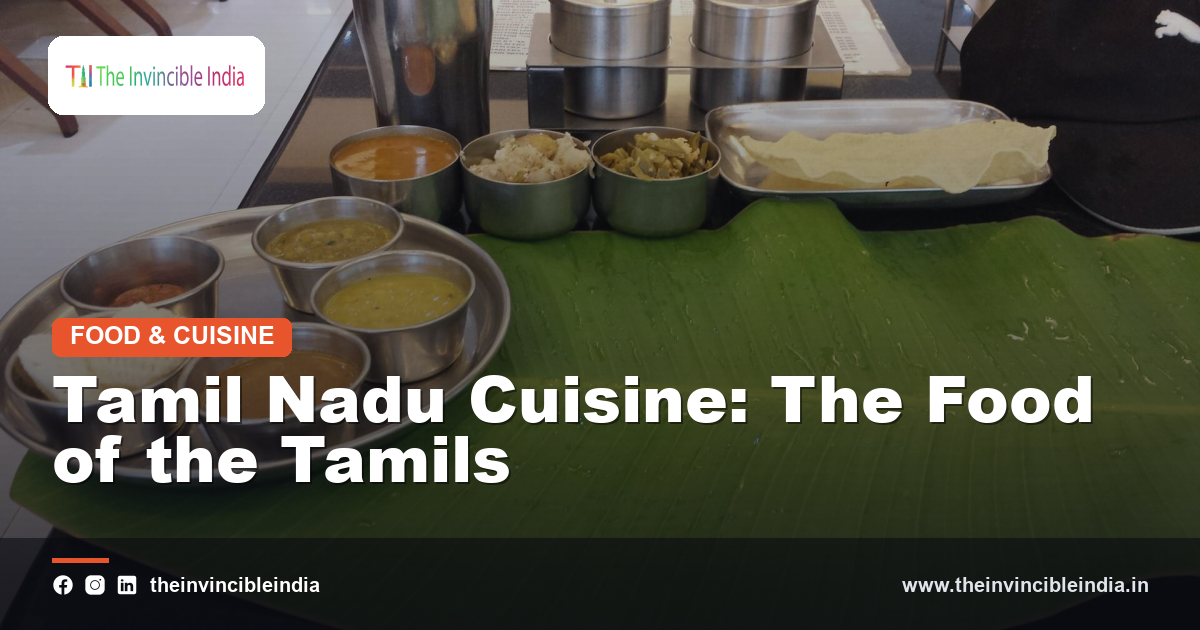
Tamil Nadu cuisine is the flavourful and time-honoured food of the Tamil people, a cuisine built upon rice, lentils and a distinctive repertoire of spices that has been refined over many centuries in the temple towns and villages of the south. Famous for its tangy sambar and rasam, its crisp dosas and soft idlis, and the ceremonial banana leaf meal that gathers many dishes onto a single leaf, Tamil food is at once simple in its staples and remarkably rich in variety. Much like the wider tradition of South Indian breakfast dishes, it reflects a deep culture of rice-based, vegetarian-friendly cooking balanced with vibrant coastal and Chettinad influences. This guide explores Tamil Nadu cuisine, its history, its famous dishes and its enduring place in India’s culinary heritage.
Quick Facts
| Detail | Information |
|---|---|
| Type | The rice-based cuisine of Tamil Nadu |
| Rooted in | Ancient Tamil and temple-town food traditions |
| Famous for | Sambar, dosa, idli and the banana leaf meal |
| Key ingredients | Rice, lentils, tamarind and curry leaves |
| Signature drink | South Indian filter coffee |
| Character | Tangy, aromatic and predominantly vegetarian |
The Food of the Tamils
Tamil Nadu cuisine is the food of the Tamil people, a culinary tradition shaped over many centuries by the region’s fertile river deltas, its long coastline and its deep-rooted temple culture. Rice, lentils and a careful balance of tangy, spiced and aromatic flavours form the foundation of Tamil cooking, and its dishes are known for a clarity of taste that reflects the discipline and refinement of a very old food culture. Everyday meals and grand feasts alike draw on the same core staples, prepared with a consistency passed down through generations of home cooks. As the food of the Tamils, rooted in rice cultivation and temple tradition, this cuisine occupies one of the most respected and recognisable places among the regional cuisines of India, admired for its balance, its subtlety and its enduring continuity.
Rice as the Foundation
Rice forms the true foundation of Tamil Nadu cuisine, eaten at nearly every meal in one form or another, whether as plain steamed rice, as the batter for dosa and idli, or as the base of dishes such as curd rice and tamarind rice. The cultivation of rice across the fertile deltas of the Kaveri and other rivers shaped the agricultural rhythm of the region for centuries, and this abundance made rice the natural centre around which the rest of the meal is built. Lentils, vegetables and spiced accompaniments are arranged around this central grain rather than replacing it. This central place of rice within Tamil Nadu cuisine, present in almost every dish from breakfast to dinner, reflects the deep agricultural heritage of the region and remains the single most defining feature of the Tamil table.
Tamarind and Souring Agents
A defining characteristic of Tamil Nadu cuisine is its skilful use of tamarind and other souring agents, which lend the tangy sharpness found in dishes such as sambar, rasam and tamarind rice. Tamarind pulp, extracted and diluted with water, forms the base of many everyday gravies, cutting through the richness of lentils and vegetables to create a flavour that is at once tangy, savoury and refreshing. Other souring elements, such as tomato and raw mango, are used in similar fashion depending on the season and the dish. This reliance on tamarind and souring agents throughout Tamil cooking gives the cuisine its distinctive tang, and it is this careful balancing of sour, spicy and savoury notes that sets Tamil Nadu food apart from many other regional cuisines of India.
Spice Blends and Aromatics
Tamil Nadu cuisine relies on its own distinctive spice blends, most notably the aromatic sambar podi and rasam podi, freshly ground mixtures of lentils, dried chillies and spices that give the region’s signature dishes their characteristic depth. Mustard seeds, curry leaves and asafoetida are tempered in hot oil at the start or end of cooking, a technique known as tadka or thalippu, releasing fragrance that perfumes the entire dish. These aromatics are considered essential rather than optional. This careful use of spice blends and aromatics, ground fresh and tempered with skill, is at the very heart of Tamil Nadu cuisine, and the fragrance released by mustard seed and curry leaf in hot oil remains one of the most recognisable sensory signatures of a Tamil kitchen.
Tiffin and Breakfast Culture
Tamil Nadu is closely associated with the culture of tiffin, the light, savoury breakfast and snack dishes such as idli, dosa, vada and upma that are enjoyed throughout the day rather than only in the morning. These dishes, many of them made from fermented rice and lentil batters, are prized for being both nourishing and easy to digest, and they are served with coconut chutney and sambar as a matter of course. Tiffin is eaten at home, in small eateries and in grand restaurants alike. This rich tiffin and breakfast culture, built around fermented batters and served with chutney and sambar, is one of Tamil Nadu’s most celebrated culinary contributions, admired and adopted across India and increasingly around the world.
Sambar, Rasam and the Everyday Meal
No description of Tamil Nadu cuisine is complete without sambar and rasam, the two soupy preparations that anchor the everyday meal alongside rice. Sambar, a lentil stew cooked with vegetables, tamarind and spice, provides substance and warmth, while rasam, a thinner, peppery and tangy broth, is prized both for its comforting flavour and for its reputation as an aid to digestion. Together they are served in careful sequence during a traditional meal. This central role of sambar and rasam within the everyday Tamil meal, each offering its own texture and character, reflects a refined culinary logic built up over generations, and their preparation remains a matter of pride in nearly every Tamil household.
Chettinad Cuisine within Tamil Food
Within the wider tradition of Tamil Nadu cuisine, the food of the Chettinad region stands out for its bold use of spice and its distinctive, freshly ground masalas. Associated with the prosperous trading Chettiar community, Chettinad cooking is known for fiery meat and vegetable curries flavoured with a complex blend of spices such as star anise, fennel and dried chillies, giving it a character noticeably more intense than much of the rest of Tamil food. Its dishes are cooked with considerable patience and skill. This distinctive Chettinad cuisine, bold, aromatic and fiery within the broader Tamil tradition, has become celebrated across India in its own right, admired for the depth and complexity of its spicing.
Street Food and Snacks
Tamil Nadu offers a lively tradition of street food and snacks, from crisp murukku and hot bajji to the savoury vada sold at roadside stalls across cities and towns. These snacks, often fried and generously spiced, are enjoyed at any hour of the day, accompanying tea or coffee as a quick refreshment between meals. Vendors take great pride in perfecting a single dish over years of practice. This vibrant street food and snack culture, offering quick, flavourful bites throughout the day, adds another dimension to Tamil Nadu cuisine beyond its formal meals, reflecting the everyday, accessible pleasures that are woven throughout the region’s food culture.
Sweets and Festive Treats
Tamil Nadu cuisine includes a rich tradition of sweets and festive treats, among them the fudge-like Mysore pak, the syrup-soaked adhirasam and the rice-and-jaggery preparation known as sweet pongal, each reserved for festivals, temple offerings and special family occasions. These sweets rely on jaggery, ghee and rice or lentil flour rather than refined sugar alone, giving them a distinctive depth of flavour tied closely to traditional methods of preparation. Their making is often a shared family activity during festivals. This tradition of sweets and festive treats, prepared with jaggery and ghee for temples and celebrations, adds warmth and ceremony to Tamil Nadu cuisine and marks the important occasions of the Tamil calendar with dishes of great and lasting affection.
Temple Food and Prasadam
Tamil Nadu’s great temples maintain their own long-standing food traditions, preparing prasadam, or sanctified food, that is offered to the deity before being distributed among devotees. Dishes such as sweet pongal and other rice preparations cooked within temple kitchens follow customs observed for centuries, prepared with particular care and often on a very large scale to serve the many pilgrims who visit. This temple food carries deep religious and cultural significance. This tradition of temple food and prasadam, prepared according to long-established custom and shared among devotees, reflects the profound connection between food and faith in Tamil culture, and it remains one of the most enduring aspects of the region’s culinary heritage.
Vegetarian Traditions
Tamil Nadu cuisine is home to a particularly rich vegetarian tradition, built around rice, lentils, vegetables and dairy, and shaped in large part by Brahminical and temple-linked food customs that avoid onion, garlic and certain other ingredients in some households. This vegetarian cooking achieves remarkable variety and depth of flavour through its skilful use of spice, tamarind and fresh coconut, demonstrating that a meal built entirely around plants can be every bit as satisfying as one built around meat. Such meals are typically served on a banana leaf. This strong vegetarian tradition within Tamil Nadu cuisine, achieving great depth of flavour without meat, stands as one of the most accomplished vegetarian culinary cultures found anywhere in India.
Coastal and Non-Vegetarian Fare
Alongside its vegetarian tradition, Tamil Nadu cuisine also includes a flavourful coastal and non-vegetarian repertoire, particularly among communities along the Bay of Bengal coast, where fresh fish, prawns and crab are cooked into tangy, spiced curries. Chettinad cuisine, too, is well known for its spiced chicken and mutton preparations, cooked with the same bold, freshly ground masalas that characterise the region’s vegetable dishes. These non-vegetarian dishes hold an important place in the wider cuisine. This coastal and non-vegetarian fare, tangy with tamarind and rich with fresh seafood or bold Chettinad spice, broadens Tamil Nadu cuisine well beyond its vegetarian reputation and reflects the culinary diversity of the state’s many coastal and inland communities.
The Banana Leaf Meal
One of the most distinctive customs of Tamil Nadu cuisine is the banana leaf meal, in which rice, sambar, rasam, vegetable dishes, pickle and a sweet are all served together on a fresh banana leaf, each item placed in its own traditional position. Eating from a banana leaf is considered both hygienic and auspicious, and the leaf itself is believed to lend a subtle fragrance to the food it holds. This meal is traditionally eaten with the right hand rather than with cutlery. This banana leaf meal, with its careful arrangement of dishes and its symbolic and practical significance, remains one of the most cherished and recognisable customs of Tamil Nadu cuisine, offered on festive occasions and in traditional restaurants across the state.
Filter Coffee Culture
Beyond its meals, Tamil Nadu is famous for its filter coffee, a strong, milky coffee brewed using a traditional metal filter and served frothy in a tumbler set within a small bowl called a dabarah. This coffee, taken first thing in the morning and again in the afternoon, is central to daily life in Tamil households, and the ritual of pouring it back and forth between tumbler and bowl to cool and froth it is itself a small daily performance. Its aroma fills homes each morning. This filter coffee culture, brewed with care and enjoyed as a daily ritual, is one of the most beloved and enduring traditions associated with Tamil Nadu, recognised across India as a hallmark of South Indian hospitality.
Fermentation and Traditional Technique
Fermentation lies at the heart of many classic Tamil Nadu dishes, most notably the batters used for idli and dosa, in which rice and urad dal are soaked, ground and left to ferment naturally overnight before being steamed or cooked on a griddle. This process, refined over generations without the aid of modern technology, not only gives these dishes their light, slightly tangy character but also improves their digestibility and nutritional value. Similar techniques are used in preparing certain pickles and beverages. This reliance on fermentation and other traditional techniques, patiently developed over centuries of home cooking, gives Tamil Nadu cuisine much of its distinctive texture and flavour, and it reflects a deep and practical culinary wisdom carried down through generations.
Tamil Nadu Cuisine Today
Today Tamil Nadu cuisine is celebrated across India and around the world, its dosa and idli served in restaurants far beyond the state, while its sambar, rasam and banana leaf meal continue to be prepared with care in homes throughout Tamil Nadu. Modern eateries and home cooks alike keep the traditions of tiffin, temple food and Chettinad spice alive, ensuring that these dishes remain living practice rather than fading memory. Its influence on the wider idea of South Indian food remains immense. As the flavourful food of the Tamils, tangy, aromatic and deeply rooted in temple and agricultural tradition, Tamil Nadu cuisine stands as one of the great and enduring culinary heritages of India.
Sources & Further Reading
- Ministry of Tourism, Government of India, on the cuisines of India (tourism.gov.in).
- Culinary references on the food traditions of Tamil Nadu.
Frequently Asked Questions
What is Tamil Nadu cuisine known for?
Tamil Nadu cuisine is known for its rice-based dishes, its tangy sambar and rasam, and its crisp tiffin items such as dosa and idli. It is also celebrated for the traditional banana leaf meal and for South Indian filter coffee.
What is the difference between sambar and rasam?
Sambar is a thick lentil stew cooked with vegetables and tamarind, while rasam is a thinner, peppery and tangy broth often taken for its digestive qualities. Both are essential parts of the everyday Tamil Nadu meal, served with rice.
What is Chettinad cuisine?
Chettinad cuisine is a bold, aromatic style of Tamil food associated with the Chettiar community, known for its freshly ground spice blends and fiery meat and vegetable curries. It is considered one of the most distinctive regional styles within Tamil Nadu cuisine.
Why is food served on a banana leaf in Tamil Nadu?
Eating from a banana leaf is considered hygienic, auspicious and traditional in Tamil Nadu, with each dish placed in a customary position on the leaf. The leaf is also believed to lend a subtle fragrance to the food served on it.
Is Tamil Nadu cuisine mostly vegetarian?
Tamil Nadu cuisine has a particularly rich vegetarian tradition rooted in temple and Brahminical food customs, though the state also has a flavourful coastal and Chettinad non-vegetarian repertoire featuring fish, seafood, chicken and mutton.


