

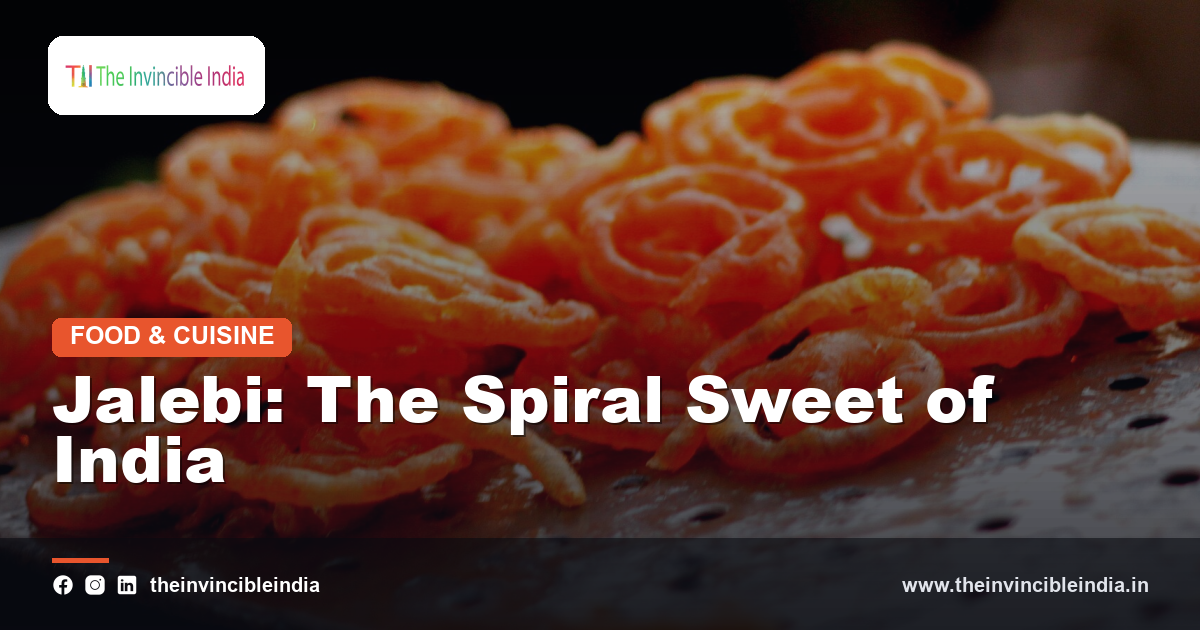
Jalebi is a crisp, deep-fried sweet made by piping a fermented batter into distinctive spiral or pretzel-like shapes, which are then soaked in sugar syrup to produce a dessert that is at once crunchy, chewy, and intensely sweet. Recognisable by its bright orange colour and coiled form, jalebi is sold throughout India at sweet shops, street stalls, and festive gatherings, often enjoyed warm and fresh straight from the frying pan. As one of the standout sweets within regional cuisines of India, jalebi holds a particularly strong association with breakfast in some regions and festive celebration in others, making it one of the most versatile and widely consumed traditional sweets found across the country.
Quick Facts
| Detail | Information |
|---|---|
| Main Ingredients | Fermented flour batter and sugar syrup |
| Preparation Method | Piped, deep-fried, then soaked in syrup |
| Shape | Spiral or coiled |
| Colour | Bright orange to golden |
| Texture | Crisp outside, syrup-soaked inside |
| Occasion | Festivals, weddings, breakfast in some regions |
Origins and Historical Background
Jalebi is widely believed to have arrived in the Indian subcontinent through Persian and Middle Eastern culinary influence, evolving over many centuries into the distinct form recognised across India today. Similar spiral-shaped, syrup-soaked sweets exist in various forms across West and Central Asia, suggesting a shared culinary lineage that predates the sweet’s specific adaptation within Indian cuisine. While exact historical details remain difficult to pin down with certainty, jalebi’s long-standing presence in Indian sweet-making traditions is well established, and it has become so thoroughly integrated into the country’s food culture that it is now regarded as a quintessentially Indian sweet in its own right, despite its cross-regional origins.
The Fermented Batter Base
Jalebi’s distinctive texture begins with a fermented batter typically made from refined flour, sometimes combined with a small amount of yoghurt or a natural fermenting agent, left to rest until it develops a light, slightly airy consistency. This fermentation process, similar in principle to techniques used in other Indian batter-based dishes, contributes to jalebi’s characteristic combination of crispness and chewiness once fried. Getting the batter’s consistency right is considered essential to achieving well-formed spirals that hold their shape during frying while still cooking through evenly, making this an important, technique-driven early stage in jalebi preparation.
Piping the Spiral Shape
The distinctive coiled shape of jalebi is achieved by piping the fermented batter through a cloth or nozzle in continuous, overlapping circular motions directly into hot oil, a technique that requires practised hand control to produce evenly sized, well-formed spirals. Skilled sweet-makers can produce large batches of consistently shaped jalebi with remarkable speed, a skill typically developed through years of practice at sweet shops and street stalls. The specific pattern and thickness of the piped batter influences both the final appearance and the texture of the fried jalebi, making this piping stage one of the most visually distinctive and skill-dependent aspects of the entire preparation process.
Frying to a Crisp Finish
Once piped into hot oil, jalebi is fried until it develops a golden-orange colour and a crisp exterior, a process that happens relatively quickly given the batter’s thin, coiled shape and large surface area exposed to the oil. Achieving the right frying temperature is important, since oil that is too cool can result in jalebi absorbing excess oil and becoming soggy, while oil that is too hot can cause uneven browning before the batter is fully cooked through. This frying stage transforms the soft, fermented batter into a crisp shell capable of holding its shape and texture once it is subsequently soaked in sugar syrup.
Soaking in Sugar Syrup
Immediately after frying, hot jalebi is submerged in warm sugar syrup, allowing it to absorb the sweet liquid through its crisp shell while still retaining a degree of crunch rather than becoming fully soft throughout. This timing is important, as jalebi is typically soaked only briefly compared to some other syrup-based sweets, preserving the contrast between a slightly crisp exterior and a syrup-soaked interior that defines its texture. The syrup itself is often lightly flavoured with saffron or cardamom, adding a subtle aromatic quality to the overall sweetness. This syrup-soaking stage is what ultimately gives jalebi its intensely sweet, sticky character.
Jalebi's Distinctive Orange Colour
Jalebi’s characteristic bright orange colour is typically achieved through the addition of food-safe colouring to the batter, though some traditional preparations rely on natural ingredients such as saffron for a more subtle golden hue. This vivid colouring has become so closely associated with jalebi that it serves as an immediate visual identifier of the sweet, distinguishing it at a glance from other fried Indian desserts. The intensity of the colour can vary from one region or sweet shop to another, reflecting differing local preferences, but the general expectation of a warm orange to golden tone remains a consistent feature across most versions of the sweet sold throughout the country.
Jalebi as a Breakfast Food in Some Regions
In certain parts of India, particularly in the north, jalebi is traditionally eaten as part of breakfast, often paired with a savoury counterpart such as fafda or spiced curd, creating a distinctive contrast between sweet and savoury flavours early in the day. This breakfast tradition sets jalebi apart from many other Indian sweets, which are typically reserved for after meals or festive occasions rather than the start of the day. The pairing of jalebi with savoury items for breakfast reflects a broader regional pattern in Indian food culture where sweet and savoury dishes are sometimes combined within a single meal, offering a flavour experience distinct from more conventionally structured meals.
Jalebi at Festivals and Celebrations
Jalebi holds an important place in Indian festive food culture, commonly prepared and distributed during religious festivals, weddings, and other significant community occasions, often alongside other traditional sweets. Its bright colour and celebratory appearance make it a visually striking addition to festive spreads, while its universal popularity ensures it is well received across a wide range of ages and tastes. Sweet shops frequently see increased demand for jalebi during major festival seasons, and it is commonly offered as prasad, a food offering, at certain religious observances, further reinforcing its cultural and symbolic significance beyond its taste alone.
Regional Variations of Jalebi
While the core preparation of jalebi remains broadly consistent across India, regional variations exist in size, thickness, and specific batter composition, reflecting local preferences and culinary traditions. Some regions favour a thinner, crisper jalebi, while others prepare a thicker, chewier version with a denser texture. Certain areas also have their own specific names or closely related sweets built on a similar fried-and-soaked principle, illustrating how a shared basic concept can produce distinct regional interpretations. These variations, while sometimes subtle, are often a point of regional pride, with local sweet shops known for their particular style of jalebi preparation.
Imarti: A Related Sweet
Imarti, sometimes considered a close relative of jalebi, is made using a fermented lentil-based batter rather than the refined flour batter typical of jalebi, resulting in a denser, flower-shaped sweet with a similarly crisp, syrup-soaked character. Despite their shared frying and syrup-soaking technique, jalebi and imarti are generally regarded as distinct sweets with different textures and flavour profiles, reflecting the different base ingredients used in their batters. This relationship between the two sweets illustrates how a shared technique, piping fermented batter into hot oil before soaking it in syrup, can be applied to different base ingredients to produce recognisably different, though related, desserts.
Jalebi Rabri: A Popular Pairing
A popular way of serving jalebi, particularly in certain northern regions, involves pairing it with rabri, a thickened, sweetened milk preparation, creating a combination that balances the crisp, syrup-soaked jalebi with the smooth, creamy richness of the milk dessert. This pairing, sometimes referred to as jalebi rabri, has become a well-known speciality in its own right, offered at sweet shops and dessert stalls specifically for those seeking a more indulgent presentation than jalebi served on its own. The contrast in texture and temperature between the two components makes this combination a distinctive and widely enjoyed variation on how jalebi can be served.
Jalebi as a Street Food Speciality
Beyond sweet shops, jalebi is a common sight at street food stalls, particularly during evening hours or festival seasons, where vendors fry it fresh in large woks in full view of customers, adding to its appeal as a freshly made, warm treat. This visible preparation process, with jalebi being piped and fried on the spot, has become part of its street food charm, drawing customers who prefer to watch their sweet being made rather than purchasing pre-packaged versions. This street food tradition exists alongside jalebi’s presence in more formal sweet shop settings, reflecting the sweet’s broad accessibility across different types of vendors and price points.
Commercial Production and Packaging
Given jalebi’s enduring popularity, it is produced both at small, traditional sweet shops and by larger commercial manufacturers offering packaged versions with extended shelf life, sometimes sold ready-to-eat or as mixes that require only frying and syrup preparation at home. While packaged jalebi mixes have made the sweet more accessible for home preparation without needing to prepare a fermented batter from scratch, connoisseurs often maintain a preference for freshly fried jalebi served hot, arguing that the texture and flavour are noticeably better than reheated or packaged versions. This tension between convenience and freshness reflects a broader pattern common to many traditional Indian sweets facing modern commercial production methods.
Jalebi in Indian Diaspora Communities
Jalebi has travelled with the Indian diaspora to countries around the world, remaining a popular sweet at cultural festivals, religious celebrations, and family gatherings held by Indian communities internationally. Indian sweet shops and restaurants in cities with significant South Asian populations commonly offer jalebi, helping introduce the sweet to broader international audiences unfamiliar with Indian desserts. Its relatively simple ingredient list and well-documented preparation method have made it possible to recreate jalebi with reasonable authenticity even in locations without easy access to specific Indian ingredients, supporting its continued presence within diaspora food culture across generations.
Preparing Jalebi at Home
Making jalebi at home involves preparing a fermented batter, allowing it to rest for the appropriate period, and then piping it into hot oil in a controlled circular motion before soaking the fried spirals in warm sugar syrup, a process that requires practice to master, particularly the piping technique. Home cooks often use a squeeze bottle or piping bag as a more manageable alternative to the traditional cloth used by professional sweet-makers, making the process more approachable for those without years of practice. Despite the learning curve involved in achieving well-formed spirals, jalebi remains a popular sweet to attempt at home, particularly during festival seasons when families often prepare traditional sweets together.
Health Considerations and Sugar Content
As a deep-fried sweet heavily soaked in sugar syrup, jalebi is generally regarded as an indulgent, occasional treat rather than an everyday food, given its high sugar and oil content. This has not diminished its popularity, though it has led some to view it primarily as a festive or special-occasion sweet rather than a regular dietary item. Awareness of its rich, calorie-dense nature is widespread, and moderation is generally the accepted approach among those who enjoy it regularly. This understanding of jalebi as a treat to be enjoyed occasionally, rather than restricted entirely, reflects a broader, balanced cultural attitude toward traditional Indian sweets more generally.
Jalebi Today
Today, jalebi remains one of India’s most recognisable and widely loved sweets, sold at sweet shops, street stalls, and restaurants across the country, and prepared at home for festivals and family celebrations. Its distinctive appearance, satisfying crunch, and intense sweetness have helped it maintain enduring popularity across generations, regions, and social settings, from humble roadside stalls to elaborate wedding feasts. As Indian sweets continue to gain wider international recognition, jalebi stands as one of the most visually and texturally distinctive representatives of the country’s rich tradition of fried, syrup-based desserts, admired as much for its craftsmanship as for its taste.
Sources & Further Reading
- Ministry of Food Processing Industries, Government of India (mofpi.gov.in).
- Ministry of Culture, Government of India (indiaculture.gov.in).
Frequently Asked Questions
What is jalebi made of?
Jalebi is made from a fermented flour batter, piped into spiral shapes, deep-fried until crisp, and then soaked in sugar syrup.
Why is jalebi orange in colour?
Jalebi’s bright orange colour typically comes from added food colouring, though some traditional versions use saffron for a more natural golden hue.
Is jalebi eaten for breakfast?
In some regions of India, particularly the north, jalebi is eaten for breakfast, often paired with a savoury dish such as fafda.
What is the difference between jalebi and imarti?
Imarti is made from a fermented lentil-based batter and has a denser, flower-like shape, while jalebi uses a flour-based batter and a thinner, spiral shape.
How is jalebi traditionally served?
Jalebi is usually served warm, either on its own or paired with rabri, a thickened sweetened milk preparation, for a richer combination.


