

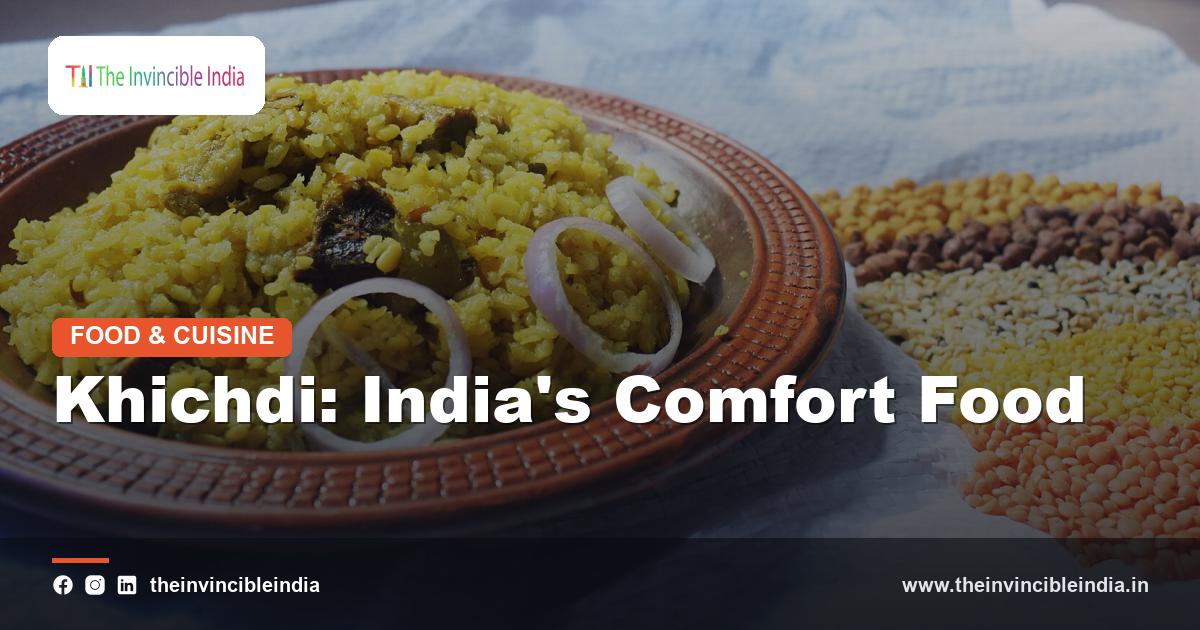
Khichdi is one of India’s oldest and most cherished comfort foods, a simple dish of rice and split lentils simmered together with turmeric until soft, mild and deeply nourishing. Eaten in nearly every region of the country under different names and with different accents of spice, khichdi is valued as much for its gentleness on the stomach as for its warmth and familiarity, making it the food most Indians reach for when unwell, fasting or simply craving something plain and reassuring. Much like the broader family of regional cuisines of India, khichdi takes on distinct local character while remaining recognisably the same humble dish everywhere it is made. This guide explores khichdi, its history, its variations and its enduring place in India’s food culture.
Quick Facts
| Detail | Information |
|---|---|
| Type | A one-pot rice and lentil dish |
| Rooted in | Ancient Indian home cooking and Ayurvedic tradition |
| Famous for | Comfort, simplicity and easy digestibility |
| Key ingredients | Rice, split lentils, turmeric and ghee |
| Eaten for | Everyday meals, convalescence and religious offerings |
| Character | Mild, wholesome and deeply comforting |
India's Simplest Comfort Food
Khichdi is India’s simplest and most enduring comfort food, a dish of rice and split lentils cooked together until soft, seasoned with little more than turmeric, salt and a spoon of ghee. Its appeal lies precisely in this restraint, for khichdi asks nothing elaborate of the cook and offers in return a meal that is warm, filling and gentle on the body, qualities that have kept it central to Indian kitchens for generations. It is prepared in grand kitchens and modest homes alike. As India’s simplest comfort food, built on the plainest of staples, khichdi holds a place in the country’s food culture that is matched by very few other dishes, cutting across region, class and occasion with equal ease.
Rice and Lentils Cooked as One
The essential technique behind khichdi is the cooking of rice and lentils together in a single pot, allowing the two ingredients to soften into one another rather than remaining separate as they would in a plate of rice served alongside dal. This combined cooking produces a texture that is soft, slightly porridge-like and easy to digest, with the starch of the rice and the protein of the lentils blending into a single comforting whole. The proportion of rice to lentils can be adjusted to taste. This practice of cooking rice and lentils as one, rather than as separate dishes, is what defines khichdi and gives it the soft, unified texture for which it is so widely loved.
A Dish of Ancient Lineage
Khichdi is a dish of genuinely ancient lineage within Indian cooking, believed to have been prepared in some form for many centuries as one of the most basic and accessible combinations of grain and legume available to Indian households. Its simplicity and reliance on staple ingredients found in almost every part of the subcontinent allowed it to spread widely and to be adopted, in one variation or another, by nearly every regional cuisine in India. Its long history reflects its practicality. This ancient lineage, built on the most basic and widely available ingredients, helps explain why khichdi has remained a constant presence on Indian tables across so many centuries and regions.
Turmeric and Simple Spicing
Khichdi is defined as much by what it leaves out as by what it includes, relying on a light hand with spice that rarely goes beyond turmeric, cumin and perhaps a pinch of asafoetida. This restrained approach to seasoning keeps the dish gentle and easily digestible, distinguishing it sharply from the boldly spiced curries that dominate much of Indian cuisine. Turmeric in particular gives khichdi its familiar golden colour. This simple spicing, built around turmeric and a very light touch of other seasonings, is central to khichdi’s identity as a soothing, undemanding dish suited to almost any stomach and any occasion.
Ghee: The Finishing Touch
A spoonful of ghee stirred into khichdi just before serving, or drizzled generously over the top, is considered by many an essential rather than optional finishing touch, adding richness, aroma and a smooth, rounded flavour to an otherwise plain dish. This final addition of ghee is often what elevates khichdi from a merely functional meal to one that feels genuinely comforting and complete. Some cooks also temper cumin seeds in the hot ghee first. This finishing touch of ghee, simple yet transformative, is one of the small details that gives khichdi its particular warmth and its lasting place as a beloved comfort food across India.
Khichdi in Ayurvedic Tradition
Khichdi holds a particularly important place within Ayurvedic tradition, where it is regarded as an ideal food for balancing the digestive system and for easing the body back into regular eating after illness or fasting. Its soft texture and mild flavour are seen as gentle on the digestive fire, and it is often recommended as part of cleansing or restorative diets within Ayurvedic practice. Many wellness retreats continue to serve khichdi for this reason. This role within Ayurvedic tradition, as a food thought to soothe and restore, has reinforced khichdi’s long-standing reputation in India as the dish to turn to when the body needs gentleness above all else.
Regional Variations Across India
Khichdi takes on distinctive regional forms across India, from the softly spiced khichdi of the north to the vegetable-laden versions of Gujarat and the richly tempered bhuni khichdi favoured in parts of eastern India. Each region adjusts the balance of rice to lentils, the choice of lentil, and the accompanying spices to suit local taste, so that the dish never feels entirely uniform despite its shared basic structure. Coastal regions sometimes add local vegetables or coconut. This wide range of regional variations, all built on the same core idea of rice and lentils cooked together, shows how a single humble dish can express so much of India’s local culinary diversity.
Khichdi as Food for the Unwell
Across India, khichdi is the food most commonly prepared for those who are unwell, recovering from illness, or simply in need of something light and easy on the stomach. Its soft texture requires little chewing, its mild flavour rarely upsets a delicate appetite, and its balance of grain and lentil provides gentle nourishment without heaviness. Doctors and elders alike often recommend it during recovery. This widespread role as food for the unwell, trusted across generations of Indian households, is one of the clearest expressions of khichdi’s reputation as the ultimate comforting and dependable dish.
Khichdi in Religious Kitchens
Khichdi occupies an important place in religious kitchens across India, prepared as prasadam in temples and distributed to devotees, and cooked in enormous quantities in community kitchens attached to shrines and pilgrimage sites. Its simplicity, affordability and universal acceptability make it ideally suited to being cooked for very large numbers of people at once, without concern for personal spice preferences. Such community meals are often shared without distinction of status. This presence in religious kitchens, feeding devotees and pilgrims in great numbers, reflects khichdi’s deep symbolic association with humility, generosity and shared nourishment within Indian religious life.
Vegetables and Everyday Variations
Beyond its most basic form, khichdi is frequently enriched with vegetables such as potato, carrot, peas and cauliflower, turning a plain convalescent dish into a more substantial and colourful everyday meal suitable for the whole family. These vegetable additions are typically cooked along with the rice and lentils, absorbing the same mild turmeric seasoning and softening into the overall texture of the dish. Some households add a handful of spinach or gourd. This everyday variation of vegetable khichdi, more filling and varied than the plainest version, shows how easily the dish adapts to become a complete and satisfying family meal.
Moong Dal Khichdi
Among the many lentils used in khichdi, split moong dal is especially favoured for its light texture and quick cooking time, making moong dal khichdi one of the most commonly prepared versions of the dish in Indian homes. Its pale yellow lentils cook down smoothly with rice into a soft, easily digestible mixture that is often the first solid food given to infants or offered to those recovering from illness. This version is prized for its gentleness. This particular preference for moong dal khichdi, valued for its lightness and ease of digestion, reflects why this lentil in particular has become so closely associated with khichdi at its most comforting.
Khichdi and the One-Pot Tradition
Khichdi exemplifies India’s long tradition of one-pot cooking, in which grain, lentil and sometimes vegetables are combined in a single vessel to produce a complete and balanced meal with minimal fuss and washing up. This practical approach to cooking has made khichdi a favourite not only in ordinary households but also while travelling, camping or cooking for large gatherings where simplicity is valued above elaborate preparation. Its ease of cooking has kept the tradition alive. This one-pot tradition, expressed so clearly through khichdi, highlights a broader strand of Indian cooking that favours resourcefulness and simplicity without sacrificing nourishment or comfort.
Accompaniments to Khichdi
Khichdi is rarely eaten entirely on its own, and is usually paired with simple accompaniments such as plain yogurt, a wedge of pickle, crisp papad or a drizzle of extra ghee, each adding a contrasting note of tang, crunch or richness to the soft, mild dish. Some households also serve a thin, spiced kadhi alongside khichdi to add a further layer of flavour. These accompaniments are chosen to complement rather than overwhelm the dish. This careful pairing of accompaniments with khichdi, always kept light and simple, allows the dish’s basic comfort to remain the centre of the meal while still offering variety of taste and texture.
Khichdi's Symbolic Place in Indian Food
Because khichdi is prepared and understood in some form across nearly every region of India, it has often been spoken of informally as a dish that reflects the country’s culinary unity, a single idea expressed in countless local variations. Its presence at family tables, in temple kitchens and in hospitals alike gives it a symbolic weight beyond its humble ingredients, representing comfort and nourishment available to everyone regardless of means. Its universality is rarely matched by other single dishes. This symbolic place within Indian food culture, as a dish shared and recognised everywhere, adds a further layer of meaning to what is, at its heart, a wonderfully simple recipe.
Nutritional Balance
Khichdi offers a naturally balanced combination of carbohydrate from rice and protein from lentils, cooked together into a form that is gentle on digestion while still providing steady, sustained energy. This balance, achieved without any elaborate nutritional planning, is part of why khichdi has long been considered a wholesome, complete meal rather than a mere side dish. The addition of vegetables or ghee further rounds out its nutritional profile. This natural nutritional balance found in khichdi, simple yet genuinely complete, is one of the quieter reasons the dish has remained a trusted staple across so many generations of Indian eating.
Khichdi at Festivals and Fasts
Khichdi appears at both ends of the ceremonial calendar in India, prepared as a simple fasting food during religious observances that call for light eating, and also cooked in large batches for community feasts and temple offerings on auspicious days. Its flexibility allows it to be made plainer for fasting or more elaborate with vegetables and spices for festive sharing, depending entirely on the occasion. This dual role reflects its deep cultural adaptability. This presence of khichdi at both festivals and fasts, shaped according to need, shows how a single dish can serve such very different ceremonial purposes within Indian tradition.
Khichdi Today
Today khichdi continues to be prepared daily in homes across India, while also finding a place on the menus of modern restaurants that present it as a wholesome, nostalgic dish for a new generation of diners. Its reputation as gentle, restorative food remains undiminished, and it is still the first dish many Indians think of when illness, fasting or simple tiredness call for something plain and comforting. Wellness trends have only reinforced its appeal. As India’s enduring comfort food, humble in its ingredients yet vast in its reach, khichdi remains one of the most quietly cherished dishes in the country’s entire culinary tradition.
Sources & Further Reading
- Ministry of Ayush, Government of India, on food and wellness traditions (ayush.gov.in).
- Ministry of Tourism, Government of India, on the cuisines of India (tourism.gov.in).
Frequently Asked Questions
What is khichdi made of?
Khichdi is made by cooking rice and split lentils together with turmeric, salt and a little ghee until soft. Vegetables and mild spices such as cumin are often added to create heartier everyday versions of the dish.
Why is khichdi considered a comfort food?
Khichdi is mild, soft in texture and easy to digest, qualities that make it soothing and undemanding on the stomach. Its simplicity and warmth have made it a trusted comfort food in Indian households for generations.
Is khichdi eaten during illness?
Yes, khichdi is one of the most commonly recommended foods during illness or recovery in India, valued for being gentle on digestion while still providing balanced nourishment from rice and lentils.
What are common variations of khichdi?
Common variations include moong dal khichdi, vegetable khichdi enriched with potato and peas, and regional styles such as Gujarati khichdi, each adjusting the lentil, spicing and added ingredients to local taste.
What is khichdi typically served with?
Khichdi is typically served with plain yogurt, pickle, crisp papad and a drizzle of ghee, and sometimes with a thin spiced kadhi, each accompaniment adding contrast to the dish’s soft, mild character.


