

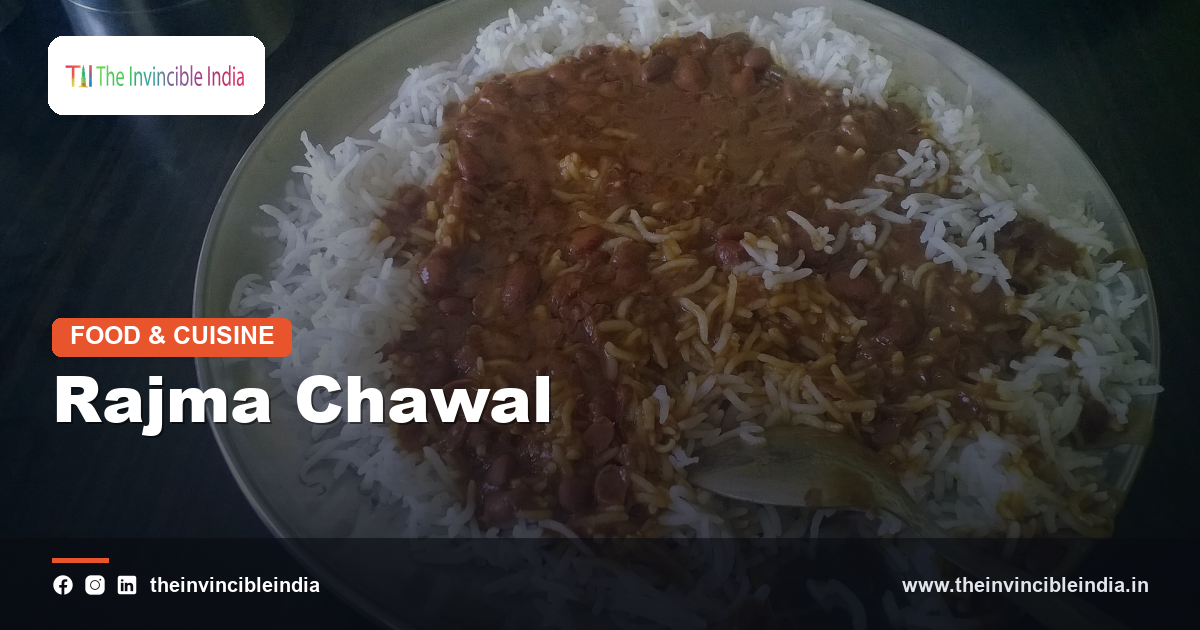
Rajma chawal is one of North India’s most cherished home-cooked meals, pairing a thick, richly spiced kidney bean curry with plain steamed rice in a combination that feels both simple and deeply satisfying. Especially popular in Punjab and Delhi, rajma chawal is the kind of dish families return to again and again, valued for the way its warm, tomato-based gravy soaks into rice to create a meal that is filling without being fussy. It shares much of the same comforting, home-style spirit found in an Indian thali, where a few well-made dishes come together into something greater than their parts. This guide explores rajma chawal, its history, its preparation and its enduring place in Indian homes.
Quick Facts
| Detail | Information |
|---|---|
| Type | Kidney bean curry served with steamed rice |
| Rooted in | Punjabi and North Indian home cooking |
| Famous for | Its thick, tomato-rich rajma gravy |
| Key ingredients | Kidney beans, tomato, onion and garam masala |
| Popular in | Punjab, Delhi and North Indian households |
| Character | Homely, hearty and mildly spiced |
A Homely North Indian Classic
Rajma chawal is a homely North Indian classic, a dish built on the simple but enduring pairing of kidney bean curry, known as rajma, with plain steamed rice, or chawal. Its comfort lies in its familiarity, for rajma chawal is rarely a dish reserved for special occasions but rather one cooked routinely in households across Punjab, Delhi and much of North India as a dependable, satisfying meal. Many families have their own long-guarded recipe. As a homely North Indian classic, built around beans and rice rather than anything elaborate, rajma chawal holds a place in everyday Indian eating that few dishes can rival for sheer consistency of affection.
Rajma: The Kidney Bean Curry
Rajma, the curry at the centre of the dish, is made by simmering soaked and cooked kidney beans in a thick gravy of onion, tomato, ginger, garlic and a blend of warming spices, until the beans are tender and the sauce has reduced to a rich, clinging consistency. The beans themselves absorb much of the gravy’s flavour during slow cooking, becoming soft yet holding their shape. Many cooks pressure-cook the beans for convenience. This kidney bean curry, thick and deeply flavoured, is the true heart of rajma chawal, and its careful, patient preparation is what separates an ordinary version of the dish from an excellent one.
Kidney Beans and Their Preparation
Kidney beans require careful preparation before they are ready for cooking, typically soaked overnight in water to soften them and reduce cooking time, then boiled or pressure-cooked until fully tender before being added to the spiced gravy. This soaking step is considered essential, both for texture and for easier digestion, and is rarely skipped even by cooks pressed for time. Some households add a pinch of soda to speed softening. This careful preparation of kidney beans, beginning long before the gravy is even started, underlines how much quiet patience goes into a truly good plate of rajma chawal.
The Tomato-Onion Gravy Base
The gravy that carries rajma’s flavour is built on a classic North Indian base of finely chopped or pureed onion and tomato, slow-cooked with ginger, garlic and a blend of spices until the raw edges soften into a rich, well-rounded sauce. This base is cooked patiently, often for a considerable time, to allow the oil to separate and the flavours to deepen fully before the beans are added. A little extra ghee is sometimes stirred in near the end. This tomato-onion gravy base, cooked slowly and with care, is what gives rajma its characteristic thickness and depth, forming the foundation upon which the whole dish depends.
Garam Masala and Warming Spice
Rajma relies on a warming blend of spices, most notably garam masala, along with cumin, coriander and a touch of red chilli, each contributing to the curry’s comforting depth without overwhelming the natural earthiness of the kidney beans. These spices are typically added partway through cooking and again as a finishing touch, layering flavour rather than relying on a single burst of seasoning. Fresh coriander leaves are often scattered on top before serving. This use of garam masala and warming spice throughout rajma gives the curry its familiar, comforting aroma and remains central to what makes rajma chawal feel so distinctly homely.
Chawal: Simple Steamed Rice
Chawal, the rice that accompanies rajma, is usually kept deliberately simple, steamed or boiled plain so that it can absorb the rich flavour of the bean curry without competing with it. Long-grain rice is generally preferred for its light, separate grains, which soak up the gravy nicely without turning mushy or clumping together. Some households add a whole spice or two while boiling the rice. This deliberate simplicity of chawal, plain and unadorned, allows the richly spiced rajma to take centre stage, and together the two form the balanced, satisfying combination for which the dish is loved.
Punjabi Origins of the Dish
Rajma chawal is closely associated with Punjabi home cooking, a tradition known for its generous use of ghee, its love of thick, hearty gravies and its preference for meals that are filling and deeply comforting. The dish reflects this same Punjabi sensibility, built around a substantial curry meant to be eaten slowly and enjoyed at leisure rather than rushed through. It remains a staple of Punjabi household cooking. These Punjabi origins, evident in the richness and warmth of the gravy, continue to shape how rajma chawal is prepared and enjoyed across North India today.
A Delhi Household Staple
In Delhi, rajma chawal has become something of a household staple, often prepared on a particular day of the week in many families as a reliable, much-loved meal that requires little planning yet never disappoints. Its popularity in the city has also led to its presence on the menus of countless small eateries and canteens, where it is served as a quick, wholesome lunch. Office canteens in particular favour it for its ease of preparation. This status as a Delhi household staple has helped cement rajma chawal’s reputation as one of North India’s most dependable and beloved comfort meals.
Cooking Rajma at Home
Preparing rajma chawal at home typically begins the night before with soaking the kidney beans, followed the next day by pressure-cooking them until soft and then simmering them in a freshly prepared onion-tomato gravy until the flavours meld together fully. Rice is cooked separately and kept simple, ready to be served alongside. Many families consider a longer simmer to improve the flavour. This home cooking process, though it takes some advance planning, remains how most North Indian households continue to prepare rajma chawal, keeping the tradition of the dish alive across generations.
Accompaniments and Sides
Rajma chawal is often served with simple accompaniments such as a wedge of pickle, a side of yogurt or a small salad of sliced onion and cucumber, each adding a fresh or tangy contrast to the richness of the curry. A raw onion ring topped with a squeeze of lime is a particularly common addition at the table. These accompaniments are kept deliberately light. This modest but effective pairing of accompaniments and sides with rajma chawal enhances the meal without distracting from its central combination of bean curry and rice.
Regional and Household Variations
While the basic idea of rajma chawal remains consistent, individual households and regions bring their own variations to the dish, adjusting the thickness of the gravy, the choice of spices, or the addition of extra vegetables such as potato to make the curry more substantial. Some families prefer a smoother, more blended gravy, while others like the beans and sauce kept more distinct. These small differences are often a matter of family tradition. This range of regional and household variations shows that, for all its simplicity, rajma chawal leaves plenty of room for personal and family style to shine through.
Nutritional Value of Rajma Chawal
Rajma chawal offers a naturally balanced meal, combining the protein and fibre of kidney beans with the carbohydrate of rice to create a dish that is both filling and nourishing without requiring any meat or elaborate preparation. This combination of legume and grain has long been recognised, quite apart from any formal nutritional science, as a satisfying and complete way to eat. Vegetarian households in particular rely on it for protein. This nutritional value, built into the very structure of the dish, is one of the quieter reasons rajma chawal has remained such a trusted staple in Indian homes.
A Dish of Comfort and Nostalgia
For many people who grew up in North Indian households, rajma chawal carries a strong sense of nostalgia, evoking memories of family lunches, school-day meals, or the particular way a mother or grandmother prepared the dish. This emotional association gives rajma chawal a place in personal memory that goes well beyond its ingredients, tying it closely to ideas of home and belonging. Students living away from home often crave it most. This quality of comfort and nostalgia, deeply personal yet widely shared, is part of what makes rajma chawal feel like more than simply a bowl of beans and rice.
Rajma Chawal Beyond North India
Though most closely associated with Punjab and Delhi, rajma chawal has travelled well beyond North India, appearing on menus and in home kitchens across the country as its comforting simplicity has won over diners from other regions. Its combination of familiar ingredients, easily adapted to local taste, has helped it settle comfortably into food cultures quite different from its own origins. It is now common in college hostels nationwide. This spread of rajma chawal beyond North India reflects the dish’s broad, easy appeal and its ability to feel at home almost anywhere it is served.
Rajma Chawal Today
Today rajma chawal remains one of the most beloved comfort meals in North Indian households, prepared regularly in homes, served in canteens and college messes, and increasingly featured on the menus of restaurants keen to offer diners something familiar and reassuring. Its thick, warming curry and simple rice continue to satisfy in a way that few more elaborate dishes can match. Home cooks continue to pass down their own family recipes. As a homely North Indian classic, hearty and endlessly comforting, rajma chawal remains a dish that generations of Indians continue to return to with genuine affection.
Sources & Further Reading
- Ministry of Tourism, Government of India, on the cuisines of India (tourism.gov.in).
- Culinary references on the home food traditions of Punjab and North India.
Frequently Asked Questions
What is rajma chawal made of?
Rajma chawal consists of rajma, a thick kidney bean curry cooked in a spiced tomato-onion gravy, served alongside chawal, or plain steamed rice, which absorbs the flavour of the curry.
Why do kidney beans need to be soaked?
Soaking kidney beans overnight softens them, reduces cooking time and improves digestibility, which is why this step is rarely skipped even when the beans will later be pressure-cooked.
Is rajma chawal a Punjabi dish?
Rajma chawal is closely associated with Punjabi and North Indian home cooking, reflecting a preference in that tradition for thick, hearty gravies and generous use of ghee, though it is now enjoyed across India.
What spices are used in rajma?
Rajma is typically seasoned with garam masala, cumin, coriander and red chilli, along with a base of onion, tomato, ginger and garlic that is cooked slowly to build depth of flavour.
Is rajma chawal a healthy meal?
Rajma chawal combines the protein and fibre of kidney beans with the carbohydrate of rice, making it a naturally balanced and filling vegetarian meal that has long been considered wholesome home cooking.


