

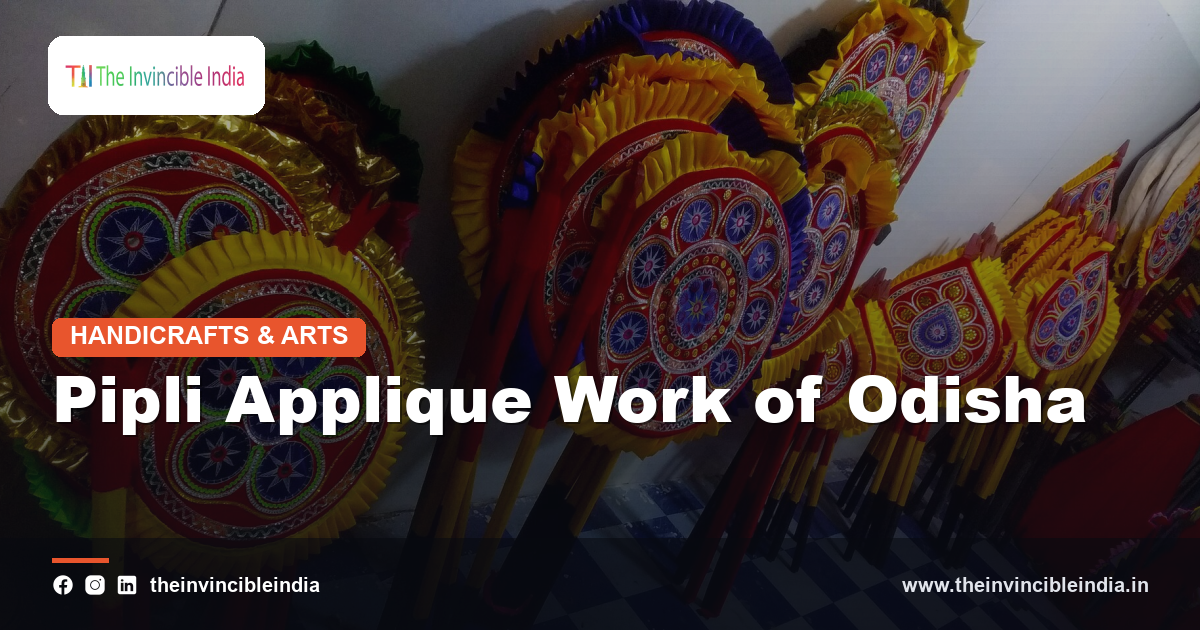
Pipli applique is a vivid patchwork textile craft named after Pipli, a small town in Odisha’s Puri district long associated with producing colourful cutwork fabric for both ritual and decorative use. Artisans stitch together brightly coloured pieces of cloth, often finished with small mirrors, to create bold, layered designs traditionally used for temple canopies, umbrellas, and ceremonial coverings connected to the Jagannath temple tradition. The craft shares its regional roots with other Odisha art forms such as Pattachitra painting, both historically linked to temple ritual needs in Puri. Over time, Pipli applique has expanded well beyond temple use into a widely recognised decorative craft sold across India and abroad.
Quick Facts
| Detail | Information |
|---|---|
| Also Known As | Chandua work |
| Primary Region | Pipli, Puri district, Odisha |
| Core Material | Cotton cloth, mirrors |
| Traditional Use | Temple canopies and umbrellas |
| Technique | Hand-stitched applique and cutwork |
| Recognition | Geographical Indication (GI) tag |
Origins in Puri District
Pipli applique takes its name from Pipli, a small town in Odisha’s Puri district that developed as a specialised centre for producing appliqued cloth used in the region’s temple traditions. The town’s proximity to Puri, home to the Jagannath temple, placed it at the centre of a network of craft communities supplying ritual textiles.
Over generations, artisan families in Pipli refined a distinctive style of cutwork and patchwork that set their textiles apart from plain woven cloth used elsewhere. This close relationship between a specific town and a specific craft has given Pipli applique a strong regional identity, with the name of the town itself becoming synonymous with the technique across India.
The Jagannath Temple Connection
Pipli applique developed largely to serve the textile needs of the Jagannath temple in Puri, one of the most significant pilgrimage sites in eastern India, where large canopies, ceremonial umbrellas, and decorative coverings were required for daily worship and annual festivals. This ritual demand shaped the scale and style of early applique work.
Temple authorities and pilgrims alike sought durable, visually striking textiles that could withstand outdoor use while conveying appropriate religious symbolism, and Pipli’s artisans responded with brightly coloured, sturdily constructed applique pieces. This enduring connection to temple ritual remains a defining part of the craft’s identity, even as its products have diversified well beyond religious use.
Meaning of Chandua and Pipli
Within the craft, the term chandua refers specifically to the large appliqued canopies traditionally hung above deities or ceremonial spaces, while Pipli simply denotes the town where this particular applique tradition is centred. These terms are often used together when describing authentic pieces from the region.
Understanding this terminology helps distinguish genuine Pipli chandua work from applique produced elsewhere in India, since the specific combination of motifs, colour choices, and construction methods associated with Pipli reflects a distinct regional tradition rather than a generic technique. This naming clarity has also supported efforts to protect the craft’s regional identity in wider markets.
The Applique Technique Explained
Applique as practised in Pipli involves cutting shapes from coloured cloth and stitching them onto a base fabric to build up layered, multi-coloured designs, a technique distinct from embroidery, which relies on thread worked directly into a single piece of fabric. This layering approach gives Pipli textiles their characteristically bold, graphic appearance.
Artisans plan compositions carefully before cutting, since the placement and overlap of appliqued shapes determines the final visual balance of the piece. This combination of planning, precise cutting, and careful stitching is central to producing the clean, vivid designs for which Pipli applique is known.
Materials: Cloth, Mirrors and Thread
Pipli applique traditionally uses brightly coloured cotton cloth as its primary material, supplemented with small mirror pieces stitched into the design to catch light and add visual sparkle to finished pieces. Coloured thread is used both for securing appliqued shapes and for decorative stitched detailing.
The choice of durable cotton fabric reflects the craft’s original outdoor and ceremonial use, where textiles needed to withstand weather and repeated handling during festivals and processions. This practical material selection, combined with decorative mirror work, has remained largely consistent even as the craft has expanded into new product categories.
Cutting and Layering Fabric Pieces
Creating a Pipli applique piece begins with cutting individual shapes, such as flowers, birds, or geometric forms, from coloured cloth according to a planned design, often guided by traditional templates passed down within artisan families. Precision at this stage directly affects the neatness of the finished work.
These cut pieces are then layered onto a base fabric in a specific order, allowing artisans to build depth and contrast through overlapping colours and shapes. This layering process requires a clear sense of the overall composition from the outset, since later stitching stages depend on the pieces being correctly positioned before permanent attachment.
Stitching Methods and Finishing
Once shapes are arranged, artisans stitch each appliqued piece securely onto the base fabric, typically using simple, sturdy stitches along the edges to prevent fraying and ensure the design withstands regular use. Edge finishing is an important step in producing durable, presentable textiles.
Finishing touches, including mirror attachment and any additional decorative stitching, are completed after the main applique work is secure, giving the piece its final polished appearance. This careful, multi-stage finishing process reflects the craft’s origins in producing textiles meant for prominent, sustained display in temple and festival settings.
Traditional Motifs and Symbolism
Pipli applique designs commonly feature motifs such as flowers, birds, elephants, and figures drawn from religious and mythological themes, chosen for their decorative appeal as well as their symbolic associations within local tradition. Sun and moon motifs also appear frequently, particularly on ceremonial umbrellas.
These recurring motifs give Pipli applique a recognisable visual vocabulary, allowing viewers familiar with the craft to identify its products even when used in non-traditional contexts such as modern home decor. This continuity of motif across both ritual and commercial products has helped preserve a clear sense of the craft’s traditional character.
Colour Choices and Visual Impact
Bright primary colours, particularly red, yellow, green, and blue, dominate Pipli applique work, chosen for their strong visual impact and their suitability for outdoor display during festivals and processions. These bold colour combinations are central to the craft’s distinctive look.
Contrasting colours are often placed deliberately next to one another to maximise visual clarity from a distance, an important consideration given the craft’s traditional use on large canopies and umbrellas viewed in open, crowded settings. This attention to visibility continues to influence colour choices even in smaller, contemporary applique products.
Ritual Products: Canopies and Umbrellas
Large appliqued canopies, known as chandua, and ceremonial umbrellas remain among the most significant traditional products of Pipli applique, used to shelter deities and important figures during temple ceremonies and processions. These pieces are often substantial in size and richly decorated.
Ceremonial umbrellas produced in Pipli are recognised for their layered, colourful construction and are used in various religious and cultural events across Odisha, extending the craft’s presence well beyond the immediate vicinity of Puri. These ritual products remain a core part of Pipli’s output alongside its more recent commercial diversification.
Rath Yatra and Festival Use
Pipli applique textiles play a visible role during Rath Yatra, the major chariot festival associated with the Jagannath temple, where decorated canopies and coverings adorn the temple chariots as they process through the streets of Puri. This annual event brings significant attention to the craft.
The scale and visibility of Rath Yatra have historically supported sustained demand for high-quality applique work, encouraging artisans to maintain traditional standards of craftsmanship for these prominent ceremonial commissions. This festival connection remains one of the clearest examples of Pipli applique’s continued ritual relevance.
Artisan Families and Hereditary Skill
Pipli applique has traditionally been practised within specific artisan families in and around the town, with skills and design knowledge passed down from one generation to the next through direct apprenticeship rather than formal training. This hereditary transmission has helped preserve particular stylistic details over time.
Many households in Pipli continue to combine applique work with other livelihoods, reflecting the craft’s integration into the broader economic life of the town. This family-based structure, while supporting continuity, has also meant that the craft’s survival depends significantly on younger generations choosing to continue the tradition.
Diversification into New Products
Beyond temple canopies and umbrellas, Pipli artisans now produce a wide range of applique goods, including bags, lampshades, garden umbrellas, wall hangings, and decorative home furnishings aimed at broader domestic and tourist markets. This diversification has helped sustain demand for the craft beyond its original ritual purpose.
Adapting traditional motifs and techniques to smaller, more portable products has allowed Pipli applique to reach buyers who may have no direct connection to its temple origins, while still showcasing the same fundamental cutwork and colour techniques. This expansion has been important to the craft’s continued commercial viability.
Tourism and Commercial Growth
Pipli has become a recognised stop for visitors travelling to Puri, with roadside shops and workshops displaying colourful applique products that attract both domestic and international tourists. This tourism-driven demand has provided an important additional market alongside traditional temple commissions.
Government emporiums and craft fairs across India also feature Pipli applique products, helping extend the craft’s reach well beyond Odisha itself. This growing commercial visibility has supported livelihoods for many artisan families while introducing the craft to audiences unfamiliar with its ritual origins.
Government Support and GI Recognition
Pipli applique has received support from government craft development programmes aimed at improving artisan training, market access, and product quality across the sector. Formal recognition of the craft’s regional identity has also included Geographical Indication status, protecting the name and origin of authentic Pipli work.
Such recognition helps distinguish genuine Pipli applique from imitations produced elsewhere, supporting fair value for the artisans who maintain traditional techniques. Continued institutional support remains important for sustaining both the craft’s economic viability and its distinct regional identity.
Comparison with Other Indian Applique Crafts
Pipli applique can be usefully compared with other regional applique and patchwork traditions found across India, such as the cutwork textiles of Kutch in Gujarat, each shaped by distinct local materials, motifs, and ritual or decorative purposes. These comparisons highlight how a shared basic technique of layering cut cloth can produce strikingly different regional styles.
What distinguishes Pipli applique within this broader family is its strong historical link to a single temple tradition and a single town, giving the craft a more concentrated identity than applique traditions practised more diffusely across wider regions. This combination of technical similarity and distinct regional character situates Pipli firmly within India’s diverse applique heritage while preserving its own recognisable identity.
Pipli Applique Today
Pipli applique today continues to serve both its original ritual purpose within Odisha’s temple traditions and a growing commercial market for colourful, handcrafted textile products. Its bold colours and distinctive cutwork remain instantly recognisable across Indian handicraft markets.
Sustained demand from religious institutions, tourists, and craft retailers alike has helped Pipli’s artisan families continue practising a technique refined over many generations. As long as this combination of ritual and commercial demand persists, Pipli applique is likely to remain one of Odisha’s most visible textile crafts.
Sources & Further Reading
- Ministry of Textiles, Government of India (texmin.nic.in).
- Ministry of Culture, Government of India (indiaculture.gov.in).
Frequently Asked Questions
What is Pipli applique known for?
Pipli applique is known for its brightly coloured cutwork textiles, traditionally used to make temple canopies and ceremonial umbrellas connected to the Jagannath temple tradition in Puri.
What does chandua mean in this craft?
Chandua refers to the large appliqued canopies traditionally used above deities or ceremonial spaces, a term closely associated with Pipli’s applique tradition.
What materials are used in Pipli applique?
Pipli applique primarily uses brightly coloured cotton cloth, small mirror pieces, and coloured thread, materials chosen for durability and visual impact.
How is Pipli applique connected to Rath Yatra?
Pipli applique textiles are used to decorate temple chariots during Rath Yatra, the major festival associated with the Jagannath temple, giving the craft continued ritual visibility.
What products are made with Pipli applique today?
Beyond traditional canopies and umbrellas, Pipli artisans now produce bags, lampshades, wall hangings, and garden umbrellas aimed at wider domestic and tourist markets.


