

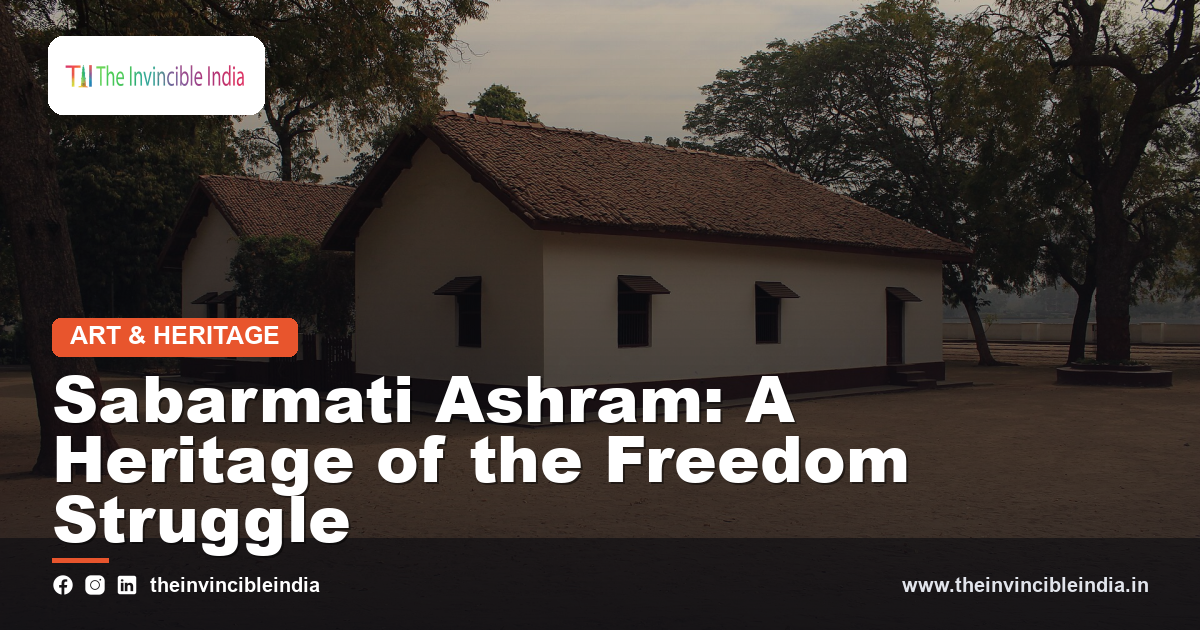
On the quiet western bank of the Sabarmati river in Ahmedabad stands a cluster of low, whitewashed buildings that once formed the home and working base of Mahatma Gandhi during some of the most decisive years of India’s freedom struggle. Unlike the ornate splendour associated with India’s royal palaces, the ashram was built and lived in according to principles of deliberate simplicity, self-reliance and communal discipline. From this modest riverside settlement, campaigns of national significance were planned and a distinctive way of life was practised daily by its residents. This guide explores the ashram’s founding, architecture, daily life and enduring heritage as a memorial to the freedom movement.
Quick Facts
| Detail | Information |
|---|---|
| Location | Western bank of the Sabarmati river, Ahmedabad |
| Founded by | Mahatma Gandhi |
| Type | Residential and working ashram, now a memorial |
| Known for | Base of the freedom struggle and the Dandi March |
| Key structure | Hriday Kunj, Gandhi’s personal cottage |
| Heritage | Preserved as a national memorial and museum |
A Settlement on the Riverbank
On the quiet western bank of the Sabarmati river in Ahmedabad stands a cluster of low, whitewashed buildings that once formed the home and working base of Mahatma Gandhi during decisive years of India’s freedom struggle. The setting was chosen deliberately, close enough to the city to remain connected to public life yet removed enough to allow a disciplined and largely self-sufficient community to take root along its banks. Open courtyards, shade trees and the flowing river nearby gave the settlement a calm, contemplative atmosphere suited to its purpose. As a riverside settlement built for community and reflection, Sabarmati Ashram established from its earliest days the quiet, unassuming character for which it remains known.
What Is Sabarmati Ashram
Sabarmati Ashram refers to the residential and working community that Mahatma Gandhi established on the riverbank, combining living quarters, workshops, a school and communal spaces within a single modest compound. It served simultaneously as a home, a training ground for volunteers in the freedom movement, and a base from which major campaigns of civil resistance were organised and directed. Unlike a monument built for display, the ashram functioned first and foremost as a place of daily work and disciplined living. This description of the ashram as a working community rather than a ceremonial site is essential to understanding why its surviving buildings remain so modest in scale and appearance.
Founding of the Ashram
Gandhi established the ashram on the banks of the Sabarmati after returning to India from years spent abroad, seeking a base from which to develop and practise the principles of truth, non-violence and self-reliance that would guide his public life. The site on the riverbank was selected for its location near Ahmedabad, a city with strong trading and textile traditions that would later prove significant to the ashram’s economic activities. From modest beginnings, the community grew steadily in both size and national importance over the following years. This founding of the ashram as a deliberate base for principled living set the pattern for everything that followed on the site.
Gandhi's Chosen Home
For a significant stretch of his public life, Sabarmati Ashram served as Gandhi’s principal home in India, the place to which he returned between journeys and from which he corresponded with followers, officials and admirers across the country and abroad. His presence gave the settlement its centre of gravity, and decisions taken within its simple rooms carried consequences that extended far beyond the riverbank on which they were made. Visitors, colleagues and petitioners of every kind made their way to the ashram to meet him there. This role of the ashram as Gandhi’s chosen home explains why the site remains so closely and personally associated with his life and work.
Architecture and Simplicity
The buildings of Sabarmati Ashram are deliberately plain, built of local materials in a low, single-storey style with whitewashed walls, tiled roofs and simple verandas that offered shade against the Gujarat heat. There is no ornamental carving, no grand facade and no display of wealth anywhere in the compound, a restraint that mirrored the values of austerity and honest labour that governed daily life within it. Functionality guided every element of the design. This architecture of deliberate simplicity, entirely without ornament or grandeur, stands in quiet contrast to the more elaborate monuments of Indian heritage and remains one of the ashram’s most striking qualities.
Hriday Kunj, Gandhi's Cottage
At the heart of the compound stands Hriday Kunj, the modest cottage that served as Gandhi’s personal residence within the ashram, containing little more than the simple furnishings needed for daily living and work. It was here that he wrote, met visitors, spun cotton thread and conducted much of the correspondence and planning associated with the freedom movement. The cottage’s plainness reflects the same restraint visible throughout the rest of the settlement. This modest cottage, preserved much as it stood during Gandhi’s residence, remains the emotional centre of the ashram and the building most closely identified with his personal presence there.
Daily Life at the Ashram
Life within Sabarmati Ashram followed a disciplined daily routine built around communal prayer, physical labour, study and simple shared meals, with residents expected to contribute to the practical running of the settlement regardless of their background or status. Tasks such as spinning, weaving, cleaning and farming were treated as dignified and necessary work rather than as menial chores, reflecting the ashram’s broader philosophy of equality and self-reliance. This rhythm of communal life gave the settlement its distinctive character. This structured daily life, combining labour, discipline and shared responsibility, was central to the ashram’s identity as a working community rather than merely a residence.
The Ashram as a Training Ground
Beyond providing a home, Sabarmati Ashram functioned as a training ground where volunteers learned the practical and ethical disciplines associated with non-violent resistance, including self-restraint, communal living and manual labour, before carrying these lessons into wider public campaigns. Many who passed through the ashram went on to take active roles in the freedom movement across different parts of the country, carrying its methods and values with them. The ashram thus multiplied its influence far beyond its own walls. This function of the ashram as a training ground for disciplined public action helps explain its outsized influence on the freedom movement relative to its modest physical size.
Spinning and Self-Reliance
The practice of spinning cotton thread by hand held particular importance at the ashram, serving as both a practical activity and a powerful symbol of economic self-reliance intended to reduce dependence on imported cloth. Residents were expected to spin regularly as part of their daily routine, and the resulting handspun cloth, known as khadi, became closely associated with the wider freedom movement as a visible expression of its principles. This simple daily task carried significance well beyond its modest output. This emphasis on spinning and self-reliance at Sabarmati Ashram illustrates how everyday activity was deliberately woven into the larger political and moral aims of the movement it supported.
The Ashram and the Dandi March
Sabarmati Ashram is closely associated with the Dandi March, the notable act of civil resistance against a colonial-era tax on salt that began from the ashram’s gates and proceeded on foot toward the coast of Gujarat. Gandhi is remembered to have expressed a determination not to return to the ashram until the specific goal of the march had been achieved, a vow that lent the departure added symbolic weight. The march drew wide public attention to the campaign it represented. This connection between the ashram and the Dandi March remains one of the most significant chapters in the site’s history and its association with organised civil resistance.
The Ashram Community
The community that lived at Sabarmati Ashram drew members from a wide range of backgrounds, united by a shared commitment to the principles that governed daily life there rather than by caste, wealth or social standing. Men and women, and people from different regions and communities, lived and worked side by side within the compound, a arrangement that itself reflected the ashram’s broader social ideals. Visitors from across India and abroad were also received and welcomed into this community. This inclusive and disciplined community at the heart of the ashram gave practical expression to values that extended well beyond its immediate residents into the wider freedom movement.
Departure and Later Years
Gandhi eventually left Sabarmati Ashram as the freedom movement entered new phases, and the settlement’s role gradually shifted from an active residential community to a site of memory and reflection on the years he had spent there. The buildings were maintained even as their original daily rhythms faded, preserved for the historical and symbolic importance they had come to carry. Later custodians took on the responsibility of protecting the site for future generations. This transition of the ashram from a living community to a preserved historical site marks an important chapter in how its legacy has been maintained since Gandhi’s departure.
Museum and Archives
Today the ashram houses a museum and archive dedicated to preserving photographs, letters, personal artefacts and other material connected to Gandhi’s life and the wider freedom movement he helped to lead. These collections allow visitors to trace the ashram’s history in considerable detail, from its founding through the campaigns organised from its grounds to its transformation into a memorial. Careful curation ensures the material remains accessible for study as well as general visits. This museum and archive function gives Sabarmati Ashram an ongoing educational role, extending its influence to new generations who did not experience the freedom struggle directly.
The Ashram as National Memorial
Sabarmati Ashram is widely regarded as one of the most significant memorials to India’s freedom struggle, a status recognised by the steady stream of visitors, students and dignitaries who come to see the buildings where Gandhi lived and worked. Its preservation is treated as a matter of considerable national importance, reflecting the site’s connection to values that remain central to the country’s founding story. Ceremonies and commemorations are periodically held within its grounds. This standing as a national memorial ensures that Sabarmati Ashram continues to be maintained and visited with the seriousness its historical role deserves.
Visiting Sabarmati Ashram
Visitors to Sabarmati Ashram can walk through its preserved buildings, including Hriday Kunj, and view the museum displays that document Gandhi’s life and the campaigns associated with the site, all within a compound that remains notably quiet and reflective despite its central location near Ahmedabad. The riverside setting and simple architecture together create an atmosphere markedly different from more elaborate heritage sites elsewhere in the country. Guided information helps visitors place each building within its historical context. This experience of visiting the ashram, calm and unadorned, allows guests to encounter its history in an atmosphere consistent with the values it was built to embody.
Conservation and Preservation
Maintaining Sabarmati Ashram’s plain, largely unornamented buildings requires ongoing care suited to their modest original materials, with conservation efforts focused on preserving their authentic simplicity rather than adding grandeur that was never part of the design. Trusts and heritage bodies responsible for the site work to protect the structures, the surrounding grounds and the archival material housed within the museum. This work is carried out with particular sensitivity given the site’s personal and historical significance. This ongoing conservation work ensures that Sabarmati Ashram continues to reflect, as faithfully as possible, the character it held during the years of Gandhi’s residence there.
Sabarmati Ashram Today
Today Sabarmati Ashram stands as one of India’s most visited and revered heritage sites connected to the freedom struggle, drawing visitors who come to walk its grounds, view its museum and reflect on the life led within its simple buildings. Its enduring appeal lies not in architectural grandeur but in the authenticity of a place where history was quietly and deliberately made through disciplined daily practice. The riverside setting continues to offer a calm space for reflection. As a heritage of the freedom struggle preserved in its original modest form, Sabarmati Ashram remains a uniquely powerful and accessible link to a defining chapter of India’s history.
Sources & Further Reading
- Ministry of Culture, Government of India (indiaculture.gov.in).
- Archaeological Survey of India, on heritage sites of the freedom movement (asi.nic.in).
Frequently Asked Questions
What is Sabarmati Ashram?
Sabarmati Ashram is a riverside settlement in Ahmedabad established by Mahatma Gandhi as his home and a working base for campaigns of India’s freedom struggle, combining residential, communal and training functions within a simple compound.
What is Hriday Kunj?
Hriday Kunj is the modest cottage within Sabarmati Ashram that served as Gandhi’s personal residence, where he lived, worked and received visitors during his years at the settlement.
Why is Sabarmati Ashram associated with the Dandi March?
The Dandi March, a notable campaign of civil resistance against a colonial-era salt tax, began from the gates of Sabarmati Ashram, making the site closely connected to this significant episode of the freedom movement.
Why are the ashram's buildings so simple?
The buildings of Sabarmati Ashram were deliberately built without ornament or grandeur, reflecting the values of austerity, self-reliance and equality that governed daily life within the community Gandhi established there.
What can visitors see at Sabarmati Ashram today?
Visitors can walk through the preserved buildings, including Hriday Kunj, and explore a museum and archive documenting Gandhi’s life and the campaigns organised from the ashram during the freedom struggle.


