

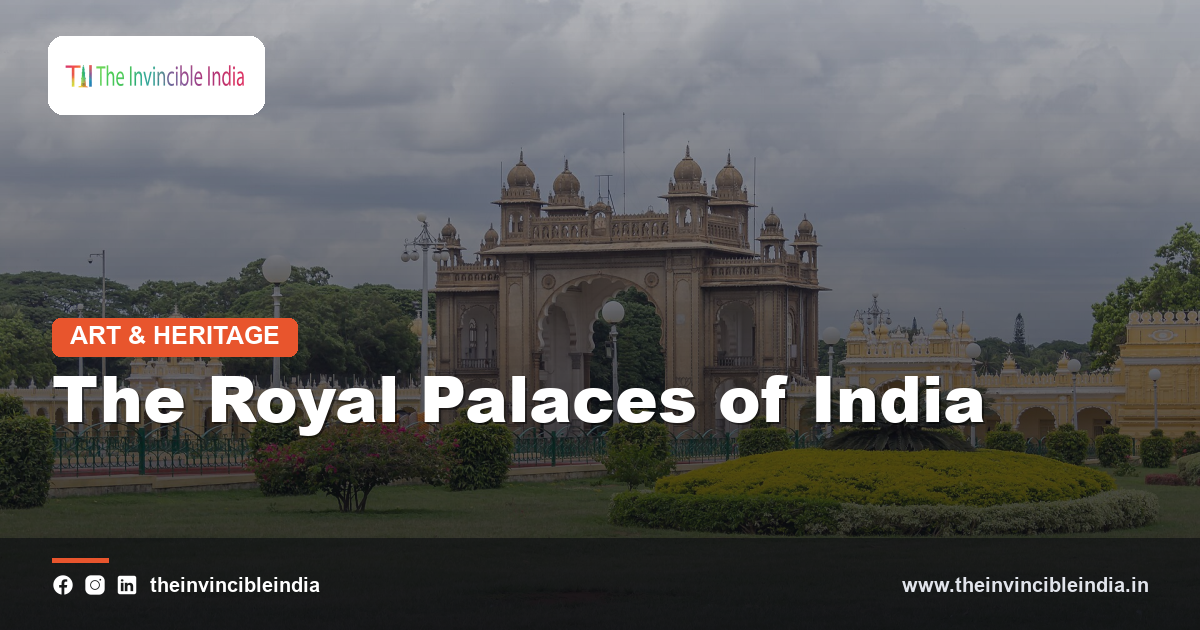
The royal palaces of India are among the most magnificent buildings in the country, splendid residences built by kings and princes to reflect their wealth, taste and authority. Rising above lakes, crowning hilltops or standing at the heart of great cities, these palaces combine soaring halls, intricate carving, painted chambers and sweeping courtyards into settings of extraordinary grandeur, many drawing on the same craftsmanship that shaped India’s Mughal architecture. From Mysore Palace in the south to the City Palace of Udaipur in the west, the royal palaces of India tell the story of dynasties, patronage and artistic ambition across the centuries. This guide explores their architecture, their famous examples and their enduring heritage.
Quick Facts
| Detail | Information |
|---|---|
| Type | The royal residences of India |
| Function | Royal residence, court and ceremonial centre |
| Famous examples | Mysore Palace and the City Palace of Udaipur |
| Features | Durbar halls, courtyards, zenanas and gardens |
| Patrons | Kings, princes and ruling dynasties across the regions |
| Heritage | Monuments of royal art, craft and ceremony |
The Splendour of Royal Palaces
The royal palaces of India stand among the most splendid buildings in the country, residences built by kings and princes to express their wealth, power and refined taste. Unlike the forts, which were built first for defence, the palace was conceived above all for the dignity and pleasure of royal life, its halls, courtyards and chambers designed to impress visitors and to provide a fitting stage for the ceremony and comfort of the court. Every detail, from carved doorway to painted ceiling, was made to reflect royal grandeur. As magnificent expressions of royal wealth, taste and ceremony, the palaces of India occupy a place of pride among the country’s architectural heritage and remain among its most visited and admired monuments.
What Is an Indian Palace
An Indian palace is a grand residence built for a ruling family, combining private apartments with the public halls and courtyards needed for the ceremonies and business of government. Palaces typically include halls of audience for receiving visitors and courtiers, private quarters for the royal family, courtyards for light and gathering, and often temples, gardens and stables within their walls, so that the palace functioned as a complete world in miniature. Its scale mirrored the standing of the dynasty that built it. This character of the Indian palace as both a private home and a public seat of ceremony is fundamental to the tradition and explains the great variety and richness of its architecture across the country.
Palaces as Seats of Royal Life
The palace was the centre of royal life, the place where the ruler slept, dined, held court, received tribute and entertained guests, and where the rhythms of ceremony and daily routine were carefully ordered. Every activity of the court, from morning audience to evening entertainment, had its proper setting within the palace, and the layout of halls and courtyards reflected the etiquette and hierarchy of royal life. The palace thus shaped, and was shaped by, the customs of the court. This role of the palace as the stage for the full round of royal life is essential to understanding why Indian palace architecture is so richly varied in its spaces and functions.
Architecture and Design
Indian palace architecture draws on a rich blend of regional, Islamic and later European influences, producing buildings of remarkable variety in material, style and decoration across the country. Domes, arches, chhatris, jharokhas and finely carved stone screens appear alongside painted walls, mirrored chambers and stained glass, as each dynasty adapted the architectural language available to it to create a distinctive royal style. The result is a rich tapestry of design across the palaces of India. This blending of influences into distinctive regional styles of palace architecture is one of the great artistic achievements of India’s royal patrons and a source of the country’s remarkable architectural diversity.
Courtyards and Gardens
Courtyards and gardens form an essential part of the Indian palace, providing light, air and greenery within the dense mass of walls and chambers, and offering settings for leisure, ceremony and private reflection. Palace courtyards range from small private spaces shaded by trees to grand formal squares used for public ceremony, while adjoining gardens, often laid out with fountains, pavilions and flowering trees, provided the ruler with places of pleasure and repose. These open spaces softened the grandeur of the surrounding halls. This careful integration of courtyards and gardens into the palace plan reflects a deep appreciation of nature and leisure within the tradition of Indian royal architecture.
Durbar Halls and Royal Ceremony
At the heart of many palaces stands the durbar hall, the great hall of audience where the ruler received courtiers, dignitaries and petitioners in a setting of considerable splendour. These halls were often the most richly decorated spaces in the palace, adorned with mirrors, gilding, chandeliers and fine textiles, and designed to awe visitors with the majesty of the throne and the wealth of the dynasty. Ceremony and architecture combined here to project royal authority. This tradition of the durbar hall as the ceremonial and architectural centrepiece of the palace reveals how deeply royal ritual shaped the design of India’s grandest interiors.
Zenana: The Royal Womens Quarters
Many Indian palaces include a zenana, the private quarters reserved for the women of the royal household, designed to provide seclusion, comfort and beauty away from the public halls of the palace. These quarters were often built around their own courtyards and gardens, decorated with fine craftsmanship, and fitted with screened windows and balconies that allowed the women of the court to observe court life and the world outside while remaining unseen. The zenana was thus a world of its own within the palace. This tradition of the zenana as a distinct and often exquisitely designed part of the palace reflects the social customs of the age and adds a further layer of richness to Indian palace architecture.
Mysore Palace of Karnataka
Among the grandest of all Indian palaces is Mysore Palace in Karnataka, a magnificent residence of domes, arches and richly decorated halls built for the Wadiyar dynasty. Its interiors combine marble floors, stained glass, carved doors and a splendid durbar hall, and the palace is especially celebrated for the dazzling illumination that transforms its facade after dark, drawing vast numbers of visitors every year. Its scale and decoration place it among India’s finest royal buildings. This Mysore Palace of Karnataka, celebrated for its architecture, its interiors and its famous illumination, stands as one of the most magnificent and beloved of India’s royal palaces.
City Palace of Udaipur
Equally celebrated is the City Palace of Udaipur, a vast complex of courtyards, balconies and towers rising above the still waters of Lake Pichola in a setting of remarkable beauty. Built and expanded over generations by the rulers of Mewar, the palace combines fortress-like strength with delicate ornamentation, its interiors decorated with mirrors, paintings, and coloured glass, offering some of the finest views and interiors among Indian royal residences. The palace remains a defining landmark of the city. This City Palace of Udaipur, rising above its lake in a fusion of strength and delicate beauty, is one of the most admired and photographed of India’s royal palaces.
Palaces of Rajasthan
Beyond Udaipur, Rajasthan is home to a wealth of royal palaces built by its many princely states, each reflecting the wealth, taste and history of its ruling family. From the pink sandstone palaces of Jaipur to the desert palaces of Jaisalmer and Bikaner, the region offers an extraordinary variety of royal architecture, often combining Rajput tradition with Mughal and later colonial influences in buildings of great charm and splendour. This concentration of fine palaces makes Rajasthan a treasure house of the tradition. This wealth of royal palaces across Rajasthan, each shaped by its own dynasty and history, forms one of the richest and most celebrated bodies of palace architecture found anywhere in India.
Palaces of the Deccan and South
The Deccan and southern India also possess a distinguished tradition of royal palace architecture, shaped by the sultanates and Hindu kingdoms that ruled the region over the centuries. These palaces often show a distinctive blend of Islamic and regional styles, with domes, arches and finely carved stonework combined with local materials and craftsmanship, reflecting the particular history and culture of each kingdom. Their architecture offers a striking counterpart to the palaces of the north. This southern and Deccan tradition of royal palace building adds important variety and depth to the overall story of India’s palace architecture.
Mughal and Indo-Islamic Palace Design
The Mughal court produced palaces of extraordinary refinement, built in red sandstone and white marble and decorated with delicate inlay, carved screens and flowing water channels that embodied the empire’s aesthetic ideals. These palaces, with their halls of public and private audience, their pleasure gardens and their exquisite ornamentation, set a standard of taste that influenced palace building across much of the subcontinent long after the empire itself had declined. Their influence can be traced in palaces far from the Mughal heartland. This Mughal and Indo-Islamic tradition of palace design left a profound and lasting mark on the wider history of Indian royal architecture.
Palaces Turned Museums and Heritage Hotels
With the end of princely rule, many royal palaces found new life as museums, government buildings or heritage hotels, their halls and courtyards opened to the public rather than reserved for a royal household. This adaptive reuse has allowed many palaces to be maintained and restored, their collections of art, arms and royal memorabilia displayed for visitors, while others offer guests the chance to stay amid genuine royal grandeur. This transformation has helped ensure their survival. This conversion of palaces into museums and heritage hotels has proved a vital and successful strategy for preserving India’s royal architectural heritage for future generations.
Royal Patronage of Art and Craft
Royal palaces were also great centres of patronage, where rulers supported painters, craftsmen, musicians and builders whose skills gave the palace its beauty and its treasures. The demand of the court for fine textiles, jewellery, painting and architecture nurtured entire traditions of craftsmanship, many of which still flourish in the regions where royal patronage once sustained them. The legacy of this patronage extends far beyond the palace walls. This royal patronage of art and craft, embodied in the decoration and treasures of the palaces, played a vital role in sustaining many of India’s finest artistic traditions across the centuries.
Preservation of Royal Heritage
The preservation of India’s royal palaces presents a considerable challenge, given their scale, the cost of maintenance and the vulnerability of their painted and carved decoration to time and weather. Government bodies, heritage trusts and, in some cases, the descendants of former royal families work to conserve these buildings, restoring their architecture and safeguarding their collections for future generations, often combining conservation with heritage tourism to fund the work. This balance of care and access is essential to their survival. This ongoing work of preservation is essential to ensuring that the royal palaces of India continue to stand as living monuments rather than fading relics of a vanished court.
The Royal Palaces of India Today
Today the royal palaces of India stand among the country’s most treasured and visited monuments, admired for their architecture, their history and the stories of the dynasties that built them. From Mysore Palace and the City Palace of Udaipur to the many palaces of Rajasthan, the Deccan and the south, these grand residences continue to draw visitors eager to glimpse the splendour of royal life. Their halls and courtyards still echo with the ceremony of a vanished age. As enduring monuments of royal art, craft and ceremony, the palaces of India remain among the most magnificent and evocative treasures of the country’s architectural heritage.
Sources & Further Reading
- Ministry of Culture, Government of India, on the royal heritage of India (indiaculture.gov.in).
- Archaeological Survey of India, on historic palaces and monuments (asi.nic.in).
Frequently Asked Questions
What is the difference between a fort and a palace in India?
A fort was built primarily for defence and often includes a palace within its walls, while a palace was designed chiefly for the dignity, ceremony and comfort of royal life, though some palaces also had defensive walls of their own.
Why is Mysore Palace famous?
Mysore Palace is famous for its domes, arches and richly decorated interiors built for the Wadiyar dynasty of Karnataka, and especially for the spectacular illumination that lights up its facade after dark, drawing large numbers of visitors.
What makes the City Palace of Udaipur special?
The City Palace of Udaipur is celebrated for rising above Lake Pichola in a striking combination of fortress-like strength and delicate ornamentation, with interiors decorated in mirrors, paintings and coloured glass built up over generations of the Mewar dynasty.
What is a zenana in an Indian palace?
A zenana is the private quarters of an Indian palace reserved for the women of the royal household, typically built around its own courtyards and gardens and fitted with screened windows that allowed observation of court life while preserving privacy.
What happened to Indian royal palaces after independence?
Many royal palaces were converted into museums, government buildings or heritage hotels after the end of princely rule, a transformation that has helped preserve their architecture and collections while giving the public and visitors access to their grandeur.


