

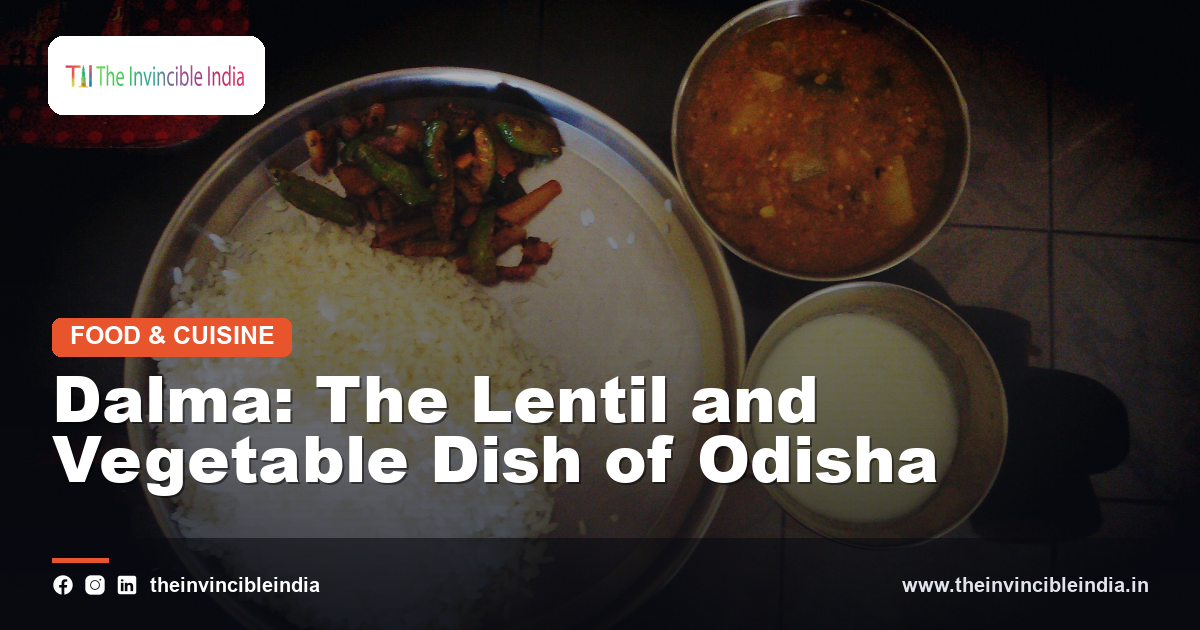
Dalma is the quiet centrepiece of the Odia table, a nourishing preparation in which lentils and a generous assortment of vegetables are cooked together until soft, then finished with a fragrant tempering. It is eaten daily in homes across the state, served at festivals and ceremonies, and closely linked to the vegetarian traditions of Odisha’s temple kitchens. Simple in concept yet layered in flavour, it reflects the Odia preference for gentle spicing and seasonal produce, and it holds an honoured place within the wider Odia cuisine. This guide explores dalma, its ingredients, its method, its cultural meaning and its continuing importance in Indian food heritage.
Quick Facts
| Detail | Information |
|---|---|
| Type | Lentil and vegetable dish |
| Region | Odisha, eastern India |
| Main ingredients | Split lentils, seasonal vegetables, ghee |
| Flavour | Mild, earthy, lightly sweet and aromatic |
| Served with | Steamed rice and simple fried sides |
| Cultural link | Everyday meals, festivals and temple offerings |
What Is Dalma
Dalma is a traditional Odia dish in which split lentils are boiled together with a mixture of vegetables, producing a thick, soothing stew that is both a staple and a delicacy. The name is commonly understood as a joining of the words for lentil and vegetable, which neatly describes the dish itself. Unlike a plain dal, it carries the sweetness and texture of several vegetables, and unlike a vegetable curry, it has the creamy body of cooked lentils. Eaten with steamed rice, it forms a complete and balanced plate. As a dish that blends lentil and vegetable into a single comforting whole, dalma remains one of the most recognisable culinary symbols of Odisha.
A Dish of Everyday Odisha
In most Odia households, dalma is not reserved for special occasions but appears regularly at lunch and dinner, adapting to whatever vegetables the season and the market provide. Its appeal lies in its flexibility, since a cook can add or remove vegetables without losing the essential character of the dish. Families often have their own preferred proportions and tempering habits, handed down across generations and refined through daily practice. Because it is wholesome, economical and easy to digest, it suits every age group and every kind of meal. This everyday presence in kitchens throughout the state explains why dalma is regarded less as a recipe than as a living part of Odia domestic life.
The Role of Lentils
The lentil is the foundation of dalma, and the most commonly used variety is the split pigeon pea, known widely as toor or arhar dal. Many cooks lightly roast the dal before boiling it, a step that deepens its aroma and gives the finished dish a gently nutty character. Others use split chickpeas or moong dal depending on household habit and availability. The lentils are cooked until they break down and thicken the liquid, binding the vegetables into a unified preparation. Their protein and fibre make the dish substantial, especially in a largely vegetarian diet. Lentils therefore supply both the body and the nourishment of dalma, and no version of the dish is complete without them.
Vegetables in the Pot
Vegetables give dalma its distinctive texture and natural sweetness, and the choice usually follows the season. Commonly used ingredients include raw banana, pumpkin, brinjal, papaya, sweet potato, yam and various gourds, cut into sizeable pieces so that they hold their shape during cooking. Starchy vegetables such as yam and raw banana add substance, while gourds and pumpkin contribute softness and mild sweetness. Leafy additions are sometimes included when available. The variety of vegetables is part of the dish’s charm, as each combination produces a slightly different flavour and colour. By drawing on what is fresh and local, dalma shows how Odia cooking naturally respects the rhythm of the agricultural year.
The Cooking Method
Traditional dalma is cooked gently and in stages, so that each ingredient reaches the right texture. The lentils are usually boiled first with turmeric until they are tender, while the harder vegetables are added at a point that allows them to cook through without disintegrating. Salt and a little jaggery or sugar are often introduced to balance the flavours. Many households still prefer to prepare it in earthen or heavy-bottomed vessels, which hold heat evenly and lend a quiet earthiness to the food. The slow simmering allows the vegetable juices to merge with the lentil broth. Patient, unhurried cooking is therefore the heart of the dalma method, and it is what gives the dish its depth.
The Tempering That Defines the Dish
The final flourish of dalma is the tempering, known in Odia kitchens as a chhunka, in which whole spices are briefly fried in hot ghee or oil and poured over the cooked dish. The aromatic burst transforms a mild stew into something fragrant and memorable. Dried red chillies, cumin and bay leaf are frequent choices, and many cooks use a blend of whole spices associated with eastern Indian cooking. The sizzling fat carries the aroma into every spoonful as the tempering is stirred through. Because the tempering is added at the very end, its flavours remain bright and distinct. This last step is what lifts dalma from a simple lentil preparation into a signature dish of Odia cooking.
Spices and Seasoning
Odia cooking is generally restrained in its use of spice, and dalma illustrates this approach well. Turmeric provides colour, cumin and dried chillies bring warmth, and a small amount of ginger is often added for freshness. Rather than overwhelming the lentils and vegetables, the seasoning is meant to support them, allowing the natural flavour of each ingredient to come through. A touch of sweetness from jaggery or sugar is a characteristic feature, balancing the earthy lentils and the gentle heat of the chillies. This careful, moderate seasoning gives the dish its soothing quality. The balance of mild spice, subtle sweetness and aromatic tempering is a defining mark of dalma and of Odia flavour more broadly.
Grated Coconut and Finishing Touches
Many versions of dalma are finished with freshly grated or lightly roasted coconut, which adds a delicate richness and a pleasing texture. Coconut is widely used along the eastern coast and fits naturally into the Odia kitchen, where it appears in savoury and sweet dishes alike. A spoonful of ghee stirred in at the end rounds out the flavour, while a scattering of fresh coriander is sometimes added for colour and fragrance. These finishing touches are modest but meaningful, turning a humble stew into a more festive preparation. The restraint of the garnish reflects the broader Odia emphasis on harmony rather than excess, and it leaves the lentils and vegetables as the true stars of the plate.
Dalma in the Temple Tradition
Dalma holds a special place in the culinary traditions associated with the great temples of Odisha, particularly the kitchens of the Jagannath Temple in Puri, which are renowned for their vegetarian offerings. Temple-style preparations are generally cooked without onion and garlic, relying instead on the natural flavour of vegetables, lentils, ghee and mild spices. Food prepared in this tradition is first offered to the deity and then distributed to devotees as sacred food. The discipline and purity associated with temple cooking have influenced the way many families prepare dalma at home on religious occasions. This devotional connection gives dalma a spiritual dimension that extends well beyond nutrition and taste.
Serving Dalma with Rice
Dalma is almost always served with steamed rice, the staple grain of Odisha, and the pairing is considered essential to a satisfying meal. The soft rice absorbs the thick, aromatic stew, so that each mouthful combines grain, lentil and vegetable. A drizzle of ghee over the rice before the dalma is added is a common household practice, especially on festive days. Some diners enjoy it warm and loose, while others prefer a thicker consistency that clings to the rice. Served in a simple bowl alongside the main grain, dalma brings balance and nutrition to the plate. The partnership of rice and dalma is one of the most familiar and cherished pairings in Odia dining.
Dalma within the Odia Meal
A traditional Odia meal is composed of several complementary elements, and dalma usually serves as the central lentil preparation. Around it may appear fried vegetables, stir-fried greens known as saga, mashed preparations, a tangy or sweet chutney and sometimes a fish or other non-vegetarian curry in households that eat them. The mild, comforting character of dalma provides a counterpoint to sharper, spicier or crisper accompaniments. Its role is to anchor the meal, bringing warmth and softness to the table. In this way dalma functions as the quiet centre around which the rest of an Odia meal is arranged, and it is rarely absent from a well-planned spread.
Nutritional Character
Dalma is valued as a nourishing and well-balanced dish. The lentils supply plant protein and dietary fibre, while the vegetables add vitamins, minerals and further fibre, and the modest amount of ghee or oil provides energy and carries flavour. Because it is cooked with relatively little fat and mild spices, it is generally gentle on the stomach, which is one reason it is often recommended for children, elders and those recovering from illness. Eaten with rice, it offers a combination of grain and pulse that complements one another nutritionally. This wholesome profile helps explain why dalma has remained a trusted everyday dish, valued as much for its goodness as for its flavour.
Household and Regional Variations
Though the essential idea of dalma is consistent, countless household and local variations exist across Odisha. Some cooks prefer a thick, almost porridge-like texture, while others keep it lighter and more soup-like. The selection of vegetables, the choice of lentil, the style of tempering and the use of coconut or jaggery all differ from kitchen to kitchen. Certain families add specific local greens or seasonal produce, giving their dalma a recognisable signature. These variations are not departures from tradition but expressions of it, since the dish was always meant to adapt to circumstance. The diversity of dalma across homes and districts demonstrates the creative flexibility that keeps a traditional dish alive.
Dalma at Festivals and Ceremonies
Beyond daily meals, dalma appears on festive tables and at important family occasions in Odisha. Its presence in temple food and in offerings makes it a natural choice for religious celebrations, when households prepare it with particular care and often in the temple-style manner without onion and garlic. At weddings, community feasts and festival gatherings, it is typically one of several vegetarian dishes served on a banana leaf or plate alongside rice. Its mild and universally liked flavour makes it suitable for large gatherings of varied tastes. Whether at an ordinary lunch or a major celebration, dalma carries a sense of tradition, and its appearance on the table signals that the meal is authentically Odia.
Tips for Preparing Dalma at Home
Cooks who wish to prepare dalma at home can follow a few general principles drawn from tradition. Lightly roasting the dal before boiling enhances its aroma, and cutting the vegetables into fairly large pieces helps them keep their form. Adding the firmer vegetables earlier and the softer ones later ensures even cooking. A pinch of sweetness balances the spices, and the tempering should always be added at the end so that its fragrance stays fresh. Using good ghee improves both flavour and authenticity. By respecting these simple steps and allowing the dish to simmer patiently, even a beginner can capture the essential character of a classic dalma.
Dalma Today
Today, dalma continues to thrive both in Odia homes and in restaurants that celebrate the cuisine of eastern India. It has also travelled with Odia families across the country and abroad, remaining a taste of home for communities far from the state. Chefs and food writers increasingly recognise it as an outstanding example of regional vegetarian cooking, valued for its balance, restraint and seasonal logic. While modern kitchens may use pressure cookers in place of earthen pots, the essential spirit of the dish endures. As both a daily comfort and a cultural emblem, dalma stands as one of Odisha’s finest contributions to the diverse culinary heritage of India.
Sources & Further Reading
- Ministry of Culture, Government of India (indiaculture.gov.in).
- Odisha Tourism, Government of Odisha (odishatourism.gov.in).
Frequently Asked Questions
What is dalma?
Dalma is a traditional Odia dish in which split lentils are cooked together with seasonal vegetables and finished with a fragrant tempering. It is served with steamed rice and is eaten both daily and on festive occasions.
Which lentils are used in dalma?
The most common choice is split pigeon pea, known as toor or arhar dal, often lightly roasted before boiling. Some households use moong dal or split chickpeas depending on preference and availability.
Does dalma contain onion and garlic?
Everyday home versions may vary, but temple-style dalma is traditionally cooked without onion and garlic. It relies instead on lentils, vegetables, ghee and mild whole spices for its flavour.
What vegetables go into dalma?
Typical choices include raw banana, pumpkin, brinjal, papaya, sweet potato, yam and gourds. The selection changes with the season and the preference of the cook.
What is dalma served with?
Dalma is traditionally served with steamed rice and is part of a larger Odia meal. It is often accompanied by fried vegetables, stir-fried greens and a chutney.


