

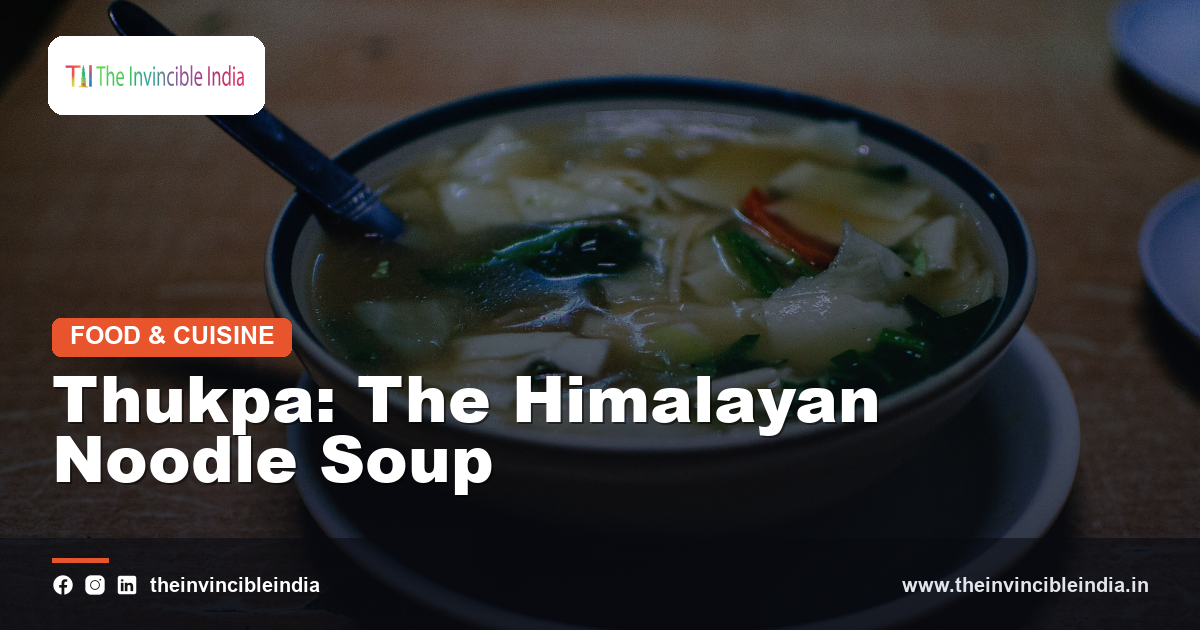
Thukpa is the warming noodle soup of the Himalayas, a generous bowl of noodles, vegetables or meat and aromatic broth that has sustained travellers, monks, farmers and families in cold mountain country for generations. Of Tibetan origin, it has become a staple in Ladakh, Sikkim, Darjeeling, Arunachal Pradesh and other hill regions of India, and it now appears on cafe and restaurant menus in cities far from the mountains. In the manner of many dishes among the regional cuisines of India, it reflects its landscape, offering heat, nourishment and comfort in a single bowl. This guide explores thukpa, its ingredients, regional forms and cultural importance.
Quick Facts
| Detail | Information |
|---|---|
| Type | Hearty noodle soup |
| Origin | Tibetan and Himalayan cuisine |
| Popular in | Ladakh, Sikkim, Darjeeling and the Northeast |
| Key ingredients | Noodles, broth, vegetables or meat, ginger and garlic |
| Served | Piping hot, usually as a full meal |
| Character | Warming, savoury, mild to lightly spicy |
What Is Thukpa
Thukpa is a Himalayan noodle soup in which wheat noodles are cooked in a flavourful broth together with vegetables, meat or both. Substantial enough to serve as a complete meal, it is typically seasoned with garlic, ginger, pepper and fresh herbs, and may be finished with a squeeze of lemon or a spoonful of chilli paste. The name itself comes from Tibetan and is used for several kinds of noodle soup across the region. Eaten piping hot from a deep bowl, thukpa offers immediate warmth to anyone coming in from the cold. Simple in concept but rich in flavour, this single-bowl meal has become one of the signature dishes of Himalayan cooking in India and beyond.
Tibetan Origins
Thukpa is generally associated with Tibetan cuisine, where noodle soups have long formed part of the daily diet in a land of high altitude and long, cold winters. As Tibetan communities moved across the Himalayas and settled in regions such as Ladakh, Sikkim, Dharamshala and Darjeeling, they brought the dish with them, and local people soon adopted it into their own food traditions. Over time, thukpa absorbed influences from neighbouring cuisines, including those of Nepal, Bhutan and the Indian hills. Today it is claimed with pride by several communities, each offering its own distinctive version. This shared and migratory history gives thukpa its place as a truly pan-Himalayan dish.
A Food for Cold Climates
The character of thukpa is closely linked to the demands of life in cold, high mountain environments, where food must provide warmth, energy and sustenance. A hot broth with noodles delivers fluids, carbohydrates and protein in a form that is easy to prepare and comforting to eat. Spices such as ginger, garlic and pepper add a gentle heat that is welcome in winter. Families often cook large pots of thukpa for gatherings, and travellers on high mountain roads rely on roadside eateries for a quick, reviving bowl. This practical and nourishing quality has made thukpa a natural fixture of Himalayan life, shaped by climate and sustained by tradition.
The Noodles
Noodles are the heart of thukpa, and their form varies by region and household. In many traditional versions they are hand-pulled or hand-cut from a simple dough of wheat flour and water, giving them a rustic, slightly uneven texture and a pleasing chew. Elsewhere, cooks use factory-made noodles for convenience, and some recipes include flat, thick or short pieces depending on the style. The noodles are usually cooked directly in the broth or added just before serving so that they stay tender without becoming soft. A well-made noodle absorbs the flavour of the soup while retaining some bite. This central place of the noodle is what makes thukpa a filling and satisfying dish, rather than a simple broth.
Broth and Aromatics
The quality of a thukpa depends heavily on its broth, which may be made from vegetable stock, chicken, mutton or bones simmered gently with aromatics. Ginger, garlic, onion and sometimes spring onion form the flavour base, with black pepper and a touch of soy sauce or salt completing the seasoning. In meat versions, the long simmering extracts a deep, savoury taste that gives the soup its body. The broth is generally clear to lightly cloudy rather than thick and creamy, and it is kept mild so that the vegetables and noodles can be tasted. This careful balance of simple aromatics and patient cooking produces a clean, comforting broth that is the soul of the dish.
Vegetable Thukpa
Vegetable thukpa is widely enjoyed, especially among vegetarian communities and in cities where it has become a popular light meal. Common vegetables include carrot, cabbage, spinach, beans, spring onion, mushrooms and radish, all cut into small pieces so that they cook quickly and blend with the noodles. Some cooks add tofu or paneer for protein. The soup is flavoured with garlic, ginger and pepper, and sometimes lightly thickened. The vegetables retain colour and a slight crunch when cooked briefly, adding freshness to the bowl. Colourful, nourishing and easy to prepare, vegetable thukpa shows how adaptable this mountain dish is to varied dietary preferences and the produce of different seasons.
Meat Thukpa
In traditional Himalayan households, thukpa often contains meat, which provides valuable protein and richness in a cold climate. Chicken is widely used in Indian cities, while mutton is common in Ladakh and other high regions, and pork or beef may appear in parts of the Northeast and Sikkim, depending on local custom. The meat is usually cooked in the broth until tender and may be sliced or shredded and added to each bowl. Some versions include eggs, offering another source of protein. These meat-based thukpas are hearty and warming, and they are often served at gatherings and festivals. Rich yet balanced, the meat version remains the more traditional form of the dish in many mountain communities.
Thenthuk and Related Soups
Thukpa is part of a larger family of Tibetan noodle dishes, and the names are often used with some flexibility. Thenthuk, for instance, is a soup in which pieces of dough are pulled by hand into flat strips and dropped directly into the simmering broth, giving it a rustic, chewy character. Gyathuk is a related noodle soup that is often associated with Chinese-influenced Tibetan cooking, and other variations use different shapes and seasonings. Each version has its own devotees and its own regional connections. This family of related soups shows the diversity within Himalayan noodle cooking, with thukpa serving as the broad and familiar name for a rich tradition of warm, nourishing bowls.
Thukpa in Ladakh
In Ladakh, a high-altitude desert region of cold winters and thin air, thukpa is a staple food and a treasured comfort. Households prepare it in many styles, often with mutton or vegetables, and it appears in simple homes, guesthouses and cafes serving trekkers and travellers. Ladakhi cuisine also includes related dishes such as skyu, a hearty pasta-like stew, and chutagi, another noodle preparation, and these are eaten alongside butter tea and barley-based foods. The dish suits the climate perfectly, offering heat and strength in cold weather. In Ladakh, thukpa is more than a meal; it is a symbol of mountain endurance and hospitality, offered warmly to visitors and neighbours alike.
Thukpa in Sikkim and Darjeeling
In Sikkim and Darjeeling, thukpa is a familiar and popular dish that reflects the region’s blended Tibetan, Nepali and Lepcha food culture. Small cafes and street stalls serve steaming bowls to locals and tourists, often accompanied by momos and a spicy chutney. The soup in this region tends to be light and aromatic, with vegetables, eggs or chicken added according to preference. It is especially welcome during the misty, cool days that characterise the hills. Many families make it at home during the winter months. The thukpa of Sikkim and Darjeeling, comforting and community-minded, is a favourite part of the hill food tradition and a pleasant introduction for visitors to the area.
Thukpa in the Northeast
Thukpa has also found a home in the states of the Northeast, particularly Arunachal Pradesh, where communities such as the Monpa have long maintained their own Himalayan food traditions. In these regions the dish is cooked with local vegetables, herbs and meats, and its flavour may be sharpened with regional chillies. Elsewhere in the Northeast, thukpa has been adopted into restaurant menus and home cooking as a popular and convenient meal. The cultural exchange between Tibetan, Bhutanese and local traditions in the area has produced many interesting variations. This broad acceptance across the Himalayan belt confirms thukpa as a shared and adaptable dish that has become part of the culinary identity of the entire hill region.
Spices, Chutneys and Accompaniments
Thukpa is usually mild to moderately spiced, and diners often adjust the heat at the table. A small dish of red chilli chutney, a spoonful of garlic paste or a splash of vinegar or soy sauce may be offered on the side, allowing each person to personalise the bowl. Fresh coriander and spring onion are commonly sprinkled on top, and a squeeze of lemon can add a pleasant freshness. In many eateries, thukpa is served with steamed momos or a cup of hot tea. These modest accompaniments are an important part of the experience, and the freedom to season a bowl to taste is one of the reasons why thukpa remains so widely enjoyed.
Thukpa in Festivals and Hospitality
In many Himalayan communities, offering a hot bowl of food to a guest is a basic act of hospitality, and thukpa often fills this role. During festivals such as Losar, and at family gatherings and religious occasions, large pots of noodle soup are prepared and shared among relatives and neighbours. Monasteries and community kitchens also serve simple soups to monks, pilgrims and visitors. The dish is easy to scale up for large groups, making it ideal for communal meals. This association with generosity and shared warmth reflects the values of mountain communities, where food is a means of welcoming others and sustaining community bonds through the long, cold season.
Nutritional Character
As a one-bowl meal, thukpa combines carbohydrates from noodles, protein from meat, eggs or tofu, and vitamins and fibre from vegetables, along with the fluids of the broth. Because it is usually cooked with moderate oil, it is generally regarded as a balanced and wholesome dish, particularly when prepared with plenty of vegetables. Garlic and ginger, traditionally valued in many food cultures for their warming qualities, add flavour as well as comfort. The nutritional balance of the dish naturally depends on its ingredients and on how generously fat and salt are used. In sensible portions, thukpa offers a nourishing and satisfying meal, which explains its long-standing popularity in demanding mountain climates.
Preparing Thukpa at Home
Home cooks can prepare thukpa with straightforward ingredients and techniques. The usual approach is to sauté garlic, ginger and onion briefly, add chopped vegetables or meat, pour in stock or water and simmer until flavourful, then cook the noodles in the broth or separately. Seasoning is adjusted with pepper, salt and soy sauce, and fresh herbs are added at the end. Cooks often keep the noodles slightly firm because they continue to soften in the hot soup. The dish is easily adapted to whatever vegetables or protein are at hand, and it can be on the table in a short time. This ease and flexibility make thukpa an excellent everyday meal for families, particularly in cooler weather.
Thukpa Today
Thukpa has moved well beyond its mountain home and is now served in cafes, restaurants and street stalls across India, as well as in Himalayan restaurants around the world. Modern cooks offer versions with different vegetables, creamy broths and fusion flavours, yet the traditional bowl of noodles, broth and aromatics remains the heart of the dish. For many travellers, a bowl of thukpa on a cold mountain evening is among the most memorable meals of a Himalayan journey. The dish continues to connect people with the cultures of Tibet and the Himalayas. As a warming, humble and generous bowl, thukpa remains an enduring emblem of mountain hospitality and shared culinary heritage.
Sources & Further Reading
- Ministry of Culture, Government of India (indiaculture.gov.in).
- Food Safety and Standards Authority of India (fssai.gov.in).
Frequently Asked Questions
What is thukpa?
Thukpa is a Himalayan noodle soup of Tibetan origin, made with wheat noodles, broth and vegetables or meat. It is seasoned with garlic, ginger and pepper and is usually served hot as a complete meal.
Where is thukpa popular in India?
Thukpa is popular in Ladakh, Sikkim, Darjeeling, Arunachal Pradesh and other Himalayan and Northeastern regions. It is also widely available in cafes and restaurants in cities across the country.
What is the difference between thukpa and thenthuk?
Thukpa is the general name for Himalayan noodle soup, while thenthuk specifically uses hand-pulled flat pieces of dough dropped into the broth. The two dishes are closely related and share a similar warming character.
Can thukpa be made vegetarian?
Yes, vegetable thukpa is widely made with carrot, cabbage, beans, spinach and mushrooms in a vegetable broth. Tofu or paneer is sometimes added for extra protein.
What is thukpa usually served with?
It is often served with a spicy red chilli chutney, a squeeze of lemon and fresh coriander or spring onion. In many places it is enjoyed alongside steamed momos or a cup of hot tea.


