

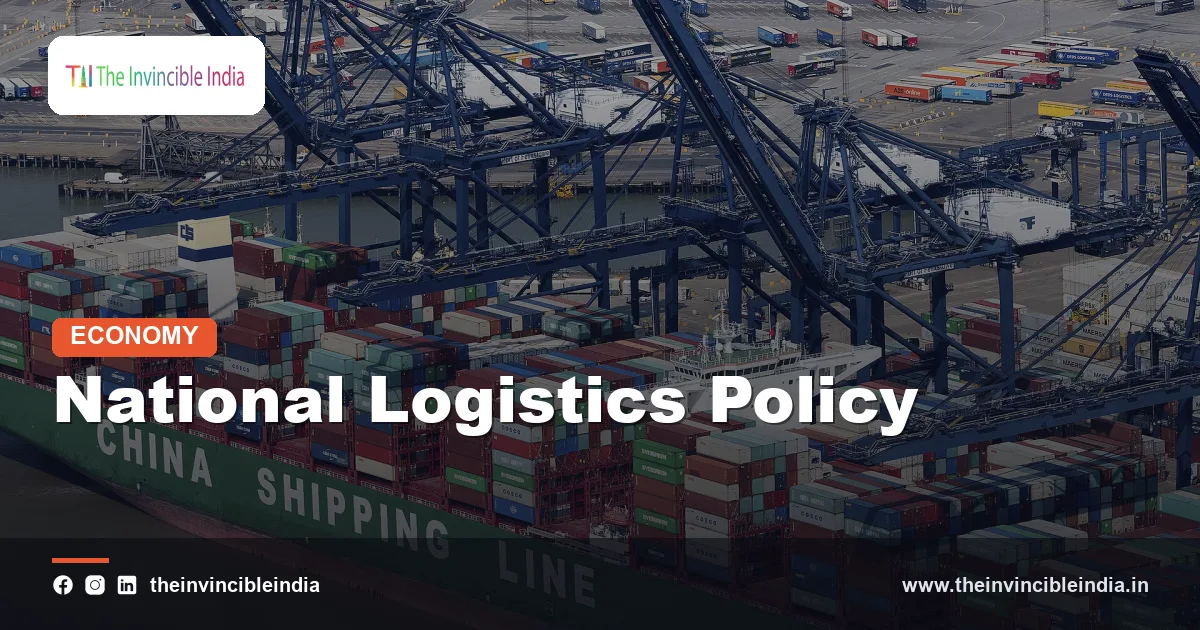
Moving goods across a country as vast as India is a complex business. A truck carrying vegetables from a farm gate, a container leaving a factory for a port or a parcel travelling between two cities passes through multiple agencies, documents, checkpoints and modes of transport. The National Logistics Policy, launched in September 2022, is the government’s attempt to make this chain faster, cheaper and more predictable by tackling fragmentation in rules, infrastructure and data.
The policy matters because logistics is a hidden cost in every product. When transport, warehousing, handling and paperwork are expensive and slow, Indian goods become less competitive at home and abroad, and consumers pay more. This explainer looks at the background of the policy, its key components such as the Comprehensive Logistics Action Plan, the Unified Logistics Interface Platform and the LEADS index, its connection with PM Gati Shakti, and the goals the government has set for 2030. 4 October 2026
Quick Facts
| Feature | Details |
|---|---|
| Launched | 17 September 2022 |
| Nodal ministry | Ministry of Commerce and Industry, through the Logistics Division of the Department for Promotion of Industry and Internal Trade |
| Main objective | Reduce logistics costs and improve efficiency across the supply chain |
| Key digital platform | Unified Logistics Interface Platform (ULIP) |
| Action framework | Comprehensive Logistics Action Plan (CLAP) |
| State benchmarking tool | Logistics Ease Across Different States (LEADS) index |
| Companion initiative | PM Gati Shakti National Master Plan (October 2021) |
| Headline goals to 2030 | Bring logistics costs to global benchmarks, improve the World Bank Logistics Performance Index ranking and build a data-driven logistics ecosystem |
What Is Logistics and Why Does It Matter?
Logistics covers the movement, storage and handling of goods from the point of production to the point of consumption. It includes freight transport by road, rail, air, inland waterways and sea, as well as warehousing, packaging, cold chains, customs clearance, last-mile delivery and the paperwork that accompanies each step. In an economy, the efficiency of this system shapes both prices and export competitiveness.
India’s logistics sector employs a very large workforce, ranging from truck drivers and warehouse workers to freight forwarders and customs brokers. The sector is also highly fragmented. A large share of operators are small firms or individual truck owners, and responsibilities are spread over many ministries and departments at the Union and State levels.
The cost problem
For many years, official and industry estimates suggested that logistics costs in India were a high single-digit to low double-digit share of gross domestic product, which was higher than in several advanced economies. The precise figure has been debated, since different studies use different definitions, and it is one reason why the policy places a strong focus on measurement and data. What is widely accepted is that inefficiencies in transport mode mix, delays at terminals and checkpoints, poor warehousing and lack of standardisation add to costs.
Background: The Road to the Policy
The policy did not arrive in isolation. Over the years, India invested in major infrastructure such as the Golden Quadrilateral, the Dedicated Freight Corridors, the Sagarmala port programme and inland waterway development. The Multimodal Transportation of Goods Act, 1993, created a legal framework for moving goods under a single contract using more than one mode. Even so, coordination between modes and agencies remained a challenge.
In 2017, the Ministry of Commerce and Industry created a dedicated Logistics Division, headed by a Special Secretary, to coordinate logistics-related matters across ministries. Later, it was recognised that India needed an overarching national policy that would integrate infrastructure, processes, digital systems and skills. The National Logistics Policy was unveiled in September 2022 alongside the launch of key supporting tools.
Challenges the policy was designed to address
- Heavy dependence on road transport compared with rail and waterways.
- Multiple agencies, each with separate data systems and approvals.
- Dwell time and delays at ports, borders and inter-State checkpoints.
- Lack of uniform standards for warehouses, vehicles and containers.
- Skill gaps and informal employment in the logistics workforce.
- Limited visibility on the location and status of cargo.
Vision, Goals and Targets to 2030
The National Logistics Policy sets out a vision of developing a technologically enabled, integrated, cost-efficient, resilient, sustainable and trusted logistics ecosystem in the country. The aim is to ensure faster and more inclusive growth by enhancing the competitiveness of Indian businesses.
Instead of only stating a single numeric objective, the policy frames goals to be achieved by 2030. Broadly, these are as follows.
- Cost reduction: bring Indian logistics costs in line with global benchmarks, which would mean a substantial reduction as a share of GDP.
- Performance ranking: improve India’s standing in the World Bank’s Logistics Performance Index, with an ambition of featuring among the leading countries by the end of the decade.
- Data-driven decisions: create a decision support mechanism based on reliable logistics data and analytics.
The World Bank’s Logistics Performance Index measures countries on customs, infrastructure, ease of arranging shipments, quality of logistics services, tracking and tracing, and timeliness. India has improved its position in successive editions, and the policy seeks to extend that progress.
The Comprehensive Logistics Action Plan (CLAP)
While the policy sets the direction, the Comprehensive Logistics Action Plan translates it into concrete actions with defined responsibilities and timelines. CLAP covers a series of action areas, each assigned to relevant ministries and agencies for implementation, and is monitored by a high-level group.
Key action areas
- Integrated digital logistics systems: connecting data and platforms of various departments so that documents and approvals can be shared digitally.
- Standardisation of physical assets and benchmarking of service quality: developing common norms for warehouses, containers and vehicles, and measuring performance against agreed standards.
- Human resource development and capacity building: training programmes and certification for logistics professionals.
- State engagement: encouraging States to align their own policies and processes with the national framework.
- Export-import logistics: improving the movement of cargo through ports, airports and borders, including trade facilitation measures.
- Distribution and warehousing: developing modern storage, cold chains and multimodal logistics parks.
- Sector-specific plans: efficient logistics plans for sectors such as coal, steel, cement, food grains, fertilisers and petroleum.
The Unified Logistics Interface Platform (ULIP)
The Unified Logistics Interface Platform is the digital backbone of the policy. It is an interface that connects the existing systems of different ministries, such as those handling roads, railways, aviation, shipping and customs, through application programming interfaces. Rather than building one giant database, ULIP lets authorised users, including private firms and start-ups, query data from multiple sources through a single window.
How ULIP helps
- Single access point: logistics companies do not have to integrate separately with each government system.
- Real-time visibility: information on vehicle movement, cargo status and documentation can be tracked more easily.
- Reduced paperwork: digital verification of vehicles, drivers and goods can lessen manual checks and delays.
- Room for innovation: businesses can build new tools and services using the platform’s data.
ULIP draws on information from systems related to vehicle registration and driving licences, fastag toll payments, railway freight, port operations and customs. The approach follows the same philosophy as India’s digital public infrastructure, where open, interoperable systems let private players build services on a shared base.
The LEADS Index: Benchmarking States
Logistics Ease Across Different States, or LEADS, is an annual index produced by the Ministry of Commerce and Industry to measure logistics performance at the State and Union Territory level. It was first released in 2018 and has been published in several rounds. The index is based on perception surveys of logistics stakeholders and on objective data, and it creates healthy competition among States.
What LEADS measures
| Pillar | What it looks at |
|---|---|
| Infrastructure | Quality of roads, rail connectivity, warehousing, ports and terminals |
| Services | Availability and reliability of logistics services, tracking and cost of operations |
| Operating and regulatory environment | Ease of doing business, approvals, regulatory processes and enabling policies |
In later editions, States have been grouped into categories such as achievers, fast movers and aspirers, which helps in highlighting those that need support. By benchmarking performance, LEADS encourages States to prepare their own logistics policies and to improve infrastructure and processes at the local level.
Standardisation, Skilling and Ease of Logistics
Efficiency does not depend only on roads and ports; it also depends on common standards and trained people. The policy places strong emphasis on both.
Standardisation
Standardising the dimensions of containers and pallets, the specifications for warehouses and the quality of vehicles can help goods move smoothly across modes. Common standards also make it easier to measure performance and to certify service providers. Such work involves coordination between bodies like the Bureau of Indian Standards and the Quality Council of India.
Skilling and workforce development
The policy envisages training programmes for the workforce at various levels, from drivers and loaders to managers and supply-chain analysts. The Logistics Sector Skill Council and educational institutions are expected to expand courses, and universities are encouraged to offer logistics and supply-chain management programmes.
Ease of Logistics and grievance redress
Two institutional mechanisms support implementation. The Ease of Logistics (ELOG) platform allows industry stakeholders to raise operational issues and seek solutions from the government. The System Improvement Group, chaired by the Special Secretary of the Logistics Division, monitors projects and reviews issues that cut across ministries.
Link with PM Gati Shakti
The National Logistics Policy is often described as the companion to PM Gati Shakti, the National Master Plan for multimodal connectivity launched in October 2021. PM Gati Shakti is a digital platform that brings together the infrastructure planning of many ministries, using geospatial mapping, so that projects for roads, railways, airports, ports, mass transport, waterways and logistics infrastructure can be planned in an integrated way.
The two initiatives complement each other. Gati Shakti focuses on building and planning physical infrastructure in a coordinated manner, while the National Logistics Policy focuses on how the infrastructure is used: the processes, services, standards and data systems that determine how efficiently goods move. Together, they aim to cut project delays, avoid duplication and improve last-mile connectivity.
Related infrastructure programmes
- Dedicated Freight Corridors: high-capacity rail routes that separate freight from passenger trains.
- Multimodal logistics parks: hubs that combine storage, transfer and handling between modes.
- Sagarmala and inland waterways: programmes to expand coastal and river-based cargo movement.
- National Rail Plan: sets an ambition of raising rail’s share of freight over the decade.
Modal Mix and Warehousing
A central theme of logistics reform is the choice of transport mode. In India, road transport carries a very large share of freight, while rail and waterways carry less than in many other large economies. Since rail and inland waterways are generally cheaper and less polluting per tonne-kilometre for long distances, a shift towards them could lower both costs and emissions. The policy and related plans therefore encourage a more balanced modal mix.
Warehousing is another area of focus. Modern warehousing needs standards, technology and good connectivity, along with cold storage for perishables such as fruits, vegetables, dairy and fish. Improvements in these areas can reduce wastage, a significant source of loss in agricultural supply chains.
Role of States and the Private Sector
Because land, transport regulation and many local approvals fall within State responsibility, the success of the policy depends on cooperation by States. A number of States have prepared their own logistics policies or action plans in alignment with the national framework, and the LEADS index offers a way to compare progress.
The private sector is equally important. Logistics service providers, shipping lines, warehouse operators, technology start-ups and manufacturers all use the system, and the policy aims to create an environment in which they can invest and innovate. Digital platforms like ULIP are designed to lower entry barriers for new firms and to encourage competition and better service.
Challenges and Criticisms
Despite its ambition, implementation of the policy faces challenges.
- Measurement: there is no single agreed method for calculating logistics costs, which makes it harder to track progress against targets.
- Coordination: aligning many ministries, regulators and States is difficult, and the policy relies on persuasion and incentives rather than binding rules.
- Informal sector: a large part of logistics is run by small operators, who may find digital integration and standardisation challenging.
- Data security and privacy: integrating government data raises questions about access and safeguards.
- Last-mile problems: even with good highways and ports, delays in cities and at terminals can negate gains.
Observers also note that logistics costs depend on factors beyond policy, including fuel prices, demand patterns and global supply conditions. Therefore, progress is likely to be gradual and best judged through sustained trends rather than single-year numbers.
Conclusion
The National Logistics Policy represents an effort to treat logistics as a system rather than a set of separate infrastructure projects. Through the Comprehensive Logistics Action Plan, the Unified Logistics Interface Platform, the LEADS index, common standards and skilling, and its link with PM Gati Shakti, it aims to lower costs and improve reliability by 2030. Its success will depend on cooperation among the Centre, the States and the private sector, and on whether improved data and infrastructure translate into smoother movement of goods for ordinary businesses and consumers.
Frequently Asked Questions
When was the National Logistics Policy launched?
The National Logistics Policy was launched on 17 September 2022. It was released by the Prime Minister along with supporting tools such as the Unified Logistics Interface Platform and the Ease of Logistics platform.
What is the main aim of the National Logistics Policy?
Its main aim is to reduce the cost and improve the efficiency of logistics in India by integrating infrastructure, digital systems, standards and skills. By 2030, the goal is to bring costs closer to global benchmarks and to improve India’s ranking in the World Bank’s Logistics Performance Index.
What is ULIP?
The Unified Logistics Interface Platform is a digital interface that connects the data systems of various ministries such as roads, railways, aviation, shipping and customs. It allows logistics firms to access information through a single window, thereby reducing paperwork and improving cargo visibility.
What is the LEADS index?
LEADS stands for Logistics Ease Across Different States. It is an annual index from the Ministry of Commerce and Industry that assesses States and Union Territories on infrastructure, logistics services and the operating and regulatory environment, and groups them into performance categories.
How is the National Logistics Policy linked to PM Gati Shakti?
PM Gati Shakti is a master plan for coordinated, multimodal infrastructure planning, while the National Logistics Policy deals with the services, processes and data systems that use that infrastructure. The two are designed to work together to cut delays and costs.
What is the Comprehensive Logistics Action Plan?
The Comprehensive Logistics Action Plan is the implementation roadmap of the policy. It identifies action areas such as digital integration, standardisation, skill development, state engagement, export-import logistics, and warehousing, and assigns responsibilities to ministries and agencies.
{“@context”:”https://schema.org”,”@graph”:[{“@type”:”FAQPage”,”mainEntity”:[{“@type”:”Question”,”name”:”When was the National Logistics Policy launched?”,”acceptedAnswer”:{“@type”:”Answer”,”text”:”The National Logistics Policy was launched on 17 September 2022. It was released by the Prime Minister along with supporting tools such as the Unified Logistics Interface Platform and the Ease of Logistics platform.”}},{“@type”:”Question”,”name”:”What is the main aim of the National Logistics Policy?”,”acceptedAnswer”:{“@type”:”Answer”,”text”:”Its main aim is to reduce the cost and improve the efficiency of logistics in India by integrating infrastructure, digital systems, standards and skills. By 2030, the goal is to bring costs closer to global benchmarks and to improve India’s ranking in the World Bank’s Logistics Performance Index.”}},{“@type”:”Question”,”name”:”What is ULIP?”,”acceptedAnswer”:{“@type”:”Answer”,”text”:”The Unified Logistics Interface Platform is a digital interface that connects the data systems of various ministries such as roads, railways, aviation, shipping and customs. It allows logistics firms to access information through a single window, thereby reducing paperwork and improving cargo visibility.”}},{“@type”:”Question”,”name”:”What is the LEADS index?”,”acceptedAnswer”:{“@type”:”Answer”,”text”:”LEADS stands for Logistics Ease Across Different States. It is an annual index from the Ministry of Commerce and Industry that assesses States and Union Territories on infrastructure, logistics services and the operating and regulatory environment, and groups them into performance categories.”}},{“@type”:”Question”,”name”:”How is the National Logistics Policy linked to PM Gati Shakti?”,”acceptedAnswer”:{“@type”:”Answer”,”text”:”PM Gati Shakti is a master plan for coordinated, multimodal infrastructure planning, while the National Logistics Policy deals with the services, processes and data systems that use that infrastructure. The two are designed to work together to cut delays and costs.”}},{“@type”:”Question”,”name”:”What is the Comprehensive Logistics Action Plan?”,”acceptedAnswer”:{“@type”:”Answer”,”text”:”The Comprehensive Logistics Action Plan is the implementation roadmap of the policy. It identifies action areas such as digital integration, standardisation, skill development, state engagement, export-import logistics, and warehousing, and assigns responsibilities to ministries and agencies.”}}]}]}


