

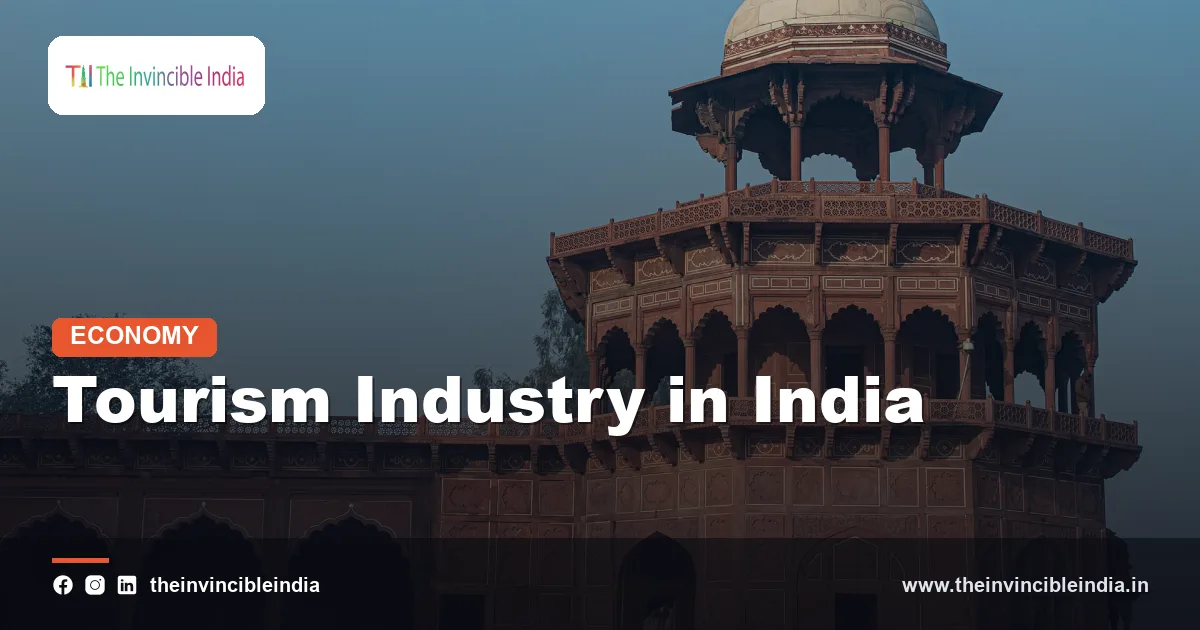
From the snow-capped Himalayas and the backwaters of Kerala to the temples of Tamil Nadu, the forts of Rajasthan and the beaches of Goa, India offers one of the most varied travel landscapes on Earth. The tourism industry in India turns this diversity into economic activity, supporting hotels, airlines, railways, guides, artisans, restaurants and countless small businesses, while also carrying cultural and diplomatic significance.
Tourism is among the largest service sectors in the country and a major source of employment and foreign exchange. It is also unusually broad: the same system serves a pilgrim travelling to a shrine with her family, a patient seeking treatment from overseas, a trekker in the Himalayas and a business delegate at a conference. This explainer looks at the economic contribution of tourism, patterns of domestic and foreign travel, its major segments, the campaigns and schemes that shape policy, and the challenges ahead. 4 October 2026
Quick Facts
| Feature | Details |
|---|---|
| Nodal ministry | Ministry of Tourism, Government of India |
| Public sector undertaking | India Tourism Development Corporation (ITDC), established in 1966 |
| Flagship branding campaign | Incredible India, launched in 2002 |
| Domestic tourism campaign | Dekho Apna Desh, launched in January 2020 |
| Hospitality campaign | Atithi Devo Bhava, launched around 2008 |
| Infrastructure schemes | Swadesh Darshan (thematic circuits) and PRASHAD (pilgrimage and heritage sites) |
| Visa facilitation | Electronic travel authorisation introduced in 2014, now known as the e-Visa |
| UNESCO World Heritage Sites | Over 40 cultural, natural and mixed sites |
| Scale of travel | Domestic tourist visits run into billions each year, far above foreign arrivals of around ten million before the pandemic |
Importance of Tourism to the Indian Economy
Tourism contributes to the Indian economy directly, through spending on hotels, transport and attractions, and indirectly, through the purchase of goods and services by the industry and the spending of those it employs. Estimates of its share in gross domestic product vary according to the method used. Measured narrowly, the direct contribution is usually put at a mid-single-digit percentage of GDP, while broader measures that include indirect and induced effects produce a considerably higher figure.
Employment is an even more striking aspect. Tourism is labour-intensive, and it provides jobs for tens of millions of people, many of them in the informal sector, in roles that include drivers, guides, boatmen, craftspersons, cooks, hotel staff and street vendors. It also generates foreign exchange, since overseas visitors pay in foreign currency for services consumed in India.
Why tourism is considered a strong job creator
- It requires comparatively less capital per job than many manufacturing industries.
- It supports women’s and youth employment, particularly in hospitality and handicrafts.
- It spreads income to remote and backward regions where few other industries exist.
- It has strong links with agriculture, construction, aviation, retail and the arts.
Domestic and Foreign Tourists
The Indian tourism story is overwhelmingly domestic. Domestic tourist visits number in the billions each year, driven by pilgrimage, family visits, leisure and business travel. Foreign tourist arrivals, by contrast, were around ten million in the years just before the COVID-19 pandemic, which is small relative to the size of the country and to the arrivals recorded by leading global destinations.
The pandemic of 2020 caused a steep collapse in both domestic and international travel, followed by a gradual recovery in the years that followed. Domestic travel rebounded faster, while international arrivals took longer to return to earlier levels.
Comparing the two segments
| Aspect | Domestic tourism | Foreign tourism |
|---|---|---|
| Scale | Billions of visits annually | Roughly ten million arrivals before the pandemic |
| Main purposes | Pilgrimage, family and social visits, leisure | Leisure, business, medical, visiting friends and relatives |
| Economic role | Supports local economies and employment widely | Brings foreign exchange and global visibility |
| Popular destinations | States with major shrines and hill stations | Delhi, Agra, Jaipur, Mumbai, Goa, Kerala and Varanasi |
A considerable share of foreign arrivals are Non-Resident Indians and people of Indian origin returning to visit family. Source markets have historically included the United States, Bangladesh, the United Kingdom, Canada, Australia and several other neighbouring and Western countries.
Major Segments of Tourism
India’s strength lies in the range of experiences it can offer. The industry is commonly divided into several overlapping segments.
Heritage and cultural tourism
India has a large number of monuments, forts, palaces and archaeological sites, including more than forty UNESCO World Heritage Sites. The Taj Mahal, the Red Fort, Hampi, Khajuraho, the Ajanta and Ellora Caves, the Konark Sun Temple and the hill forts of Rajasthan attract visitors from all over the world. Cultural festivals, classical dance and music, textiles and cuisine form part of the experience.
Pilgrimage and religious tourism
Faith is the single largest driver of domestic travel. Sites such as Varanasi, Tirupati, Amarnath, Vaishno Devi, Puri, Rameswaram, Ajmer Sharif, Bodh Gaya, the Golden Temple at Amritsar and the Char Dham in Uttarakhand draw very large numbers of pilgrims. Large gatherings such as the Kumbh Mela are among the biggest human congregations in the world.
Medical and wellness tourism
Many patients travel to India for treatment, drawn by relatively affordable costs, skilled doctors and modern hospitals. Wellness tourism builds on traditional systems such as yoga, Ayurveda and naturopathy, with Kerala and Rishikesh being well-known centres. The government has introduced special medical visas and promoted the idea of healing in India to encourage this segment.
Adventure and eco-tourism
The Himalayas support trekking, mountaineering, skiing, river rafting and paragliding, while the coastline and islands offer diving and water sports. Eco-tourism draws on national parks, tiger reserves, wetlands, mangroves and tea and spice plantations. Wildlife safaris in places such as Ranthambore, Corbett, Kaziranga and Bandhavgarh are particularly popular.
MICE tourism
MICE stands for meetings, incentives, conferences and exhibitions. India has built large convention and exhibition venues, such as Bharat Mandapam in Delhi and Yashobhoomi in Dwarka, in an effort to attract international events that bring high-spending business visitors.
Other emerging segments
- Rural and tribal tourism: homestays and village experiences that share income with communities.
- Cruise tourism: river and coastal cruises, including journeys along the Ganga and the western coast.
- Film and sports tourism: travel linked to shooting locations and sporting events.
- Buddhist circuit tourism: visits to sites in Bihar, Uttar Pradesh and neighbouring regions associated with the life of the Buddha.
Government Institutions and Policy Framework
Tourism in India is a shared responsibility. At the Union level, the Ministry of Tourism formulates national policy, promotes the country abroad and funds major projects. The India Tourism Development Corporation, set up in 1966, runs hotels, tour services and consultancy. The Ministry also works through regional offices and overseas India Tourism offices.
The Constitution does not list tourism as a separate subject in the Seventh Schedule, and in practice States carry primary responsibility for developing and regulating tourist destinations within their boundaries. This is why each State has its own tourism department and development corporation, and why central schemes rely on cooperation with State governments.
Key policy documents and bodies
- National Tourism Policy, 2002: recognised tourism as a priority sector and an engine of growth.
- Later strategy documents: national strategies and roadmaps for sustainable and responsible tourism.
- Ministry of Tourism classification of hotels: a voluntary star-rating system and a recognition process for tour operators.
- Tourism Satellite Account: a statistical framework for measuring the sector’s economic contribution.
The Incredible India Campaign
Incredible India is the signature branding campaign for Indian tourism. Launched in 2002, it was designed to project India as a destination of diverse and memorable experiences, using striking imagery, short films and a clear slogan. The campaign has been run in international markets through print, television, digital media, trade fairs and partnerships with travel agents.
Over the years, the campaign has evolved from general awareness to targeted marketing of specific themes such as yoga, wellness, wildlife, heritage and the Himalayan experience. It has also moved from traditional media to online and social platforms. As a brand, Incredible India helped India gain recognition as a destination in markets where it had earlier been little known.
Dekho Apna Desh and the Push for Domestic Travel
Dekho Apna Desh, which translates as see your own country, was launched in January 2020 to encourage Indians to travel within India. The initiative aimed to increase domestic tourism, reduce the outflow of Indian tourists to foreign destinations and make citizens more aware of their own heritage. During the pandemic, it was extended into a series of webinars that showcased destinations and discussed topics ranging from sustainable travel to tourism safety.
Other initiatives share the aim of raising awareness at home. The Atithi Devo Bhava campaign, based on the Sanskrit idea of treating the guest as divine, promotes hospitality and training for those working in tourism. The Ministry has also supported the Paryatan Parv, a festival that links tourism with local culture, and the Adopt a Heritage programme that invites private and public organisations to maintain monuments and develop visitor amenities.
E-Visas and Ease of Travel
Visa procedures have a strong influence on foreign tourist arrivals. In 2014, India introduced an electronic travel authorisation for citizens of selected countries, which allowed travellers to apply online for a visa on arrival. The scheme was renamed the e-Tourist Visa in 2015 and later expanded into the broader e-Visa regime, with categories for tourism, business, medical treatment, medical attendants, conferences and films.
The e-Visa has been extended to citizens of a large number of countries and to many designated airports and seaports. Applicants submit their details and fee online, receive electronic approval and carry a printout or digital copy for arrival. The change has reduced the need to visit consulates, and it is considered a significant step in improving the ease of travelling to India.
Other facilitation measures
- Regional air connectivity under the UDAN scheme to link smaller cities.
- Improved airports, highways and railway services, including tourist trains such as the Palace on Wheels.
- Multilingual tourist helplines, signage and online information portals.
Swadesh Darshan and PRASHAD
Two flagship central schemes focus on developing destinations and facilities.
Swadesh Darshan
Launched in 2014-15, Swadesh Darshan supports the development of theme-based tourist circuits across the country. Themes have included Buddhist, Himalayan, North-East, coastal, desert, heritage, Ramayana, Krishna, rural, spiritual, tribal, wildlife and eco circuits. Funding goes towards infrastructure such as roads, signage, lighting, interpretation centres and visitor facilities. A revised version, often called Swadesh Darshan 2.0, launched in 2022, shifted attention to destination-based and sustainable development, with greater involvement of States and local communities.
PRASHAD
The National Mission on Pilgrimage Rejuvenation and Spiritual, Heritage Augmentation Drive, known as PRASHAD, was launched in 2015, originally under the name PRASAD. It focuses on identified pilgrimage and heritage destinations, funding basic amenities such as accommodation, drinking water, sanitation, transport links and information facilities. It works alongside the HRIDAY scheme for heritage city development.
Challenges Facing the Tourism Industry
Despite its potential, the tourism sector faces several challenges.
- Infrastructure gaps: last-mile connectivity, quality of accommodation and public amenities can fall short of visitors’ expectations at many destinations.
- Safety and cleanliness: concerns about personal safety, harassment, sanitation and touts affect the experience, especially for foreign and women travellers.
- Seasonality and concentration: a large share of visitors travel to a few well-known destinations and in particular seasons, leading to overcrowding while other attractions remain underused.
- Environmental pressure: excessive footfall can strain fragile ecosystems, mountain towns, coastlines and heritage sites, raising questions about carrying capacity.
- Skills and quality of service: a trained and multilingual workforce is needed across the sector.
- Regulatory complexity: varying State taxes, permits and rules for vehicles and tour operators can make travel more costly and confusing.
- Vulnerability to shocks: pandemics, extreme weather, floods, landslides and geopolitical tension can quickly affect arrivals.
Sustainability and the Road Ahead
Looking ahead, policy is moving towards sustainable and responsible tourism, with attention to community participation, waste management, conservation and the use of technology. Digital tools such as online booking, mobile guides and contactless payments are improving the visitor experience, and the growth of homestays and local experiences offers a way to spread benefits more widely.
Policy discussions also focus on diversification, whether through new circuits in the North-East and the islands, the promotion of off-season travel, or the development of wellness and medical segments. If infrastructure, safety and service quality keep improving, tourism can remain one of the most important sources of jobs and foreign exchange for the country.
Conclusion
The tourism industry in India combines vast natural and cultural assets with a large and growing domestic market. Campaigns like Incredible India and Dekho Apna Desh, facilitation tools such as the e-Visa, and schemes like Swadesh Darshan and PRASHAD have shaped how the sector develops. Challenges of infrastructure, sustainability and quality remain, but the sector’s potential to create jobs and bring regions into the economic mainstream makes it a lasting priority.
Frequently Asked Questions
What is the contribution of tourism to India’s economy?
Tourism makes a meaningful contribution to GDP, with the direct share usually estimated in the mid-single digits of GDP and higher when indirect effects are included. It is also a major employer, supporting tens of millions of jobs, and a source of foreign exchange earnings.
What is the Incredible India campaign?
Incredible India is the Ministry of Tourism’s international branding campaign, launched in 2002. It promotes India as a destination of diverse experiences through advertising, digital media, trade fairs and partnerships, and has been adapted over time to highlight themes like wellness, wildlife and heritage.
What is Dekho Apna Desh?
Dekho Apna Desh is a Ministry of Tourism initiative launched in January 2020 that encourages Indians to travel within their own country. It later included webinars and online content to promote destinations and responsible tourism.
What are Swadesh Darshan and PRASHAD?
Swadesh Darshan funds the development of thematic tourist circuits, such as Buddhist, coastal, wildlife and North-East circuits. PRASHAD focuses on improving facilities at pilgrimage and heritage destinations, including amenities like drinking water, sanitation and transport links.
What is the e-Visa for tourists visiting India?
The e-Visa is an online visa system, introduced in 2014 as an electronic travel authorisation and later expanded. Eligible foreign nationals apply online and receive electronic approval for categories such as tourism, business, medical treatment and conferences before arriving at designated airports and seaports.
What are the main types of tourism in India?
The main segments are heritage and cultural tourism, pilgrimage and religious tourism, medical and wellness tourism, adventure tourism, eco-tourism and MICE tourism. Rural, cruise, film and Buddhist circuit tourism are other growing areas.
{“@context”:”https://schema.org”,”@graph”:[{“@type”:”FAQPage”,”mainEntity”:[{“@type”:”Question”,”name”:”What is the contribution of tourism to India’s economy?”,”acceptedAnswer”:{“@type”:”Answer”,”text”:”Tourism makes a meaningful contribution to GDP, with the direct share usually estimated in the mid-single digits of GDP and higher when indirect effects are included. It is also a major employer, supporting tens of millions of jobs, and a source of foreign exchange earnings.”}},{“@type”:”Question”,”name”:”What is the Incredible India campaign?”,”acceptedAnswer”:{“@type”:”Answer”,”text”:”Incredible India is the Ministry of Tourism’s international branding campaign, launched in 2002. It promotes India as a destination of diverse experiences through advertising, digital media, trade fairs and partnerships, and has been adapted over time to highlight themes like wellness, wildlife and heritage.”}},{“@type”:”Question”,”name”:”What is Dekho Apna Desh?”,”acceptedAnswer”:{“@type”:”Answer”,”text”:”Dekho Apna Desh is a Ministry of Tourism initiative launched in January 2020 that encourages Indians to travel within their own country. It later included webinars and online content to promote destinations and responsible tourism.”}},{“@type”:”Question”,”name”:”What are Swadesh Darshan and PRASHAD?”,”acceptedAnswer”:{“@type”:”Answer”,”text”:”Swadesh Darshan funds the development of thematic tourist circuits, such as Buddhist, coastal, wildlife and North-East circuits. PRASHAD focuses on improving facilities at pilgrimage and heritage destinations, including amenities like drinking water, sanitation and transport links.”}},{“@type”:”Question”,”name”:”What is the e-Visa for tourists visiting India?”,”acceptedAnswer”:{“@type”:”Answer”,”text”:”The e-Visa is an online visa system, introduced in 2014 as an electronic travel authorisation and later expanded. Eligible foreign nationals apply online and receive electronic approval for categories such as tourism, business, medical treatment and conferences before arriving at designated airports and seaports.”}},{“@type”:”Question”,”name”:”What are the main types of tourism in India?”,”acceptedAnswer”:{“@type”:”Answer”,”text”:”The main segments are heritage and cultural tourism, pilgrimage and religious tourism, medical and wellness tourism, adventure tourism, eco-tourism and MICE tourism. Rural, cruise, film and Buddhist circuit tourism are other growing areas.”}}]}]}


