

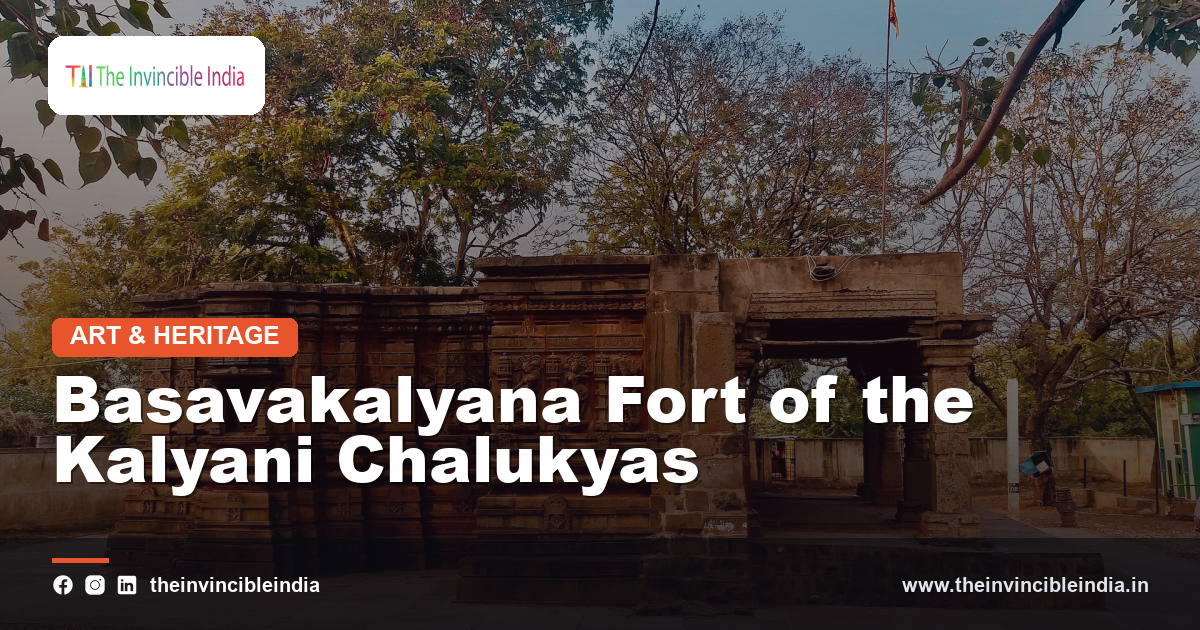
Basavakalyana fort, the historic stronghold at Basavakalyana, a town formerly known as Kalyani or Kalyan, in Bidar district of northern Karnataka, is one of the notable forts of the northern Deccan. The town was once the capital of the Western Chalukyas, often called the Kalyani Chalukyas, who ruled much of the Deccan from here, and the fort stands as a reminder of that age and of the later powers who held it, including the Bahmanis and other Deccan rulers. The town is also closely linked with the twelfth-century social reformer Basavanna and the Sharana movement, a connection reflected in its modern name. Basavakalyana fort belongs to the wider story told in the guide to the great forts of India. This article explains its location, history, architecture and significance.
Quick answer: Basavakalyana fort is a Deccan fort at Basavakalyana, formerly Kalyani, in Bidar district of northern Karnataka, India. The town was once the capital of the Western Chalukyas, often called the Kalyani Chalukyas, and the fort was later held by the Bahmanis and other Deccan powers. The town is also closely linked with the twelfth-century reformer Basavanna and the Sharana movement, reflected in its modern name.
Key Takeaways
- Basavakalyana fort is a Deccan fort at Basavakalyana, formerly Kalyani, in Bidar district of northern Karnataka.
- The town was once the capital of the Western Chalukyas, often called the Kalyani Chalukyas.
- The fort was later held by the Bahmani sultanate and other Deccan powers.
- The town is closely linked with the twelfth-century reformer Basavanna and the Sharana movement.
- The modern name Basavakalyana honours Basavanna and the town’s association with him.
- Basavakalyana fort preserves stone walls, gateways and bastions and is a protected heritage site.
The sections below explain where Basavakalyana fort stands, who held it and what visitors can see today.
Quick Facts
| Detail | Information |
|---|---|
| Location | Basavakalyana, Bidar district, Karnataka |
| Also known as | Kalyani, Kalyan (former names) |
| Type | Deccan fort at a former capital |
| Associated dynasties | Western Chalukyas of Kalyani, Bahmanis, later Deccan powers |
| Cultural link | Basavanna and the twelfth-century Sharana movement |
| Key structures | Stone ramparts, gateways and bastions |
| Protected status | Monument of recognised heritage importance |
| Nearest city | Bidar, northern Karnataka |
What Is Basavakalyana Fort?
Basavakalyana fort is a historic Deccan stronghold at the town of Basavakalyana, formerly known as Kalyani or Kalyan, in Bidar district of northern Karnataka. The fort stands at a place of great historical importance, for the town was once the capital of the Western Chalukyas, the dynasty often called the Kalyani Chalukyas, who ruled much of the Deccan from here. The stronghold, with its stone walls, gateways and bastions, was held after the Chalukya age by the Bahmani sultanate and other Deccan powers, each adapting its defences. The town is also closely linked with the twelfth-century social reformer Basavanna and the Sharana movement, a connection honoured in its modern name. The fort thus unites political, military and cultural significance. Basavakalyana fort is therefore best understood as a stronghold at a former imperial capital, whose walls recall both the Western Chalukyas and the later powers of the northern Deccan.
Where Is Basavakalyana Fort Located?
Basavakalyana fort is located in the town of Basavakalyana, in Bidar district, in the northern part of Karnataka within the Deccan plateau. The town lies in the far north of the state, close to the borders with neighbouring regions of the Deccan, in a landscape of plains and low hills. Bidar, the district town, is a major historic centre of the area and serves as a natural base for travellers exploring the region. Roads connect Basavakalyana with Bidar and other towns of the northern Deccan, making the fort accessible to visitors. The surrounding country reflects the character of the northern Karnataka Deccan, rich in historic sites linked to the Chalukyas, the Bahmanis and later powers. The location of Basavakalyana fort at a former imperial capital therefore places it at a historically significant point in the northern Deccan, where the memory of the Western Chalukyas and later rulers is preserved in its monuments.
Why Was the Town Renamed Basavakalyana?
The town was renamed Basavakalyana to honour the twelfth-century social reformer Basavanna, also known as Basaveshwara, whose life and teaching are closely associated with the place. Formerly known as Kalyani or Kalyan, the town was a centre of the Sharana movement that Basavanna led, a movement of social and religious reform that left a deep mark on the culture of the region. The modern name combines the reverence for Basavanna with the old name of the town, so that Basavakalyana expresses both the historical capital of the Chalukyas and the memory of the reformer. The renaming reflects the importance of Basavanna in the identity and heritage of the area. The change of name links the town firmly to its cultural and spiritual legacy. The renaming of the town as Basavakalyana therefore honours one of the most revered figures associated with the place, uniting its ancient history with its enduring devotional tradition.
Who Built Basavakalyana Fort?
Basavakalyana fort was built and developed over time by several powers, with the town’s early importance rooted in its role as the capital of the Western Chalukyas, often called the Kalyani Chalukyas. The Chalukyas, who ruled much of the Deccan from Kalyani, established the town as a centre of power, and fortification of the site is associated in tradition with their age and that of their successors. After the Chalukya period, the fort was held and strengthened by the Bahmani sultanate and later Deccan powers, each adapting the defences to their needs. As a result, the surviving walls, gateways and bastions reflect more than one phase of building rather than a single original design. As with many forts, the precise early history rests on tradition and such records as survive, and should be stated with caution. The building of Basavakalyana fort therefore spans several powers, from the Western Chalukyas to the Bahmanis and others who reshaped the stronghold over time.
How Old Is Basavakalyana Fort?
Basavakalyana fort is old, with the importance of its site rooted in the age of the Western Chalukyas, who made Kalyani their capital in the medieval centuries of Deccan history. The fort as it survives, however, reflects the work of successive powers, including the Bahmani sultanate and later Deccan rulers, who held and rebuilt the stronghold after the Chalukya age. Because the fort was developed over a long span, its walls, gateways and bastions belong to a range of periods. Scholars date the various structures by their style and by such records as survive, while treating the earliest traditional dates with caution. The broad framework places the town’s rise to prominence in the Chalukya age and the fort’s later development across the following centuries. The age of Basavakalyana fort is therefore best expressed in general terms, as a stronghold at a historic capital whose history reaches back to the medieval Deccan and spans the powers that followed.
What Was Kalyani to the Western Chalukyas?
Kalyani was the capital of the Western Chalukyas, the dynasty often called the Kalyani Chalukyas after the town, who ruled much of the Deccan during the late medieval centuries. As the seat of a major power, Kalyani was an important political, administrative and cultural centre, from which the Chalukyas governed their wide territories. The dynasty was a great patron of temple building and the arts, and their age saw a remarkable flowering of Deccan architecture across northern Karnataka and neighbouring regions. The town’s role as the Chalukya capital gave it lasting fame and importance, and the name Kalyani became attached to the dynasty itself. After the Chalukya period, the town passed to later powers, but its earlier role as an imperial capital remained central to its identity. What Kalyani was to the Western Chalukyas therefore explains much of the historical significance of Basavakalyana, which stands on the site of one of the great capitals of the medieval Deccan.
Who Was Basavanna?
Basavanna, also known as Basaveshwara, was a revered twelfth-century social and religious reformer whose life and teaching are closely associated with the town of Kalyani, now Basavakalyana. He is remembered as a leading figure of a movement of reform that emphasised devotion, social equality and the dignity of labour, challenging aspects of the social order of his time. His teachings, expressed in part through a tradition of devotional verse, left a deep and lasting mark on the culture and spiritual life of the region. Basavanna is honoured across Karnataka and beyond as a saint, reformer and thinker, and the town’s modern name reflects this reverence. Historians and devotees draw on tradition and devotional literature to understand his life, and some details belong to tradition rather than firm record. Basavanna therefore stands as one of the most revered figures associated with Basavakalyana, lending the town a profound cultural and spiritual significance beyond its role as a fortified capital.
What Was the Sharana Movement?
The Sharana movement was a twelfth-century movement of social and religious reform centred on Kalyani, now Basavakalyana, closely associated with Basavanna and his followers. The movement brought together people from varied backgrounds in a shared devotion and a vision of social equality, questioning aspects of the established social order and emphasising sincerity, labour and direct devotion to the divine. Its participants, known as Sharanas, expressed their ideas through a rich tradition of devotional verse that became an important part of the literary and spiritual heritage of the region. The movement left a lasting legacy in the culture of Karnataka and in the religious tradition it helped shape. As with many such movements, aspects of its history are understood through tradition and devotional literature. The Sharana movement therefore forms a central part of the cultural significance of Basavakalyana, linking the town not only to the political history of the Deccan but also to one of its most influential currents of reform and devotion.
What Are the Fortifications Like?
The fortifications of Basavakalyana fort are built in the manner of the Deccan strongholds of the region, with stone walls, gateways and bastions enclosing and defending the site. The defences follow the logic of fort building developed across the northern Deccan, combining ramparts with bastions from which defenders could command the approaches. Gateways controlled entry into the fort and could be defended against attack. Over time, the various powers who held the fort, from the age associated with the Chalukyas through the Bahmanis and later rulers, repaired and strengthened the defences, so the fortifications reflect several periods of work. Features such as water storage, essential for a fort facing the possibility of siege, were provided within the walls. The combination of built masonry and the natural setting gave the fort its strength. The fortifications of Basavakalyana fort therefore illustrate the tradition of Deccan fort building, adapted over centuries by the successive powers that held this historic stronghold.
What Monuments Survive in and Around the Fort?
Basavakalyana fort preserves monuments and structures within and around it that record its long history and its cultural importance. Along the circuit of the fort stand walls, gateways and bastions, while within the enclosure lie the remains of buildings used for defence, administration and daily life. The town around the fort is rich in associations with the Western Chalukyas, the later Deccan powers and, above all, with Basavanna and the Sharana movement, so that sites of historical and devotional significance lie near the stronghold. Structures connected with both the political and the spiritual heritage of the place survive in various states. Together they allow the layered story of Basavakalyana to be traced across the fort and its surroundings. The monuments in and around Basavakalyana fort therefore turn the site into a rich historical and cultural landscape, where the memory of an imperial capital and a great reform movement is preserved alongside the defences of the fort.
How Did the Bahmanis and Later Powers Hold the Fort?
The Bahmani sultanate and later powers held Basavakalyana fort in the centuries after the Western Chalukya age, when the stronghold passed into the world of the Deccan sultanates and their successors. The Bahmanis, a major Muslim power of the northern Deccan, controlled the region and its forts, using Basavakalyana as one of their strongholds and adapting its defences to their needs. After the Bahmani period, the fort came under the powers that succeeded the sultanate as control of the northern Deccan changed hands. Each of these rulers used and maintained the fort as part of their hold on the region. As with other phases of the fort’s history, the detailed record rests on historical sources and should be stated with caution. The holding of Basavakalyana fort by the Bahmanis and later powers therefore marks the phases of its history after the Chalukyas, placing the stronghold within the world of the Deccan sultanates and the rulers who followed them.
Why Was the Fort Strategically Important?
Basavakalyana fort was strategically important because it stood at a historic capital in the northern Deccan, commanding the surrounding country and the routes that crossed it. As the former seat of the Western Chalukyas, the town carried both practical and symbolic weight, and holding the fort meant controlling a place of established importance. For the Bahmani sultanate and later powers, the stronghold was a key point in the defence and administration of the northern Deccan. Its walls, gateways and bastions made it a formidable obstacle, and its position gave it command over the region. The combination of historical prestige and strategic location made the fort a valuable possession for the powers who held it. The strategic importance of Basavakalyana fort therefore lay in the union of a historic capital and a well-fortified stronghold, which together made it significant in the contests for control of the northern Deccan across the centuries.
How Does the Fort Reflect Deccan History?
Basavakalyana fort reflects the broader history of the Deccan, a region shaped by the rise and fall of great powers and by profound movements of culture and reform. The town’s role as the capital of the Western Chalukyas places it at the heart of one of the formative dynasties of the medieval Deccan, while its later holding by the Bahmanis and others traces the shifting balance of power in the region. Its association with Basavanna and the Sharana movement adds a dimension of social and religious reform that is central to the cultural history of Karnataka. The layering of political, military and spiritual significance at a single site is characteristic of the richness of the Deccan. Studying the fort thus offers a window onto the wider story of the plateau. The way Basavakalyana fort reflects Deccan history therefore gives it exceptional meaning, since its walls and its surroundings carry the memory of empires, sultanates and a great movement of reform.
How Is Basavakalyana Fort Protected and Preserved?
Basavakalyana fort is recognised as a heritage monument and is cared for as a protected site, with its conservation falling under the responsibility of the relevant authorities. Preserving a fort at a historic capital involves guarding its walls, gateways and bastions against weathering, the growth of vegetation, structural strain and the wear caused by time and visitors. Conservation work aims to stabilise and document the structures while retaining the historic character of the fort and its setting. The cultural importance of the town, linked with Basavanna and the Sharana movement, adds to the value of preserving the site and its surroundings. Because the formal status and arrangements of such a site can change, visitors should consult current official information. Responsible behaviour and respect for the monument support its preservation. The protection of Basavakalyana fort therefore depends on cooperation between heritage authorities, the local community and the visitors who come to honour its history and its devotional heritage.
How Can Visitors Plan a Trip to Basavakalyana Fort?
Visitors can plan a trip to Basavakalyana fort by travelling to the town of Basavakalyana in Bidar district, most conveniently from Bidar, which is the main historic centre of the area and is connected by road and rail to other parts of the Deccan. The cooler months from about October to February are generally the most comfortable, since the summer in the northern Deccan can be very hot. The fort can be explored along with the many sites in the town associated with the Western Chalukyas and with Basavanna and the Sharana movement, which draw pilgrims and visitors alike. Comfortable footwear, sun protection and drinking water are advisable, and respectful behaviour is appropriate at the devotional sites. Checking current access and local conditions in advance is wise. A well planned trip allows Basavakalyana fort to be appreciated as both a historic Deccan stronghold at a former imperial capital and a centre of profound cultural and spiritual heritage.
Basavakalyana Fort Today
Basavakalyana fort today stands as a historic stronghold at a place of great importance in the northern Deccan, its walls and gateways recalling the Western Chalukyas who made Kalyani their capital and the later powers who held it. Associated with the Bahmanis and other Deccan rulers, and above all with the twelfth-century reformer Basavanna and the Sharana movement, the town unites political, military and spiritual heritage in a single landscape. The fort and the many sites around it draw both those interested in the history of the Deccan and devotees who honour Basavanna. Though quieter than some of India’s grandest forts, it offers a rich encounter with the layered past of Karnataka. Continued conservation and respectful visitation will help ensure that it endures. Basavakalyana fort thus remains a lasting witness to an imperial capital, the powers that followed and one of the most influential movements of reform in the history of the Deccan.
Sources & Further Reading
- Archaeological Survey of India (asi.nic.in).
- Department of Tourism, Government of Karnataka (karnatakatourism.org).
Frequently Asked Questions
Where is Basavakalyana fort located?
Basavakalyana fort is located in the town of Basavakalyana, formerly Kalyani, in Bidar district in the northern part of Karnataka. The town lies in the far north of the state, with Bidar the main historic centre and gateway for travellers.
Why was the town renamed Basavakalyana?
The town, formerly known as Kalyani or Kalyan, was renamed Basavakalyana to honour the twelfth-century reformer Basavanna, also known as Basaveshwara, who is closely associated with the place. The name unites the old capital of the Chalukyas with the memory of the reformer.
Who built Basavakalyana fort?
Basavakalyana fort developed over time, with the town’s early importance rooted in its role as the capital of the Western Chalukyas. The fort was later held and strengthened by the Bahmani sultanate and other Deccan powers, so the early history should be stated with caution.
Who was Basavanna?
Basavanna, also known as Basaveshwara, was a revered twelfth-century social and religious reformer closely associated with Kalyani, now Basavakalyana. He led a movement emphasising devotion, social equality and the dignity of labour, leaving a deep mark on the culture of Karnataka.
What was the Sharana movement?
The Sharana movement was a twelfth-century movement of social and religious reform centred on Kalyani, associated with Basavanna and his followers. It emphasised devotion and social equality and produced a rich tradition of devotional verse that shaped the heritage of the region.
What is the best time to visit Basavakalyana fort?
The best time to visit is the cooler season from about October to February, since the summer in the northern Deccan can be very hot. These months make exploring the fort and the many associated sites in the town far more comfortable.


