

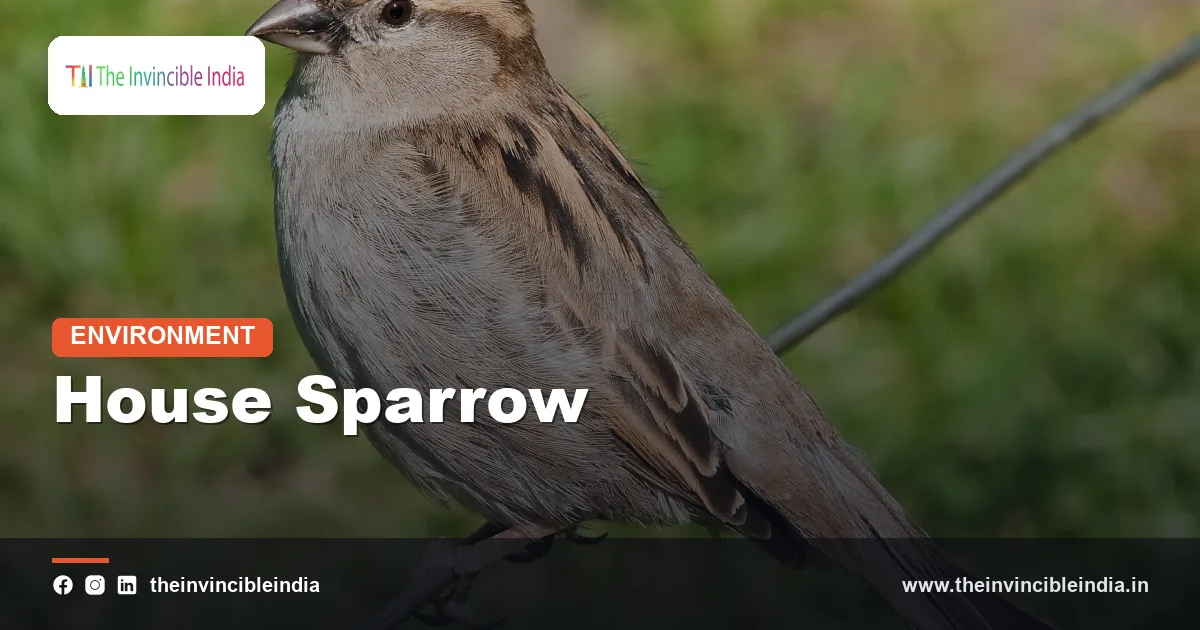
The house sparrow (Passer domesticus) is a small, seed-eating songbird that has lived alongside people in India for centuries and is the bird most Indians call the chidiya or gauraiya. Once so common that it hopped across courtyards, verandas and kitchen windowsills in every town, the house sparrow has become a much rarer sight in many large Indian cities, which is why it has turned into a symbol of urban wildlife conservation.
This explainer covers how to recognise the house sparrow, where it lives, what it eats, why its numbers fell in cities, what World Sparrow Day on 20 March is about, why it is Delhi’s state bird, and what ordinary households can do to bring it back. Information was last reviewed on 22 October 2026.
| Quick Fact | Detail |
|---|---|
| Common name | House sparrow (Hindi: gauraiya, chidiya) |
| Scientific name | Passer domesticus |
| Family | Passeridae (Old World sparrows) |
| Typical size | About 14 to 16 cm long; roughly 25 to 40 grams |
| Habitat | Human settlements, farmland edges, gardens, railway stations and markets |
| Diet | Grain and seeds; insects for nestlings; kitchen scraps |
| Global IUCN status | Least Concern, although local declines are well documented |
| Special day | World Sparrow Day, observed every year on 20 March |
| State bird of | Delhi (declared in 2012); Bihar also adopted it as its state bird |
Key Takeaways
- The house sparrow (Passer domesticus) is a small Old World sparrow, about 14 to 16 cm long, that depends closely on human buildings for nesting.
- Male house sparrows have a grey crown, a black bib and chestnut markings, while female house sparrows are plain buff-brown with a pale streak behind the eye.
- House sparrow numbers have fallen noticeably in many Indian cities, mainly because of fewer nesting cavities, fewer insects for chicks and less spilled grain.
- World Sparrow Day is observed on 20 March each year to raise awareness about the house sparrow and other urban birds.
- Delhi declared the house sparrow its state bird in 2012, and Bihar also recognises it as a state bird.
- A weatherproof nest box with a roughly 32 mm entrance hole, native shrubs, grain and clean water can help the house sparrow settle in a neighbourhood again.
What is the house sparrow?
The house sparrow is a small passerine bird in the family Passeridae, and Passer domesticus is its scientific name. It is one of the most widely distributed wild birds on Earth, found across Europe, Asia and North Africa as a native species, and introduced by people to the Americas, southern Africa, Australia and New Zealand.
The species is closely associated with human habitation. The name “domesticus” reflects this habit of living in and around homes, farms and towns. In India, the house sparrow is part of folk songs, children’s rhymes and household memories, and the Hindi word gauraiya is familiar to almost every Indian family.
Several subspecies are recognised across its range. The form found across most of the Indian subcontinent is usually called the Indian house sparrow (Passer domesticus indicus), which is slightly paler and greyer than its European counterpart.
How can you identify a house sparrow, and how do males differ from females?
A house sparrow can be identified by its stocky body, short thick seed-cracking bill and brownish plumage, and the two sexes look quite different. The male is the more striking bird, and the female is easily overlooked.
Male house sparrow
- A grey crown and a black throat patch, commonly called a bib.
- Chestnut-brown stripes running from behind the eye down the nape.
- White cheeks and a single pale wing bar.
- A black bill in the breeding season.
Female house sparrow
- Plain buff and brown plumage without a bib.
- A pale streak extending behind the eye.
- Streaked brown back and a dull, pale underside.
Young house sparrows resemble females. The call is a repeated, cheerful chirrup, often given in chorus from a hedge or roof edge, which is one reason the bird is easy to notice by sound even when hidden.
Where does the house sparrow live in India?
The house sparrow lives across most of India, from the plains and plateaus to hill towns, and it is generally absent only from dense forests and very high altitudes. It prefers the company of people and is typically seen around houses, shops, grain stores, railway stations, temples, schools and village farmyards.
Its range matters because the bird behaves differently in different settings. In villages and small towns with older houses, tiled roofs and open grain storage, the house sparrow is often still common. In large metropolitan areas dominated by glass, steel and sealed concrete, it is more patchy, and local populations may survive mainly around older neighbourhoods, markets and gardens.
The house sparrow does not migrate over long distances. Most individuals spend their lives within a small area, often within a kilometre or two of where they hatched, which is why a loss of local nesting sites can quickly empty a neighbourhood.
What does the house sparrow eat?
The house sparrow mainly eats grain and seeds, but it feeds its chicks largely on insects. Adults pick up spilled rice, wheat, millet, bajra and broken grain, wild grass seeds and kitchen scraps, and they also take small buds, nectar and soft fruit at times.
The insect diet of nestlings is a vital detail. During the first week or so after hatching, chicks need protein-rich food, so parents gather caterpillars, aphids, small beetles, flies and spiders. Gardens full of exotic ornamental plants, neat lawns and sprayed hedges supply very few of these insects, so nestlings may starve even when adults can still find grain.
- Adults: seeds, grain, bread, rice and household leftovers.
- Nestlings: soft-bodied insects and spiders.
- Also: water for drinking and fine dust or sand for dust-bathing.
How does the house sparrow breed and build its nest?
The house sparrow breeds by building an untidy domed or cup-like nest of dry grass, straw, feathers, paper and string inside a hole or gap in a building. It generally prefers holes in walls, gaps under tiled roofs, spaces behind signboards, ventilators and cavities in old trees.
A clutch typically holds three to five eggs, which are whitish with grey or brown speckles. Both parents incubate the eggs for about two weeks, and the chicks usually leave the nest roughly two weeks after hatching. A pair may raise more than one brood in a year, particularly where food is plentiful.
House sparrows are social. They often nest in loose colonies, feed in flocks and roost together in dense bushes, bamboo clumps or thorny trees. This sociability is useful for conservation, because a few well-placed nest boxes in one spot can support several pairs.
Why did house sparrow numbers fall in Indian cities?
House sparrow numbers fell in many Indian cities mainly because modern urban development removed the nesting spaces, insect-rich greenery and open grain that the bird depends on. No single cause explains every decline, and researchers generally treat the fall as the result of several overlapping pressures.
| Pressure | How it affects the house sparrow |
|---|---|
| Loss of nesting cavities | Sealed concrete and glass buildings replace old houses with eaves, gaps and tiled roofs, leaving few places to nest. |
| Fewer insects for chicks | Pesticides, paved ground and exotic ornamental plants reduce the caterpillars and aphids that nestlings need. |
| Less spilled grain | Packaged food and tidy kitchens replace open grain stores and courtyards where sparrows once fed. |
| Loss of green cover | Shrubs, hedges and weedy patches that gave shelter and seeds are cleared for roads and buildings. |
| Predators and competitors | Crows, cats and sometimes other adaptable birds can take eggs, chicks or nesting sites in crowded cities. |
| Pollution and noise | Air pollution and constant noise may add stress, although the exact effects are still being studied. |
Some popular explanations, such as radiation from mobile phone towers, have been widely discussed, but scientific evidence for them remains limited and inconclusive. Habitat and food explanations are better supported.
Is the house sparrow endangered in India?
The house sparrow is not considered globally threatened, because the International Union for Conservation of Nature (IUCN) lists it as Least Concern. The species is still extremely numerous worldwide, and many populations are stable.
The picture is more complicated at the local level. Bird-monitoring studies in India, such as the State of India’s Birds assessments, have suggested that the house sparrow is holding on in many areas, while falling in some large cities. Because monitoring methods and survey coverage keep changing, readers should treat any single population figure with caution and consult the latest published assessment.
Legal protection is a separate matter. Wild birds in India are covered by the Wild Life (Protection) Act, 1972, which prohibits hunting and trade in native wild species, but the schedule placement of individual species has been revised over time, so the current schedule listing should be checked in the latest text of the Act.
Why is World Sparrow Day celebrated on 20 March?
World Sparrow Day is celebrated on 20 March every year to draw attention to the house sparrow and the wider decline of common urban birds. The first observance took place in 2010, and it was initiated by the Nature Forever Society, founded by conservationist Mohammed Dilawar in Nashik, Maharashtra, together with partner organisations in other countries.
The day has since grown into a worldwide campaign. Schools, bird clubs, resident welfare associations and nature groups in India mark it by distributing nest boxes, holding talks, running sparrow counts and encouraging people to put out grain and water. The day’s value lies mainly in public awareness, since individual households ultimately decide whether a locality offers nest sites and food.
Why is the house sparrow the state bird of Delhi?
The house sparrow was declared the state bird of Delhi in 2012, mainly to highlight its decline in the national capital and encourage public action. The decision followed concern from naturalists and citizens that the once-common bird had grown scarce in many Delhi neighbourhoods.
Bihar has also recognised the house sparrow as its state bird. Official bird lists are updated from time to time, so anyone citing state symbols for an exam or publication should verify them against a current government source.
A state-bird declaration is symbolic and does not by itself restore habitat. It does, however, give conservation groups and local bodies a recognised emblem to build awareness campaigns around.
How can people help the house sparrow return?
People can help the house sparrow return by providing nesting spaces, native plants, food and water, and by reducing pesticide use around the home. These steps are inexpensive, and they work best when many neighbours act together.
Put up nest boxes
- Use an untreated wooden box with an entrance hole of about 32 mm, small enough to keep out larger birds.
- Fix it 2 to 3 metres above the ground, on a wall or tree trunk, shaded from strong afternoon sun and sheltered from rain.
- Place several boxes close together, since house sparrows nest in colonies.
- Keep boxes away from easy cat access and avoid disturbing them in the breeding season.
Plant for insects and shelter
- Choose native shrubs, hedges, grasses and flowering plants that attract insects.
- Leave a small patch of weeds or long grass where seeds and insects collect.
- Avoid spraying garden pesticides, which wipe out the food nestlings need.
Offer food and water
- Scatter small quantities of millet, broken rice or bajra in a clean spot.
- Keep a shallow dish of fresh water, especially in summer, and clean it often.
- Provide a patch of loose dry soil for dust-bathing.
Feeding should be modest and hygienic. Large piles of spoiled food can attract pests and spread disease among birds.
What is the cultural importance of the house sparrow in India?
The house sparrow holds a warm place in Indian family life, children’s stories and regional songs, because it was historically the most visible wild bird in homes. Grandparents across the country often recall sparrows nesting in the house and feeding in the courtyard, and this nostalgia drives much of the public interest in saving the bird.
Its familiarity also makes it a useful teaching tool. Teachers use the house sparrow to explain how a change in buildings, food and gardens can alter a whole local ecosystem. For city children, spotting sparrows at school or in a park is often their first experience of watching wild birds.
Bottom Line
The house sparrow is not globally endangered, but it has become scarce in many Indian cities because modern buildings and gardens give it fewer places to nest and fewer insects to feed its chicks. Simple, local steps such as nest boxes, native plants, grain, water and less pesticide can help the house sparrow return to neighbourhoods where it once thrived.
Frequently Asked Questions
Why is the house sparrow disappearing from Indian cities?
The house sparrow is disappearing from many Indian cities mainly because of a loss of nesting spaces, fewer insects for chicks and less spilled grain. Modern sealed buildings offer few cavities, pesticides and exotic plants reduce insect food, and tidy kitchens leave little grain. Researchers usually see these causes acting together rather than one single cause.
When is World Sparrow Day observed?
World Sparrow Day is observed on 20 March every year. The first observance was in 2010, and it was started by the Nature Forever Society of Nashik with partner groups abroad. The day is meant to raise awareness about the house sparrow and other urban birds.
Is the house sparrow the state bird of Delhi?
Yes, the house sparrow was declared the state bird of Delhi in 2012. The declaration aimed to draw attention to its decline in the capital. Bihar has also recognised the house sparrow as a state bird, though readers should verify official lists against a current government source.
What do house sparrows eat?
House sparrows mainly eat grain and seeds, such as rice, wheat, millet and bajra, along with kitchen scraps. Their chicks, however, are fed largely on insects such as caterpillars and aphids during the first days after hatching. Fresh water and a patch of dust for bathing are also important.
How can I attract house sparrows to my home?
You can attract house sparrows by putting up weatherproof nest boxes, planting native shrubs and offering grain and clean water. A box with an entrance hole of about 32 mm, fixed 2 to 3 metres high in a sheltered and shaded spot, suits them well. Avoiding garden pesticides also helps, since chicks depend on insects.
Is the house sparrow an endangered species?
No, the house sparrow is not globally endangered, because the IUCN lists it as Least Concern. Its numbers have, however, fallen in many cities in India and elsewhere. For current population trends, readers should check the latest published bird-monitoring assessments.
{“@context”:”https://schema.org”,”@graph”:[{“@type”:”FAQPage”,”mainEntity”:[{“@type”:”Question”,”name”:”Why is the house sparrow disappearing from Indian cities?”,”acceptedAnswer”:{“@type”:”Answer”,”text”:”The house sparrow is disappearing from many Indian cities mainly because of a loss of nesting spaces, fewer insects for chicks and less spilled grain. Modern sealed buildings offer few cavities, pesticides and exotic plants reduce insect food, and tidy kitchens leave little grain. Researchers usually see these causes acting together rather than one single cause.”}},{“@type”:”Question”,”name”:”When is World Sparrow Day observed?”,”acceptedAnswer”:{“@type”:”Answer”,”text”:”World Sparrow Day is observed on 20 March every year. The first observance was in 2010, and it was started by the Nature Forever Society of Nashik with partner groups abroad. The day is meant to raise awareness about the house sparrow and other urban birds.”}},{“@type”:”Question”,”name”:”Is the house sparrow the state bird of Delhi?”,”acceptedAnswer”:{“@type”:”Answer”,”text”:”Yes, the house sparrow was declared the state bird of Delhi in 2012. The declaration aimed to draw attention to its decline in the capital. Bihar has also recognised the house sparrow as a state bird, though readers should verify official lists against a current government source.”}},{“@type”:”Question”,”name”:”What do house sparrows eat?”,”acceptedAnswer”:{“@type”:”Answer”,”text”:”House sparrows mainly eat grain and seeds, such as rice, wheat, millet and bajra, along with kitchen scraps. Their chicks, however, are fed largely on insects such as caterpillars and aphids during the first days after hatching. Fresh water and a patch of dust for bathing are also important.”}},{“@type”:”Question”,”name”:”How can I attract house sparrows to my home?”,”acceptedAnswer”:{“@type”:”Answer”,”text”:”You can attract house sparrows by putting up weatherproof nest boxes, planting native shrubs and offering grain and clean water. A box with an entrance hole of about 32 mm, fixed 2 to 3 metres high in a sheltered and shaded spot, suits them well. Avoiding garden pesticides also helps, since chicks depend on insects.”}},{“@type”:”Question”,”name”:”Is the house sparrow an endangered species?”,”acceptedAnswer”:{“@type”:”Answer”,”text”:”No, the house sparrow is not globally endangered, because the IUCN lists it as Least Concern. Its numbers have, however, fallen in many cities in India and elsewhere. For current population trends, readers should check the latest published bird-monitoring assessments.”}}]}]}


