

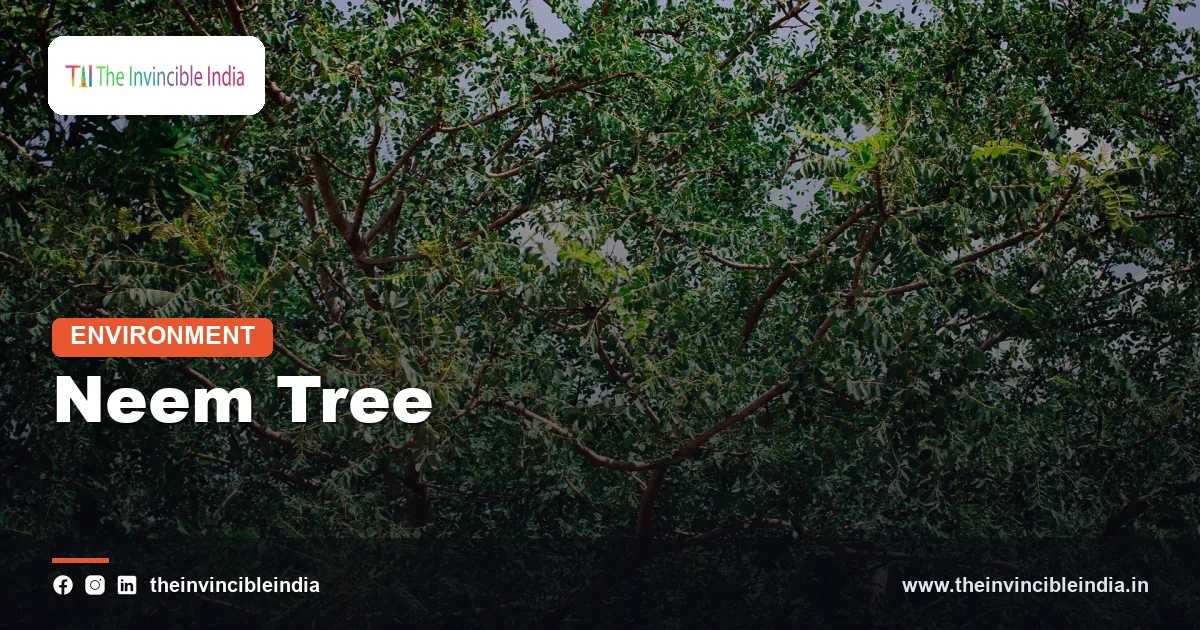
The neem tree (Azadirachta indica) is a fast-growing, evergreen to semi-evergreen tree native to the Indian subcontinent, famous for its bitter leaves, its hardiness in dry climates and its long history of use in agriculture, household life and traditional medicine. In many Indian villages it is affectionately called the “village pharmacy” because almost every part of the tree has a traditional use.
Today the neem tree is also studied by scientists, especially for azadirachtin, a natural compound that deters insect pests and is the basis of many biopesticides. This explainer covers what the neem tree is, how to recognise it, how it is used, what the science says, and the landmark 1990s-2000s dispute over patents on neem products. Information was last reviewed on 22 October 2026.
| Attribute | Detail |
|---|---|
| Scientific name | Azadirachta indica |
| Family | Meliaceae (the mahogany family) |
| Common names | Neem, nim, margosa tree, Indian lilac |
| Native range | The Indian subcontinent and parts of South and Southeast Asia |
| Typical height | Commonly 15 to 20 metres, sometimes taller |
| Key active compound | Azadirachtin, a limonoid with insect antifeedant and growth-regulating effects |
| Typical lifespan | Often 150 to 200 years under good conditions |
| Famous legal case | A European patent on a neem-based fungicide was opposed in 1995 and revoked in 2000; the revocation was upheld on appeal in 2005 |
Key Takeaways
- The neem tree, Azadirachta indica, is a hardy tree in the mahogany family that is native to the Indian subcontinent and grows well in hot, dry conditions.
- Azadirachtin, a compound found mainly in neem seeds, discourages insects from feeding and disrupts their growth, and it is the active basis of many neem biopesticides.
- India has required domestic urea to be neem-coated since 2015, because neem coating slows the conversion of urea into forms that are easily lost from the soil.
- Neem has been used for centuries in Ayurveda, Siddha and Unani practice, but traditional use is not the same as proven medical benefit, and neem oil can be dangerous for infants.
- A European patent on a neem-based fungicide was revoked by the European Patent Office in 2000 after objections from Indian and international groups, and the decision was upheld on appeal in 2005.
- The neem tree is widely planted in India for shade along roads, in courtyards and around temples because it tolerates drought and poor soil.
What is the neem tree?
The neem tree is a tropical evergreen tree, scientifically named Azadirachta indica, that belongs to the mahogany family Meliaceae and has been grown in India for thousands of years. It is native to the Indian subcontinent and has been introduced to many other warm regions, including parts of Africa, the Middle East, Southeast Asia and the Americas.
The common name neem comes from the Sanskrit word nimba, and the tree is called nim in Hindi, veppam in Tamil, vepa in Telugu, bevu in Kannada, aryaveppu in Malayalam and limbdo in Gujarati. It is the official state tree of Andhra Pradesh, and its ubiquity in towns and villages makes it one of the most familiar trees in the country.
How can you identify a neem tree?
A neem tree can be identified by its dense, rounded crown, its compound leaves with toothed leaflets and its clusters of small white, honey-scented flowers. The tree typically grows 15 to 20 metres tall, with a short trunk and rough, furrowed, dark grey to reddish-brown bark.
Leaves, flowers and fruit
Each leaf is pinnate, meaning it has a central stalk with many leaflets arranged along it, usually in the range of 10 to 15 leaflets. The leaflets are narrow, pointed and have serrated edges, and they taste strongly bitter. In spring the tree bears drooping sprays of tiny, fragrant white flowers that attract bees.
The fruit is a smooth, olive-like drupe about 1 to 2 centimetres long, green when young and yellow when ripe. Each fruit contains a hard seed with a kernel that holds the oil from which neem oil is extracted.
Why is the neem tree called India’s village pharmacy?
The neem tree is called India’s village pharmacy because its leaves, bark, flowers, seeds and twigs have all been used in everyday household and traditional medicine practices for centuries. The nickname describes a long tradition rather than a medical guarantee, and it speaks to how readily available the tree has been in rural life.
The Sanskrit-derived term arishta, linked to neem, is often explained as meaning “reliever of sickness” or “perfect”, which reflects the esteem the tree has been held in. Texts of Ayurveda, India’s classical system of medicine, discuss neem in several contexts, and it also appears in the Siddha and Unani traditions.
| Part of the neem tree | Traditional or practical use |
|---|---|
| Twigs | Chewed and used as a natural toothbrush (datun) |
| Leaves | Used in herbal baths, as a household insect deterrent and in festival foods and rituals |
| Flowers | Used in seasonal dishes such as those prepared at the Telugu and Kannada new year |
| Seeds | Pressed to make neem oil; the remaining seed cake is used in farming |
| Bark and wood | Traditional medicine; the wood is used for furniture, tools and carving |
| Shade and canopy | Cooling shelter in streets, courtyards and village squares |
What is azadirachtin and how does it work as a biopesticide?
Azadirachtin is the main insecticidal compound of the neem tree, a bitter chemical found chiefly in the seed kernel that deters insects from feeding and interferes with their growth. Scientifically it is a limonoid, a type of modified terpenoid, and it acts on insects in several ways at once.
Azadirachtin works mainly as an antifeedant, so that insects stop eating treated plants, and as a growth regulator, because it disrupts the hormones that control moulting and development in many insects. It also reduces egg laying in some species. Because it works by deterring and disrupting rather than by quickly killing, results usually appear over days rather than hours.
Neem-based pesticides are widely used in organic and low-chemical farming because they break down relatively quickly in sunlight and soil and are considered to have lower toxicity to mammals and many beneficial insects than several synthetic pesticides. They are not harmless, however; neem products can affect some non-target insects, including aquatic invertebrates, so label directions and local agricultural advice should be followed.
How is neem used in Indian agriculture?
Neem is used in Indian agriculture as a biopesticide, as an organic fertiliser in the form of neem cake and as a coating on urea fertiliser. Indian farmers have long used crushed neem leaves and seeds to protect stored grain and field crops from pests.
Neem cake and neem oil
When neem seeds are pressed for oil, the solid residue left behind is called neem cake. It is used as an organic manure and soil amendment that supplies nutrients and is reported to help suppress some soil pests and nematodes. Neem oil is diluted and sprayed on crops against a range of insects and mites.
Neem-coated urea
From 2015, the Government of India directed domestic urea producers to supply neem-coated urea. The coating slows the release of nitrogen from urea in the soil, which can improve fertiliser efficiency and reduce losses. It also made it harder to divert subsidised agricultural urea for industrial use, since neem-coated urea is less suitable for such purposes.
What role does the neem tree play in Indian culture and festivals?
The neem tree plays a part in Indian culture as a symbol of health, protection and the bitter side of life that is accepted along with the sweet. At the Telugu and Kannada new year, Ugadi, a dish combining bitter neem flowers with jaggery, tamarind and other tastes represents the mixture of experiences expected in the year ahead.
In Bengal, a few bitter neem leaves fried with brinjal are traditionally eaten at the start of a meal. In parts of Tamil Nadu and other states, neem branches and leaves are offered in worship of village goddesses, such as Mariamman, especially during seasons when diseases were once common. At Puri in Odisha, the wooden idols of Lord Jagannath, Balabhadra and Subhadra are traditionally carved from neem wood selected according to specific rules.
Neem leaves are also hung over doorways in many homes and used in rituals associated with births and illnesses. These practices vary by region and community.
What are the traditional medicinal uses of neem, and what does science say?
Traditional systems use neem for skin conditions, oral care, fevers and digestive complaints, while modern research has studied its extracts for antimicrobial, anti-inflammatory and other properties, though evidence in humans is limited. Laboratory studies on cells and animals do not by themselves prove that neem works as a treatment in people.
Chewing neem twigs and using neem-based toothpastes or mouthwashes is a long-standing oral hygiene practice in India, and some small studies have examined their effects on dental plaque. Neem preparations are also applied on the skin in traditional care. Quality, dose and preparation vary widely between products.
Safety notes
- Neem oil taken by mouth has been linked to poisoning in infants and young children, and it should never be given to them.
- Pregnant and breastfeeding women, and people with medical conditions, are generally advised to seek professional advice before taking neem products internally.
- Neem is used traditionally and is not a substitute for medical diagnosis or treatment.
Why is the neem tree so hardy and good for shade?
The neem tree is hardy because it tolerates heat, drought and poor, dry soils, and it grows quickly into a dense, shady tree that stays green when many other trees are bare. A deep root system and tough, leathery leaves help the tree survive on very little water once it is established.
These traits explain why neem is a favourite roadside and courtyard tree across the plains and in semi-arid regions such as Rajasthan, Gujarat and the Deccan. It has also been planted for shade and afforestation in dry regions abroad, and it has been reported to have been used for shade-planting near pilgrim sites in Saudi Arabia.
The tree is not without drawbacks. It prefers warm climates and is damaged by frost, and in some countries where it was introduced, such as parts of Australia and Africa, it can spread outside plantations and compete with native vegetation.
What was the neem patent battle?
The neem patent battle was a long-running dispute in which Indian farmers’ groups, civil society organisations and others challenged a European patent on a neem-based fungicide, arguing that the knowledge was traditional and not new. The European Patent Office (EPO) revoked the patent in 2000, and the revocation was upheld on appeal in 2005.
The patent in question was granted in 1994 to the United States Department of Agriculture and a private company, W. R. Grace and Company, for a method of controlling fungi on plants using hydrophobic extracted neem oil. In 1995, a group of opponents, including the Research Foundation for Science, Technology and Ecology, the International Federation of Organic Agriculture Movements and a Member of the European Parliament, filed an opposition. They argued that Indian farmers had used neem’s antifungal properties for centuries, so the claimed invention lacked novelty.
| Year | Event |
|---|---|
| 1994 | European patent granted on a neem-oil-based method of controlling fungi |
| 1995 | Opposition filed at the European Patent Office by Indian and international groups |
| 2000 | The European Patent Office revokes the patent |
| 2005 | The revocation is upheld by the EPO’s appeal board |
The case is often cited as an example of what critics call biopiracy, meaning the patenting of traditional knowledge or biological resources without fair recognition. It also encouraged India to build the Traditional Knowledge Digital Library (TKDL), a database of documented traditional knowledge in a form patent examiners can search, so that similar claims can be spotted as “prior art”.
It should be noted that neem itself was never patented as a plant. The dispute concerned particular methods and formulations, and numerous other neem-related patents on specific processes exist in various countries.
Bottom Line
The neem tree is one of India’s most useful and recognisable trees, valued as a hardy shade tree, as a source of the biopesticide azadirachtin and as a part of daily and festival life. Its traditional health uses are long-standing, but claims should be treated with caution, and the neem patent case remains a landmark in the protection of traditional knowledge.
Frequently Asked Questions
What is the scientific name of the neem tree?
The scientific name of the neem tree is Azadirachta indica. It belongs to the mahogany family Meliaceae and is native to the Indian subcontinent.
Why is neem called the village pharmacy of India?
Neem is called the village pharmacy because its leaves, bark, flowers, seeds and twigs have all been used in traditional household remedies and personal care for centuries. The nickname reflects tradition and easy availability, not proven medical benefit for every use.
What is azadirachtin?
Azadirachtin is the main insecticidal compound of the neem tree, found mainly in the seed kernel. It makes insects stop feeding and disrupts their moulting and development, which is why it is used in many neem-based biopesticides.
Why is urea coated with neem in India?
Urea is coated with neem in India because the coating slows the release of nitrogen in the soil, which can improve fertiliser efficiency and reduce losses. Since 2015 the Government of India has directed domestic urea producers to supply neem-coated urea, and the coating also reduces the chance of agricultural urea being diverted for industrial use.
What was the neem patent case?
The neem patent case was a challenge to a European patent, granted in 1994 to the United States Department of Agriculture and W. R. Grace, on a neem-oil-based fungicide method. The European Patent Office revoked the patent in 2000 after opposition from Indian and international groups, and the decision was upheld on appeal in 2005.
Is neem safe to take internally?
Neem is not considered safe for everyone to take internally, and neem oil in particular has been linked to poisoning in infants and young children. Pregnant or breastfeeding women and people with medical conditions should consult a qualified health professional before using neem products by mouth.
{“@context”:”https://schema.org”,”@graph”:[{“@type”:”FAQPage”,”mainEntity”:[{“@type”:”Question”,”name”:”What is the scientific name of the neem tree?”,”acceptedAnswer”:{“@type”:”Answer”,”text”:”The scientific name of the neem tree is Azadirachta indica. It belongs to the mahogany family Meliaceae and is native to the Indian subcontinent.”}},{“@type”:”Question”,”name”:”Why is neem called the village pharmacy of India?”,”acceptedAnswer”:{“@type”:”Answer”,”text”:”Neem is called the village pharmacy because its leaves, bark, flowers, seeds and twigs have all been used in traditional household remedies and personal care for centuries. The nickname reflects tradition and easy availability, not proven medical benefit for every use.”}},{“@type”:”Question”,”name”:”What is azadirachtin?”,”acceptedAnswer”:{“@type”:”Answer”,”text”:”Azadirachtin is the main insecticidal compound of the neem tree, found mainly in the seed kernel. It makes insects stop feeding and disrupts their moulting and development, which is why it is used in many neem-based biopesticides.”}},{“@type”:”Question”,”name”:”Why is urea coated with neem in India?”,”acceptedAnswer”:{“@type”:”Answer”,”text”:”Urea is coated with neem in India because the coating slows the release of nitrogen in the soil, which can improve fertiliser efficiency and reduce losses. Since 2015 the Government of India has directed domestic urea producers to supply neem-coated urea, and the coating also reduces the chance of agricultural urea being diverted for industrial use.”}},{“@type”:”Question”,”name”:”What was the neem patent case?”,”acceptedAnswer”:{“@type”:”Answer”,”text”:”The neem patent case was a challenge to a European patent, granted in 1994 to the United States Department of Agriculture and W. R. Grace, on a neem-oil-based fungicide method. The European Patent Office revoked the patent in 2000 after opposition from Indian and international groups, and the decision was upheld on appeal in 2005.”}},{“@type”:”Question”,”name”:”Is neem safe to take internally?”,”acceptedAnswer”:{“@type”:”Answer”,”text”:”Neem is not considered safe for everyone to take internally, and neem oil in particular has been linked to poisoning in infants and young children. Pregnant or breastfeeding women and people with medical conditions should consult a qualified health professional before using neem products by mouth.”}}]}]}


