

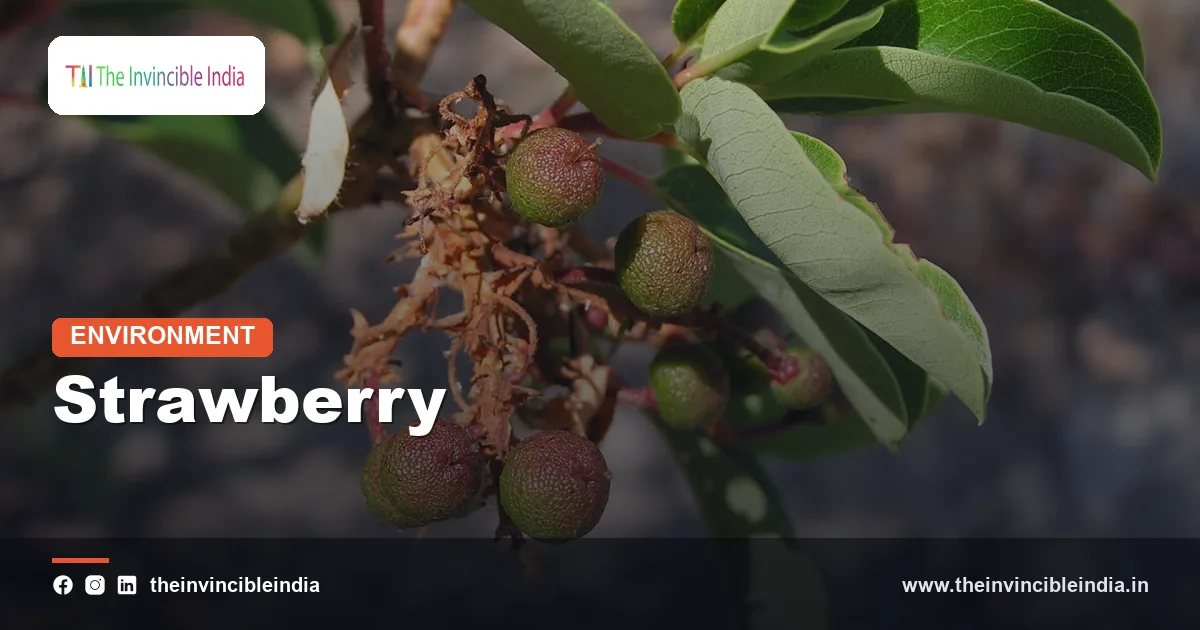
The strawberry (Fragaria x ananassa) is a low, perennial, runner-producing plant of the rose family whose bright red, juicy, aromatic fruit is grown in India mainly in cooler hill regions such as Mahabaleshwar and Panchgani in Maharashtra, and in parts of Himachal Pradesh, Uttarakhand, Jammu and Kashmir and Haryana. The strawberry plant is a soft-fruit crop of cool weather, so in most of India it is planted in the monsoon-end months and harvested in the winter and early spring.
Botanically the strawberry is not a true berry, and the tiny “seeds” on its surface are the real fruits. This explainer, last updated 30 October 2026, covers the botany, varieties, Indian growing regions, cultivation, nutrition and everyday uses of the strawberry in India.
| Quick Fact | Detail |
|---|---|
| Scientific name | Fragaria x ananassa (garden strawberry) |
| Plant family | Rosaceae (the rose family) |
| Plant type | Low-growing herbaceous perennial that spreads by runners (stolons) |
| Where grown in India | Maharashtra (Mahabaleshwar, Panchgani), Himachal Pradesh, Uttarakhand, Jammu and Kashmir, Haryana, Karnataka and parts of Punjab |
| Main season | Planted around September to October; fruit from about November or December to March or April |
| Fruit type | Aggregate accessory fruit; the fleshy red part is the swollen flower base |
| Nutrition | High in vitamin C, with manganese, folate, potassium and anthocyanin pigments |
| Main uses | Fresh fruit, jam, crush, ice cream, milkshakes, cakes and desserts |
| Shelf life | Very short; the ripe fruit bruises and spoils within a few days |
Key Takeaways
- The strawberry, Fragaria x ananassa, is a low perennial plant of the Rosaceae family that spreads by runners.
- Mahabaleshwar and Panchgani in the Satara district of Maharashtra form India’s best-known strawberry-growing belt.
- Strawberry in India is a winter and early spring crop, planted after the monsoon and harvested from about November to April.
- The red flesh of a strawberry is an accessory fruit, and the small seed-like specks on its skin are the true fruits, called achenes.
- The cultivated garden strawberry arose in Europe in the eighteenth century as a hybrid of two American wild species.
- Most commercial Indian strawberry plants are grown on raised beds covered with plastic mulch and fed by drip irrigation.
What is the strawberry plant?
The strawberry plant is a small, herbaceous, perennial plant that grows close to the ground from a short, thick crown and produces three-part toothed leaves, white five-petalled flowers and red fruit. It is a member of the rose family and is a cousin of the apple, pear, plum, rose and raspberry.
The plant seldom grows taller than about thirty centimetres. From the crown it sends out long, thin runners that root at intervals and create new daughter plants, so a single plant can multiply into a dense patch. Most commercial growers in India treat the strawberry as a one-season crop and replant each year with fresh runners, because the productivity of old plants falls.
Is a strawberry really a berry?
A strawberry is not a true berry in the botanical sense, because its red, fleshy part develops from the swollen flower base, called the receptacle, rather than from the ovary. The small yellow-brown specks on the surface are achenes, each one a tiny dry fruit that holds a single seed.
This makes the strawberry an aggregate accessory fruit. A typical fruit carries about two hundred achenes. The fleshy part ripens from white to red as sugars rise and acids fall, and it does not become sweeter after harvest, which is why growers pick the fruit when it is fully coloured. In everyday and market language, however, it is simply called a berry.
Where does the strawberry come from?
The garden strawberry comes from Europe, where it arose in the eighteenth century as a chance hybrid between two American wild species, Fragaria virginiana from North America and Fragaria chiloensis from Chile. Before this, Europeans ate wild woodland strawberries (Fragaria vesca), which are small, fragrant and sweet.
The hybrid proved larger, juicier and more productive, and it quickly replaced the older types in gardens and farms. The wild strawberry species of the Himalaya, such as Fragaria nubicola, grow naturally in Indian hill forests, but the large red fruit sold in Indian markets belongs to the hybrid garden strawberry, which was introduced and developed in India during the last century or so, especially through hill horticulture programmes.
Where is strawberry grown in India?
Strawberry is grown in India mainly in the Mahabaleshwar and Panchgani area of Maharashtra, which produces the largest share of the commercial crop, and in parts of Himachal Pradesh, Uttarakhand, Jammu and Kashmir, Haryana, Karnataka and Punjab. The Mahabaleshwar-Panchgani plateau lies in the Western Ghats at roughly 1,200 metres above sea level.
This elevation gives cool nights, red laterite soil and moderate winters, which suit the plant. Mahabaleshwar strawberries have been granted Geographical Indication (GI) recognition, and the area is a popular tourist destination where fruit stalls and farm visits are a seasonal attraction. Hill farms in Himachal Pradesh and around Nainital in Uttarakhand also grow strawberries, as do parts of the plains in Haryana and Punjab where polyhouse and winter cultivation have spread. Exact area and tonnage figures change each year and are not given here.
What are the main strawberry varieties grown in India?
The main strawberry varieties grown in India include Sweet Charlie, Camarosa, Winter Dawn, Chandler, Nabila, Ofra, Sensation and Katrain Sweet, along with newer imported cultivars. Strawberry varieties are grouped by day-length response into short-day, day-neutral and long-day types.
| Variety | Typical features |
|---|---|
| Sweet Charlie | Early, sweet, fragrant fruit; a popular type in Mahabaleshwar and elsewhere |
| Camarosa | Large, firm, deep-red fruit with good shipping quality |
| Winter Dawn | Widely planted short-day variety with attractive conical fruit |
| Chandler | Large, bright-red fruit with good flavour |
| Nabila | Firm, large fruit with good tolerance to warm weather |
| Ofra | Early cultivar suited to mild winters and warm regions |
| Katrain Sweet | Variety developed for Himachal and cooler north Indian hill regions |
Growers choose a variety for taste, firmness, size and resistance to rot. Because fresh strawberries are fragile, firm varieties that travel well are valued by farmers who send fruit to distant cities.
How is strawberry cultivated in India?
Strawberry is cultivated in India by planting healthy runner-derived plants on raised beds in cool, well-drained, slightly acidic soil, covering the beds with plastic mulch and giving the plants steady drip irrigation and balanced feeding. Planting in Mahabaleshwar generally takes place around September and October, after the monsoon.
Soil and beds
Loose, well-drained, humus-rich soil with a pH of about 5.5 to 6.5 suits the plant, which has shallow roots. Farmers make raised beds, add farmyard manure, lay drip lines and cover the beds with black or silver-black plastic film. The mulch warms the soil, suppresses weeds and keeps fruit clean by stopping it from touching wet soil.
Planting material
Healthy planting material is vital, because strawberry plants spread viruses through runners. Many growers in India buy plants multiplied in cooler nurseries or by tissue culture, and some bring in certified plants from specialised nurseries. Plants are set with the crown level with the soil surface, since burying it causes rot.
Water, nutrition and care
Drip irrigation delivers water in small, frequent amounts, and fertiliser is often supplied through the drip line. Runners are removed in the fruiting phase so the plant puts energy into fruit instead of new plants. Growers remove old leaves, control weeds and pick fruit every few days during the harvest.
What diseases and pests affect strawberries?
Strawberry plants are mainly affected by grey mould (Botrytis), powdery mildew, leaf spots and crown rot, and by pests such as red spider mites, aphids and thrips. Damp, cloudy weather during fruiting raises the risk of grey mould, which rots ripe fruit.
Growers lower the risk by using mulch, spacing plants for airflow, removing infected fruit and spraying carefully according to guidance from agricultural extension services. Unseasonal rain is the main weather risk, since it causes fruit to rot and cuts quality. In some regions, growers use low tunnels or polyhouses to shelter the crop, and cooling methods during the warm months of spring.
How and when is strawberry harvested?
Strawberry is harvested by hand when the fruit is fully red, usually every two to three days over a season of several weeks, and the picked fruit is packed quickly in shallow punnets or trays to avoid crushing. The fruit is picked with the green cap (calyx) and a short stalk attached.
In Mahabaleshwar the harvest typically runs from about November or December to March or April, with the peak in the cool months of January and February. Because strawberries do not ripen further after picking and spoil in a few days, they are moved quickly to markets in Mumbai and Pune and are best kept cool. Growers sell part of the crop to pulp and jam makers when fruit is surplus or slightly blemished. Cold storage and refrigerated transport extend the selling window.
Is strawberry good for you?
Strawberry is a low-calorie fruit that is a rich source of vitamin C and also provides manganese, folate, potassium and anthocyanin pigments, which give the fruit its red colour. A small bowl of strawberries supplies a large share of the daily vitamin C requirement of an adult.
The fruit has less sugar than many other fruit, so it is often included in balanced diets, although individuals with diabetes should still follow medical advice. A small number of people are allergic to strawberries and may develop itching or rash after eating them. Strawberries are listed among fruits that may carry pesticide residues, so thorough washing before eating is recommended.
How is strawberry used in India?
Strawberry is used in India mainly as a fresh fruit and as a flavour in processed foods, including jams, crushes, syrups, ice cream, milkshakes, cakes and chocolates. Fresh fruit is sold in baskets at hill-station stalls and in city markets, and tourists to Mahabaleshwar often buy strawberries with cream or ice cream.
- Fresh fruit: eaten whole, in fruit salads or with cream.
- Jam, crush and syrup: made by small processors in the Mahabaleshwar area and by larger food companies.
- Desserts and drinks: shakes, ice cream, cakes, pastries and mocktails.
- Flavouring: strawberry flavour is widely used in sweets, yoghurt and beverages, though many products use artificial flavour.
The fruit has become a symbol of the Western Ghats hill-station tourism, and farm-visit tourism, where visitors pick their own fruit, adds income for growers.
What are the challenges of growing strawberry in India?
The main challenges of growing strawberry in India are heat, unseasonal rain, plant disease, perishability and the high cost of planting material and mulch. Strawberry thrives in cool weather, so rising temperatures in spring can shorten the picking season and soften fruit.
| Challenge | Why it matters | Common response |
|---|---|---|
| Warm spring weather | Reduces fruit size and firmness, ends the season early | Heat-tolerant varieties, shade, early planting |
| Rain and humidity | Promotes grey mould and fruit rot | Plastic mulch, tunnels, careful spraying |
| Perishability | Fruit spoils in a few days | Fast transport, cold chain, processing surplus |
| Planting material | Virus-free plants are costly | Tissue-cultured or certified nursery plants |
| Labour | Picking and packing are manual | Family and seasonal labour |
Research bodies and state agricultural universities continue to evaluate varieties and methods for new areas, and the crop has spread to lower-altitude and plains regions through protected cultivation and winter planting.
Bottom Line
The strawberry is a low, runner-spreading plant of cool weather whose sweet red fruit has become a familiar winter treat in India, led by the Mahabaleshwar and Panchgani belt. Success with the crop depends on cool nights, good planting material, mulch, drip irrigation and quick handling of a very perishable fruit.
Frequently Asked Questions
Where is strawberry grown in India?
Strawberry is grown in India mainly in Mahabaleshwar and Panchgani in Maharashtra, along with parts of Himachal Pradesh, Uttarakhand, Jammu and Kashmir, Haryana and Karnataka. The Mahabaleshwar plateau is the best-known producing area. Cool nights and well-drained red soil suit the plant.
Which season is best for strawberries in India?
Winter and early spring, from about November to March or April, is the best season for strawberries in India. Plants are set out around September and October, after the monsoon. Warm spring weather ends the picking season.
Is a strawberry a real berry?
No, a strawberry is not a true berry in botanical terms. The red flesh is the swollen base of the flower, and the tiny specks on it are the real fruits, called achenes. It is classed as an aggregate accessory fruit.
How is a strawberry plant propagated?
A strawberry plant is propagated mainly by runners, which are long stems that root and form new daughter plants. Growers also use tissue-cultured plants for clean, virus-free stock. Plants grown from seed are less common in commercial farming.
Why are strawberries expensive in Indian cities?
Strawberries are costly because the fruit is delicate, perishable and grown in a few cool regions, so it needs careful handling and fast transport to reach city markets. Labour for picking and packing and the cost of planting material also add to the price. Prices fall in peak season when supply is high.
Are strawberries healthy?
Yes, strawberries are a healthy, low-calorie fruit that supplies vitamin C, manganese, folate and antioxidant pigments. They contain less sugar than many other fruits. Washing the fruit well before eating is advised, and people allergic to strawberries should avoid them.
{“@context”:”https://schema.org”,”@graph”:[{“@type”:”FAQPage”,”mainEntity”:[{“@type”:”Question”,”name”:”Where is strawberry grown in India?”,”acceptedAnswer”:{“@type”:”Answer”,”text”:”Strawberry is grown in India mainly in Mahabaleshwar and Panchgani in Maharashtra, along with parts of Himachal Pradesh, Uttarakhand, Jammu and Kashmir, Haryana and Karnataka. The Mahabaleshwar plateau is the best-known producing area. Cool nights and well-drained red soil suit the plant.”}},{“@type”:”Question”,”name”:”Which season is best for strawberries in India?”,”acceptedAnswer”:{“@type”:”Answer”,”text”:”Winter and early spring, from about November to March or April, is the best season for strawberries in India. Plants are set out around September and October, after the monsoon. Warm spring weather ends the picking season.”}},{“@type”:”Question”,”name”:”Is a strawberry a real berry?”,”acceptedAnswer”:{“@type”:”Answer”,”text”:”No, a strawberry is not a true berry in botanical terms. The red flesh is the swollen base of the flower, and the tiny specks on it are the real fruits, called achenes. It is classed as an aggregate accessory fruit.”}},{“@type”:”Question”,”name”:”How is a strawberry plant propagated?”,”acceptedAnswer”:{“@type”:”Answer”,”text”:”A strawberry plant is propagated mainly by runners, which are long stems that root and form new daughter plants. Growers also use tissue-cultured plants for clean, virus-free stock. Plants grown from seed are less common in commercial farming.”}},{“@type”:”Question”,”name”:”Why are strawberries expensive in Indian cities?”,”acceptedAnswer”:{“@type”:”Answer”,”text”:”Strawberries are costly because the fruit is delicate, perishable and grown in a few cool regions, so it needs careful handling and fast transport to reach city markets. Labour for picking and packing and the cost of planting material also add to the price. Prices fall in peak season when supply is high.”}},{“@type”:”Question”,”name”:”Are strawberries healthy?”,”acceptedAnswer”:{“@type”:”Answer”,”text”:”Yes, strawberries are a healthy, low-calorie fruit that supplies vitamin C, manganese, folate and antioxidant pigments. They contain less sugar than many other fruits. Washing the fruit well before eating is advised, and people allergic to strawberries should avoid them.”}}]}]}


