

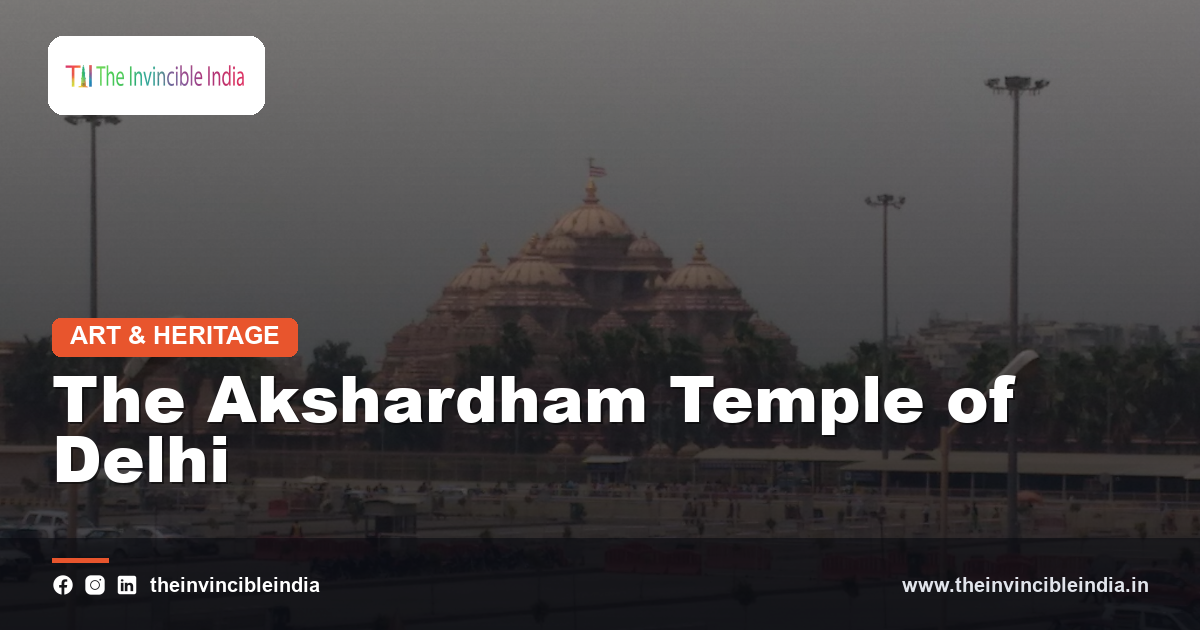
The Akshardham Temple in Delhi is a sprawling modern temple complex built by the Swaminarayan Sanstha, combining traditional Hindu temple-building techniques with monumental scale and elaborate stone carving. Completed in the early twenty-first century, the central monument was constructed largely without structural steel, following building methods rooted in classical Indian architectural treatises much like those described in broader guides to Indian temple architecture. Beyond its central shrine, the complex includes exhibition halls, gardens, and a large stepped water tank, together forming one of Delhi’s most extensive cultural and religious destinations. Its blend of traditional craftsmanship and contemporary scale has made it a widely visited symbol of devotional architecture in modern India.
Quick Facts
| Detail | Information |
|---|---|
| Location | Delhi, India |
| Built by | BAPS Swaminarayan Sanstha |
| Completed | 2005 |
| Architectural technique | Traditional Sthapatya Shastra methods |
| Materials | Pink sandstone and marble |
| Recognition | Guinness World Record for largest comprehensive Hindu temple complex |
A Vast Modern Temple Complex
The Akshardham Temple complex occupies an extensive site on the banks of the Yamuna river in Delhi, combining a central stone temple with gardens, exhibition halls, and water features across a sprawling campus. Its scale sets it apart from most traditional temple compounds, reflecting an ambition to create a comprehensive cultural and spiritual destination rather than a single shrine alone.
Since its completion, the complex has become one of Delhi’s most visited attractions, drawing pilgrims and tourists alike who come both for worship and to experience its architectural and cultural offerings. This dual appeal has helped establish Akshardham as a distinctive addition to the city’s landscape of religious monuments.
The Swaminarayan Sanstha and Its Vision
Akshardham was built under the auspices of the BAPS Swaminarayan Sanstha, a Hindu religious and cultural organization devoted to promoting spiritual and social values rooted in the Swaminarayan tradition. The complex was conceived as a means of celebrating Indian culture, spirituality, and architectural heritage on a grand scale.
The organization’s broader mission of education and cultural preservation is reflected throughout the complex, which combines devotional space with exhibitions intended to introduce visitors to aspects of Indian history, values, and traditional knowledge alongside its primary religious function.
Building Without Structural Steel
One of the most notable aspects of Akshardham’s construction is that the central monument was built without the use of structural steel, relying instead on traditional load-bearing stone construction techniques. This approach echoes historic temple-building methods that predate the widespread use of modern industrial materials.
Achieving this on such a large scale required careful engineering within the constraints of traditional construction, demonstrating that ancient building principles could still support a monument of considerable size and complexity. This deliberate choice reflects the project’s broader commitment to traditional craftsmanship over modern industrial methods.
Sthapatya Shastra: Traditional Design Principles
The temple’s design follows principles drawn from Sthapatya Shastra, a body of traditional Indian architectural and design knowledge that governs temple proportions, layout, and symbolism. These texts provide guidelines intended to ensure that sacred structures are built in harmony with established spiritual and aesthetic conventions.
Applying these traditional principles to a project of Akshardham’s scale required extensive study and consultation with scholars versed in this specialized knowledge, ensuring that the finished monument remained faithful to established conventions even while achieving a scale far beyond most historic temples built using similar methods.
The Central Monument
At the heart of the complex stands the main temple monument, a multi-domed structure carved extensively in stone and organized around a central sanctum housing the presiding deity. The monument’s exterior is covered with detailed carvings arranged across multiple registers, creating a dense visual program typical of major Hindu temple architecture.
The building’s overall form draws on classical temple design, with tiered towers, pillared corridors, and a symmetrical layout oriented around its central shrine. Despite its contemporary construction, the monument’s architectural vocabulary situates it firmly within the long continuum of Indian temple building traditions.
Pink Sandstone and Marble Craftsmanship
The temple’s exterior is primarily built from pink sandstone, while portions of the interior make extensive use of white marble, following material choices long associated with major Indian religious architecture. These stones were carved by skilled artisans employing both traditional hand-carving techniques and, where appropriate, modern tools to achieve consistent detailing across the vast structure.
The scale of the carving project required the coordinated efforts of a large workforce of craftsmen working over an extended construction period, reflecting the scale of ambition behind the temple’s design. The resulting stonework covers the monument’s surfaces with an unbroken density of ornamental and figural detail.
Carved Pillars, Domes, and Figures
Akshardham’s central monument features an extensive sculptural program, including carved pillars, domes, and thousands of figures depicting deities, sages, musicians, dancers, and animals drawn from Indian mythology and cultural history. This dense figural decoration echoes the sculptural richness found in historic temple complexes across the subcontinent.
The carvings are arranged to tell stories and convey spiritual and cultural themes, transforming the temple’s surfaces into an extended visual narrative. This approach situates the monument within a long tradition of using architectural ornamentation as a vehicle for religious and cultural storytelling.
The Gajendra Pith Elephant Plinth
Surrounding the base of the central monument is a plinth featuring a long procession of carved elephants, known as the Gajendra Pith, depicting the animals in various poses and activities. Elephants hold significant symbolic value in Indian culture, often associated with strength, wisdom, and auspiciousness.
This elephant plinth adds a distinctive decorative band to the monument’s base, reinforcing themes of nature and mythology found throughout the temple’s broader sculptural program. Its inclusion reflects the careful attention given to symbolic detail across every level of the complex’s design.
Yagnapurush Kund and the Stepped Tank
Among the complex’s notable features is Yagnapurush Kund, a large stepped water tank built in the tradition of India’s historic stepwells, arranged around a central platform used for cultural performances and events. Its terraced steps descend symmetrically toward a central pool, echoing the stepwell architecture found across various regions of India.
This structure serves both a functional and symbolic role within the complex, providing a dramatic setting for evening cultural programs while also connecting the modern complex to older traditions of stepped water architecture that have long been part of India’s built heritage.
Gardens and Grounds
The temple complex includes extensive landscaped gardens featuring sculpted lawns, water features, and thematic plantings that extend the visitor experience beyond the central monument itself. These grounds are designed to complement the architecture, offering spaces for quiet reflection as well as areas suited to larger public gatherings.
The scale of the gardens contributes to the overall sense of Akshardham as a comprehensive destination rather than a single building, reinforcing the complex’s identity as both a religious site and a broader cultural park intended for extended visits.
Exhibition Halls and Cultural Displays
Beyond its central shrine, Akshardham houses exhibition halls presenting displays on Indian history, values, and spiritual traditions through various multimedia and diorama-based presentations. These exhibitions are designed to introduce visitors, including younger audiences, to aspects of Indian culture in an accessible and engaging format.
This educational dimension distinguishes Akshardham from temples focused solely on ritual worship, positioning the complex as a hybrid space combining devotional practice with cultural and historical interpretation aimed at a broad public audience.
Guinness World Record Recognition
Akshardham has been recognized by Guinness World Records as the world’s largest comprehensive Hindu temple complex, an acknowledgment of the scale and completeness of its architecture, gardens, and associated facilities. This recognition has contributed significantly to the complex’s international profile.
Such formal recognition underscores the scale of ambition behind the project, distinguishing it among modern temple complexes built anywhere in the world. It has also reinforced Akshardham’s status as a major landmark within Delhi’s broader collection of religious and cultural destinations.
Craftsmen and Traditional Skills
The construction of Akshardham depended on the skills of thousands of traditional stone carvers and artisans, many trained in techniques passed down through generations of craft communities associated with Indian temple building. Their work sustained a living tradition of hand-carved stone architecture on a scale rarely attempted in the modern era.
This large-scale mobilization of traditional artisanal skill helped preserve and showcase craft techniques that might otherwise see diminishing large-scale application, demonstrating how major contemporary construction projects can support the continuation of historic building traditions.
A Center for Cultural and Spiritual Learning
Beyond its architectural and religious significance, Akshardham functions as a center for cultural and spiritual education, hosting programs, exhibitions, and events intended to convey aspects of Indian heritage and values to a broad public. This educational mission extends the complex’s role beyond that of a conventional place of worship.
By combining devotional space with structured cultural programming, Akshardham reflects a broader contemporary approach to temple building, in which architectural grandeur is paired with an explicit emphasis on public education and cultural transmission for visitors of diverse backgrounds.
Visiting the Complex
Visitors to Akshardham typically explore the central monument, its surrounding gardens, and one or more of the exhibition halls, with an evening water and light show at Yagnapurush Kund forming an additional highlight for many. The scale of the complex generally requires a substantial visit to appreciate its full range of offerings.
Given its popularity, the complex can draw large numbers of visitors, particularly during evenings and weekends, reflecting its status as one of Delhi’s leading cultural and religious destinations for both domestic and international travelers.
The Evening Water and Light Show
Each evening, Yagnapurush Kund becomes the setting for a water and light presentation that combines fountains, projected imagery, and recorded narration to convey themes drawn from Indian philosophy and mythology. This program transforms the stepped tank into an additional attraction distinct from the daytime experience of the temple and its carved monument.
The show draws large audiences seated around the tank’s terraced steps, adding a further dimension to a visit that already encompasses architecture, gardens, and exhibition halls. Its popularity reflects the broader design philosophy behind Akshardham, which seeks to engage visitors through multiple complementary experiences rather than a single devotional encounter alone.
Akshardham and Contemporary Temple Building
Akshardham is frequently cited as a significant example of contemporary Hindu temple building, demonstrating how traditional architectural knowledge can be applied at a scale and with an ambition rarely attempted using historic construction methods. Its completion prompted renewed interest in traditional stone-carving techniques among architects and cultural institutions.
The complex has also influenced subsequent large-scale temple projects that similarly combine traditional craftsmanship with expansive visitor facilities, reflecting a broader trend in modern religious architecture toward comprehensive cultural destinations. Akshardham’s example continues to inform discussions of how ancient building traditions can be adapted to contemporary scale and purpose.
Akshardham Temple Today
Today the Akshardham Temple stands as one of the most significant works of contemporary Hindu temple architecture, its carved stone monument and extensive grounds continuing to attract millions of visitors each year. Its combination of traditional craftsmanship and modern scale exemplifies a distinctive approach to religious architecture in twenty-first-century India.
As both an active place of worship and a major cultural institution, Akshardham continues to shape perceptions of contemporary Indian temple building, demonstrating the continued vitality of traditional architectural and artistic techniques within a thoroughly modern context.
Sources & Further Reading
- Ministry of Culture, Government of India (indiaculture.gov.in).
- Archaeological Survey of India (asi.nic.in).
Frequently Asked Questions
Where is the Akshardham Temple located?
The Akshardham Temple is located on the banks of the Yamuna river in Delhi, India.
Who built the Akshardham Temple?
It was built by the BAPS Swaminarayan Sanstha, a Hindu religious and cultural organization.
Is the temple built using modern steel construction?
No, the central monument was built primarily using traditional stone construction methods without structural steel.
What is Yagnapurush Kund?
It is a large stepped water tank within the complex, built in the tradition of Indian stepwells and used for cultural performances.
Has Akshardham received any special recognition?
Yes, it has been recognized by Guinness World Records as the world’s largest comprehensive Hindu temple complex.


