

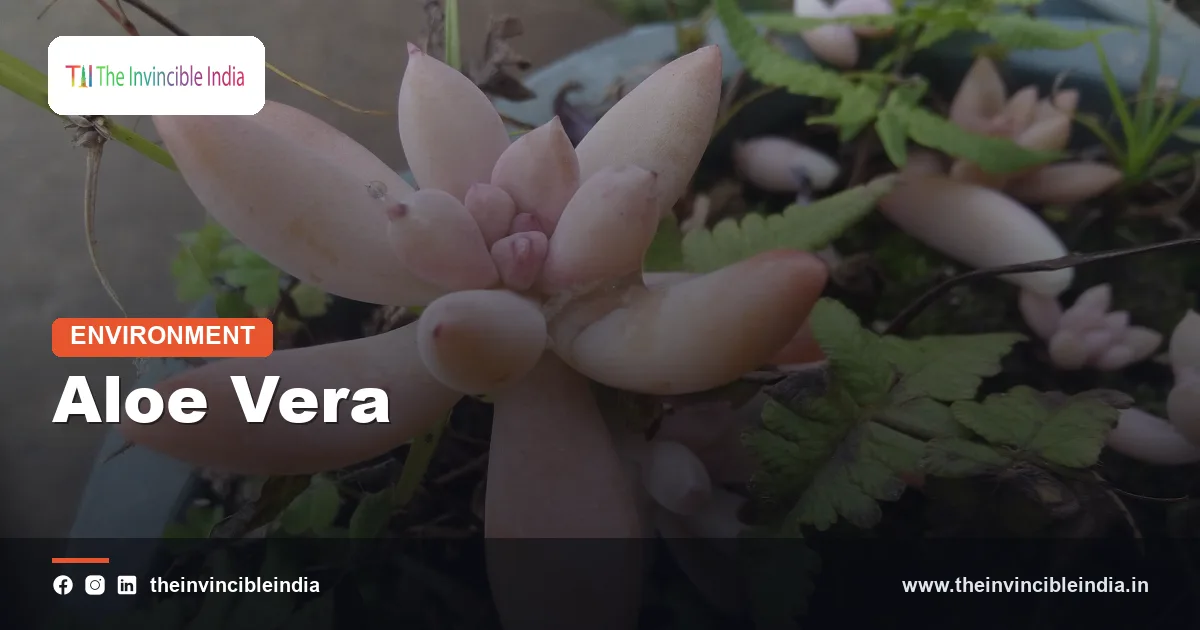
Aloe vera (Aloe vera, also written Aloe barbadensis) is a hardy, fleshy-leaved succulent plant grown across India in homes, gardens and commercial farms for the clear gel inside its leaves, which is used in traditional medicine, skin care, food and drink. Known as ghritkumari or ghikwar in Hindi, kumari in Sanskrit and katrazhai in Tamil, the plant is not native to the subcontinent but has been naturalised for centuries and is now one of the most familiar household plants in the country.
Aloe vera appears in Ayurveda, in village remedies and on the shelves of every pharmacy and cosmetics store in India. This explainer, last updated 23 October 2026, covers the botany, cultivation, uses, safety and cultural role of aloe vera in India, with measured, evidence-aware claims.
| Quick Fact | Detail |
|---|---|
| Scientific name | Aloe vera (L.) Burm.f., also called Aloe barbadensis Miller |
| Plant family | Asphodelaceae (subfamily Asphodeloideae) |
| Common names | Ghritkumari, ghikwar, kumari, katrazhai, kalabanda, korphad, aloe |
| Plant type | Perennial succulent herb forming a rosette of thick leaves |
| Origin | Probably the Arabian Peninsula; naturalised in India and other warm regions |
| Key plant parts | Inner leaf gel (parenchyma) and bitter yellow latex (rind) |
| Main Indian growing states | Rajasthan, Gujarat, Andhra Pradesh, Tamil Nadu, Maharashtra and others |
| Photosynthesis type | CAM (Crassulacean Acid Metabolism), which saves water |
| Common uses | Skin gel, juice, hair care, Ayurvedic formulations, ornamental pots |
Key Takeaways
- Aloe vera is a succulent of the family Asphodelaceae, and it is not a cactus even though it grows in dry, sunny places.
- The clear gel from the inner aloe vera leaf and the yellow latex under the leaf skin are different substances with different uses and risks.
- Aloe vera is called ghritkumari or kumari in Hindi and Sanskrit and is a long-established plant in Ayurveda and Indian home remedies.
- Aloe vera gel is widely used on the skin for minor sunburn and dryness, but evidence for most other health claims is limited or mixed.
- Aloe vera is easily grown in pots and in dry soil in India, needs little water and is propagated by separating the small offsets, called pups, from the parent plant.
- Aloe latex taken by mouth is a strong laxative and should not be used casually, and the gel should be patch-tested on the skin before regular use.
What is aloe vera?
Aloe vera is a stemless or short-stemmed succulent that forms a rosette of thick, pointed, grey-green leaves with small white teeth along the edges. The leaves store water in a clear, mucilaginous gel, which lets the plant survive long dry periods. Mature plants send up a tall, unbranched flower spike with tubular yellow or orange flowers.
The genus Aloe contains hundreds of species, mostly from Africa and Arabia, and aloe vera is the species most widely cultivated for its gel. It has been grown in India for a very long time, and Indian languages have their own old names for it, which reflects how thoroughly the plant was absorbed into local medicine and household life.
Despite its look, aloe vera is not a cactus. Cacti belong to a separate family from the Americas, while aloe vera belongs to the Asphodelaceae family, which also includes the red hot poker and the haworthia of succulent collectors.
Where did aloe vera come from, and how did it reach India?
Aloe vera is believed to have originated on the Arabian Peninsula and nearby arid lands, and it spread across the warm parts of the world through trade and cultivation. It is not known as a truly wild native plant in India, but it has long since escaped into dry scrub in many regions and become a familiar part of the landscape.
Arab traders and early Mediterranean medical traditions valued the dried aloe latex, and the plant moved along the same sea routes that carried spices and textiles. Indian physicians absorbed it into Ayurveda under the Sanskrit name kumari, and later Unani medicine, which also reached India, used a related preparation called sibr. In modern times, India has become both a large grower and an exporter of aloe vera raw material and finished products.
How is aloe vera grown in India?
Aloe vera is grown in India as a low-water crop in warm, dry and semi-arid regions, and the plant is propagated mainly by separating the suckers, known as pups, that grow around the base of the parent plant. It thrives in sandy or light, well-drained soil and is easily damaged by waterlogging.
Commercial cultivation is found in Rajasthan and Gujarat, which have suitable dry climates, and also in parts of Andhra Pradesh, Tamil Nadu, Maharashtra and Madhya Pradesh. Farmers plant pups at close spacing, give light irrigation and harvest the lower, mature leaves several times a year while leaving the young central leaves to continue growing.
Growing aloe vera at home
- Light: Bright light with several hours of direct sun; leaves may turn reddish-brown in very harsh sun.
- Soil: A gritty, well-drained mix, such as garden soil with coarse sand; avoid heavy clay.
- Water: Water deeply but only when the soil is dry; overwatering is the most common cause of rot.
- Pot: A pot with drainage holes; terracotta suits the plant because it dries quickly.
- Propagation: Separate healthy pups with a few roots and plant them in fresh mix.
- Temperature: Prefers warm conditions and is sensitive to frost.
What parts of the aloe vera plant are used?
Two parts of the aloe vera leaf are used: the clear inner gel, which is the main ingredient in skin and drink products, and the yellow latex just beneath the leaf skin, which is a bitter laxative material. These two parts are chemically and functionally different and should not be confused.
| Part | What it is | Typical use | Key caution |
|---|---|---|---|
| Inner gel | Clear, watery, mucilaginous tissue in the centre of the leaf | Skin gel, hair care, juices, cosmetics | Patch-test first; some people react |
| Yellow latex | Bitter yellow sap beneath the green rind, rich in anthraquinones such as aloin | Traditional laxative preparations | Strong purgative; not for casual or long-term use |
| Leaf rind | Green outer skin of the leaf | Usually discarded; whole-leaf extracts contain it | Whole-leaf products may contain latex compounds |
| Flowers and roots | Minor parts of the plant | Occasional folk uses | Little scientific study |
What is aloe vera used for in India?
Aloe vera is used in India as a soothing skin gel, as a juice sold as a wellness drink, as an ingredient in hair and cosmetic products and as a component in Ayurvedic formulations. Households also use the fresh gel straight from the leaf for minor burns, dry skin and as a face or hair mask.
- Skin care: Gel for dryness, minor sunburn and after-sun care.
- Hair care: Gel and aloe-based oils or shampoos used for scalp and hair conditioning.
- Beverages and food: Aloe juice and gel cubes are sold in commercial products and added to drinks and desserts in some places.
- Ayurveda: Kumari is used in preparations such as kumaryasava, a fermented tonic described in classical texts.
- Cosmetics industry: Gel is a common base in creams, lotions, soaps and facial sheets.
- Ornamental use: A popular potted plant on balconies and windowsills.
In many homes, aloe vera is also considered an auspicious or protective plant, and it is sometimes hung or kept near the entrance. This is a cultural custom with no medical meaning, but it shows how the plant is woven into daily life.
Does aloe vera really work? What does the evidence say?
Aloe vera gel has reasonable support for modest topical uses, such as soothing minor sunburn and mild skin dryness, but evidence for most other claims, especially for internal use, is limited, inconsistent or still under study. Aloe vera should be understood as a traditional and cosmetic plant rather than a proven cure.
Small studies suggest aloe vera gel may help with some minor skin conditions, and the gel is generally well tolerated on the skin. Claims that aloe juice treats diabetes, boosts immunity, cures acne or reverses ageing are not firmly established, and results across studies are mixed in quality. Health regulators in many countries do not accept strong disease claims for aloe vera products.
Aloe vera is not a replacement for medical care. Serious burns, deep wounds, long-lasting skin problems and any internal health condition should be seen by a doctor.
Is aloe vera safe? What are the side effects?
Aloe vera gel is generally safe for short-term use on intact skin, but aloe latex and whole-leaf extracts taken by mouth can cause cramps, diarrhoea and electrolyte loss, and they are not recommended for casual use. A small number of people also develop allergic skin reactions to the fresh plant.
- Skin test: Apply a small amount on the inner forearm and wait a day before wider use, especially with fresh leaf gel, which may carry traces of latex.
- Oral latex: Strongly laxative; prolonged use may cause dehydration and low potassium. It is generally advised against in pregnancy, in young children and in people with bowel disease.
- Whole-leaf extract: In 2016, an international cancer research agency classified non-decolorised whole-leaf aloe vera extract as possibly carcinogenic to humans on the basis of animal evidence, which is why purified, decolorised products are preferred.
- Medicine interactions: Aloe taken by mouth may affect how some medicines are absorbed, including blood sugar and heart medicines, so a doctor should be consulted.
- Open wounds: Deep or infected wounds should be treated by a health professional.
How is aloe vera gel extracted and used at home?
Aloe vera gel is extracted at home by cutting a mature, outer leaf near the base, letting the yellow latex drain away, slicing off the green rind and scooping out the clear gel. Draining the cut leaf upright for ten to fifteen minutes reduces the yellow latex that can irritate the skin.
- Choose a thick, mature leaf from the outer ring of the plant.
- Cut near the base with a clean knife and stand the leaf upright in a bowl so the yellow sap drains.
- Rinse the leaf, trim the spiny edges and slice away the green skin.
- Scoop out the clear gel and rinse it lightly to remove any yellow residue.
- Apply fresh gel to a small patch of skin first; refrigerate any leftover for a few days only.
Fresh gel spoils quickly, so it is best used within a few days. Commercial gels contain preservatives and thickeners, so the fresh gel and a bottled product are not identical.
What is the commercial importance of aloe vera in India?
Aloe vera is commercially important in India as a raw material for the cosmetics, personal care, nutraceutical and herbal industries, and it is an accessible cash crop for farmers in dry regions. Its low water requirement makes aloe vera attractive in places where other crops are risky.
Indian companies process the leaves into gel, juice, powder and extracts, which are used domestically and exported. The sector is relatively unregulated at the farm level, so quality can vary widely, and buyers generally prefer decolorised, standardised gel with a defined aloin limit. Farmers who grow aloe vera for contract buyers usually agree on harvesting schedules and leaf quality in advance.
Bottom Line
Aloe vera is an easy, drought-hardy succulent that has earned a permanent place in Indian homes, gardens and the herbal industry. Its gel is a useful and gentle skin product, but its latex and its larger health claims deserve caution, and it is best treated as a traditional and cosmetic plant, not a cure.
Frequently Asked Questions
What is aloe vera called in Hindi?
Aloe vera is called ghritkumari or ghikwar in Hindi, and kumari in Sanskrit. In Tamil it is katrazhai, in Telugu kalabanda and in Marathi korphad. These names reflect centuries of use of the plant in Indian households and in Ayurveda.
Is aloe vera a cactus?
No, aloe vera is not a cactus. It is a succulent in the family Asphodelaceae, while cacti belong to a separate family native to the Americas. Both groups store water and tolerate dry conditions, which is why they look alike and are often grown together.
Can I apply aloe vera gel directly on my face?
Yes, most people can use pure aloe vera gel on the face, but a patch test is recommended first. Apply a small amount on the inner forearm and wait a day to check for redness or itching. Fresh gel should be rinsed free of yellow latex, and anyone with sensitive skin or a skin condition should consult a dermatologist.
Is it safe to drink aloe vera juice?
Purified, decolorised aloe vera juice is generally considered low risk in small amounts, but it is not proven to treat any disease. Juice made from the whole leaf or containing latex can cause cramps and diarrhoea. Pregnant women, children and people on regular medicines should check with a doctor before drinking aloe juice.
How often should I water an aloe vera plant?
Water an aloe vera plant only when the top few centimetres of soil are completely dry, which is usually every one to three weeks depending on the weather. Aloe vera stores water in its leaves and quickly rots if the soil stays wet. Use a pot with drainage holes and water less in winter.
Which Indian states grow aloe vera commercially?
Aloe vera is grown commercially in Rajasthan and Gujarat in particular, and also in parts of Andhra Pradesh, Tamil Nadu, Maharashtra and Madhya Pradesh. These regions have warm, dry climates that suit the crop. Production patterns shift with contract buyers and local water availability.
{“@context”:”https://schema.org”,”@graph”:[{“@type”:”FAQPage”,”mainEntity”:[{“@type”:”Question”,”name”:”What is aloe vera called in Hindi?”,”acceptedAnswer”:{“@type”:”Answer”,”text”:”Aloe vera is called ghritkumari or ghikwar in Hindi, and kumari in Sanskrit. In Tamil it is katrazhai, in Telugu kalabanda and in Marathi korphad. These names reflect centuries of use of the plant in Indian households and in Ayurveda.”}},{“@type”:”Question”,”name”:”Is aloe vera a cactus?”,”acceptedAnswer”:{“@type”:”Answer”,”text”:”No, aloe vera is not a cactus. It is a succulent in the family Asphodelaceae, while cacti belong to a separate family native to the Americas. Both groups store water and tolerate dry conditions, which is why they look alike and are often grown together.”}},{“@type”:”Question”,”name”:”Can I apply aloe vera gel directly on my face?”,”acceptedAnswer”:{“@type”:”Answer”,”text”:”Yes, most people can use pure aloe vera gel on the face, but a patch test is recommended first. Apply a small amount on the inner forearm and wait a day to check for redness or itching. Fresh gel should be rinsed free of yellow latex, and anyone with sensitive skin or a skin condition should consult a dermatologist.”}},{“@type”:”Question”,”name”:”Is it safe to drink aloe vera juice?”,”acceptedAnswer”:{“@type”:”Answer”,”text”:”Purified, decolorised aloe vera juice is generally considered low risk in small amounts, but it is not proven to treat any disease. Juice made from the whole leaf or containing latex can cause cramps and diarrhoea. Pregnant women, children and people on regular medicines should check with a doctor before drinking aloe juice.”}},{“@type”:”Question”,”name”:”How often should I water an aloe vera plant?”,”acceptedAnswer”:{“@type”:”Answer”,”text”:”Water an aloe vera plant only when the top few centimetres of soil are completely dry, which is usually every one to three weeks depending on the weather. Aloe vera stores water in its leaves and quickly rots if the soil stays wet. Use a pot with drainage holes and water less in winter.”}},{“@type”:”Question”,”name”:”Which Indian states grow aloe vera commercially?”,”acceptedAnswer”:{“@type”:”Answer”,”text”:”Aloe vera is grown commercially in Rajasthan and Gujarat in particular, and also in parts of Andhra Pradesh, Tamil Nadu, Maharashtra and Madhya Pradesh. These regions have warm, dry climates that suit the crop. Production patterns shift with contract buyers and local water availability.”}}]}]}


