

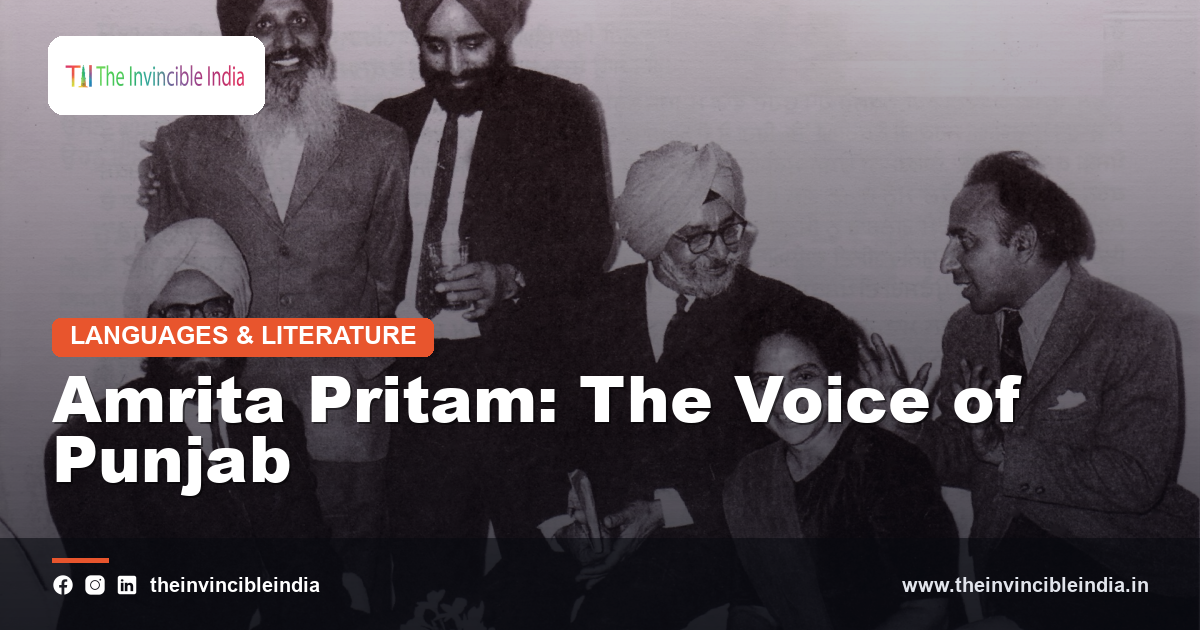
Amrita Pritam is remembered as one of the most celebrated Punjabi and Hindi writers of the twentieth century, a poet and novelist whose work gave literary voice to love, loss, and the upheaval of Partition. Her poetry shares emotional territory with the region’s wider literary heritage, including the Perso-Arabic tradition explored in guides to Urdu literature, even as she wrote primarily in Punjabi and Hindi. Across decades of prolific writing, she produced poetry, novels, and essays that addressed the experiences of women and the trauma of displacement with unusual candor for her time. Amrita Pritam’s body of work remains a defining presence in modern Punjabi and Indian literature.
Quick Facts
| Detail | Information |
|---|---|
| Primary Languages | Punjabi and Hindi |
| Literary Forms | Poetry, novels, essays |
| Major Poem | Ajj Aakhan Waris Shah Nu |
| Major Novel | Pinjar |
| Recurring Themes | Partition, love, women’s experience |
| Recognition | Widely honored with major national literary awards |
Who Was Amrita Pritam
Amrita Pritam is remembered as one of the foremost voices in modern Punjabi and Hindi literature, celebrated for a body of poetry and prose that captured the emotional experience of love, loss, and social change across the twentieth century. Her writing career spanned several decades of sustained output.
She wrote across multiple literary forms, including poetry, novels, and essays, addressing themes that ranged from personal romantic experience to the collective trauma of historical upheaval. This breadth of subject and form has helped secure her lasting reputation within Indian literature.
Early Life and Literary Beginnings
Amrita Pritam began writing poetry from a young age, developing her craft within a Punjabi literary environment that valued both classical form and emerging modern sensibilities. Her early work already displayed the emotional directness that would come to define her mature writing.
Her literary beginnings were shaped by the wider cultural and intellectual currents of Punjab during a period of significant social and political change, providing the backdrop against which her distinctive poetic voice gradually developed and matured.
Rise as a Punjabi Poet
Amrita Pritam rose to prominence as a Punjabi poet whose verse combined lyrical sensitivity with an unusually candid engagement with personal and social themes. Her poetry quickly attracted a devoted readership drawn to its emotional honesty and accessible language.
As her reputation grew, she became recognized as one of the leading literary voices of her generation in Punjabi, admired for a style that balanced traditional lyrical craftsmanship with a modern willingness to address difficult personal and social experience directly.
Partition and Its Literary Impact
The Partition of India left a deep and lasting impression on Amrita Pritam’s writing, as the widespread displacement and loss of the period shaped much of her most powerful literary work. Her writing gave voice to the human cost of this historical rupture.
Rather than treating Partition as a distant historical event, her work conveys its emotional and psychological aftermath through intimate personal narrative, helping readers understand the period’s impact on ordinary lives rather than only its broader political dimensions.
Ajj Aakhan Waris Shah Nu
Among Amrita Pritam’s most renowned works is the poem ‘Ajj Aakhan Waris Shah Nu,’ in which she addresses the classical Punjabi poet Waris Shah directly, invoking his memory amid the devastation of Partition. The poem has become one of the most recognized literary responses to that period.
By calling upon a revered figure from Punjab’s literary past, the poem connects contemporary suffering to a longer cultural memory, using classical reference to frame and express profound modern grief. This work remains closely associated with her literary legacy.
Themes of Loss and Displacement
Loss and displacement recur throughout Amrita Pritam’s poetry and prose, reflecting both the historical experience of Partition and more personal forms of separation and longing found throughout her work. These themes give her writing a consistent emotional depth across different forms and periods.
Her treatment of displacement extends beyond physical migration to encompass emotional and psychological dislocation, exploring how individuals cope with profound change and loss. This layered approach to the theme has contributed to the enduring resonance of her work among readers.
Pinjar and Her Prose Fiction
Amrita Pritam’s novel Pinjar stands among her most acclaimed prose works, a narrative set against the backdrop of Partition that follows a woman’s experience of abduction, displacement, and resilience during that turbulent period. The novel is widely studied for its unflinching portrayal of these events.
Through Pinjar and her other prose fiction, Amrita Pritam demonstrated a capacity to address difficult social and historical themes with psychological depth and narrative skill, extending her literary reach beyond poetry into sustained long-form storytelling.
Women's Voices in Her Writing
A defining feature of Amrita Pritam’s literary output is its sustained attention to women’s experience, exploring themes of desire, autonomy, social constraint, and resilience with a candor that was notable for its time. Her female characters and poetic personas often speak with striking directness.
This focus on women’s inner lives and social circumstances gave her writing a distinctive perspective within a literary landscape that had not always centered such experiences, helping establish her as an important voice in the representation of women in modern Indian literature.
Poetic Style and Themes of Love
Amrita Pritam’s poetry is marked by an intimate, direct style that conveys romantic and emotional experience with unusual candor, often exploring themes of love, longing, and separation through vivid, personal imagery. This directness became one of the hallmarks of her poetic voice.
Her love poetry, while deeply personal, also resonated broadly with readers, who found in her verse an honest articulation of emotional experience that felt both individually specific and universally recognizable. This balance between the personal and the universal remains central to her poetic appeal.
Association with Imroz
Amrita Pritam’s long personal and creative association with the artist Imroz is widely known and has become part of the broader public understanding of her life and work. Their companionship spanned several decades and is often discussed alongside her literary output.
This relationship, marked by mutual creative respect and unconventional companionship for its era, has come to be seen as an extension of the themes of love and independence that run through much of her poetry, adding a biographical dimension to how her work is read.
Recognition and Literary Honors
Amrita Pritam received significant recognition during her lifetime for her contributions to Punjabi and Hindi literature, including major national literary honors that acknowledged the depth and impact of her body of work. This recognition reflected her standing among the foremost writers of her generation.
Such honors helped bring her work to wider national and international attention, reinforcing her position not only as a leading Punjabi writer but as a significant figure within the broader landscape of modern Indian literature.
Amrita Pritam in Hindi and Punjabi
Amrita Pritam wrote extensively in both Punjabi and Hindi, allowing her work to reach readers across linguistic communities and contributing to literary traditions in both languages. This dual engagement broadened her audience considerably beyond a single regional readership.
Her ability to move between these two languages reflects the layered linguistic landscape of Punjab and northern India more broadly, and it allowed her themes of love, loss, and womanhood to resonate with readers across different linguistic and cultural contexts.
Her Influence on Punjabi Literature
Amrita Pritam’s work exerted considerable influence on the subsequent development of Punjabi literature, particularly in expanding the range of themes and emotional directness considered appropriate for serious literary treatment. Later writers frequently cite her as an important literary predecessor.
Her willingness to address difficult personal and historical themes helped open space for subsequent generations of Punjabi writers to explore similarly candid subject matter, cementing her role as a pioneering figure within the modern Punjabi literary tradition.
Feminist Readings of Her Work
Amrita Pritam’s writing is frequently discussed in the context of feminist literary criticism, given its sustained attention to women’s autonomy, desire, and social constraint within a patriarchal society. Scholars often highlight her work as an early and significant contribution to this discourse in Indian literature.
While she did not necessarily frame her own work in explicitly political or theoretical terms, the themes she explored continue to invite feminist analysis, and her writing is regularly examined alongside broader discussions of gender and literature in modern South Asia.
Legacy in Indian Literature
Amrita Pritam’s legacy extends well beyond Punjabi literature to occupy an important place within the broader canon of modern Indian writing, recognized for her contributions to poetry, fiction, and the literary memory of Partition. Her work continues to be translated and studied widely.
Her combination of historical engagement, emotional candor, and literary craftsmanship has ensured her continued relevance to readers and scholars long after her most celebrated works were first published, securing her place among India’s most significant modern writers.
Essays and Nonfiction Writing
Beyond her poetry and novels, Amrita Pritam also produced essays and reflective nonfiction, exploring themes of memory, creativity, and personal experience with the same emotional candor found throughout her literary work. These writings add further depth to her overall literary output.
Her nonfiction allowed her to address literary and personal questions more directly than her poetry or fiction, offering readers additional insight into the concerns and experiences that shaped her broader creative work across a long and varied writing career.
Amrita Pritam and Editorial Work
Amrita Pritam was also involved in editorial and literary journal work over the course of her career, providing a platform for Punjabi literary expression and engaging directly with the broader literary community of her time. This editorial role complemented her own creative writing.
Through this involvement, she helped support and encourage other writers, extending her influence on Punjabi and Hindi literature beyond her own published work into the wider cultivation of literary culture during her lifetime.
International Recognition and Translation
Amrita Pritam’s work has been translated into numerous languages, extending her reach well beyond Punjabi and Hindi readerships to audiences across India and abroad. These translations have helped introduce her distinctive literary voice to a much wider international readership over time.
Through sustained translation and critical attention, her poetry and prose have become accessible to scholars and general readers unfamiliar with her original languages, reinforcing her standing as a writer of significance well beyond the regional literary sphere in which she first became known.
Amrita Pritam Today
Amrita Pritam’s poetry and prose continue to be read, translated, and studied today, valued for their emotional honesty, historical significance, and contribution to the literary memory of Partition. Her work remains a touchstone for discussions of Punjabi and Hindi literature alike.
As one of the defining literary voices of modern Punjab, Amrita Pritam’s exploration of love, loss, and women’s experience continues to resonate with new generations of readers, ensuring her enduring place within India’s literary heritage.
Sources & Further Reading
- Sahitya Akademi.
- Ministry of Culture, Government of India (indiaculture.gov.in).
Frequently Asked Questions
Who was Amrita Pritam?
Amrita Pritam was a celebrated Punjabi and Hindi writer known for poetry and prose that explored love, loss, and the experience of Partition with unusual emotional candor.
What is Ajj Aakhan Waris Shah Nu about?
Ajj Aakhan Waris Shah Nu is a renowned poem by Amrita Pritam that addresses the classical poet Waris Shah amid the devastation of Partition, expressing profound grief and loss.
What is Pinjar?
Pinjar is one of Amrita Pritam’s most acclaimed novels, following a woman’s experience of abduction and displacement during the Partition of India.
In which languages did Amrita Pritam write?
Amrita Pritam wrote extensively in both Punjabi and Hindi, allowing her work to reach readers across multiple linguistic communities.
Who was Imroz?
Imroz was an artist known for his long personal and creative association with Amrita Pritam, a relationship widely discussed alongside her literary legacy.


