

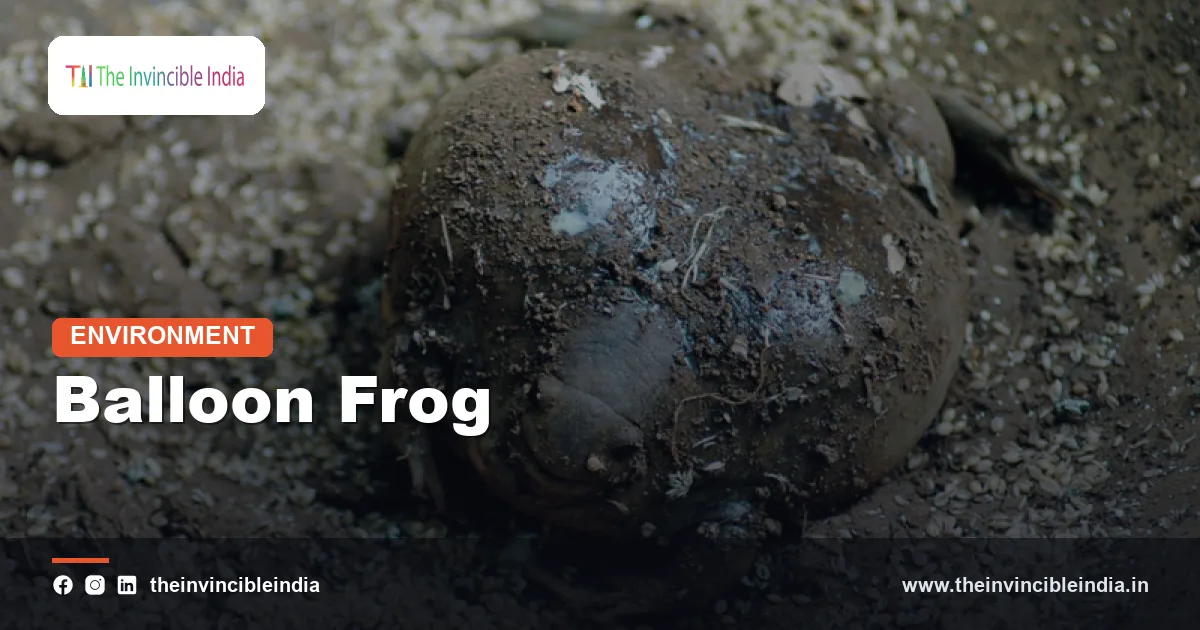
The balloon frog is a plump, round-bodied burrowing frog of the genus Uperodon that inflates its body with air when threatened, spends the dry months underground and emerges in large numbers to breed in monsoon pools across India. In India the term balloon frog usually refers to the Indian balloon frog (Uperodon globulosus) and the marbled balloon frog (Uperodon systoma), two closely related members of the family Microhylidae, the narrow-mouthed frogs.
A balloon frog is rarely seen for most of the year, which makes its sudden appearance after the first heavy rains all the more striking. Understanding the balloon frog explains how amphibians survive long dry seasons, why they gather in huge breeding choruses and why even a small, unremarkable-looking frog is a useful part of an Indian wetland.
Quick Facts About the Balloon Frog
| Common name | Balloon frog; Indian balloon frog (Uperodon globulosus) and marbled balloon frog (Uperodon systoma) |
|---|---|
| Scientific name | Genus Uperodon, with U. globulosus and U. systoma the best-known species in India |
| Family | Microhylidae (narrow-mouthed frogs) |
| Size | Small to medium; adults generally about 4 to 6 cm in body length, with a rounded, globular body and short limbs |
| India range and habitat | Found across large parts of peninsular and central India and the plains; scrub, farmland, forest edges, gardens and villages with loose, burrowable soil |
| Diet | Mainly ants and termites, with some other small insects |
| Breeding and life cycle | Explosive monsoon breeding in temporary pools; eggs laid in water, tadpoles filter-feed, then metamorphose into froglets |
| Conservation status | Least Concern on the IUCN Red List for the common species; legally protected wildlife in India |
Key Takeaways
- The balloon frog belongs to the genus Uperodon in the family Microhylidae and is named for its habit of puffing up its body when it is disturbed.
- The balloon frog is a burrowing amphibian that spends most of the dry season underground and comes to the surface mainly after heavy monsoon rain.
- The balloon frog feeds mostly on ants and termites, which it picks up with a quick flick of its tongue.
- Balloon frogs breed explosively in temporary monsoon pools, where males call loudly and females lay eggs that develop into filter-feeding tadpoles.
- Inflating the body makes the balloon frog look larger and harder to swallow, and it can also wedge the frog tightly inside a crevice.
- The commonly seen Indian balloon frog and marbled balloon frog are not considered threatened, although they depend on seasonal pools and loose soil.
What Is the Balloon Frog?
The balloon frog is a rotund, short-legged burrowing frog belonging to the narrow-mouthed frog family Microhylidae, and in India it refers mainly to species of the genus Uperodon. The name comes from the way the frog gulps air and swells into a tight ball when it feels threatened.
Two species are usually meant when Indian naturalists speak of a balloon frog:
- The Indian balloon frog, Uperodon globulosus, often called the globular frog, is a broad, rounded species found across much of the subcontinent.
- The marbled balloon frog, Uperodon systoma, has a mottled, marbled pattern and is similarly widespread in India.
Both were once placed in other genera such as Ramanella, Kaloula or Uperodon in different works, and the scientific names of microhylid frogs have been rearranged several times. For general readers the important point is that these are closely related, similar-looking frogs with similar habits.
What Does a Balloon Frog Look Like?
A balloon frog has a plump, rounded body, a small pointed head, short and stout limbs and smooth or slightly granular skin, usually in shades of brown, grey or olive with darker patches. Compared with the lean, long-legged frogs that hop around ponds, the balloon frog looks squat and almost toad-like.
Features that help identify the balloon frog are:
- A globular body shape that becomes almost spherical when inflated
- A narrow mouth and a small head, typical of the Microhylidae family
- Short hind legs that are better adapted for digging and shuffling than for long leaps
- Toes with little or no webbing in many individuals, though breeding adults may show slight webbing
- Colour patterns that range from plain brown to marbled or blotched designs, depending on species and individual
Males are usually smaller than females and carry a vocal sac. Colour and pattern can alter slightly with temperature, moisture and age, so it is best to look at several characters rather than colour alone.
Why Does the Balloon Frog Puff Up?
The balloon frog puffs up to look bigger, to make itself harder for predators to swallow and to wedge itself firmly into a crevice or burrow. The frog fills its lungs and body cavity with air, stretching the skin and lifting itself on stiffened legs.
This defensive behaviour is common among burrowing frogs and some toads. It works best against predators with limited mouth gape, such as snakes and small birds, which may give up on a swollen, rounded animal. The balloon frog may also produce sticky skin secretions that make it unpleasant to handle or eat.
After the threat has passed, the frog slowly lets the air out and returns to its normal shape. Repeated disturbance is stressful for the animal, so it should never be provoked just to see it inflate.
Where Does the Balloon Frog Live in India?
The balloon frog lives across large parts of peninsular, central and northern India, where it occupies scrub, farmland, forest edges, gardens, village outskirts and any open ground with soil loose enough to dig into. It does not need pristine forest and often occurs close to people.
Typical features of balloon frog habitat are:
- Loose, sandy or loamy soil in which it can bury itself
- Termite mounds, ant trails and rotting wood, which supply food
- Seasonal puddles, tanks, ditches and flooded fields for breeding
- Hollows under stones, logs, bricks and rubbish used as daytime shelters
Balloon frogs are sometimes found inside houses and outbuildings, particularly after rain, when they wander in search of damp, dark hiding places. They are harmless to people.
What Does the Balloon Frog Eat?
The balloon frog eats mainly ants and termites, which it picks up in large numbers with a quick flick of a sticky tongue. Such a specialised diet is typical of many narrow-mouthed frogs, whose small mouths are suited to tiny prey.
At night, the frog emerges and waits near insect trails or termite exits, eating steadily. Because termites and ants occur in huge numbers and are often considered pests of crops, buildings and stored wood, the balloon frog performs a quiet service by reducing their numbers. Other small insects and soil invertebrates are eaten occasionally.
The balloon frog is itself prey for snakes, owls, mongooses, monitor lizards and other animals. Its defence of inflating, burrowing and hiding gives it a better chance of survival than a soft, exposed frog would have.
How Does the Balloon Frog Survive the Dry Season?
The balloon frog survives the dry season by burrowing into the soil and staying inactive until the rains return, a state known as aestivation. Underground, the frog finds cooler, moister conditions and loses far less water than it would at the surface.
Burrowing frogs typically back into soil, using their hind limbs to push earth aside and sink downward. The frog may also form a layer of dried skin or mucus around itself that reduces water loss. When heavy rain soaks the ground, vibrations and moisture seem to act as signals, and many balloon frogs emerge at the same time, often on the first heavy night of the monsoon.
The annual cycle of the balloon frog can be summarised as follows:
| Season | What the balloon frog does |
|---|---|
| Summer and dry months | Remains buried, inactive and conserving water |
| First heavy rains | Emerges from burrows; males start calling near new pools |
| Peak monsoon | Breeds in temporary water; eggs and tadpoles develop |
| Late monsoon and after | Froglets disperse; adults feed heavily and prepare for the dry period |
How Does the Balloon Frog Breed?
The balloon frog breeds in explosive bursts during the monsoon, when males call from shallow pools and females lay eggs in the water. These breeding events can last only a night or two, and they depend on heavy rain filling temporary pools.
The male balloon frog has a loud, bellowing or bleating call that carries a long way. Many males gather at the same spot and call together, forming a chorus. After mating, eggs are laid in water and often float on the surface in a thin film or small clusters.
The tadpoles of microhylid frogs have distinctive features. They lack the horny beak and rows of teeth seen in many other tadpoles, and they feed by filtering tiny particles from the surface of the water. They grow in the pool, develop legs, lose the tail and emerge as tiny froglets. Because pools may dry quickly, rapid development is a big advantage.
How Is the Balloon Frog Different From Other Frogs?
The balloon frog differs from most Indian frogs because it is a burrowing microhylid with a rounded body, short limbs and a narrow mouth, rather than a long-legged jumping frog of the family Ranidae. The comparison below highlights the differences.
| Feature | Balloon frog | Typical true frog |
|---|---|---|
| Family | Microhylidae | Ranidae |
| Body shape | Plump, rounded, squat | Slender, streamlined |
| Legs | Short, used for digging | Long, used for leaping and swimming |
| Mouth | Narrow, small | Wide |
| Main food | Ants and termites | Varied insects and other prey |
| Behaviour | Burrows and puffs up | Jumps and swims away |
| Dry season | Aestivates underground | Often stays near water or hides in damp places |
The balloon frog is also distinct from toads. Although it has a toad-like shape, it belongs to a separate family from true toads, and its skin is generally smoother.
Is the Balloon Frog Safe to Touch?
The balloon frog is not dangerous, but it is best not to handle it, because its skin secretions can irritate eyes and mouths and human hands can harm the frog. It does not bite or sting and is harmless when left alone.
If a balloon frog is found indoors, gently guide it outside into a damp, shaded spot using a container or a leaf. Anyone who touches a frog should wash their hands afterwards with plain water and soap. Chemicals on skin, such as repellents and sanitisers, can absorb through amphibian skin and damage the animal.
Is the Balloon Frog Threatened?
The commonly seen balloon frog species, the Indian balloon frog and the marbled balloon frog, are not considered threatened and are rated Least Concern by the IUCN. Amphibians in general, however, are among the most threatened animal groups, and local populations can decline sharply.
Threats that affect balloon frogs include:
- Filling of temporary pools and ponds for construction and farming
- Pesticides and fertilisers that wash into breeding water
- Road deaths during rainy-night movements to breeding sites
- Soil compaction and paving that remove burrowing habitat
- Climate change, which can shift or disrupt the timing of the monsoon
Protecting small seasonal wetlands and leaving patches of unpaved ground in villages and towns help balloon frogs and other amphibians.
Bottom Line
The balloon frog is a round, burrowing frog that puffs up in defence, eats ants and termites and appears in large numbers with the first heavy monsoon rain. It is harmless, ecologically useful and a good indicator of healthy seasonal wetlands.
Frequently Asked Questions
What is a balloon frog?
A balloon frog is a plump, burrowing frog of the genus Uperodon that inflates its body when threatened. In India it usually means the Indian balloon frog or the marbled balloon frog. Both belong to the narrow-mouthed frog family Microhylidae.
Why does the balloon frog puff up?
The balloon frog puffs up to look larger and to make itself difficult for predators to swallow. Inflating also helps the frog to wedge itself into a crevice or burrow. The behaviour is a defence and the frog deflates once the danger has passed.
What does the balloon frog eat?
The balloon frog eats mainly ants and termites. It catches them with a fast flick of its sticky tongue, usually at night. Other small insects are eaten occasionally.
Where is the balloon frog found in India?
The balloon frog is found across large parts of peninsular, central and northern India in scrub, farmland, gardens and forest edges. It needs loose soil for burrowing and temporary pools for breeding. It often lives close to villages and towns.
When does the balloon frog breed?
The balloon frog breeds during the monsoon, usually after the first heavy rains. Males call loudly from shallow pools, and females lay eggs in the water. Breeding can be brief and explosive, lasting only a night or two.
Is the balloon frog poisonous?
No, the balloon frog is not dangerous to people. Its skin secretions can irritate the eyes and mouth, so wash your hands after touching one and avoid handling it where possible. The frog does not bite or sting.
{“@context”:”https://schema.org”,”@graph”:[{“@type”:”FAQPage”,”mainEntity”:[{“@type”:”Question”,”name”:”What is a balloon frog?”,”acceptedAnswer”:{“@type”:”Answer”,”text”:”A balloon frog is a plump, burrowing frog of the genus Uperodon that inflates its body when threatened. In India it usually means the Indian balloon frog or the marbled balloon frog. Both belong to the narrow-mouthed frog family Microhylidae.”}},{“@type”:”Question”,”name”:”Why does the balloon frog puff up?”,”acceptedAnswer”:{“@type”:”Answer”,”text”:”The balloon frog puffs up to look larger and to make itself difficult for predators to swallow. Inflating also helps the frog to wedge itself into a crevice or burrow. The behaviour is a defence and the frog deflates once the danger has passed.”}},{“@type”:”Question”,”name”:”What does the balloon frog eat?”,”acceptedAnswer”:{“@type”:”Answer”,”text”:”The balloon frog eats mainly ants and termites. It catches them with a fast flick of its sticky tongue, usually at night. Other small insects are eaten occasionally.”}},{“@type”:”Question”,”name”:”Where is the balloon frog found in India?”,”acceptedAnswer”:{“@type”:”Answer”,”text”:”The balloon frog is found across large parts of peninsular, central and northern India in scrub, farmland, gardens and forest edges. It needs loose soil for burrowing and temporary pools for breeding. It often lives close to villages and towns.”}},{“@type”:”Question”,”name”:”When does the balloon frog breed?”,”acceptedAnswer”:{“@type”:”Answer”,”text”:”The balloon frog breeds during the monsoon, usually after the first heavy rains. Males call loudly from shallow pools, and females lay eggs in the water. Breeding can be brief and explosive, lasting only a night or two.”}},{“@type”:”Question”,”name”:”Is the balloon frog poisonous?”,”acceptedAnswer”:{“@type”:”Answer”,”text”:”No, the balloon frog is not dangerous to people. Its skin secretions can irritate the eyes and mouth, so wash your hands after touching one and avoid handling it where possible. The frog does not bite or sting.”}}]}]}


