

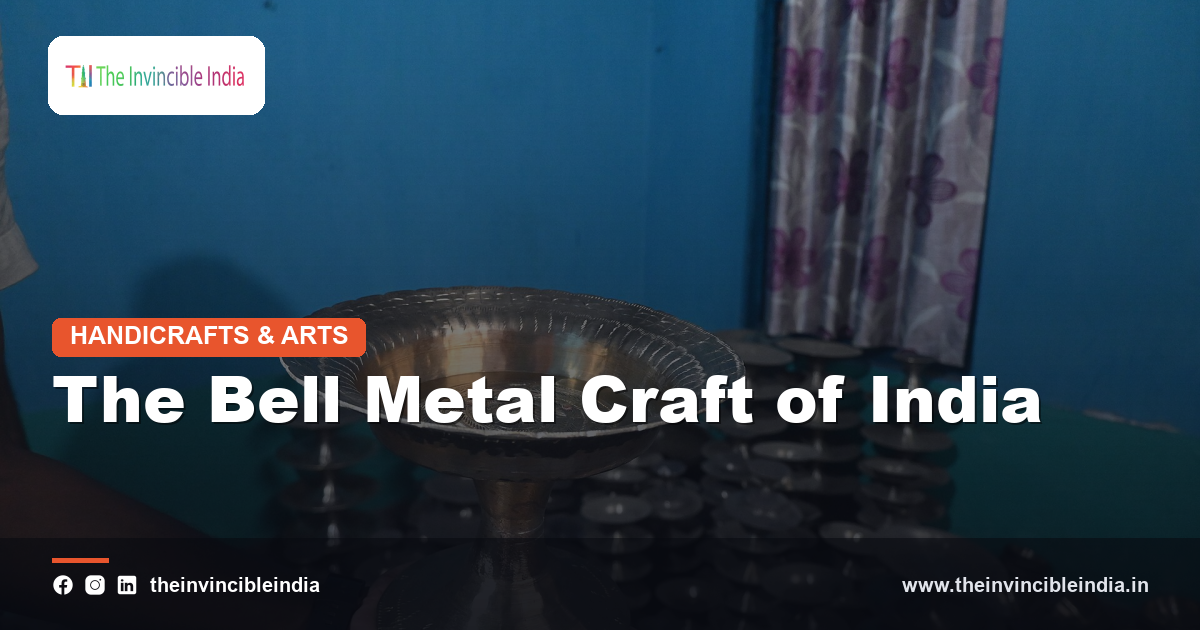
Bell metal is a traditional bronze alloy of copper and tin, cast across several regions of India into bells, gongs, ritual objects and household utensils prized for their resonance and durability. Artisan communities in Assam, West Bengal, Odisha and Kerala have sustained the craft for generations, each region developing its own casting styles and specialities. Alongside crafts such as Moradabad brassware, bell metal work reflects India’s long, varied tradition of copper-alloy metalworking. This guide covers its history, materials, techniques and continuing relevance.
Quick Facts
| Detail | Information |
|---|---|
| Craft Type | Bronze alloy casting |
| Alloy | Copper and tin |
| Regions | Assam, West Bengal, Odisha, Kerala |
| Common Products | Bells, utensils, ritual objects |
| Notable Centre | Sarthebari, Assam |
| Traditional Use | Ritual, dining, ceremonial |
What Is Bell Metal
Bell metal is a traditional bronze alloy, primarily composed of copper and tin, valued in India for centuries for its resonant qualities and durability when cast into bells, gongs, utensils and ritual objects. The specific proportion of tin to copper distinguishes bell metal from other bronze alloys, giving it particular acoustic properties that make it especially suited to producing clear, sustained sound when struck.
Beyond its use in bells and gongs, bell metal has long been used to make everyday utensils and cookware, particularly in regions where the alloy’s traditional association with cleanliness and durability made it a preferred household material. This dual use has made bell metal craft one of the more versatile traditional metalworking practices in India.
Origins and Historical Roots
The use of bell metal in India is understood to have developed over many centuries, growing out of a broader tradition of bronze and copper alloy metalworking practised across the subcontinent. Various regions developed their own specialised bell metal traditions, often linked to the availability of raw materials and the presence of skilled artisan communities willing to invest years in mastering casting techniques.
Bell metal objects, particularly bells and gongs, have long held religious and ceremonial significance in Indian communities, contributing to sustained demand for skilled bell metal casters across generations. This combination of practical household use and religious application has helped the craft persist as a recognised tradition.
Regional Centres
Bell metal craft is practised in several regions across India, each with its own distinctive style and specialisation, including Sarthebari in Assam, various centres in West Bengal and Odisha, and parts of Kerala. Assam’s bell metal tradition is particularly well known for household utensils and ceremonial items, produced by dedicated artisan communities using techniques passed down over generations.
In eastern India, bell metal craft has historically been associated with the production of both utilitarian vessels and ritual objects. Kerala’s tradition includes bells, lamps and vessels used in temple worship, reflecting the material’s longstanding association with religious practice in the region.
The Casting Process
Bell metal objects are typically produced through casting, in which molten alloy is poured into a mould shaped to the desired form, whether a bell, vessel or decorative object. Traditional casting methods often involve creating a clay or wax mould, into which the molten metal is poured and left to cool and solidify before the mould is broken away to reveal the finished piece.
This process requires careful control of metal temperature and mould preparation, as defects introduced during casting can be difficult to correct later. Skilled casters develop an intuitive understanding of metal flow and cooling rates through years of hands-on experience.
Alloy Composition and Material Properties
The specific ratio of copper to tin used in bell metal affects both its acoustic and physical properties, with artisans adjusting proportions depending on whether the finished item is intended for sound production, such as a bell or gong, or for practical use as a utensil. A higher tin content is generally associated with the harder, more resonant alloy used for bells.
Achieving the correct alloy composition requires careful measurement and experience, as even small variations can affect the final properties of the metal, reflecting the technical sophistication underlying bell metal craft.
Tools and Techniques
Bell metal artisans use a range of traditional tools for mould-making, casting and finishing, including implements for shaping clay or wax moulds, controlled furnaces or hearths for melting metal, and various hand tools for cleaning, shaping and polishing finished castings. In some traditions, sheet metal techniques are also used alongside casting, particularly for producing certain types of vessels or trays.
The combination of casting and metal forming techniques used varies by region and by the type of object being produced, with mastery typically developing over an extended period of practical training.
Common Products: Utensils and Vessels
Bell metal has long been used to produce household utensils and vessels, including plates, bowls, cups and cooking vessels, valued for their durability and traditional association with cleanliness and good health. In many regions, bell metal utensils were historically preferred for everyday dining and food preparation, particularly for special occasions.
While everyday use has declined somewhat with the availability of cheaper alternative materials, bell metal vessels remain valued as heirloom items and for specific ceremonial or traditional dining occasions in many parts of India.
Bell Metal in Ritual and Religious Use
Bell metal holds particular significance in religious and ceremonial contexts across India, where bells, lamps, incense holders and other ritual objects are commonly cast from the alloy for use in temples and household worship. The material’s association with clarity of sound has made it especially valued for objects intended to be rung or struck during religious ceremonies.
Many households maintain bell metal items specifically for use during festivals or worship, reflecting the material’s continued cultural and religious significance beyond its practical uses.
Bell Metal Gongs and Bells
Among the most distinctive products of bell metal craft are bells and gongs, valued for the alloy’s ability to produce a clear, sustained tone when struck. Temple bells, ranging from small handheld bells to larger fixed installations, are cast using techniques refined to achieve consistent sound quality alongside structural durability.
The process of casting a bell requires particular attention to wall thickness and shape, as these factors directly influence the pitch and resonance of the finished object, a skill combining metallurgical knowledge with a practised ear for sound.
Decorative and Ornamental Bell Metal Items
In addition to functional utensils and ritual objects, bell metal is also used to produce decorative items such as figurines, lamps, trays and ornamental vessels intended primarily for display rather than everyday use. These decorative pieces often incorporate more elaborate surface detailing than purely functional items.
Decorative bell metal items have found a market among buyers interested in traditional Indian craft objects for home decor or gifting, providing artisans with an additional outlet for their casting and finishing skills.
Motifs and Surface Treatment
Bell metal objects, particularly decorative and ritual items, often feature engraved or embossed surface patterns, including floral motifs, geometric borders and religious symbols appropriate to the object’s intended use. Utensils and everyday vessels are typically left plainer, relying on the natural sheen and solid form of the cast metal.
Where decoration is applied, it is generally added after casting, through engraving, embossing or polishing techniques, with the degree of treatment often reflecting the item’s intended purpose.
The Artisan Community
Bell metal casting is practised by dedicated artisan communities in various regions of India, often organised around specific towns or villages known for generations of specialisation in the craft. These communities typically maintain close-knit working relationships, with casting, finishing and trading roles sometimes divided among different family groups.
The specialised knowledge required for successful casting has traditionally been closely guarded within these artisan communities, contributing to strong regional identities associated with bell metal production.
Training and Skill Transmission
Skills in bell metal casting are typically transmitted within families or local artisan communities, with younger members gradually learning mould preparation, metal handling and finishing techniques through sustained practical involvement in workshop activities. Genuine proficiency usually develops only after years of hands-on experience under the guidance of skilled elders.
In some regions, craft development organisations and vocational training programmes have introduced structured courses aimed at supporting skill transmission beyond traditional family lines.
Economic Significance
Bell metal craft provides a livelihood for artisan communities across several Indian states, supporting not only casters and finishers but also related trades such as metal suppliers, mould makers and traders who bring finished products to market. Ritual and ceremonial demand for bell metal items provides a relatively stable market for the craft.
Regional bell metal industries also contribute to local economies through associated activities such as raw material supply and the marketing of finished goods within India and, in some cases, to export markets.
Traditional Beliefs and Everyday Use
Bell metal utensils have long been associated in Indian households with beliefs regarding cleanliness and general wellbeing, contributing to their traditional popularity for dining and food preparation in many communities. Such beliefs are part of longstanding cultural practice rather than established scientific consensus, but they have played a meaningful role in sustaining demand for bell metal vessels across generations.
In many households, bell metal utensils continue to be used on specific occasions or reserved as valued items passed down within families.
Contemporary Challenges
Bell metal craft faces a number of contemporary challenges, including declining everyday use of bell metal utensils as households increasingly adopt lighter, less expensive alternative materials for daily cooking and dining. Competition from mass-produced metal and alloy products can also affect demand, particularly in categories such as utensils where price sensitivity is higher.
Attracting younger artisans to continue the demanding, skill-intensive casting process remains an ongoing concern in several regional bell metal centres, along with rising costs of copper and tin.
Bell Metal Compared with Brass and Bronze Ware
Bell metal is sometimes confused with brass or other bronze alloys, but its specific copper-to-tin composition sets it apart in both appearance and, more importantly, in its acoustic behaviour when cast into bells and gongs. Brass, an alloy of copper and zinc, tends to serve a different range of purposes, often favoured for engraved decorative ware and everyday utensils where resonance is not a primary requirement.
Understanding this distinction helps explain why certain regions and artisan communities have historically specialised specifically in bell metal rather than brass or other bronze alloys, tailoring their casting expertise to the particular demands of resonant, ritual-use objects. Buyers seeking genuine bell metal items, particularly bells intended for religious use, often rely on the reputation of specific regional centres and artisan families to ensure they receive authentic, correctly alloyed pieces rather than substitutes made from more common metals.
Bell Metal Craft Today
Bell metal craft continues to be practised across several regions of India, sustained by ongoing demand for ritual objects, bells and gongs, alongside a smaller but persistent market for decorative items and traditional utensils. Regional centres such as Sarthebari in Assam and various towns in West Bengal, Odisha and Kerala continue to support dedicated artisan communities working within this long-established tradition.
As interest in traditional Indian metalwork persists among both domestic and international buyers, bell metal craft’s combination of practical, ritual and decorative applications suggests it will remain a recognised part of India’s metalworking heritage for the foreseeable future.
Sources & Further Reading
- Ministry of Textiles, Government of India (texmin.nic.in).
- Export Promotion Council for Handicrafts (epch.in).
Frequently Asked Questions
What is bell metal?
Bell metal is a traditional bronze alloy of copper and tin, valued for its resonant sound when cast into bells and gongs and for its durability in utensils.
Which regions in India are known for bell metal craft?
Sarthebari in Assam, parts of West Bengal and Odisha, and areas of Kerala are notable centres for traditional bell metal casting.
What items are traditionally made from bell metal?
Bells, gongs, ritual objects, household utensils and decorative items are among the products traditionally cast from bell metal.
Why is bell metal used for temple bells?
Its particular copper-to-tin ratio gives bell metal a clear, sustained tone, making it well suited to bells and gongs used in worship.
Are bell metal utensils still used today?
They are used less for everyday cooking than in the past, but many households retain them for special occasions or as valued heirloom items.


