

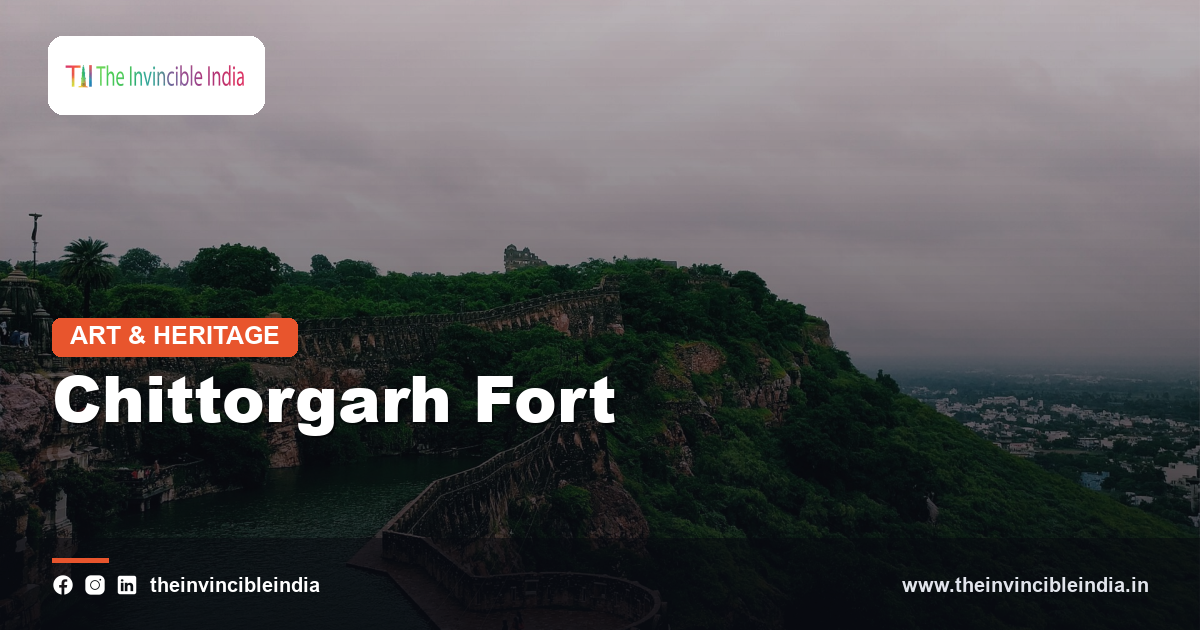
Spread across a vast hilltop plateau in southern Rajasthan, Chittorgarh Fort stands as one of the largest and most historically resonant of India’s great forts, home to towering victory towers, ruined palaces, and temples spanning centuries of Mewar history. As the long-standing capital of the Sisodia rulers of Mewar, the fort witnessed repeated sieges, periods of resurgence, and enduring associations with Rajput themes of honor and resistance. Its monuments, from the sculpted Vijay Stambha to the tranquil Gaumukh Reservoir, reflect the fort’s layered role as military stronghold, royal residence, and religious center. This guide surveys Chittorgarh’s history, architecture, and lasting cultural significance.
Quick Facts
| Detail | Information |
|---|---|
| Location | Chittorgarh, Rajasthan |
| Dynasty | Sisodia rulers of Mewar |
| Notable Structures | Vijay Stambha, Kirti Stambha, Rana Kumbha’s Palace |
| Historical Role | Former capital of Mewar |
| Water Source | Gaumukh Reservoir |
| Recognition | UNESCO World Heritage Site (Hill Forts of Rajasthan) |
Historical Background
Chittorgarh Fort stands atop a large hill in southern Rajasthan and served for centuries as the principal stronghold of the Mewar kingdom, one of the most prominent Rajput states in the region. Its long history spans multiple dynastic periods, marked by cycles of construction, conflict, and rebuilding as the fort changed hands and was subsequently restored by returning Mewar rulers. Structures within the fort range from early defensive walls to later palaces, towers, and temples added across successive centuries of occupation. As both a military stronghold and a center of Mewar cultural and religious life, Chittorgarh holds a central place in Rajput history and collective memory. Its scale and historical depth make it one of the most significant fort complexes in India.
Location and Scale
Occupying an extensive hilltop plateau, Chittorgarh is counted among the largest fort complexes in India, encompassing not only defensive fortifications but also palaces, temples, towers, and water reservoirs within its walls. The sheer scale of the site allowed it to function almost as a self-contained city during periods of siege, supporting a substantial population within its fortified perimeter. Steep approaches and a long fortified gateway sequence provided considerable natural and constructed defense for the elevated plateau. The fort’s expansive layout reflects its role over many centuries as the primary seat of Mewar power, accommodating the full range of religious, residential, and administrative functions expected of a major regional capital. This combination of scale and historical continuity distinguishes Chittorgarh among Rajasthan’s many fortified sites.
Mewar Dynasty and Rajput Legacy
The Sisodia rulers of Mewar, one of the most prominent Rajput dynasties, held Chittorgarh as their capital for an extended period, during which the fort grew into a major center of political and cultural life. The dynasty’s long resistance to various external powers seeking control over the region has made Chittorgarh a particularly significant site within broader narratives of Rajput history and identity. Successive Mewar rulers commissioned towers, palaces, and temples within the fort, reflecting both religious devotion and dynastic pride. Following the eventual relocation of the Mewar capital to Udaipur, Chittorgarh retained deep symbolic importance even as its role as an active seat of government diminished. This enduring association with Mewar identity continues to shape how the fort is remembered and presented today.
Vijay Stambha (Tower of Victory)
The Vijay Stambha, or Tower of Victory, rises prominently within the fort as a commemorative structure built to mark a significant military achievement by a Mewar ruler. Constructed in tiers and richly carved with sculptural depictions of deities and mythological figures, the tower stands as one of the most architecturally accomplished commemorative structures in Rajput architecture. An internal staircase allows access to upper levels, from which visitors can survey much of the surrounding fort and landscape. The tower’s dense sculptural program reflects considerable artistic and engineering achievement, executed at a scale intended to convey lasting commemorative significance. As one of Chittorgarh’s most recognizable landmarks, the Vijay Stambha remains closely associated with the fort’s broader identity as a site of Rajput historical memory.
Kirti Stambha (Tower of Fame)
The Kirti Stambha, or Tower of Fame, is an older and comparatively more modest commemorative tower associated with Jain religious tradition, reflecting the presence of Jain patronage and worship within the fort’s long history. Carved with figures associated with Jain teachings, the tower illustrates the religious diversity present within Chittorgarh alongside its predominantly Hindu and Rajput identity. Its more slender profile and different sculptural program distinguish it clearly from the later, larger Vijay Stambha elsewhere in the fort. The tower’s construction reflects the patronage of merchant or religious communities associated with Jain tradition active within the fort during its period of construction. Together with the Vijay Stambha, the Kirti Stambha underscores the fort’s role as a site of varied religious and commemorative architecture spanning multiple traditions.
Rana Kumbha's Palace
Rana Kumbha’s Palace, among the oldest surviving structures within Chittorgarh, reflects the architectural ambitions of the Mewar ruler associated with a significant phase of the fort’s expansion. Now largely in ruins, the palace complex nonetheless retains sufficient structure to convey its original scale, including courtyards, halls, and what are believed to have been stables and residential quarters. The palace’s association with significant events in Mewar history has given it particular symbolic importance within the broader narrative of the fort. Later structures within the fort were often built in reference to or in proximity to this palace, underscoring its central place within the complex’s historical layout. Despite its ruined state, Rana Kumbha’s Palace remains an important focal point for visitors exploring the fort’s Mewar-era history.
Padmini's Palace
Padmini’s Palace, a relatively modest structure set beside a small water tank, is closely associated in popular memory with a legendary Mewar queen whose story has become deeply woven into the fort’s historical narrative. The palace’s design, centered around reflective water and simple pavilion structures, reflects a more intimate architectural scale compared to the fort’s grander defensive and religious monuments. Regardless of the precise historical details associated with the site, Padmini’s Palace has become one of the most visited and symbolically significant locations within Chittorgarh. Its association with themes of honor and resistance central to Mewar identity has cemented its place in popular retellings of the fort’s history. The palace continues to draw considerable visitor interest as part of the broader Chittorgarh experience.
Gaumukh Reservoir
The Gaumukh Reservoir, a natural spring-fed water source within the fort, played a crucial practical role in sustaining the fort’s population during peacetime and, more critically, during periods of prolonged siege. Steps leading down to the water’s edge allowed access for daily use as well as religious observance, since water sources of this kind were often treated with particular reverence. The reservoir’s reliable water supply was a key factor enabling Chittorgarh to function as a largely self-sufficient stronghold capable of withstanding extended blockades. Its continued presence within the fort today offers visitors insight into the practical engineering considerations that supported the site’s long-term habitation. As both a functional water source and a site of religious significance, the Gaumukh Reservoir remains an important part of Chittorgarh’s historical infrastructure.
Meera Temple
The Meera Temple within Chittorgarh is associated with a revered devotional poet-saint whose hymns remain an important part of the region’s religious and cultural heritage. Built in a style consistent with the fort’s other religious structures, the temple continues to draw pilgrims and visitors interested in its association with this devotional tradition. Its relatively modest scale, compared to some of the fort’s larger monuments, reflects its primary role as a place of personal devotion rather than grand royal ceremony. The temple’s continued use for worship illustrates the ongoing religious life that persists within the fort despite its largely historical and touristic present-day role. As a site of devotional significance, the Meera Temple adds an important spiritual dimension to Chittorgarh’s broader historical and architectural narrative.
Kalika Mata Temple
The Kalika Mata Temple, originally dedicated to a different deity before later being rededicated, stands as one of the older religious structures within the fort, reflecting the layered religious history of the site. Its architecture displays features associated with earlier temple building traditions in the region, distinguishing it from later structures added during subsequent phases of the fort’s development. The temple remains an active site of worship, drawing devotees alongside visitors interested in its historical and architectural significance. Its survival across many centuries of the fort’s turbulent history speaks to the resilience of religious institutions even amid periods of conflict and political change. The Kalika Mata Temple contributes to the broader picture of Chittorgarh as a site combining military, residential, and religious functions across its long history.
Fortification Walls and Gates
Chittorgarh’s outer defenses consist of substantial fortification walls encircling the hilltop plateau, punctuated by a series of fortified gateways designed to control and slow access to the fort’s interior. These successive gateways, arranged along the winding approach road, reflect careful defensive planning intended to hinder any attacking force attempting to reach the plateau above. Bastions and watch points along the walls allowed defenders to monitor the surrounding countryside for approaching threats. The scale of these fortifications, matched to the considerable size of the plateau they enclose, reflects the substantial resources historically devoted to defending Chittorgarh. These defensive structures remain a prominent feature of the fort today, offering visitors a clear sense of the military engineering that once protected this significant Rajput stronghold.
Historical Sieges and Significance
Chittorgarh’s long history includes several significant sieges, during which the fort withstood or ultimately fell to various besieging forces over different periods, before typically being reclaimed by returning Mewar rulers. These episodes have become central to the fort’s historical identity, closely associated with narratives of resistance and sacrifice within Rajput tradition. The fort’s eventual decline as an active capital, following the relocation of Mewar’s seat of power to Udaipur, followed particularly difficult periods of conflict. Despite this shift, Chittorgarh retained deep symbolic significance for the Mewar dynasty and Rajput identity more broadly. These historical episodes continue to shape how the fort is interpreted and presented to visitors today, forming an essential part of its broader historical narrative.
Jauhar and Its Place in Memory
Chittorgarh is closely associated in popular memory with the practice of jauhar, a historical act of mass self-immolation reportedly undertaken by women of the fort in the face of imminent defeat, intended to avoid capture by besieging forces. This aspect of the fort’s history is treated with particular solemnity and is remembered as an expression of honor and resistance within Rajput cultural tradition, rather than presented in graphic or sensationalized detail. Sites within the fort associated with these events are approached by visitors and interpreters with considerable respect and restraint. The memory of jauhar remains deeply embedded in regional cultural narratives and continues to shape the symbolic weight attached to Chittorgarh within Rajasthani history. This history is presented today as part of a broader, carefully contextualized understanding of the fort’s past.
Materials and Architecture
Builders of Chittorgarh relied on locally available stone to construct its walls, towers, and palace structures, employing techniques suited to both defensive fortification and more refined architectural detailing. Commemorative towers such as the Vijay Stambha demanded particularly advanced construction skill, combining structural stability with an extensive sculptural program across multiple stories. Palace structures within the fort, though many now in partial ruin, display construction techniques consistent with broader Rajput architectural traditions of the period. The fort’s builders also incorporated water management infrastructure, including reservoirs and stepped access points, reflecting practical engineering considerations alongside monumental construction. This combination of defensive, religious, and residential architecture across a single expansive site illustrates the range of building traditions represented within Chittorgarh.
UNESCO Recognition
Chittorgarh Fort is included among the Hill Forts of Rajasthan recognized collectively as a UNESCO World Heritage Site, an honor reflecting both its architectural significance and its deep historical and cultural importance within the region. This international recognition has supported ongoing conservation efforts aimed at preserving the fort’s towers, palaces, and temples against the effects of age and weathering. Heritage designation has also helped raise wider awareness of Chittorgarh’s history among visitors and researchers beyond the immediate region. The fort’s inclusion alongside other major Rajasthani strongholds highlights shared themes of Rajput fortification and resistance found across the wider hill fort tradition. This recognition reinforces Chittorgarh’s status as one of the most historically significant fort complexes in India.
Chittorgarh Fort Today
Today, Chittorgarh Fort remains a major heritage destination, drawing visitors interested in its towers, palaces, temples, and its deep association with Rajput history and cultural memory. Conservation authorities continue to maintain the fort’s extensive structures, balancing preservation with the demands of considerable visitor interest. Light-based evening presentations and guided tours help convey the fort’s layered history to a broad public audience. As one of the largest and most historically significant fort complexes in India, Chittorgarh continues to attract scholarly attention alongside its popular appeal. Its enduring symbolic weight within Rajput and Rajasthani identity ensures that Chittorgarh remains far more than a static historical ruin, continuing to shape regional cultural memory today.
Sources & Further Reading
- Archaeological Survey of India (asi.nic.in).
- UNESCO World Heritage Centre (whc.unesco.org).
Frequently Asked Questions
What is Chittorgarh Fort known for?
Chittorgarh Fort is known for being one of the largest fort complexes in India, its association with the Mewar dynasty, and monuments such as the Vijay Stambha and Rana Kumbha’s Palace.
Who ruled from Chittorgarh Fort?
Chittorgarh served as the capital of the Sisodia rulers of Mewar for an extended period before the dynasty later shifted its seat of power to Udaipur.
What is the Vijay Stambha?
The Vijay Stambha, or Tower of Victory, is a richly carved commemorative tower within Chittorgarh Fort built to mark a significant military achievement of a Mewar ruler.
What is jauhar and how is it linked to Chittorgarh?
Jauhar refers to a historical act of self-immolation associated with Rajput resistance during siege, and Chittorgarh is closely linked to this history within regional cultural memory.
Is Chittorgarh Fort a UNESCO World Heritage Site?
Yes. Chittorgarh Fort is included among the Hill Forts of Rajasthan, a group of forts collectively recognized as a UNESCO World Heritage Site.


