

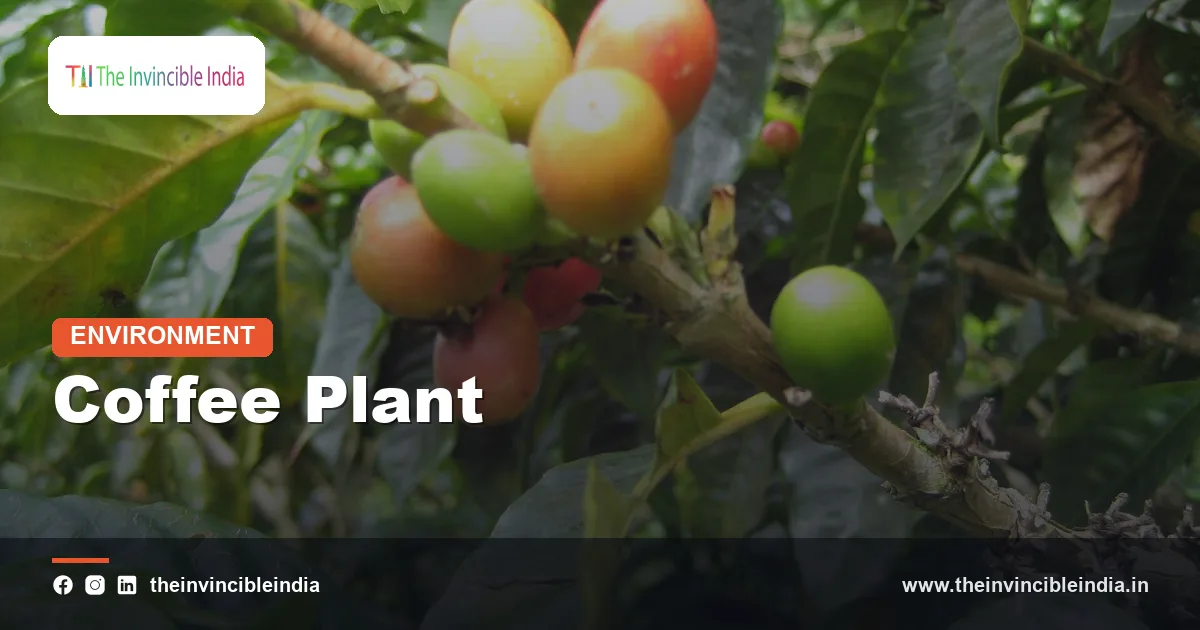
The coffee plant is an evergreen tropical shrub of the genus Coffea, family Rubiaceae, whose red fruits, called cherries, hold the seeds that are roasted and ground into coffee, and in India it is grown mainly as two species: Coffea arabica (arabica) and Coffea canephora (robusta). Indian coffee is cultivated chiefly in the hill regions of the Western Ghats and the Eastern Ghats, under the shade of tall trees, which gives it a distinctive profile among the world’s coffees.
Coffee in India is a plantation crop with a history of several centuries, a regulator of its own in the Coffee Board, and several Geographical Indication-tagged growing regions. This article explains how the coffee plant grows, how its cherries become the beans in your cup, and what makes Indian estates different from those elsewhere.
| Quick Facts | Details |
|---|---|
| Scientific names | Coffea arabica (arabica) and Coffea canephora (robusta) |
| Family | Rubiaceae (the madder family) |
| Origin | Arabica from the highlands of Ethiopia and neighbouring regions; robusta from the forests of central and western Africa |
| Where grown in India | Karnataka (Kodagu, Chikmagalur, Hassan), Kerala (Wayanad), Tamil Nadu (Nilgiris, Shevaroys, Pulneys), and the Araku region of Andhra Pradesh and Odisha |
| Part used | The seeds (beans) inside the ripe cherries |
| Season and cycle | Blossom showers in spring, cherries ripen over several months, with harvest mainly from about November to February |
| Main products | Green coffee beans for export and domestic roasting, filter coffee, instant coffee and speciality coffee |
| Notable facts | Legend credits the Sufi saint Baba Budan with bringing the first coffee seeds to Chikmagalur; the Coffee Board of India, based in Bengaluru, regulates the sector |
Key Takeaways
- The coffee plant grown in India belongs mainly to two species, Coffea arabica and Coffea canephora (robusta), which differ in flavour, altitude preference and caffeine content.
- Indian coffee is largely shade-grown, with coffee bushes planted beneath taller native and planted trees in the Western Ghats.
- Karnataka, Kerala and Tamil Nadu together form the traditional heartland of Indian coffee, and Karnataka is the largest producing state.
- According to local tradition, the Sufi saint Baba Budan brought seven coffee seeds from Yemen to the hills of Chikmagalur in Karnataka in the seventeenth century.
- Monsooned Malabar is a distinctive Indian coffee processed by exposing dried beans to the moist monsoon winds of the Malabar coast, which swells the beans and mellows their flavour.
- The Coffee Board of India, established under the Coffee Act of 1942 and based in Bengaluru, supports research, marketing and quality in the coffee sector.
What Is the Coffee Plant?
The coffee plant is a woody, evergreen shrub or small tree with dark glossy leaves, clusters of fragrant white flowers and red or yellow fruits, grown mainly for the seeds inside those fruits. In the wild it can reach several metres in height, but estates keep it pruned to about two metres to make picking easier.
Each fruit, called a coffee cherry, normally contains two seeds that sit face to face with their flat sides together. These seeds are the coffee beans. When a cherry develops only one rounded seed, the result is called a peaberry, which some buyers value for its distinct roast character.
The plant belongs to the Rubiaceae family, which also includes cinchona, the source of quinine, and many tropical garden plants such as ixora and gardenia. A coffee bush typically begins to bear fruit about three to four years after planting and can remain productive for decades with good management.
Which Coffee Species Are Grown in India?
India grows two main coffee species: arabica (Coffea arabica) and robusta (Coffea canephora). Arabica is the older and more aromatic species and is usually grown at higher altitudes, while robusta is hardier, higher in caffeine and grown at lower elevations.
| Feature | Arabica | Robusta |
|---|---|---|
| Scientific name | Coffea arabica | Coffea canephora |
| Preferred altitude | Higher hills, often about 1,000 to 1,500 metres | Lower elevations, often about 500 to 1,000 metres |
| Flavour | Aromatic, smooth and acidic, with sweet notes | Strong, earthy, full-bodied and more bitter |
| Caffeine | Lower | Higher |
| Pollination | Largely self-pollinating | Mostly cross-pollinating |
| Hardiness | More prone to leaf rust and stem borer | More resistant to disease and heat |
| Typical use | Filter coffee, speciality coffee, single estate | Blends, espresso, instant coffee |
Both species have breeding programmes in India. The Central Coffee Research Institute at Balehonnur in Karnataka, a unit of the Coffee Board, has released improved arabica and robusta selections, including varieties with better resistance to leaf rust and borer. Older, well-known Indian arabica selections such as Kents and S.795 are still found on many estates.
How Did Coffee Come to India?
Coffee came to India through Arab trade and, according to tradition, through Baba Budan, a Sufi pilgrim who is said to have smuggled seven green coffee seeds from Yemen and planted them in the hills near Chikmagalur in the seventeenth century. The hills are today named Baba Budan Giri in his memory.
The legend is widely told in Karnataka, and while historians treat its precise details with caution, there is no doubt that coffee cultivation was established in the region by early modern times. In the nineteenth century, European planters set up commercial estates in the Western Ghats, especially in Coorg (Kodagu), the Nilgiris and Wayanad, and coffee became an important plantation crop alongside tea and rubber.
A major setback came in the 1870s and 1880s, when coffee leaf rust, caused by the fungus Hemileia vastatrix, devastated plantations across South Asia. Many planters in southern India shifted to tea, but coffee survived in Karnataka and nearby areas, and breeding for rust resistance became a permanent research priority. The Coffee Board was set up in 1942 to organise the industry.
Where Is Coffee Grown in India?
Coffee is grown in India mainly in three southern states, Karnataka, Kerala and Tamil Nadu, with smaller plantings in Andhra Pradesh, Odisha and the north-eastern states. Karnataka, with the districts of Kodagu, Chikmagalur and Hassan, is the largest producing state and grows both arabica and robusta.
- Kodagu (Coorg), Karnataka: The largest coffee district in India, known for robusta and arabica estates growing under thick shade.
- Chikmagalur, Karnataka: The historic birthplace of Indian coffee, with arabica estates around Baba Budan Giri and the Mullayanagiri range.
- Hassan, Karnataka: A mixed area producing both species on lower slopes.
- Wayanad, Kerala: A major robusta-growing region.
- Nilgiris, Shevaroys and Pulneys, Tamil Nadu: Hill ranges with arabica estates, often at high altitude.
- Araku Valley, Andhra Pradesh and Odisha: A newer region with arabica grown largely by tribal farming communities.
Several of these areas have received Geographical Indication tags, including Coorg arabica, Chikmagalur arabica, Bababudangiri arabica, Wayanad robusta, and Araku Valley arabica, which protect the regional names used in marketing.
What Is Shade-Grown Coffee?
Shade-grown coffee is coffee grown under a canopy of taller trees instead of in full sun, and this is the standard method on most Indian estates. Silver oak, jackfruit, rosewood and other native trees form an upper layer, with coffee bushes beneath, and in many estates pepper vines climb the shade trees.
The canopy cools the bushes, reduces soil erosion, drops leaf litter that feeds the soil, and provides habitat for birds, insects and small mammals. Indian coffee landscapes in the Western Ghats are therefore often described as agroforestry systems, and birdwatchers frequently visit coffee estates in Kodagu and Chikmagalur. The Western Ghats are recognised as a global biodiversity hotspot, and coffee plantations form part of the matrix around protected forest there.
Shade also slows ripening, which allows beans to develop more complex flavours, and it lowers pressure from certain pests. Growers must manage the balance carefully, though, because too much shade reduces yield and promotes fungal disease.
How Does the Coffee Plant Grow and Fruit Through the Year?
The coffee plant flowers after the first rains of spring and then carries green fruit that slowly ripens over several months. The yearly cycle is closely tied to the rains and drives the work calendar on every Indian estate.
Blossom and fruit set
Around March and April, a good shower, often called the blossom shower, triggers masses of fragrant white flowers. The bloom may last only a few days, and the heavy scent can fill an entire estate. Backing showers a few weeks later help fruit set.
Monsoon growth
During the southwest monsoon, the cherries swell on the branches. Estates carry out weeding, pruning, shade regulation and disease control at this time, since heavy rain also encourages leaf rust and other fungi.
Harvest
Harvest generally begins around November with arabica and continues into the early months of the year with robusta. Pickers harvest ripe red cherries selectively by hand, passing through the same bushes several times, which is the practice on quality-focused estates. Some estates use stripping, which collects all cherries at once, for faster harvests.
How Is Coffee Processed After Harvest?
Coffee is processed after harvest either by the wet (washed) method or the dry (natural) method, which remove the fruit pulp and dry the beans for storage and export. The choice of method affects flavour, and Indian estates use both.
- Washed (wet) process: Cherries are pulped, fermented in tanks to loosen the sticky layer, washed and dried as parchment coffee. This method is common for arabica and gives a clean, bright cup.
- Natural (dry) process: Whole cherries are dried in the sun on patios or mats, then hulled to remove the dried fruit. This is common for robusta and gives a heavier body.
- Curing and grading: Dried coffee is hulled, sorted by size and density, and graded before sale at auction or by private contract.
- Monsooning: A special Indian process in which dried arabica or robusta beans are spread in warehouses on the Malabar coast and exposed to moist monsoon winds for several weeks, producing pale golden, swollen beans with low acidity.
Roasting turns green beans brown and develops aroma, and it usually occurs near the market, not at the estate. South Indian filter coffee typically blends roasted arabica and robusta with chicory, though many roasters now sell chicory-free and single-origin options.
What Pests and Diseases Affect the Coffee Plant?
The main threats to the coffee plant in India are coffee leaf rust, the white stem borer and the berry borer. These can reduce yield sharply if left unchecked, which is why pest management is at the centre of research and extension work.
Coffee leaf rust, caused by the fungus Hemileia vastatrix, appears as orange powdery spots under leaves and causes early leaf fall. The white stem borer is a beetle whose larvae tunnel into arabica stems and can kill bushes. The coffee berry borer is a small beetle that bores into cherries. Plant breeders have developed rust-resistant selections, and estates use field hygiene, shade regulation and monitoring to limit damage.
Climate change adds further pressure. Erratic rainfall, higher temperatures and unseasonal storms can disrupt flowering, fruit set and ripening, and arabica in particular is sensitive to heat. For this reason researchers and growers are paying closer attention to water management, shade design and heat-tolerant plant material.
Who Regulates and Promotes Coffee in India?
The Coffee Board of India regulates and promotes coffee in India. It is a statutory body under the Ministry of Commerce and Industry, set up under the Coffee Act of 1942 and headquartered in Bengaluru. Its work includes research, extension, quality improvement, market support and promotion of Indian coffee abroad and at home.
The Board runs the Central Coffee Research Institute at Balehonnur, in Chikmagalur district, and supports growers through advisory services. India exports a large share of its coffee, mostly as green beans, to Europe and other markets, and domestic consumption has been growing, especially with the spread of cafes and speciality roasters in cities. Indian coffee is also found in the traditional coffee houses of south India, where filter coffee is a daily habit.
Bottom Line
The coffee plant is the shade-loving shrub that has turned the hills of Karnataka, Kerala and Tamil Nadu into a coffee-growing belt, producing both arabica and robusta. From the legend of Baba Budan to monsooned beans and GI-tagged estates, Indian coffee reflects a blend of history, agroforestry and careful processing.
Frequently Asked Questions
What is the difference between arabica and robusta coffee?
Arabica (Coffea arabica) is aromatic, smoother and lower in caffeine, and it grows best at higher altitudes. Robusta (Coffea canephora) is hardier, stronger, more bitter and higher in caffeine, and it grows at lower elevations. India grows both, and many filter coffee blends combine the two.
Where is coffee grown in India?
Coffee is grown mainly in Karnataka (Kodagu, Chikmagalur and Hassan), Kerala (Wayanad) and Tamil Nadu (Nilgiris, Shevaroys and Pulneys), with smaller areas in Andhra Pradesh, Odisha and the north-east. Karnataka is the largest producing state. Most coffee grows in the hills of the Western Ghats.
Who brought coffee to India?
According to tradition, the Sufi saint Baba Budan brought seven coffee seeds from Yemen and planted them in the hills of Chikmagalur, Karnataka, in the seventeenth century. Historians treat the details cautiously, but coffee cultivation is certainly old in this region. The hills are now named Baba Budan Giri.
What is monsooned coffee?
Monsooned coffee is Indian coffee that is exposed to the moist monsoon winds of the Malabar coast for several weeks after drying. The beans swell, turn pale golden and lose acidity, giving a mellow, heavy-bodied cup. Monsooned Malabar is a well-known Indian speciality.
How long does a coffee plant take to produce coffee?
A coffee plant usually begins to bear fruit about three to four years after planting. Flowering occurs after spring showers, and the cherries ripen over several months before harvest. A well-managed bush can stay productive for many years.
Is coffee grown in the shade in India?
Yes, most Indian coffee is grown in the shade of taller trees such as silver oak and jackfruit, often with pepper vines on the trunks. This shade-grown system cools the bushes, protects the soil and supports birds and other wildlife. It is a major reason Indian estates are described as agroforestry landscapes.
{“@context”:”https://schema.org”,”@graph”:[{“@type”:”FAQPage”,”mainEntity”:[{“@type”:”Question”,”name”:”What is the difference between arabica and robusta coffee?”,”acceptedAnswer”:{“@type”:”Answer”,”text”:”Arabica (Coffea arabica) is aromatic, smoother and lower in caffeine, and it grows best at higher altitudes. Robusta (Coffea canephora) is hardier, stronger, more bitter and higher in caffeine, and it grows at lower elevations. India grows both, and many filter coffee blends combine the two.”}},{“@type”:”Question”,”name”:”Where is coffee grown in India?”,”acceptedAnswer”:{“@type”:”Answer”,”text”:”Coffee is grown mainly in Karnataka (Kodagu, Chikmagalur and Hassan), Kerala (Wayanad) and Tamil Nadu (Nilgiris, Shevaroys and Pulneys), with smaller areas in Andhra Pradesh, Odisha and the north-east. Karnataka is the largest producing state. Most coffee grows in the hills of the Western Ghats.”}},{“@type”:”Question”,”name”:”Who brought coffee to India?”,”acceptedAnswer”:{“@type”:”Answer”,”text”:”According to tradition, the Sufi saint Baba Budan brought seven coffee seeds from Yemen and planted them in the hills of Chikmagalur, Karnataka, in the seventeenth century. Historians treat the details cautiously, but coffee cultivation is certainly old in this region. The hills are now named Baba Budan Giri.”}},{“@type”:”Question”,”name”:”What is monsooned coffee?”,”acceptedAnswer”:{“@type”:”Answer”,”text”:”Monsooned coffee is Indian coffee that is exposed to the moist monsoon winds of the Malabar coast for several weeks after drying. The beans swell, turn pale golden and lose acidity, giving a mellow, heavy-bodied cup. Monsooned Malabar is a well-known Indian speciality.”}},{“@type”:”Question”,”name”:”How long does a coffee plant take to produce coffee?”,”acceptedAnswer”:{“@type”:”Answer”,”text”:”A coffee plant usually begins to bear fruit about three to four years after planting. Flowering occurs after spring showers, and the cherries ripen over several months before harvest. A well-managed bush can stay productive for many years.”}},{“@type”:”Question”,”name”:”Is coffee grown in the shade in India?”,”acceptedAnswer”:{“@type”:”Answer”,”text”:”Yes, most Indian coffee is grown in the shade of taller trees such as silver oak and jackfruit, often with pepper vines on the trunks. This shade-grown system cools the bushes, protects the soil and supports birds and other wildlife. It is a major reason Indian estates are described as agroforestry landscapes.”}}]}]}


