

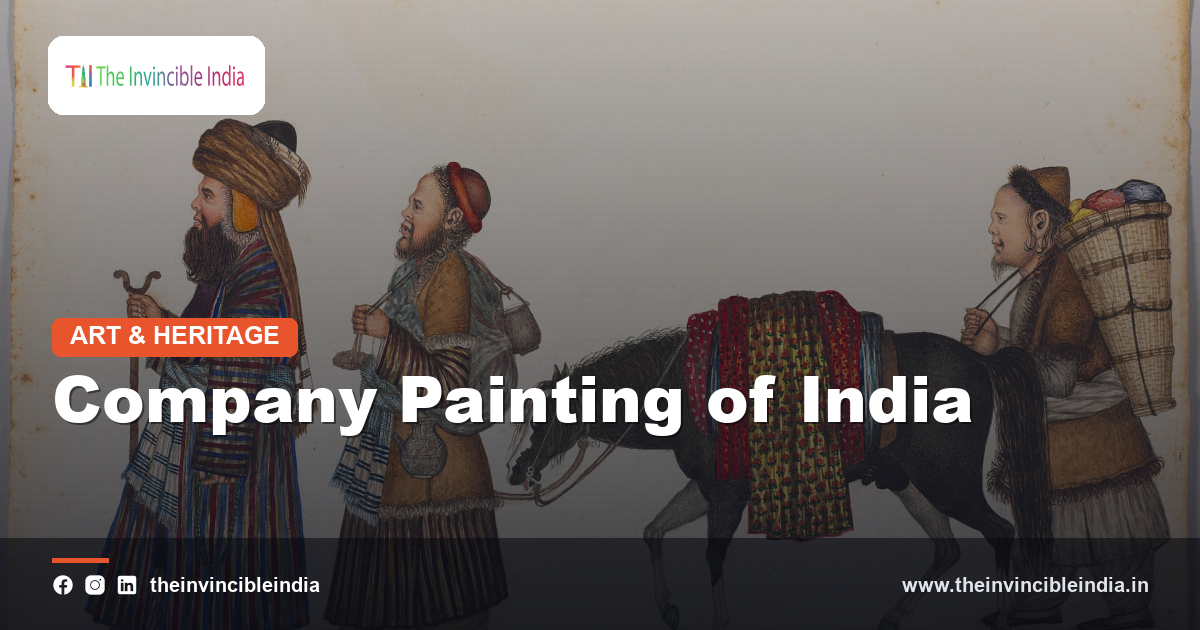
Company painting is a distinctive style of Indian painting that developed during the colonial period, representing a meeting of Indian artistic technique with European taste and subject matter. Created chiefly by Indian artists trained in the established traditions of Indian miniature painting, the style adapted to new patrons connected with European trading companies and colonial society, depicting natural history, portraits, monuments and everyday life with careful observation. This hybrid art occupies a unique place bridging two artistic worlds and offers a valuable visual record of its time. This guide explores the origins, characteristics, subjects and legacy of Company painting, a fascinating chapter in India’s artistic history.
Quick Facts
| Detail | Information |
|---|---|
| Type | A hybrid style of Indian painting from the colonial period |
| Period | Flourished under colonial-era patronage |
| Known for | Blending Indian technique with European taste |
| Common subjects | Natural history, occupations, monuments and portraits |
| Centres | Cities and regions across colonial India |
| Legacy | A valuable visual record preserved in collections |
A Meeting of Styles
Company painting is a distinctive style of Indian painting that developed during the colonial period, representing a meeting of Indian artistic technique with European taste and subject matter. Created chiefly by Indian artists for patrons connected with European trading companies and colonial society, the style adapted the skill and tradition of Indian miniature painting to new subjects and a new visual sensibility. It occupies a unique place bridging two artistic worlds. As a meeting of styles, blending Indian craftsmanship with European preference, Company painting stands as a distinctive and historically significant chapter in the story of Indian art, reflecting the changing patronage of its time.
Origins under Colonial Patronage
Company painting arose as Indian artists, many trained in established regional schools of miniature painting, found new patrons among European officials, traders and residents in colonial India. These patrons sought paintings that recorded the people, places, plants, animals and customs of the subcontinent, often for personal interest, scientific curiosity or as souvenirs. Indian artists adapted their traditional skills to meet this new demand. These origins under colonial patronage, in which skilled Indian artists worked for a new class of patron with new expectations, gave rise to the distinctive hybrid style that came to be known as Company painting.
What Is Company Painting
Company painting refers to a body of work produced largely by Indian artists working for European patrons during the colonial era, characterised by a blend of Indian technique and European conventions of representation. The style typically favours careful, detailed observation, often applied to natural history subjects, everyday occupations, architecture and portraiture, rendered with a precision suited to its documentary purpose. It is best understood as a genre defined by patronage and purpose. This definition of Company painting, as a hybrid genre shaped by the particular demands of colonial-era patrons, helps explain both its distinctive style and the wide range of subjects it came to depict.
Blending Indian and European Technique
A defining feature of Company painting is its blending of Indian and European artistic technique, combining the fine brushwork and detail of Indian miniature tradition with elements of European perspective, shading and composition. Indian artists, skilled in the conventions of their own regional schools, adapted these skills to satisfy European tastes for naturalism and precise observation, producing a style distinct from both its Indian and European sources. This blending gives Company painting its unique character. This technical blending of Indian skill with European convention, achieved by artists working across two traditions, is what most clearly distinguishes Company painting and gives it a special place in the history of Indian art.
Centres of Company Painting
Company painting was produced across various centres of colonial India, wherever European patrons and skilled Indian artists came together, including major cities and regions with strong existing traditions of painting. Local schools of Indian painting provided artists with the technical foundation on which Company painting could develop, so that the style often carried regional variations reflecting these earlier traditions. Different centres thus produced Company paintings of somewhat different character. This spread of Company painting across various centres of colonial India, drawing on skilled local artists in each place, reflects the wide reach of the demand for this hybrid style during the period of its flourishing.
Natural History Subjects
Among the most characteristic subjects of Company painting are natural history studies, depicting the plants, birds, animals and other natural life of India with careful, detailed observation. European patrons, often connected with scientific or botanical interests, commissioned such studies for their accuracy and aesthetic appeal, and Indian artists brought exceptional skill in fine detail to these commissions. These natural history paintings are valued today for both their beauty and their documentary value. This focus on natural history subjects in Company painting, rendered with careful and skilled observation, produced some of the style’s most admired and historically valuable works, prized by collectors and institutions alike.
Portraits and Court Life
Company painting also encompasses portraiture and depictions of court life, recording the appearance of rulers, officials and notable figures of the period, as well as scenes of ceremony and daily court activity. Such works served both as personal keepsakes for patrons and as visual records of the society and courts of the time, rendered with the careful attention to detail characteristic of the style. These portraits provide a valuable historical record. This body of portraiture and court scenes within Company painting, capturing the people and life of the period with careful detail, offers a valuable visual window into the society of colonial-era India as seen through the eyes of its artists.
Architecture and Monuments
Company painters also turned their attention to the architecture and monuments of India, producing careful depictions of forts, temples, palaces and other notable buildings, often for patrons interested in the country’s historic sites. These architectural studies combined accurate observation with an appreciation for the grandeur and beauty of Indian monuments, and they contributed to a growing European interest in India’s architectural heritage. Such works remain valuable historical records today. This depiction of architecture and monuments within Company painting, rendered with careful and appreciative observation, adds an important dimension to the style and reflects the broader curiosity about India’s built heritage during the colonial period.
Everyday Life and Occupations
A significant category of Company painting depicts the everyday life, trades and occupations of Indian society, illustrating various castes, professions and ways of life with careful, systematic observation. These paintings, often produced in series, aimed to document the variety of Indian occupations and social life for curious patrons, offering a visual survey of the country’s people at work. Such series are valued today as social and historical documents. This documentation of everyday life and occupations in Company painting, presented through careful and systematic visual observation, provides an important record of Indian society during the period and remains a distinctive feature of the style.
Materials and Technique
Company painting was typically executed on paper, using watercolour or gouache in a technique that combined the fine brushwork of Indian tradition with elements of European watercolour practice, often on a larger scale than earlier miniature painting. Artists paid careful attention to accurate colour, shading and proportion, adapting their traditional skills to the new demands of naturalistic representation. This technical adaptation is a hallmark of the style. This use of paper and watercolour technique, adapted from Indian tradition to meet new demands for naturalism, reflects the practical and stylistic evolution that produced Company painting as a distinct and recognisable school of Indian art.
European Influence on Style
European influence shaped Company painting in several ways, from an emphasis on naturalistic proportion and perspective to a preference for pale backgrounds and careful shading that departed from the flatter conventions of earlier Indian miniature painting. European prints and illustrated books also served as models and points of reference for Indian artists working in this new style. This influence gave Company painting its recognisably hybrid appearance. This shaping influence of European taste and visual convention on Company painting, evident in its naturalism and composition, is central to understanding the style as a genuine artistic fusion rather than simply an extension of earlier Indian painting traditions.
Indian Artists and Their Skill
Despite the strong European influence on Company painting, the style was overwhelmingly the work of skilled Indian artists, many trained in established regional schools, who brought their considerable technical ability to bear on new subjects and new patrons. Their fine brushwork, patience and careful observation, honed within traditional Indian painting practice, made possible the precision and beauty for which Company painting is admired. Their contribution is central to the achievement of the style. This essential contribution of skilled Indian artists to Company painting, adapting their traditional expertise to new demands, deserves particular recognition as the true technical and artistic foundation of the entire tradition.
Patrons and Collectors
Company painting was sustained by a network of patrons connected with colonial society, including officials, traders and other residents who commissioned and collected such works during their time in India. Many of these paintings were later brought back and preserved in private and institutional collections, ensuring their survival to the present day. The taste and interests of these patrons shaped much of the subject matter of the style. This role of patrons and collectors in commissioning and preserving Company painting has ensured that a substantial body of this distinctive art has survived, offering later generations a rich record of the style and its subjects.
Legacy in Museums and Collections
Today, significant collections of Company painting are preserved in museums and institutions in India and abroad, valued both as art and as historical documents of the colonial period. These collections allow scholars and the public to study the style’s distinctive blend of Indian skill and European taste, and to appreciate the artistry and observation that Indian painters brought to their commissions. This preserved legacy is an important resource for understanding the period. This legacy of Company painting in museums and collections, carefully preserved and studied, secures the style’s place in the wider history of Indian art and ensures its continued appreciation by scholars and enthusiasts alike.
Company Painting Today
Today Company painting is recognised as a significant and distinctive chapter in the history of Indian art, appreciated for both its artistic qualities and its value as a historical record of colonial-era India. Scholars continue to study its blending of Indian and European technique, its varied subjects, and the skilled Indian artists who created it, while museum collections keep the style accessible to new generations. Its unique hybrid character continues to attract scholarly and popular interest. As a meeting of Indian skill and European taste, Company painting endures as a valuable and fascinating record of a distinctive period in India’s artistic and social history.
Sources & Further Reading
- Ministry of Culture, Government of India, on the painting traditions of India (indiaculture.gov.in).
- National Museum, on Company painting and colonial-era Indian art.
Frequently Asked Questions
What is Company painting?
Company painting is a hybrid style of Indian painting that developed during the colonial period, produced chiefly by Indian artists for European patrons. It blends Indian technique with European taste and conventions of representation.
What subjects does Company painting typically depict?
Company painting typically depicts subjects such as natural history studies of plants and animals, portraits and court life, architecture and monuments, and scenes of everyday occupations and trades in Indian society.
Who created Company paintings?
Company paintings were created chiefly by skilled Indian artists, many trained in established regional schools of miniature painting, who adapted their technique to serve the tastes of European patrons in colonial India.
How did European influence shape Company painting?
European influence shaped Company painting through an emphasis on naturalistic proportion, perspective and shading, along with subjects favoured by European patrons, giving the style its distinctive hybrid appearance compared with earlier Indian painting.
Why is Company painting historically important?
Company painting is historically important because it provides a valuable visual record of colonial-era India, documenting its people, occupations, architecture and natural life through the skilled eyes of Indian artists working for European patrons.


