

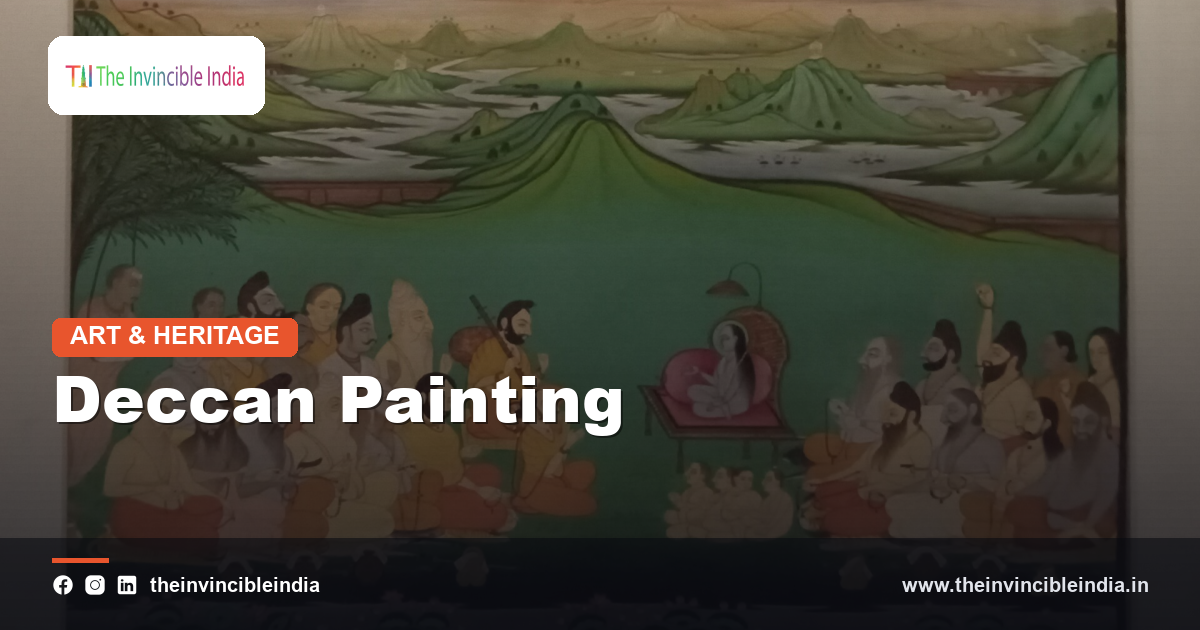
Deccan painting is a distinguished school of Indian miniature painting that flourished in the courts of the Deccan region of central and southern India, celebrated for its rich colour, refined ornamentation and distinctive character. Developing under the patronage of the sultanates that ruled the region, it absorbed influences from Persia while forging a style recognisably its own, standing apart from other schools of Indian miniature painting such as the Mughal and Rajput traditions. Centres such as Bijapur and Golconda each nurtured their own accomplished styles. This guide explores the history, character, centres and legacy of Deccan painting, a celebrated treasure of India’s artistic heritage.
Quick Facts
| Detail | Information |
|---|---|
| Type | A school of Indian miniature painting from the Deccan courts |
| Region | The Deccan region of central and southern India |
| Known for | Rich colour, ornamentation and Persian-influenced style |
| Major centres | Bijapur, Golconda, Ahmadnagar and Hyderabad |
| Influences | Persian, Indian and local Deccan traditions |
| Legacy | A distinctive and celebrated school of Indian painting |
The Painting of the Deccan
Deccan painting is a distinguished school of Indian miniature painting that flourished in the courts of the Deccan region of central and southern India, celebrated for its rich colour, refined ornamentation and distinctive character. Developing under the patronage of the sultanates that ruled the region, Deccan painting absorbed influences from Persia and elsewhere while forging a style recognisably its own, admired for its opulence and imaginative quality. It stands apart from the better-known Mughal and Rajput schools. As the painting of the Deccan, marked by richness of colour and distinctive style, this tradition holds an important and celebrated place among the schools of Indian miniature painting.
Historical Background of the Deccan Courts
Deccan painting developed under the patronage of the several sultanates that ruled the Deccan region in the medieval and early modern periods, courts noted for their wealth, cultural sophistication and connections to the wider Islamic world. These courts supported skilled painters and fostered an artistic environment receptive to outside influence, particularly from Persia, while also drawing on local Deccan and Indian traditions. This courtly patronage was essential to the flourishing of the school. This historical background of patronage by the Deccan sultanates, cultured and connected courts open to varied artistic influence, provided the essential conditions under which Deccan painting could develop into a distinctive and accomplished tradition.
Character and Style
Deccan painting is distinguished by a character of richness, opulence and imaginative ornamentation, setting it apart from the more restrained naturalism often associated with Mughal painting. The style favours bold and luminous colour, elaborate decorative detail, and compositions that can be strikingly inventive, sometimes verging on the fantastical in their imagery. This distinctive richness gives Deccan painting an unmistakable visual identity. This distinctive character and style of Deccan painting, marked by richness of colour and imaginative ornamentation, is what most clearly identifies the school and accounts for the particular admiration it receives among connoisseurs of Indian miniature art.
Bijapur Painting
Among the most celebrated centres of Deccan painting was Bijapur, whose court fostered a style noted for its refinement, poetic sensibility and rich decorative quality. Bijapur painting is admired for its elegant figures, luxuriant use of colour and gold, and a certain lyrical, dreamlike atmosphere that distinguishes it from other Deccan schools. The Bijapur style represents one of the artistic high points of the region. This Bijapur style of Deccan painting, celebrated for its refinement and poetic, richly coloured quality, is regarded as among the finest achievements of the wider Deccan tradition and a testament to the cultural sophistication of its court.
Golconda and Hyderabad
Another important centre of Deccan painting developed at Golconda and later at Hyderabad, courts likewise noted for their wealth and cultural patronage. The painting associated with these centres shares the broader Deccan characteristics of rich colour and fine ornamentation, while also developing its own particular emphases in subject and style over time. The continuity from Golconda to Hyderabad reflects the enduring artistic culture of the region. This tradition of painting at Golconda and Hyderabad, sustained across changing political circumstances, demonstrates the resilience and continuity of artistic patronage in the Deccan and its ongoing contribution to the wider school of Deccan painting.
Ahmadnagar Painting
Ahmadnagar was another significant centre associated with the early development of Deccan painting, its court likewise supporting skilled artists who contributed to the formation of the wider Deccan style. Painting associated with Ahmadnagar is valued for its role in the early history of the school, helping to establish the characteristic Deccan qualities of rich colour and refined ornamentation that would be developed further at other courts. This early contribution was important to the tradition’s formation. This contribution of Ahmadnagar to the early development of Deccan painting situates the centre as an important part of the school’s history, alongside Bijapur and Golconda, in the broader story of Deccan artistic achievement.
Persian and Indian Influences
Deccan painting is notable for its distinctive blending of Persian and Indian artistic influences, reflecting the cultural and diplomatic connections of the Deccan sultanates with the wider Persianate world as well as their roots in the Indian subcontinent. Persian elements can be seen in aspects of composition, colour and decorative motif, while Indian sensibilities shape other aspects of subject and style, together producing the school’s distinctive hybrid character. This blending is a defining feature of Deccan art. This blending of Persian and Indian influences within Deccan painting, reflecting the region’s wide cultural connections, is central to understanding the school’s distinctive richness and helps explain its particular place among the traditions of Indian miniature painting.
Colour and Ornamentation
Few schools of Indian miniature painting rival Deccan painting in their use of rich, luminous colour and elaborate ornamentation, qualities that give the tradition its particular splendour. Deep and jewel-like hues, generous use of gold, and intricate decorative patterning are hallmarks of the style, applied with a confidence and richness that produce a striking visual effect. This emphasis on colour and ornament sets a distinctive tone. This emphasis on rich colour and elaborate ornamentation in Deccan painting, applied with striking confidence and richness, is among the most admired features of the school and a large part of what gives it such a distinctive and memorable visual character.
Themes of Court and Poetry
Deccan painting depicts a range of themes connected to court life and poetry, including courtly gatherings, rulers and nobles, and subjects drawn from literary and poetic traditions cherished at the Deccan courts. These works often convey a refined, cultured atmosphere, reflecting the literary and artistic sophistication for which the Deccan sultanates were known. Such themes reveal the intellectual and cultural life of the courts. This engagement with themes of court life and poetry in Deccan painting reflects the refined cultural environment of the sultanates that patronised the art, and it gives the tradition a particular richness of subject alongside its celebrated richness of style.
Portraiture in Deccan Painting
Portraiture forms an important part of the Deccan painting tradition, depicting rulers and notable court figures with a dignity and refinement suited to their status. Deccan portraits often combine careful attention to likeness with the rich decorative sensibility characteristic of the wider school, producing images that are as much celebrations of status and culture as records of appearance. This approach to portraiture reflects the values of the Deccan courts. This tradition of portraiture within Deccan painting, combining careful observation with rich decorative treatment, contributes an important dimension to the school and offers valuable insight into the rulers and courtly culture of the historical Deccan.
Depictions of Music and Ragamala
Deccan painting includes notable depictions related to music, including works in the wider Indian tradition of illustrating musical modes through image and poetry. Such paintings sought to capture the mood and character associated with particular musical themes, rendered with the rich colour and imaginative quality typical of Deccan art. This connection between painting and music reflects the broader cultural refinement of the Deccan courts. This engagement with musical and poetic themes within Deccan painting demonstrates the wide cultural range of the tradition, extending beyond portraiture and court scenes to embrace the artistic and imaginative connections between painting, poetry and music cherished in the region.
Materials and Technique
Like other schools of Indian miniature painting, Deccan painting was executed with fine brushes and natural pigments on paper, built up through careful, patient layering of colour and detail. The technique allowed for the rich, luminous effects and fine ornamentation characteristic of the school, requiring considerable skill in the handling of colour and gold. This careful technique underlies the visual splendour of Deccan work. This technical foundation of fine brushwork and careful layering of colour, shared with the wider tradition of Indian miniature painting, made possible the particular richness and ornamentation for which Deccan painting is celebrated among connoisseurs of the miniature art.
Distinguishing Deccan from Mughal Style
While related to the wider tradition of Indian miniature painting, Deccan painting is generally distinguished from the Mughal school by its greater richness of colour, its more pronounced Persian influence, and a certain imaginative or fantastical quality less common in Mughal naturalism. Scholars and connoisseurs often identify Deccan works by these qualities, alongside particular stylistic conventions associated with the Deccan courts. This distinction helps situate Deccan painting within the broader field. This distinguishing of Deccan painting from the Mughal school, based on differences of colour, influence and imaginative quality, helps clarify the particular identity and contribution of the Deccan tradition within the wider family of Indian miniature painting.
A Treasured Legacy
The finest works of Deccan painting are treasured today in museums and collections, admired for their rich colour, imaginative quality and historical significance as products of the sophisticated courts of the Deccan sultanates. Scholars regard the school as an important and distinctive contribution to Indian art, deserving of recognition alongside the better-known Mughal and Rajput traditions. This treasured legacy reflects the lasting achievement of Deccan artists. This legacy of Deccan painting, preserved and studied as an important chapter of Indian miniature art, ensures continued appreciation of the school’s distinctive richness and secures its place within the wider story of the country’s artistic heritage.
Deccan Painting Today
Today Deccan painting is recognised by scholars and art lovers as a distinguished and distinctive school of Indian miniature painting, its finest works held in major museum collections in India and abroad. The rich colour and imaginative ornamentation associated with Bijapur, Golconda and other Deccan centres continue to be studied and admired, contributing to a fuller understanding of the diversity of Indian painting traditions. Renewed scholarly attention has helped raise its profile in recent decades. As the painting of the Deccan, marked by richness of colour and imaginative style, this tradition endures as a celebrated and important part of India’s artistic heritage.
Sources & Further Reading
- Ministry of Culture, Government of India, on the miniature painting traditions of India (indiaculture.gov.in).
- National Museum, on the Deccan school of Indian painting.
Frequently Asked Questions
What is Deccan painting?
Deccan painting is a school of Indian miniature painting that developed in the courts of the Deccan region under the patronage of the sultanates that ruled there. It is known for its rich colour, ornamentation and Persian-influenced style.
What are the main centres of Deccan painting?
The main centres of Deccan painting include Bijapur, celebrated for its refined and poetic style, along with Golconda, Hyderabad and Ahmadnagar, each contributing to the wider Deccan tradition.
How does Deccan painting differ from Mughal painting?
Deccan painting differs from Mughal painting through its greater richness of colour, stronger Persian influence and a more imaginative, sometimes fantastical quality, compared with the naturalism generally associated with the Mughal school.
What themes does Deccan painting depict?
Deccan painting depicts themes including courtly gatherings, portraits of rulers and nobles, subjects drawn from poetry, and musical themes, all rendered with the school’s characteristic richness of colour and ornamentation.
Why is Deccan painting historically significant?
Deccan painting is historically significant because it reflects the sophisticated culture of the Deccan sultanates and their wide artistic connections, representing a distinctive and celebrated contribution to the broader tradition of Indian miniature painting.


