

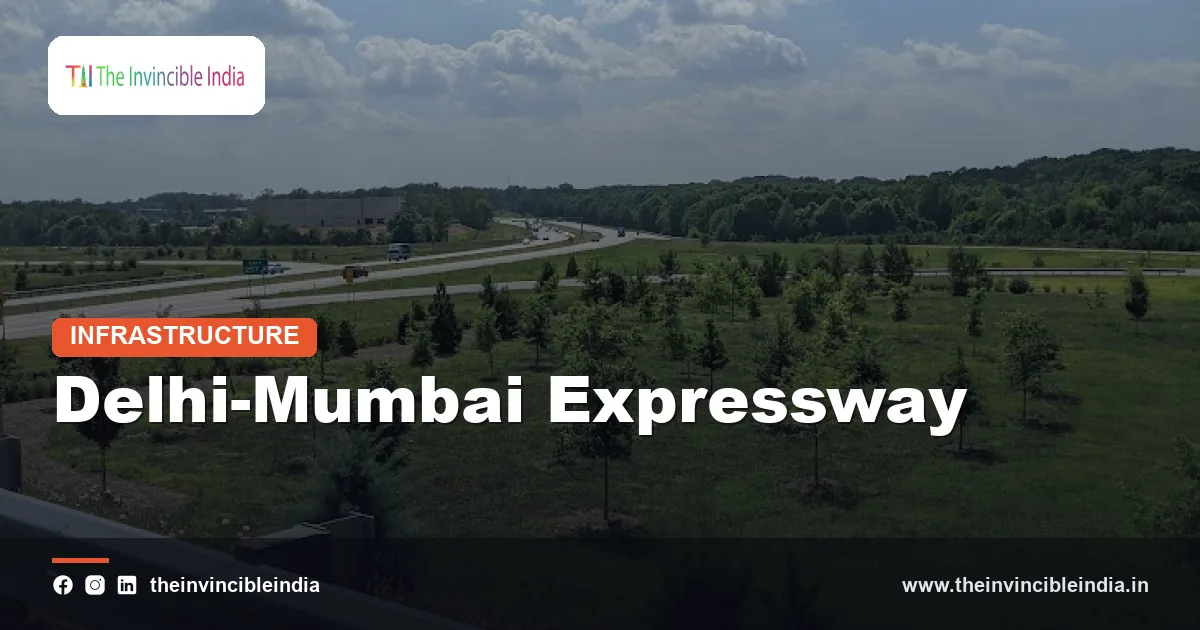
The Delhi-Mumbai Expressway is India’s longest expressway, a roughly 1,350 km access-controlled, eight-lane highway being built by the National Highways Authority of India (NHAI) to link Delhi with Mumbai through Haryana, Rajasthan, Madhya Pradesh, Gujarat and Maharashtra. Once complete, the Delhi-Mumbai Expressway is expected to roughly halve the road journey between the two cities, from about a day to around twelve hours.
The project is a flagship of the Bharatmala Pariyojana, the central government’s highway development programme, and is designed with wildlife crossings, tunnels, wayside amenities and provision for future expansion to twelve lanes. It is being opened in phases, with completed stretches entering service while construction continues on the rest.
| Attribute | Detail |
|---|---|
| Type | Access-controlled expressway, eight lanes, expandable to twelve |
| Approximate length | About 1,350 km |
| Terminal points | Delhi (National Capital Region) in the north; Mumbai region (Navi Mumbai, near Jawaharlal Nehru Port) in the west |
| States crossed | Haryana, Rajasthan, Madhya Pradesh, Gujarat and Maharashtra, along with the Delhi region |
| Implementing agency | National Highways Authority of India (NHAI) |
| Programme | Bharatmala Pariyojana, under the Ministry of Road Transport and Highways |
| Foundation laid | March 2019 |
| First section opened | February 2023, in the Haryana-Rajasthan stretch |
| Design highlights | Animal overpasses and underpasses, tunnels, wayside amenities, solar power and electric vehicle charging provisions |
Key Takeaways
- The Delhi-Mumbai Expressway is India’s longest expressway, with an approximate length of 1,350 km between Delhi and the Mumbai region.
- The National Highways Authority of India (NHAI) is building the Delhi-Mumbai Expressway as part of the Bharatmala Pariyojana highway programme.
- The Delhi-Mumbai Expressway is designed as an eight-lane, access-controlled corridor that can later be widened to twelve lanes.
- The route passes through five states, namely Haryana, Rajasthan, Madhya Pradesh, Gujarat and Maharashtra, and is intended to cut the Delhi-Mumbai drive from roughly a day to about twelve hours.
- The Delhi-Mumbai Expressway includes wildlife overpasses and underpasses, notably near tiger habitats in Rajasthan, as well as tunnels such as those at Mukundra Hills and in the Matheran region.
- The project is opening in phases, with the first section entering service in February 2023, so the whole corridor is not yet a single fully operational expressway.
What is the Delhi-Mumbai Expressway?
The Delhi-Mumbai Expressway is a new-generation, access-controlled highway that connects India’s national capital region with the Mumbai region and is intended to become the country’s longest expressway. It runs for roughly 1,350 km, although the figure has been reported slightly differently as alignments and sections were finalised.
Access-controlled means that vehicles can enter and exit only at designated interchanges, and that pedestrians, cattle and slow-moving traffic are kept off the carriageway through fencing and grade-separated crossings. Such a design allows higher and safer speeds than ordinary national highways, and the expressway is built for a design speed of about 120 km/h.
The expressway is often called the DME in shorthand. It is also described as part of a broader effort to build high-capacity corridors that reduce logistics cost and improve connectivity between major economic regions of northern and western India.
Who is building the Delhi-Mumbai Expressway?
The National Highways Authority of India (NHAI), a statutory body under the Ministry of Road Transport and Highways, is the agency building the Delhi-Mumbai Expressway. NHAI was created to develop, maintain and manage the country’s national highway network.
The project was announced in 2018 and the foundation stone was laid in March 2019. The corridor was divided into many construction packages that were awarded to different contractors, which is the usual method for projects of this length. Work was interrupted in 2020 by the COVID-19 pandemic and then resumed, and phases have been completed in sequence.
The expressway forms part of the Bharatmala Pariyojana, the umbrella programme for road development launched to build economic corridors, feeder routes and border and coastal roads. Its estimated cost is on the order of a lakh crore rupees, making it one of the largest single highway projects in the country. Exact cost figures have varied across official announcements.
Which states and cities does the Delhi-Mumbai Expressway pass through?
The Delhi-Mumbai Expressway passes through five states, namely Haryana, Rajasthan, Madhya Pradesh, Gujarat and Maharashtra, and begins in the Delhi region. Gujarat has the longest stretch, while Haryana and Maharashtra contribute shorter lengths.
| State | Examples of areas on or near the route |
|---|---|
| Delhi and Haryana | Delhi region, Faridabad-Gurugram belt, Sohna, Nuh district |
| Rajasthan | Dausa, Sawai Madhopur, Kota, Bundi, Jhalawar region |
| Madhya Pradesh | Mandsaur and Ratlam districts in the western part of the state |
| Gujarat | Vadodara, Bharuch, Surat region |
| Maharashtra | Palghar, Thane and Raigad districts, ending near Navi Mumbai |
The alignment is largely a new corridor, passing through rural areas and bypassing congested city centres, and it connects to existing highways at interchanges. It is meant to stimulate regional growth by linking industrial areas, agricultural districts and ports. The western terminus is near Jawaharlal Nehru Port (JNPT) in the Navi Mumbai area, one of India’s major container ports.
What is the design of the Delhi-Mumbai Expressway?
The Delhi-Mumbai Expressway is designed as an eight-lane access-controlled expressway that can be expanded to twelve lanes as traffic grows. Land has been acquired and structures such as bridges and underpasses have been planned with this future expansion in mind.
Main design features
- Lanes: eight lanes at the start, with provision for twelve.
- Speed: designed for speeds up to about 120 km/h, subject to the rules that apply on specific sections.
- Access control: entry and exit only at interchanges, with fencing along the corridor.
- Pavement and drainage: concrete or high-quality pavement sections with provision for rainwater harvesting.
- Safety systems: crash barriers, signage, emergency telephones, helipads at selected points and trauma-care facilities.
- Green features: plantation along the corridor and plans for solar power and electric vehicle charging at amenity locations.
Planners describe it as a “smart” corridor, with intelligent traffic management and electronic tolling intended to be a part of operations. The details of tolling and traffic control are set by NHAI and may change as sections open.
How does the expressway protect wildlife?
The Delhi-Mumbai Expressway protects wildlife through dedicated animal overpasses and underpasses, fencing and elevated or tunnelled sections that let animals cross without entering traffic. This was a notable feature because the route passes near protected habitats, including areas linked to tiger reserves in Rajasthan and Madhya Pradesh.
Mukundra Hills
Near Mukundra Hills Tiger Reserve in Rajasthan, the expressway uses a tunnel and elevated sections so that the road does not cut through the forest floor. These structures keep the corridor largely out of the reserve’s core area and allow animal movement.
Animal crossings
Animal overpasses are planted bridges built above the carriageway so that wildlife can walk across. Underpasses and large culverts allow animals to pass beneath the road. Together, they are among the earliest large-scale uses of dedicated wildlife crossings on an Indian expressway, according to official descriptions.
Why it matters
Roads can fragment habitats and cause collisions between vehicles and animals. Wildlife crossings, if properly designed and maintained, can reduce those risks. Conservationists generally welcome such designs but also stress the need for monitoring to confirm that animals actually use the crossings.
Which tunnels does the Delhi-Mumbai Expressway have?
The Delhi-Mumbai Expressway includes tunnels in two major locations, the Mukundra Hills area in Rajasthan and the Matheran region in Maharashtra, in addition to many bridges and flyovers. These tunnels are used where the road crosses hills, ghat sections or sensitive habitats.
- Mukundra Hills tunnel (Rajasthan): built as part of the stretch that passes near the Mukundra Hills Tiger Reserve, combined with elevated road sections to minimise disturbance.
- Matheran tunnels (Maharashtra): part of the section passing through the Western Ghats near Matheran, where the terrain is steep and requires tunnelling and long bridges.
Tunnelling is expensive and technically demanding, but it allows direct alignments through hilly terrain and reduces environmental damage compared with deep cuttings. The expressway also includes numerous major bridges, including crossings of rivers such as the Chambal and the Narmada, as well as a large number of grade-separated crossings.
What wayside amenities does the expressway offer?
The Delhi-Mumbai Expressway is planned to have wayside amenities at regular intervals, offering fuel, food, rest rooms, vehicle repair, parking, medical aid and electric vehicle charging. These facilities are meant to make long journeys safer and more comfortable on a corridor where regular roadside shops are not allowed.
Typical amenities include:
- Fuel stations and electric vehicle charging points.
- Food courts, convenience shops and clean toilets.
- Parking spaces for cars and heavy vehicles and driver rest areas.
- Trauma-care, ambulance and emergency response services at intervals.
- Helipad facilities at selected locations for emergency use.
Wayside amenities also offer local employment and a place to showcase regional crafts and produce. Since the expressway is access-controlled, these facilities sit within the corridor or at designated interchanges rather than along the open roadside.
How much time does the Delhi-Mumbai Expressway save?
The Delhi-Mumbai Expressway is expected to cut the road journey between Delhi and Mumbai from around 24 hours to about 12 hours, according to official estimates. It is also expected to shorten the distance compared with the older national highway routes, although figures vary by source and by starting and ending point.
Actual journey times depend on traffic, speed limits, toll plazas and which sections are open. Until the full corridor is complete, drivers use a combination of expressway stretches and existing highways, so travel time savings are partial.
Wider economic effects
- Freight: faster trucking between northern India and the western ports can lower logistics costs.
- Regional development: industrial corridors, logistics parks and new settlements are expected to grow along the route.
- Tourism: easier access to places in Rajasthan, Gujarat and Madhya Pradesh.
- Fuel and emissions: steadier speeds on a smooth, uncongested road can reduce fuel use per trip, though higher overall traffic may offset some benefits.
How is the Delhi-Mumbai Expressway being opened?
The Delhi-Mumbai Expressway is being opened in phases, with completed sections allowed to operate before the whole route is finished. The first stretch, covering the Haryana and Rajasthan portion near Sohna, Dausa and Lalsot, was opened to traffic in February 2023.
Phased opening is a common approach for very long highway projects because it starts delivering benefits early, helps spread out toll collection and allows traffic patterns to be monitored. It also means that the expressway’s length, number of operational interchanges and facilities change over time.
| Stage | What it means |
|---|---|
| Announcement and planning | The project was announced around 2018 under Bharatmala, with land acquisition and design |
| Foundation | Foundation stone laid in March 2019 |
| First section | Opened in February 2023 in Haryana and Rajasthan |
| Further sections | Additional stretches in Rajasthan, Madhya Pradesh, Gujarat and Maharashtra opening in stages |
| Full corridor | Continuous Delhi-Mumbai route, with later expansion to twelve lanes as demand grows |
What are the concerns and criticisms of the project?
The main concerns about the Delhi-Mumbai Expressway involve land acquisition, environmental impact, cost, toll levels and the risk of high-speed accidents. These issues are common to large highway projects and are debated by farmers’ groups, conservationists and transport planners.
- Land and livelihoods: acquiring land for a new corridor affects farmers and rural communities, who need fair compensation.
- Environment: highways can fragment habitats and affect water systems even with mitigation structures.
- Safety: higher speeds require strict enforcement, driver discipline and fast emergency response.
- Cost and tolls: a large project requires substantial public funding, and toll rates affect affordability for users.
- Rail versus road: some analysts argue for balancing road projects with rail freight, which is often more energy efficient.
Bottom Line
The Delhi-Mumbai Expressway is India’s longest expressway and a major test of how the country builds large, safer and more environmentally aware highways. It is built by NHAI under Bharatmala, runs across five states, and is opening in phases, so its full benefits will depend on completion, safe operation and sensible management of its environmental and social effects.
Frequently Asked Questions
How long is the Delhi-Mumbai Expressway?
The Delhi-Mumbai Expressway is about 1,350 km long, making it India’s longest expressway. The figure is approximate because alignments and sections have been reported with small differences. The expressway links Delhi with the Mumbai region near Jawaharlal Nehru Port.
Which states does the Delhi-Mumbai Expressway pass through?
The Delhi-Mumbai Expressway passes through Haryana, Rajasthan, Madhya Pradesh, Gujarat and Maharashtra, starting from the Delhi region. Gujarat has the longest share of the route. The expressway ends near Navi Mumbai in Maharashtra.
Who is building the Delhi-Mumbai Expressway?
The National Highways Authority of India (NHAI) is building the Delhi-Mumbai Expressway under the Bharatmala Pariyojana. The project works through many construction packages given to different contractors. The Ministry of Road Transport and Highways oversees the programme.
How much time will the Delhi-Mumbai Expressway save?
The Delhi-Mumbai Expressway is expected to reduce the road journey from about 24 hours to roughly 12 hours once the full corridor is operational. The saving comes from higher speeds and a more direct route. Actual times depend on traffic, speed limits and which sections are open.
Does the Delhi-Mumbai Expressway have wildlife crossings?
Yes, the Delhi-Mumbai Expressway has animal overpasses, underpasses and elevated or tunnelled sections designed to allow wildlife to cross safely. They are concentrated near sensitive areas such as the Mukundra Hills Tiger Reserve in Rajasthan. Monitoring is needed to confirm how well animals use them.
Is the Delhi-Mumbai Expressway fully open?
No, the Delhi-Mumbai Expressway is being opened in phases rather than all at once. The first section opened in February 2023 in the Haryana and Rajasthan stretch. Other stretches have been opening in stages, so travellers use a mix of expressway and existing highway sections until the whole corridor is complete.
{“@context”:”https://schema.org”,”@graph”:[{“@type”:”FAQPage”,”mainEntity”:[{“@type”:”Question”,”name”:”How long is the Delhi-Mumbai Expressway?”,”acceptedAnswer”:{“@type”:”Answer”,”text”:”The Delhi-Mumbai Expressway is about 1,350 km long, making it India’s longest expressway. The figure is approximate because alignments and sections have been reported with small differences. The expressway links Delhi with the Mumbai region near Jawaharlal Nehru Port.”}},{“@type”:”Question”,”name”:”Which states does the Delhi-Mumbai Expressway pass through?”,”acceptedAnswer”:{“@type”:”Answer”,”text”:”The Delhi-Mumbai Expressway passes through Haryana, Rajasthan, Madhya Pradesh, Gujarat and Maharashtra, starting from the Delhi region. Gujarat has the longest share of the route. The expressway ends near Navi Mumbai in Maharashtra.”}},{“@type”:”Question”,”name”:”Who is building the Delhi-Mumbai Expressway?”,”acceptedAnswer”:{“@type”:”Answer”,”text”:”The National Highways Authority of India (NHAI) is building the Delhi-Mumbai Expressway under the Bharatmala Pariyojana. The project works through many construction packages given to different contractors. The Ministry of Road Transport and Highways oversees the programme.”}},{“@type”:”Question”,”name”:”How much time will the Delhi-Mumbai Expressway save?”,”acceptedAnswer”:{“@type”:”Answer”,”text”:”The Delhi-Mumbai Expressway is expected to reduce the road journey from about 24 hours to roughly 12 hours once the full corridor is operational. The saving comes from higher speeds and a more direct route. Actual times depend on traffic, speed limits and which sections are open.”}},{“@type”:”Question”,”name”:”Does the Delhi-Mumbai Expressway have wildlife crossings?”,”acceptedAnswer”:{“@type”:”Answer”,”text”:”Yes, the Delhi-Mumbai Expressway has animal overpasses, underpasses and elevated or tunnelled sections designed to allow wildlife to cross safely. They are concentrated near sensitive areas such as the Mukundra Hills Tiger Reserve in Rajasthan. Monitoring is needed to confirm how well animals use them.”}},{“@type”:”Question”,”name”:”Is the Delhi-Mumbai Expressway fully open?”,”acceptedAnswer”:{“@type”:”Answer”,”text”:”No, the Delhi-Mumbai Expressway is being opened in phases rather than all at once. The first section opened in February 2023 in the Haryana and Rajasthan stretch. Other stretches have been opening in stages, so travellers use a mix of expressway and existing highway sections until the whole corridor is complete.”}}]}]}


