

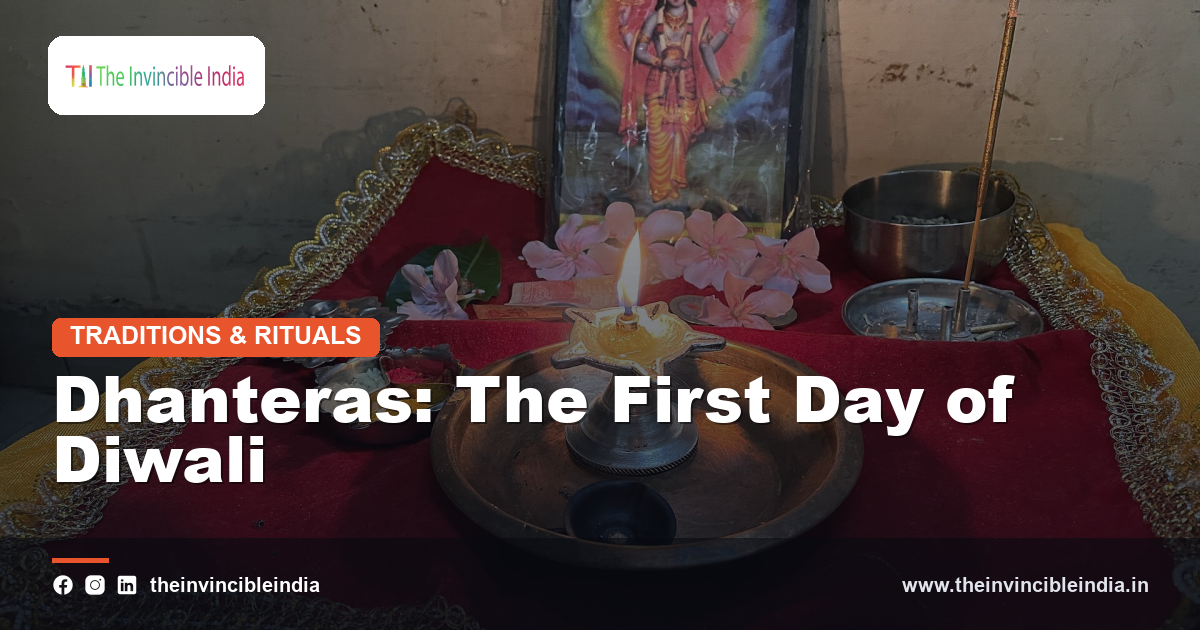
Dhanteras marks the opening day of Diwali, one of the most widely observed festivals in Indian tradition. Falling on the thirteenth lunar day of the dark fortnight before the main night of Diwali, it is dedicated to inviting wealth, health and prosperity into the home. Households mark the occasion with thorough cleaning, the lighting of lamps, and the purchase of gold, silver or new utensils, customs believed to draw in good fortune for the year ahead. The day is also associated with Lord Dhanvantari, revered for his connection to health and healing. Together these rituals set a hopeful and purposeful tone for the larger Diwali celebrations that follow.
Quick Facts
| Detail | Information |
|---|---|
| Also Known As | Dhantrayodashi |
| Marks | First day of the five-day Diwali festival |
| Deities Honored | Goddess Lakshmi, Lord Kubera, Lord Dhanvantari |
| Key Rituals | Buying gold or silver, cleaning homes, lighting diyas |
| Associated Values | Wealth, prosperity and good health |
| Observed | Across India, widely by trading and business communities |
Meaning and Origins of the Name
Dhanteras derives its name from two Sanskrit-rooted terms, one meaning wealth and the other referring to the thirteenth lunar day on which the festival falls. The festival is also known in some regions as Dhantrayodashi, a fuller rendering of the same idea, tying the day explicitly to the thirteenth day of the waning fortnight before Diwali. The name captures the central theme of the observance: an invitation for wealth, in its many forms, to enter and remain within the household. For most families the term wealth is understood broadly, encompassing not only money and precious metals but also health, well-being, and the prosperity of relationships. This layered meaning has kept the festival relevant across changing economic circumstances, since its blessings are sought as much for good health as for material gain. Understanding the name is therefore the starting point for understanding the values the day is meant to reinforce. Dhanteras stands as a linguistic and cultural marker of the aspirations that open the larger Diwali season.
Dhanteras Within the Diwali Calendar
Dhanteras opens a sequence of celebrations that culminates in Diwali, the festival of lights observed across much of India. It falls two days before the main night of Diwali, setting a tone of anticipation and preparation for the household festivities that follow. The days between Dhanteras and Diwali are typically used for cleaning, shopping, and decorating, so that homes are ready for the arrival of the main festival. In many family calendars, Dhanteras is followed by Naraka Chaturdashi, then the principal night of Lakshmi Puja, and finally by Govardhan Puja and Bhai Dooj, forming a connected five-day sequence. Each day in this cycle carries its own rituals and meanings, yet together they build toward a shared spirit of renewal and togetherness. Dhanteras therefore functions less as an isolated event than as the doorway through which the wider festival begins. Its placement at the very start of the cycle gives it a distinct role in setting expectations, moods, and preparations for everything that follows.
The Legend of Lord Dhanvantari
Among the stories associated with Dhanteras, the account of Lord Dhanvantari holds particular importance. Dhanvantari is revered in Hindu tradition as a physician deity connected with health and healing, and is said to have emerged during a great churning event described in ancient texts, carrying knowledge that would later be associated with Ayurveda. Because Dhanteras is understood to mark this emergence, the day is closely linked with wishes for good health alongside prosperity. This mythological backdrop explains why many households and practitioners of traditional medicine treat the day as significant for beginning new health-related routines or purchases. The story is retold in a general and reverential way rather than through fixed textual citation, since versions vary slightly across regional traditions. What remains constant is the association between this day and the idea that wellness is a form of wealth in its own right. This layer of meaning broadens the festival beyond material prosperity to include physical and spiritual well-being.
Goddess Lakshmi and the Welcome of Prosperity
Goddess Lakshmi, revered as the deity of wealth, fortune, and abundance, occupies a central place in the imagination of Dhanteras even though her principal worship occurs on the main night of Diwali. On Dhanteras, households prepare the ground for her arrival by cleaning and decorating their homes, following a widespread belief that she visits places that are clean, well-lit, and welcoming. Small lamps are lit near entrances and windows to symbolically guide her inside, a practice that continues through the following days of the festival. The anticipation built on Dhanteras therefore serves as a spiritual and practical rehearsal for the fuller worship to come. Many families also purchase small idols or images of Lakshmi on this day, to be formally worshipped during the main Diwali puja. This layered approach, in which preparation and worship are spread across several days, reflects the importance placed on receiving prosperity with due respect and readiness rather than treating it as automatic or guaranteed.
Lord Kubera, the Keeper of Wealth
Alongside Goddess Lakshmi, Lord Kubera is invoked on Dhanteras as the traditional guardian of wealth and treasure in Hindu belief. Where Lakshmi represents the arrival and flow of prosperity, Kubera is associated with its safekeeping and prudent management, and the two are often worshipped together on this occasion. Business owners in particular pay attention to this pairing, since it reflects the dual concern of earning wealth and protecting it responsibly. In many households, a small prayer or invocation to Kubera accompanies the main rituals directed at Lakshmi, reinforcing the idea that prosperity requires both generosity and careful stewardship. This combined worship illustrates the practical wisdom embedded in the festival, which treats wealth not as an end in itself but as a resource to be managed with foresight. The presence of Kubera in the day’s observances adds a note of discipline to the otherwise celebratory atmosphere of Dhanteras.
Cleaning and Preparing the Home
Cleaning is one of the most visible and widely observed customs associated with Dhanteras. In the days leading up to the festival, households undertake thorough cleaning of living spaces, workplaces, and shop premises, clearing away clutter and giving a fresh appearance to interiors and entrances. This practice stems from the belief that Goddess Lakshmi favors homes that are tidy, bright, and orderly, and is unlikely to enter spaces that appear neglected. Beyond its religious rationale, the custom also carries a practical benefit, encouraging families to declutter and refresh their surroundings ahead of the festive season. Walls may be freshly painted, floors polished, and doorways decorated, all in anticipation of the celebrations to follow. For many, this period of cleaning becomes an informal seasonal ritual comparable to a change of season, marking a transition from the year that is ending to the one about to begin. The custom binds together spiritual belief and everyday domestic care in a single shared activity.
Buying Gold, Silver and Metal Utensils
Purchasing gold, silver, or other precious items is perhaps the most widely recognized custom of Dhanteras, giving the festival its strong association with markets and jewellery trade. The practice is rooted in the belief that acquiring valuable metal on this auspicious day invites lasting prosperity into the household. Jewellery stores across the country typically see a marked increase in customers in the days surrounding the festival, reflecting how deeply this custom is embedded in popular observance. For many families, the purchase need not be large or expensive; even a small coin or token amount of gold or silver is considered sufficient to fulfil the tradition. The custom also extends to other valuable or symbolically significant items, reflecting a flexible interpretation of what counts as an auspicious purchase. Over time, this tradition has also shaped consumer behavior more broadly, with the timing of major purchases in some households deliberately aligned with the festival. The custom continues to anchor Dhanteras firmly in public consciousness as a day of new acquisitions.
The Custom of Purchasing New Utensils
Alongside gold and silver, the purchase of new metal utensils, particularly those made of bronze or other traditional metals, is a distinct and long-standing Dhanteras custom. Utensils bought on this day are often set aside for ceremonial use or reserved for special occasions throughout the year, rather than immediate everyday use. The tradition reflects an older association between metal vessels and household prosperity, predating the modern emphasis on jewellery, and remains especially popular in many parts of northern and western India. Kitchenware shops, like jewellers, see increased activity around the festival as families look to add new items to their homes. The custom is often explained as an extension of the wealth-related theme of the day, since utensils represent both practical value and a store of material worth. In some households, the newly purchased items are ceremonially placed alongside images of Lakshmi and Kubera before being put into regular use. This custom illustrates how Dhanteras blends devotional practice with practical domestic life.
Lighting Diyas and the Symbolism of Light
Lighting earthen lamps, or diyas, is a central visual and symbolic element of Dhanteras, connecting it to the broader theme of light that defines the entire Diwali season. Lamps are placed at entrances, windows, and courtyards, their flickering glow intended to welcome prosperity and dispel negativity from the household. The act of lighting a lamp is simple, yet it carries substantial symbolic weight, representing the triumph of clarity and hope over uncertainty and difficulty. In many homes, the number and placement of lamps follow customs passed down through generations, though there is considerable regional and personal variation in practice. The lighting of diyas on Dhanteras also serves a practical function, illuminating homes during the darker evenings of the lunar month, well before electric lighting became widespread. Today, diyas are often used alongside electric string lights, blending traditional and modern forms of illumination. The custom remains one of the most recognizable and photographed aspects of the festival.
Rangoli and Threshold Decorations
Decorative rangoli patterns, made using colored powders, flower petals, or rice paste, are commonly created at the entrances of homes and shops during Dhanteras. These designs are believed to welcome visiting deities, particularly Goddess Lakshmi, and to signal that a household is prepared to receive good fortune. Rangoli motifs often include lotus flowers, footprints, and geometric patterns, each carrying its own symbolic association with auspiciousness and welcome. The creation of rangoli is frequently a shared family activity, bringing together different generations in a creative and communal task ahead of the festival. In addition to their religious significance, these patterns add color and visual festivity to streets and courtyards during the Diwali season. Small footprints leading from the doorway into the home are a particularly common motif, symbolizing the arrival and passage of prosperity into the household. This tradition, though modest in scale, contributes significantly to the festive atmosphere associated with Dhanteras and the days that follow.
Yamadeepdan: The Lamp Lit for Yama
A distinctive and less widely known ritual associated with Dhanteras is Yamadeepdan, the lighting of a lamp dedicated to Yama, the deity associated with death in Hindu tradition. This lamp is traditionally placed outside the main door, facing south, a direction conventionally associated with Yama, and is lit in the evening as a gesture of respect. The ritual is generally understood as a prayer for protection from untimely death and for the well-being of family members throughout the coming year. Unlike the many lamps lit to welcome Lakshmi, the Yamadeepdan lamp carries a more solemn tone, reflecting concern for safety and longevity rather than material gain. The custom is observed with varying degrees of emphasis across regions and families, with some treating it as an essential part of the evening’s rituals and others observing it more informally. Its presence within the Dhanteras observance highlights the festival’s broader concern with holistic well-being, extending beyond wealth to matters of health and protection.
Dhanvantari Puja and Ayurveda
Given the association between Dhanteras and Lord Dhanvantari, the day holds particular significance for practitioners and followers of Ayurveda, the traditional Indian system of medicine. Many Ayurvedic institutions and practitioners mark the occasion with special prayers, health camps, or symbolic acts related to healing and medicine. The day is sometimes used as an opportunity to reflect on personal health goals or to begin new wellness routines, drawing on the belief that health-related endeavors started on this day are especially auspicious. This connection has helped keep Ayurveda visible within a widely observed popular festival, linking ancient medical tradition with everyday religious practice. Public discussions of health and well-being around this time of year, whether formal or informal, often reference this association. In this way, Dhanteras serves as a cultural touchpoint that bridges devotional practice and the appreciation of traditional medicine, reinforcing the idea that health is itself a form of wealth worth honoring.
Role in Trade and Business Communities
Dhanteras holds particular importance for traders, shopkeepers, and business communities across India, for whom the festival marks a significant point in the commercial calendar. Many businesses choose this day to open new account books, symbolically aligning fresh commercial beginnings with the day’s association with wealth. Shops are cleaned, decorated, and sometimes specially worshipped, with prayers offered for continued prosperity and successful trade in the year ahead. The heightened retail activity surrounding the festival, particularly in gold, silver, and utensil markets, reflects this commercial dimension of the observance. For small and large businesses alike, Dhanteras functions as both a religious occasion and a practical marker of the business year, blending devotional ritual with economic planning. This dual role has helped the festival remain closely tied to India’s trading communities across generations, even as forms of commerce and record-keeping have modernized considerably.
Family Gatherings and Shared Meals
Beyond its religious and commercial dimensions, Dhanteras is also an occasion for family members to come together, often as a prelude to the larger gatherings of Diwali itself. Households may host modest evening functions involving prayer, the lighting of lamps, and the sharing of sweets, setting a warm and anticipatory tone for the days ahead. Extended families frequently coordinate schedules to be together for at least part of the Dhanteras to Diwali period, treating it as a time for reunion as much as ritual observance. Children are often included in preparatory activities such as decorating the home or helping arrange lamps and rangoli, passing customs down informally through participation rather than instruction. These gatherings reinforce social bonds within families and communities, giving the festival a communal warmth that complements its more solemn religious elements. The blending of devotion, celebration, and togetherness on this day reflects a broader pattern found throughout the Diwali season.
Regional Variations Across India
While the core themes of Dhanteras, wealth, health, and preparation for Diwali, are broadly consistent, specific customs vary across India’s diverse regions and communities. In some parts of the country, the purchase of particular metals or utensils is emphasized more strongly, while in others, the Dhanvantari and Yamadeepdan rituals receive greater attention. Local temples may hold special prayers or events tailored to community traditions, and the exact timing of rituals can shift slightly according to regional calendars and customs. Trading communities in different states sometimes have their own distinctive practices linked to opening new ledgers or performing business-specific prayers. Despite these variations, the shared thread of inviting prosperity and preparing for Diwali remains recognizable throughout the country. This regional diversity illustrates how a widely observed festival can accommodate a range of local customs while retaining a common core of meaning, reflecting the broader pattern of unity and diversity found across Indian festival traditions.
Dhanteras in Contemporary Times
In recent decades, Dhanteras has become closely associated with a broader wave of consumer activity extending well beyond its traditional focus on gold, silver, and utensils. Retailers across categories, including electronics, vehicles, and home goods, now often promote the day as an auspicious time for significant purchases, reflecting shifting consumer habits and marketing practices. Online shopping platforms have further extended this trend, allowing festival-related purchasing to take place without visiting physical markets. At the same time, many families continue to observe the day’s original religious customs alongside these newer consumer patterns, treating shopping and ritual as complementary rather than competing activities. This evolution illustrates how a long-standing religious observance can adapt to contemporary economic life while retaining its underlying symbolic meaning. The continued popularity of the festival among younger generations, even as its expression changes, suggests that its core association between purchase, prosperity, and hope for the future remains resonant in modern India.
Dhanteras Today
Dhanteras today stands as both a devotional occasion and a widely recognized marker of the festive season, observed in millions of households and marketplaces across the country. It continues to open the Diwali calendar with rituals that combine cleaning, worship, and purchase, each carrying its own layer of symbolic meaning related to wealth, health, and protection. As with many long-observed festivals, its expression continues to evolve, incorporating new consumer patterns while retaining the older devotional customs tied to Lakshmi, Kubera, and Dhanvantari. The festival’s ability to hold together commercial activity and spiritual reflection speaks to a broader characteristic of Indian festival culture, in which the sacred and the everyday are frequently intertwined. As Diwali preparations gather pace across the days that follow, Dhanteras remains a distinctive and anticipated beginning, valued for the sense of hope, renewal, and gratitude it brings to the wider celebration.
Sources & Further Reading
- Ministry of Culture, Government of India (indiaculture.gov.in).
- Ministry of Tourism, Government of India (tourism.gov.in).
Frequently Asked Questions
What does Dhanteras mean?
Dhanteras combines the Sanskrit words for wealth and the thirteenth lunar day, marking the start of the Diwali festival. It is dedicated to inviting prosperity, health and well-being into the household.
Why do people buy gold on Dhanteras?
Purchasing gold, silver or new utensils on this day is believed to invite lasting prosperity into the home. Even a small or symbolic purchase is considered sufficient to observe the custom.
Which deities are worshipped on Dhanteras?
Goddess Lakshmi, Lord Kubera and Lord Dhanvantari are the principal deities associated with the day, representing prosperity, the safekeeping of wealth, and health respectively.
What is Yamadeepdan?
Yamadeepdan is the lighting of a lamp dedicated to Yama, placed facing south outside the home. It is offered as a prayer for protection and the well-being of family members.
How is Dhanteras connected to Diwali?
Dhanteras is the first day of the broader five-day Diwali festival, followed by Naraka Chaturdashi, the main Lakshmi Puja night, Govardhan Puja and Bhai Dooj.


