

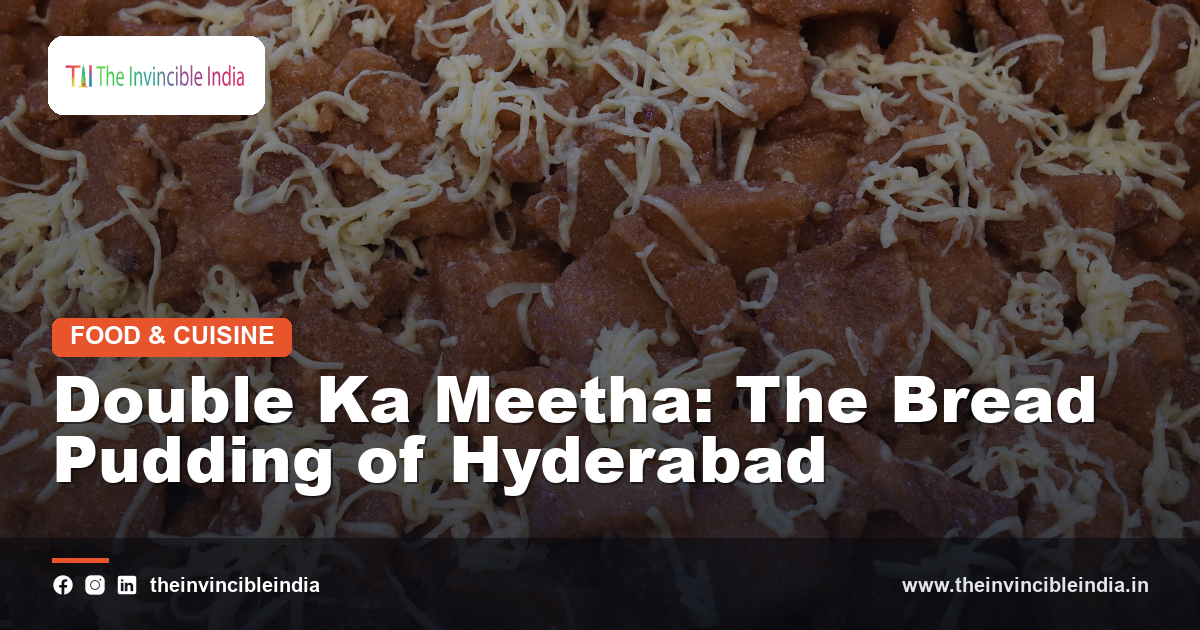
Double ka meetha, also written dubal ka meetha or called double roti ka meetha and Hyderabadi bread pudding, is one of the best-loved desserts of Hyderabad and a regular finale at weddings and festive dinners in Telangana. It is made from slices of bread fried in ghee, soaked in sweetened milk or syrup, and finished with saffron, cardamom and chopped nuts. The dessert reflects the rich court cooking that shaped the city’s food over centuries. Within the wider story of famous sweets of India, it is a good example of how a plain loaf of bread can be turned into a celebratory dish. This guide explains what double ka meetha is, how it is prepared and where it belongs at the table.
Quick answer: Double ka meetha is a traditional Hyderabadi dessert made of bread slices fried in ghee and soaked in sweetened, saffron-flavoured milk or syrup, then topped with nuts. Its name comes from double roti, the everyday word for bread in Hyderabad. It is a staple of weddings, Eid gatherings and festive feasts and is often served after Hyderabadi biryani.
Key Takeaways
- Double ka meetha is a Hyderabadi bread dessert, and its name means the sweet of double roti, double roti being the local word for bread.
- The bread is fried in ghee until golden, then soaked in sweetened milk or sugar syrup rather than baked in an oven.
- Saffron and cardamom give the dessert its characteristic aroma, and almonds, pistachios and cashews are the usual toppings.
- It is a Hyderabadi festive dish, common at weddings, Eid celebrations and formal dinners.
- It is often compared with shahi tukda and with Western bread pudding, though its method and flavours are distinct.
- It is commonly served warm or chilled, sometimes with rabri or cream, as the closing dish of a Hyderabadi meal.
The sections below describe the dessert, its name, its ingredients and method, and the customs of serving it in Hyderabad.
Quick Facts
| Detail | Information |
|---|---|
| Dish type | Traditional dessert, a fried-bread pudding |
| City of association | Hyderabad, Telangana |
| Main ingredient | Bread, ghee, milk and sugar |
| Signature flavours | Saffron, cardamom and nuts |
| Cooking style | Bread fried in ghee, then soaked in sweet milk or syrup |
| Usually served | At weddings, Eid and festive meals, warm or chilled |
What is double ka meetha?
Double ka meetha is a dessert from Hyderabad made by frying slices of bread in ghee and soaking them in sweetened milk or sugar syrup. The soaked slices soften into a rich, creamy pudding that is flavoured with saffron and cardamom and decorated with chopped nuts. It is usually served in a shallow dish or in individual bowls, and the top is often spread with thickened milk or cream. Unlike the Western bread pudding, it is not baked with eggs but assembled from fried bread and reduced milk. The dessert is vegetarian, uses a small number of everyday ingredients and depends on ghee, saffron and patient cooking for its richness. It is therefore best understood as a celebratory sweet that turns an ordinary household item into something fit for a feast.
Where does double ka meetha come from?
Double ka meetha comes from Hyderabad, where it is regarded as a classic of the city’s festive cooking. Hyderabadi cuisine developed under the patronage of the Nizams and blended Mughlai influences with the produce and tastes of the Deccan, producing dishes such as biryani, haleem and a range of rich sweets. Bread-based desserts of this kind belong to the same tradition as the fried-bread sweets of the wider Mughal world, which explains the family resemblance to dishes like shahi tukda. The exact date of the first double ka meetha and the name of its creator are not documented, so the origin is best described in general terms as a court-influenced dessert of old Hyderabad. Over time it moved from palace kitchens to ordinary homes and caterers across the city.
What does the name double ka meetha mean?
The name double ka meetha means the sweet made of double roti, and double roti is the everyday Hyderabadi term for a loaf of sliced bread. The word double is thought to refer to the thick, puffed shape of the loaf, which looks like two layers compared with a flat roti, though this explanation is a popular folk account rather than a documented one. The word meetha simply means sweet and is widely used in Hindi and Urdu for desserts. Because the name is so descriptive, it tells a listener exactly what the dish contains. Alternate spellings such as double ka meetha, dubal ka meetha and double roti ka meetha appear in menus and recipes, and all refer to the same dessert. The plain, practical name matches the plain ingredient from which the dish is built.
What ingredients go into double ka meetha?
Double ka meetha is built from a short list of ingredients: bread, ghee, milk, sugar, saffron, cardamom and nuts. White bread slices are the usual choice, and the crusts are often trimmed so that the pudding has a soft, even texture. Ghee is used for frying and gives the dessert its depth of flavour. Full-cream milk is simmered until it reduces and thickens, and in many modern kitchens condensed milk or khoya is used to shorten the process. Sugar sweetens the milk or is dissolved into a syrup. Saffron strands are steeped in warm milk for colour and fragrance, and ground cardamom adds a cooling, floral note. Almonds, pistachios and cashews supply crunch and richness. Together, these simple items produce a dessert that tastes far more elaborate than its ingredient list suggests.
How is double ka meetha made?
Double ka meetha is made by frying the bread, preparing a sweet milk, and layering the two so the bread can absorb the liquid. The bread slices are cut into triangles or squares, fried in ghee until golden and crisp at the edges, and set aside. Milk is simmered with sugar, saffron and cardamom until it thickens to a creamy consistency, or a sugar syrup is prepared separately. The fried bread is arranged in a dish, the sweet liquid is poured over it and the dish is left to rest so that the bread softens through. Some cooks warm the dessert gently for a few minutes to help the flavours blend. The method is simple but depends on timing, because bread that soaks too briefly stays dry and bread that soaks too long loses its shape.
Why is the bread fried in ghee first?
The bread is fried in ghee first because frying gives it a golden crust, a nutty flavour and enough structure to hold its shape in liquid. Plain bread soaked directly in milk would turn mushy and pale, while ghee-fried bread keeps a slight bite even after absorbing the sweet milk. The ghee itself is a defining flavour of Hyderabadi festive sweets and signals that the dish is meant for special occasions. Cooks usually fry on a moderate flame so that the slices brown evenly without burning, and they drain the fried pieces on absorbent paper to remove excess fat. Some households toast the bread dry and brush it with ghee as a lighter alternative. In every version, the aim is the same: to create a base that is crisp enough to survive soaking yet soft enough to melt in the mouth.
What role does reduced milk play in the dessert?
Reduced milk is the heart of double ka meetha because it supplies the creamy, caramel-tinged richness that sets the dessert apart. Milk is simmered slowly over low heat, stirred often and allowed to thicken until it coats the back of a spoon. This process concentrates the milk sugars and gives a flavour reminiscent of rabri, the classic North Indian dessert of thickened sweetened milk. A pot of milk can take considerable time to reduce, which is why many cooks and caterers now use condensed milk, khoya or milk powder as time-saving substitutes. The reduced milk is poured over the fried bread while still warm so that it is absorbed evenly. The quality of the milk and the patience of the cook therefore decide whether the final pudding is merely sweet or truly rich and layered.
How do saffron and cardamom shape the flavour?
Saffron and cardamom shape the flavour of double ka meetha by giving it the perfumed aroma that is associated with Hyderabadi and Mughlai desserts. Saffron is soaked in a little warm milk until the liquid turns deep golden, and this infusion is stirred through the sweet milk or sprinkled over the top. It adds a delicate colour, a faintly honeyed fragrance and a sense of luxury, since saffron is among the most valued spices in Indian cooking. Cardamom, usually freshly ground from green pods, contributes a clean, cooling and slightly citrusy note that balances the sweetness of sugar and ghee. Some cooks add a few drops of rose water or kewra essence for additional fragrance. The restraint with which these aromatics are used is part of the skill, because too much can overpower the milk and bread.
Which nuts and garnishes are used?
Almonds, pistachios and cashews are the most common nuts used to garnish double ka meetha, and they add both texture and visual appeal. They are usually blanched and sliced thinly, or chopped coarsely, and in some kitchens they are lightly fried in ghee before being scattered over the dessert. Raisins and charoli seeds are also used in some households. A layer of rabri, malai or whipped cream is often spread over the soaked bread, and a few saffron strands are laid on top for colour. For grand occasions, a sheet of edible silver leaf known as varq may be placed over the surface, a decoration long linked with Mughal and Hyderabadi sweets. These garnishes turn a humble bread dessert into a presentable dish suitable for a wedding table, and they signal the care taken in preparing it.
How is double ka meetha different from shahi tukda?
Double ka meetha differs from shahi tukda mainly in the way the bread is treated and in the character of the final dish. Shahi tukda, a Mughlai dessert of fried bread and thickened milk, is typically presented as separate crisp pieces of bread topped with rabri, so that the bread remains firm. Double ka meetha, by contrast, is soaked until the bread becomes soft and pudding-like, and the dish is served as a uniform, creamy mass. Hyderabadi versions also tend to use a stronger saffron and cardamom flavour and may include more nuts. Both desserts share a common ancestry in the fried-bread sweets of Mughal cooking and use similar ingredients, which is why they are often confused. Knowing the difference helps a diner understand that one is a crisp, layered sweet and the other a soft, soaked pudding.
Is double ka meetha the same as bread pudding?
Double ka meetha is often called Hyderabadi bread pudding, but it is not identical to the Western dish of that name. Western bread pudding is generally made by soaking stale bread in a custard of milk and eggs and then baking it until set. Double ka meetha usually contains no eggs and is not baked, because the bread is fried in ghee and then soaked in sweetened, reduced milk or syrup. The flavours also differ, since saffron, cardamom and nuts replace the vanilla, cinnamon and dried fruit common in European versions. The comparison remains useful because both dishes show how leftover or plain bread can be transformed into a comforting dessert. The English label helps newcomers understand the dish, while the Hyderabadi name preserves its own identity and tradition.
When is double ka meetha served?
Double ka meetha is served at weddings, Eid celebrations, family gatherings and formal dinners, and it is closely associated with the celebratory meal of Hyderabad. At a traditional Hyderabadi wedding feast it commonly appears alongside other sweets as part of the dessert course. During Eid, families often prepare it at home to share with guests after a meal of biryani and other savoury dishes. Caterers and restaurants in the city also keep it on their menus because it is popular with both residents and visitors. Its relatively simple ingredients mean it can be prepared in large quantities, which suits community gatherings. Because it is linked with hospitality and joyful occasions, offering double ka meetha is a way of showing generosity to guests and marking an event as special.
How does it fit into a Hyderabadi dawat?
Double ka meetha fits into a Hyderabadi dawat, or formal feast, as the sweet that follows the main savoury courses. A typical dawat features dishes such as dum biryani, mirchi ka salan, baghare baingan and a meat curry, and the meal is rounded off with desserts. Double ka meetha and khubani ka meetha, a stewed dried-apricot dessert, are among the best-known choices. The sweets are meant to refresh the palate after rich, spiced food and to provide a gracious closing note. Hosts take pride in presenting them well, with garnishes of nuts and saffron. The dessert is therefore not merely a sweet but also an expression of hospitality, tying the dish to the social customs of Hyderabadi dining. Its place at the end of the meal is as established as that of biryani at the centre.
Is double ka meetha eaten hot or cold?
Double ka meetha can be eaten either warm or chilled, and the choice usually depends on the season and the host. Served warm, the dessert is soft, fragrant and comforting, with the ghee and saffron most noticeable. Served chilled, it firms up slightly, the flavours deepen and the dessert becomes a refreshing end to a spiced meal, which many people prefer in the hot months of Hyderabad. Some cooks prepare it a few hours ahead and refrigerate it so that the bread can absorb the milk fully. It is usually served in small portions because it is rich, and a spoon is the customary utensil. Whichever way it is presented, the dessert is best eaten fresh, since the bread continues to soften and may become overly soft if left for too long.
What variations of double ka meetha exist?
Variations of double ka meetha exist in both ingredients and presentation, and they reflect the preferences of different cooks and caterers. Some versions use a sugar syrup scented with saffron instead of reduced milk, producing a lighter, more syrupy dessert. Others use condensed milk, khoya or milk powder to save time, and some add a layer of rabri or fresh cream. Brown bread, sweet buns or even croissants appear in modern interpretations, while chefs sometimes present the pudding in layered glasses or as individual portions. Dried fruits, fresh mango or a dusting of cocoa are occasional additions in contemporary restaurants. Despite these changes, the essential character remains the fried bread, the sweetened milk and the aromatic saffron and cardamom. The variations show that the dish is a living tradition that can adapt while keeping its identity.
Double Ka Meetha Today
Double ka meetha today remains a symbol of Hyderabadi hospitality and one of the most recognised desserts of the city. It is served at weddings, in restaurants and in homes, and it appears on the dessert menus of Hyderabadi restaurants across India and in the diaspora abroad. Packaged mixes, ready-to-eat tubs and home bakers have widened its reach, while chefs continue to experiment with new presentations. The dessert endures because it is easy to understand, simple to prepare and rich in the flavours of saffron, cardamom and ghee that define festive Indian sweets. For visitors to Hyderabad, tasting it after a plate of biryani is a customary part of experiencing the city’s cuisine. Its continued popularity shows how a modest slice of bread, handled with care, can become a lasting emblem of culinary heritage.
Sources & Further Reading
- Ministry of Culture, Government of India (indiaculture.gov.in).
- Telangana Tourism, Government of Telangana (telanganatourism.gov.in).
Frequently Asked Questions
What is double ka meetha?
Double ka meetha is a Hyderabadi dessert made of ghee-fried bread soaked in sweetened, saffron-flavoured milk and topped with nuts. It is often called Hyderabadi bread pudding and is a staple of festive meals.
Why is it called double ka meetha?
It is called double ka meetha because double roti is the Hyderabadi word for bread and meetha means sweet. The name therefore means the sweet made from bread.
Is double ka meetha made with eggs?
Traditional double ka meetha is made without eggs. The bread is fried in ghee and soaked in sweetened milk or syrup, and the dessert is not baked or set with a custard.
Is double ka meetha the same as shahi tukda?
No, they are related but different desserts. Shahi tukda keeps the fried bread crisp under a topping of rabri, whereas double ka meetha is soaked until the bread turns soft and pudding-like.
Is double ka meetha served hot or cold?
It can be served either way. Many people eat it warm in cooler weather and chilled in summer, and some hosts prepare it ahead so the bread can absorb the milk fully.
When is double ka meetha traditionally served?
It is traditionally served at weddings, Eid celebrations, formal dinners and family gatherings in Hyderabad. It usually follows the main course, often after biryani.


