

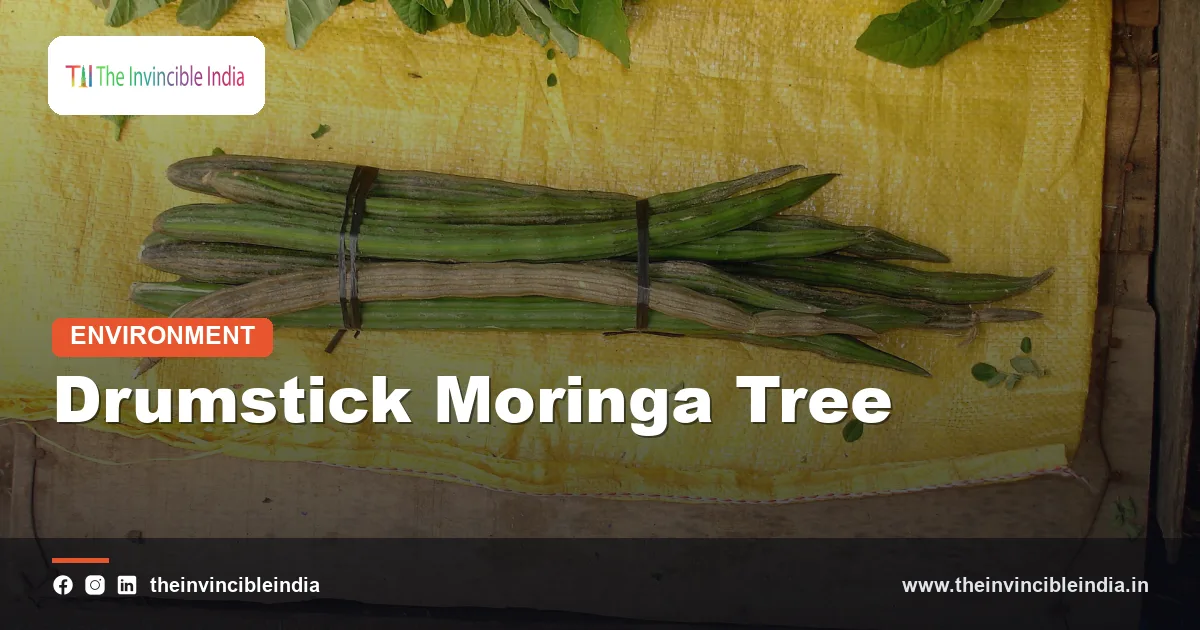
The drumstick tree (Moringa oleifera) is a fast-growing, drought-tolerant tree native to the sub-Himalayan region of India whose long green pods (“drumsticks”), leaves and flowers are eaten across the country and valued for their nutrition. It is a kitchen-garden staple in South India, the essential vegetable in sambar, and today a globally promoted “superfood” crop, with India widely reported as the world’s largest producer.
The drumstick tree, also called moringa, horseradish tree or sahjan, is unusual because almost every part of it is useful: pods and leaves as food, seeds for oil and water clarification, and wood for fuel. This explainer covers what the drumstick tree is, how it is used in Indian cooking, what its nutrition really offers, how it is grown, and what claims about it deserve caution. Last updated: 23 October 2026.
Quick Facts: Drumstick Tree at a Glance
| Common names | Drumstick tree, moringa, horseradish tree, sahjan or sajna (Hindi), murungai (Tamil), munaga (Telugu), shevga (Marathi), saragvo (Gujarati) |
|---|---|
| Scientific name | Moringa oleifera |
| Plant family | Moringaceae, a small family of tropical and subtropical trees |
| Type | Fast-growing, soft-wooded, deciduous to semi-evergreen tree, usually 5 to 10 metres tall |
| Native range | Sub-Himalayan foothills of north-western India and neighbouring areas; now cultivated across the tropics |
| Edible parts | Immature pods (drumsticks), leaves, flowers and, in some uses, seeds and roots |
| Pod length | Commonly 30 to 60 centimetres, and longer in some varieties |
| Main producing states | Tamil Nadu, Andhra Pradesh, Karnataka and other southern states, with growing cultivation elsewhere |
| Other uses | Seed oil (ben or behen oil), water clarification with crushed seeds, fodder and green manure |
Key Takeaways
- The drumstick tree (Moringa oleifera) is native to the sub-Himalayan region of India and is now grown throughout the tropics.
- Drumsticks, the long green pods of the drumstick tree, are a standard vegetable in sambar and many curries across South and West India.
- Moringa leaves are a nutrient-dense green, rich in vitamin A precursors, vitamin C, calcium, iron and protein, though they are best seen as part of a varied diet rather than a cure.
- Crushed moringa seeds can help clarify turbid water, but they do not make water fully safe to drink without further treatment.
- The drumstick tree grows quickly from seed or stem cuttings, tolerates heat and drought, and can be harvested within months of planting.
- India is widely reported as the world’s largest producer of moringa, and demand for moringa powder and leaf products is rising globally.
What is the drumstick tree?
The drumstick tree is a small to medium, fast-growing tropical tree, scientifically named Moringa oleifera, whose long, slender seed pods are eaten as a vegetable and whose leaves are widely used as a nutritious green. It belongs to the family Moringaceae and is also known simply as moringa.
The name “drumstick” comes from the thin, long, ribbed pods that resemble the sticks used to play a drum. The tree has feathery, finely divided leaves, creamy-white fragrant flowers and a soft, brittle trunk with corky, pale bark. In English it is also called the horseradish tree, because the roots have a sharp, pungent taste, and the “oleifera” in the name means oil-bearing, a reference to the oil in its seeds.
Moringa oleifera is the best-known of about a dozen species in its genus. It is easy to grow, needs little water once established and often appears in backyards, field bunds and roadsides in rural India.
Where does the drumstick tree come from and where is it grown?
The drumstick tree originated in the sub-Himalayan foothills of northern India and neighbouring countries, and it is now grown across the tropical and subtropical world. Ancient Indian texts mention it, and it has been cultivated in the subcontinent for thousands of years.
In India, southern states are the commercial heartland of drumstick production, with Tamil Nadu, Andhra Pradesh and Karnataka leading, and districts such as Dindigul, Theni and Tiruppur in Tamil Nadu being widely known for the crop. The tree is also grown in Maharashtra, Gujarat, Odisha, West Bengal and many other states as a household crop. Outside India, moringa is cultivated in Africa, Southeast Asia and Latin America, often promoted by development programmes because of its nutrition and hardiness.
The tree thrives in hot, semi-arid to humid tropical climates, on sandy to loamy, well-drained soils. It is sensitive to frost and does poorly in waterlogged ground.
How is the drumstick used in Indian cooking?
The drumstick is used in Indian cooking mainly as a vegetable in sambar, curries, soups and dals, where its tender pods are cut into short lengths and the soft inner pulp is scraped out with the teeth. The flavour is mild and slightly bitter-sweet, and the pods absorb spices and tamarind well.
Regional dishes
- Sambar and kuzhambu (Tamil Nadu, Karnataka, Andhra Pradesh): Drumstick pieces are a signature ingredient in sambar and tamarind-based gravies.
- Murungai keerai poriyal (Tamil Nadu): Drumstick leaves are stir-fried with coconut and lentils.
- Shevgyachya shengachi amti (Maharashtra): A lentil-based curry flavoured with drumstick pods.
- Sajne data and flower dishes (Bengal and eastern India): Pods are cooked in mustard-based preparations, and the flowers are fried or cooked as a side dish.
- Sahjan ki phali (northern India): Pods are cooked with potatoes or in yoghurt-based curries.
- Dried-leaf powder: Used in modern kitchens in rotis, soups and smoothies.
The tender leaves are cooked like spinach, and in some households are added to dosa batter or dal. The flowers are used lightly cooked. Larger, older pods become fibrous and are better for extracting pulp than for eating whole.
How nutritious is the drumstick tree?
The drumstick tree is nutritious because its leaves and pods supply useful amounts of vitamin C, provitamin A (beta-carotene), calcium, iron, potassium, protein and dietary fibre. The leaves are the more concentrated source, while the pods are a fibre-rich vegetable that adds vitamin C and minerals to meals.
Nutrient values vary with the variety, soil, season and whether the leaves are fresh or dried. Dried leaf powder has higher nutrient concentration by weight, because water has been removed, but the amount eaten is small. A spoonful of leaf powder in food can add some nutrients, but it does not replace vegetables, pulses, fruit or a balanced diet.
| Part | Notable nutrients | Common use |
|---|---|---|
| Leaves | Beta-carotene, vitamin C, calcium, iron, protein and antioxidants | Cooked greens, dried powder |
| Pods (drumsticks) | Vitamin C, fibre, potassium and small amounts of protein | Sambar, curries, soups |
| Flowers | Small amounts of minerals and plant compounds | Fried or cooked side dishes |
| Seeds | Oil-rich, with protein; mature seeds can be bitter | Oil extraction, water clarification |
Moringa is promoted in several nutrition and kitchen-garden programmes in India and abroad because it is cheap, hardy and easy to grow in household plots. Claims that moringa cures diabetes, cancer or other serious conditions are not supported by strong clinical evidence. Research is ongoing, and some small studies suggest possible effects on blood sugar or cholesterol, but results are preliminary.
What are the health cautions for moringa?
The main cautions for moringa are that concentrated leaf powders and supplements can interact with medicines, that roots and bark are not considered safe in pregnancy, and that health claims on product labels are often stronger than the evidence. Eating drumstick pods and leaves as food is generally regarded as safe for most people.
- Pregnant women are commonly advised to avoid moringa root, root bark and extracts, which contain compounds that may stimulate the uterus, and to consult a doctor about other forms.
- People who take medicines for diabetes, blood pressure or thyroid conditions, or blood thinners, should ask a doctor before using concentrated moringa supplements.
- Large doses of leaf powder can cause digestive upset such as loose stools or gas.
- Supplement quality varies; buying from reputable sources reduces the risk of contamination or adulteration.
Anyone with a medical condition, a child, or an older person on regular medication should treat moringa supplements like any other herbal product and take medical advice first.
How is the water-purifying use of moringa seeds explained?
Crushed moringa seeds can clarify turbid water because they contain positively charged proteins that bind to suspended clay and dirt particles and make them clump and settle. This natural coagulation has been studied for decades and is used in some rural communities to reduce muddy cloudiness.
The treated water becomes clearer and, according to studies, may also have fewer bacteria, but the method does not reliably make water safe to drink on its own. Water treated with moringa seed should still be boiled, filtered or disinfected before drinking, especially where contamination is possible. The seed powder is best viewed as a low-cost pre-treatment, not a replacement for proper water treatment.
How do you grow a drumstick tree?
You grow a drumstick tree by planting seeds or stem cuttings in warm, sunny, well-drained soil, watering lightly, and pruning the main shoot to encourage branching and easy harvest. The tree grows very quickly and can flower within 6 to 12 months in favourable conditions.
- Propagation: Seeds germinate within about a week or two; stem cuttings about 1 to 1.5 metres long, planted in the rainy season, root easily and bear sooner.
- Soil and site: Full sun and light, well-drained sandy loam are ideal; waterlogging can quickly kill the tree.
- Pruning: Cutting the top at about one metre height encourages side branching, keeps the tree low and makes pod and leaf harvest easier.
- Water and feeding: The tree tolerates drought, but regular watering and compost increase yield.
- Harvest: Pods are picked young and tender, usually a few months after flowering; leaves can be harvested repeatedly.
- Weak wood: The soft branches break easily in strong wind, so pruning and sheltered planting help.
Commercial growers use improved varieties, many from agricultural universities. Well-known Indian selections include PKM-1 and PKM-2, developed at Tamil Nadu Agricultural University, and Bhagya (KDM-1) from Karnataka, and these are chosen for yield and pod quality.
Why has moringa become a global superfood crop?
Moringa has become a global superfood crop because it is nutritious, quick to grow, drought-tolerant and easy to process into powder, capsules, tea and oil. Rising interest in plant-based and traditional foods has expanded markets for moringa leaf powder in North America, Europe and the Middle East.
India’s export interest has grown as processors dry and mill leaves into powder and sell drumstick pods frozen or as processed products, with Indian pods also reaching diaspora markets abroad. Development agencies in Africa and Asia promote the tree for household nutrition and as a cash crop for smallholders. The seed oil, known as ben or behen oil, is stable and non-drying, and has long been used in perfumery, cosmetics and as a lubricant.
The “superfood” label is a marketing term and not a scientific category. The most useful way to see moringa is as a hardy, affordable and genuinely nutritious food plant that fits well into family farms and kitchen gardens.
Bottom Line
The drumstick tree (Moringa oleifera) is a native Indian food tree that turns sambar pods, nutritious leaves and water-clarifying seeds into one easy-to-grow plant. It deserves its popularity as a hardy, useful crop, provided its health claims are kept realistic and supplements are used with medical advice.
Frequently Asked Questions
What is the scientific name of the drumstick tree?
The scientific name of the drumstick tree is Moringa oleifera, and it belongs to the family Moringaceae. It is also called moringa, horseradish tree, sahjan, murungai and shevga in different languages. The name oleifera refers to the oil in its seeds.
Where is the drumstick tree native to?
The drumstick tree is native to the sub-Himalayan foothills of northern India and neighbouring regions. It has been cultivated in the Indian subcontinent for thousands of years and is now grown throughout the tropics. Tamil Nadu, Andhra Pradesh and Karnataka are major producing states in India.
Are drumstick leaves and pods healthy?
Drumstick leaves and pods are healthy foods that supply vitamin C, provitamin A, calcium, iron, potassium and fibre. They are best eaten as part of a varied diet and are not a cure for any disease. Strong claims about treating serious conditions are not backed by solid clinical evidence.
Can moringa seeds purify water?
Crushed moringa seeds can clarify cloudy water because their proteins make suspended particles clump and settle. The treated water should still be boiled, filtered or disinfected before drinking. Moringa seed is therefore a low-cost pre-treatment, not a complete purification method.
How long does a drumstick tree take to bear pods?
A drumstick tree can start flowering within about 6 to 12 months of planting, and pods follow a few months after flowering. Improved annual varieties fruit early, while older types may take longer. Yield depends on variety, water, soil and pruning.
Is moringa safe during pregnancy?
Moringa root, root bark and concentrated extracts are generally advised against in pregnancy because they may stimulate the uterus. Eating drumstick pods or leaves as normal food is usually considered safe, but pregnant women should confirm with a doctor. Supplements and powders should be used only on medical advice.
{“@context”:”https://schema.org”,”@graph”:[{“@type”:”FAQPage”,”mainEntity”:[{“@type”:”Question”,”name”:”What is the scientific name of the drumstick tree?”,”acceptedAnswer”:{“@type”:”Answer”,”text”:”The scientific name of the drumstick tree is Moringa oleifera, and it belongs to the family Moringaceae. It is also called moringa, horseradish tree, sahjan, murungai and shevga in different languages. The name oleifera refers to the oil in its seeds.”}},{“@type”:”Question”,”name”:”Where is the drumstick tree native to?”,”acceptedAnswer”:{“@type”:”Answer”,”text”:”The drumstick tree is native to the sub-Himalayan foothills of northern India and neighbouring regions. It has been cultivated in the Indian subcontinent for thousands of years and is now grown throughout the tropics. Tamil Nadu, Andhra Pradesh and Karnataka are major producing states in India.”}},{“@type”:”Question”,”name”:”Are drumstick leaves and pods healthy?”,”acceptedAnswer”:{“@type”:”Answer”,”text”:”Drumstick leaves and pods are healthy foods that supply vitamin C, provitamin A, calcium, iron, potassium and fibre. They are best eaten as part of a varied diet and are not a cure for any disease. Strong claims about treating serious conditions are not backed by solid clinical evidence.”}},{“@type”:”Question”,”name”:”Can moringa seeds purify water?”,”acceptedAnswer”:{“@type”:”Answer”,”text”:”Crushed moringa seeds can clarify cloudy water because their proteins make suspended particles clump and settle. The treated water should still be boiled, filtered or disinfected before drinking. Moringa seed is therefore a low-cost pre-treatment, not a complete purification method.”}},{“@type”:”Question”,”name”:”How long does a drumstick tree take to bear pods?”,”acceptedAnswer”:{“@type”:”Answer”,”text”:”A drumstick tree can start flowering within about 6 to 12 months of planting, and pods follow a few months after flowering. Improved annual varieties fruit early, while older types may take longer. Yield depends on variety, water, soil and pruning.”}},{“@type”:”Question”,”name”:”Is moringa safe during pregnancy?”,”acceptedAnswer”:{“@type”:”Answer”,”text”:”Moringa root, root bark and concentrated extracts are generally advised against in pregnancy because they may stimulate the uterus. Eating drumstick pods or leaves as normal food is usually considered safe, but pregnant women should confirm with a doctor. Supplements and powders should be used only on medical advice.”}}]}]}


