

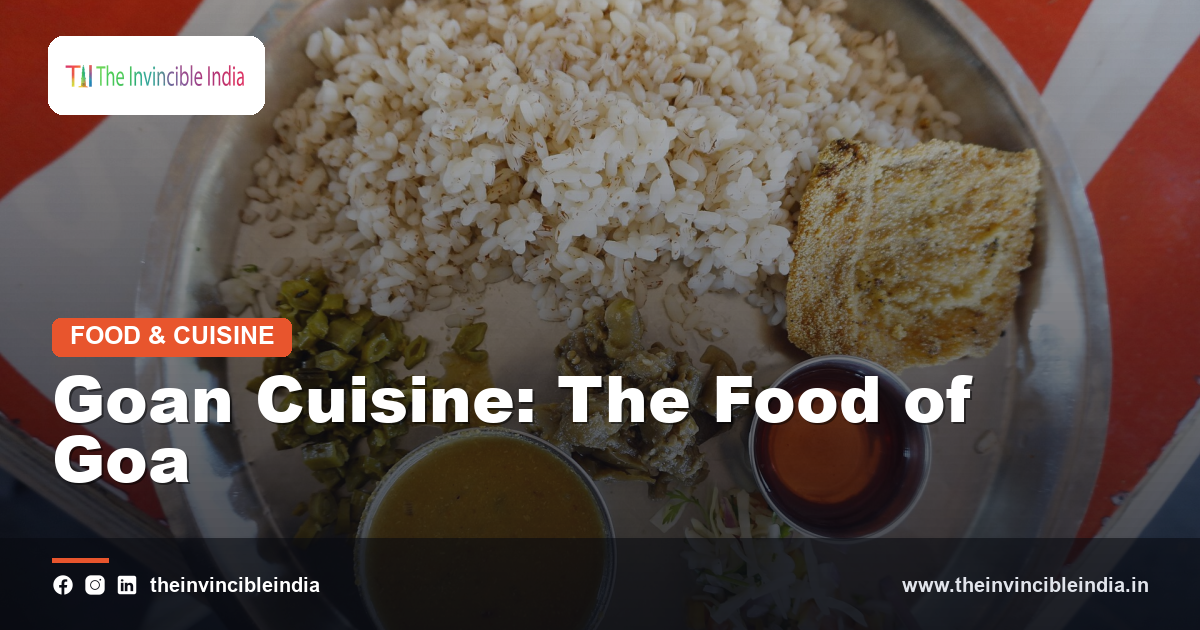
Goan cuisine is the vibrant, coastal food of Goa, a cuisine shaped by the sea, the region’s tropical produce, and a remarkable blending of Indian and Portuguese culinary traditions unique among the cuisines of India. Famous for its fish curry, its fiery vindaloo and its generous use of coconut and local souring agents, Goan cooking reflects both the Hindu and Christian communities of the region, each contributing its own dishes and flavours. Distinct from other coastal traditions, including the cuisine of Kerala, Goan food carries its own unmistakable character. This guide explores Goan cuisine, its history, its famous dishes and its enduring place in India’s culinary heritage.
Quick Facts
| Detail | Information |
|---|---|
| Type | The coastal cuisine of Goa |
| Rooted in | Indian and Portuguese culinary tradition |
| Famous for | Fish curry, vindaloo and coconut-based dishes |
| Key ingredients | Fish, coconut, kokum and local spices |
| Communities | Hindu Goan and Goan Catholic traditions |
| Character | Tangy, spiced and richly coastal |
The Food of Goa
Goan cuisine is the vibrant, coastal food of Goa, shaped by the region’s position on the Arabian Sea, its tropical produce and its long history of trade and settlement. Fish, rice, coconut and a distinctive set of local spices form the foundation of the cuisine, and its dishes are known for a bright, tangy and often fiery character that reflects both the sea that surrounds Goa and the many cultures that have shaped it. This character makes Goan food instantly recognisable. As the food of Goa, drawn from the sea and shaped by centuries of history, this cuisine occupies a distinctive and much-loved place among the coastal cuisines of India.
A Meeting of India and Portugal
Goan cuisine is defined above all by its remarkable blending of Indian and Portuguese culinary traditions, a legacy of centuries of Portuguese presence in the region. Ingredients and techniques introduced from Europe, such as vinegar-based marinades and certain meats, were combined with local spices, coconut and fish to create dishes found nowhere else in India, giving Goan food its unmistakably hybrid character. This fusion is the very foundation of the cuisine. This meeting of India and Portugal, blending European techniques with local ingredients and spices over centuries, gave rise to a cuisine of unique character, and this fusion remains the single most defining feature of Goan food.
The Celebrated Fish Curry
The most beloved dish of Goan cuisine is fish curry, a tangy, coconut-based curry cooked with fresh fish and flavoured with kokum or tamarind, red chillies and a blend of aromatic spices. Eaten daily with rice by many Goan families, this fish curry rice is considered the everyday staple of the region, its bright, tangy flavour reflecting the abundance of fresh fish from Goa’s coastal waters. Its simplicity conceals great skill in balancing flavour. This celebrated fish curry, tangy, coconut-rich and eaten daily with rice, is the true heart of Goan cuisine and the dish most closely associated with the everyday food of the region.
The Fiery Vindaloo
Among the most famous dishes to emerge from Goan cuisine is vindaloo, a fiery, tangy meat curry whose name and vinegar-based marinade trace back to Portuguese influence, later transformed with local chillies and spices into a distinctly Goan dish. Traditionally made with pork, vindaloo is known for its bold heat and its sharp, vinegary tang, a combination that has made it one of the most internationally recognised dishes of Indian cuisine. Its preparation calls for careful balancing of heat and acidity. This fiery vindaloo, born of Portuguese influence and transformed by Goan spice, has carried the name of Goan cuisine to tables far beyond India, becoming one of its most famous culinary exports.
The Generous Use of Coconut
Coconut holds a central place in Goan cuisine, used in its grated form, as coconut milk, and as coconut oil to give body, richness and sweetness to countless curries and dishes. This generous use of coconut, drawn from the many coconut palms that line Goa’s coast, reflects the cuisine’s coastal character and gives Goan curries their characteristic richness, balancing the tang of kokum or tamarind and the heat of local chillies. This ingredient is essential to the cuisine’s identity. This generous use of coconut throughout Goan cooking, giving richness and body to so many of its dishes, is one of the defining features of the cuisine and a clear reflection of its coastal, tropical setting.
Kokum and Tangy Flavours
A distinctive feature of Goan cuisine is its use of kokum, a sour fruit native to the region’s coast, which lends a tangy, fruity sourness to curries and is also used to prepare a refreshing cooling drink. Alongside tamarind and vinegar, kokum gives many Goan dishes their characteristic tang, balancing the richness of coconut and the heat of chillies to create the bright, layered flavour typical of the cuisine. This tang is a signature of Goan cooking. This use of kokum and other souring agents across Goan cuisine, lending its dishes their characteristic tang, is one of the qualities that most clearly distinguishes Goan food from the cuisines of neighbouring regions.
The Goan Sausage
Among the distinctive contributions of Portuguese influence to Goan cuisine is the Goan sausage, a spiced, vinegar-cured pork sausage that has become a beloved specialty of the region, especially among the Goan Catholic community. Dried and smoked in the traditional manner, this sausage is fried and cooked into rich dishes or enjoyed on its own, its tangy, spiced flavour reflecting the same Portuguese-Goan fusion found throughout the cuisine. Its preparation is a matter of local pride. This Goan sausage, spiced and vinegar-cured in a tradition inherited from Portugal, stands as one of the most distinctive and cherished specialties of Goan cuisine, unique among the meat preparations of India.
Sorpotel and Festive Meat Dishes
A celebrated dish of the Goan Catholic community is sorpotel, a rich, tangy pork dish cooked with vinegar and a blend of spices, traditionally prepared for festive occasions and celebrations such as weddings and Christmas. Its deep, complex flavour, built up over careful preparation, makes sorpotel one of the most elaborate and prized dishes of Goan cuisine, reserved for special gatherings rather than everyday meals. Its preparation is considered an occasion in itself. This sorpotel, rich, tangy and reserved for festive occasions, is among the most celebrated dishes of the Goan Catholic culinary tradition and a fine expression of the cuisine’s Portuguese-influenced richness.
Bebinca and Goan Sweets
Goan cuisine closes its meals with distinctive sweets, among which bebinca, a rich, layered dessert made from coconut milk, eggs and sugar baked layer by layer, is especially celebrated, particularly during festive occasions such as Christmas. This painstaking layering, requiring patience as each thin layer is baked before the next is added, produces a dessert of remarkable richness and texture found nowhere else in India. Its preparation is considered a labour of love. This bebinca, painstakingly layered and rich with coconut milk, stands as the most celebrated of Goan desserts and a fine example of the patience and skill embedded in Goan culinary tradition.
Xacuti and Cafreal
Goan cuisine offers a range of distinctive spiced dishes beyond its most famous curries, among them xacuti, a richly spiced curry made with roasted coconut and a complex blend of spices, and cafreal, a green, herb-marinated dish often made with chicken. Both dishes reflect the depth and inventiveness of Goan spicing, each achieving a distinctive flavour profile through its own particular blend of roasted spices or fresh herbs. Their preparation reflects considerable culinary skill. These dishes of xacuti and cafreal, each achieving its own distinctive character through careful spicing, show the impressive range and inventiveness that lie behind the well-known fish curry and vindaloo of Goan cuisine.
The Bounty of the Sea
Goan cuisine draws deeply on the bounty of the Arabian Sea, with fish, prawns, crab and other seafood forming the backbone of the everyday Goan diet. Fresh catch from the sea is prepared in countless ways, fried, curried or grilled, and this abundance of seafood, combined with the region’s rice and coconut, gives Goan food its characteristically coastal and maritime character. This bounty shapes the daily rhythm of Goan cooking. This deep reliance of Goan cuisine on the bounty of the sea, providing the fish and seafood that anchor the everyday diet, is central to the identity of the cuisine and a direct reflection of Goa’s life along the coast.
Hindu Goan Vegetarian Cuisine
Alongside its famous seafood and meat dishes, Goan cuisine includes a rich vegetarian tradition associated with the region’s Hindu community, featuring vegetable curries, lentil preparations and rice dishes flavoured with coconut and local spices. This vegetarian cooking, distinct from the Portuguese-influenced Catholic dishes, draws on its own set of temple and community food traditions, showing that Goan cuisine possesses considerable diversity beyond its coastal seafood reputation. This tradition enriches the wider cuisine. This Hindu Goan vegetarian cuisine, with its own distinctive vegetable and lentil dishes flavoured with coconut and spice, forms an important and often overlooked branch of Goan food, broadening the cuisine well beyond its famous fish and pork dishes.
Goan Spices and Masalas
Goan cuisine relies on its own distinctive spice blends, or masalas, ground fresh and combining local chillies with warming spices to create the complex flavours found in dishes such as vindaloo and xacuti. These masalas, often prepared at home using traditional recipes passed down through families, are central to achieving the authentic depth of flavour that distinguishes true Goan cooking from imitations found elsewhere. Their preparation is considered an essential culinary skill. These Goan spices and masalas, carefully ground and blended according to traditional family recipes, are the true foundation of the cuisine’s distinctive flavour, and their skilful preparation remains central to authentic Goan cooking.
Rice and the Goan Meal
Rice forms the staple of the everyday Goan meal, typically served alongside fish curry and other accompaniments in a simple yet deeply satisfying combination that anchors daily eating across the region. This pairing of rice and fish curry, often called simply fish curry rice, is considered the quintessential Goan meal, enjoyed by families across the region regardless of community, and it reflects the coastal, rice-growing character of Goa’s agriculture. This everyday meal embodies the essence of the cuisine. This central place of rice, paired with fish curry as the quintessential Goan meal, embodies the everyday essence of the cuisine, simple yet deeply satisfying and enjoyed across the communities of Goa.
Goan Cuisine Today
Today Goan cuisine is celebrated across India and around the world, its fish curry and vindaloo enjoyed in restaurants far beyond the shores of Goa itself, while the state’s own kitchens continue to prepare its dishes with traditional care. The blending of Indian and Portuguese influence, the generous use of coconut and kokum, and the distinct contributions of both the Hindu and Catholic communities continue to define this vibrant coastal cuisine. Its popularity continues to grow each year. As the vibrant food of Goa, tangy, coastal and shaped by centuries of cultural exchange, Goan cuisine remains one of the most distinctive and beloved culinary traditions of India.
Sources & Further Reading
- Ministry of Tourism, Government of India, on the cuisines of India (tourism.gov.in).
- Culinary references on the food traditions of Goa.
Frequently Asked Questions
What is Goan cuisine known for?
Goan cuisine is known for its tangy fish curry, its fiery vindaloo, and its generous use of coconut and kokum. It reflects a unique blend of Indian and Portuguese culinary traditions, with distinct contributions from both the Hindu and Goan Catholic communities.
What is Goan fish curry?
Goan fish curry is a tangy, coconut-based curry cooked with fresh fish and flavoured with kokum or tamarind, red chillies and aromatic spices. Eaten daily with rice by many Goan families, it is considered the everyday staple dish of the region.
Why is vindaloo associated with Goa?
Vindaloo traces its name and vinegar-based marinade to Portuguese influence, later transformed with local Goan chillies and spices into a fiery, tangy dish, traditionally made with pork. It has become one of the most internationally recognised dishes of Goan and Indian cuisine.
What is bebinca?
Bebinca is a rich, layered Goan dessert made from coconut milk, eggs and sugar, baked layer by layer in a painstaking process. It is especially celebrated during festive occasions such as Christmas and is considered the most iconic sweet of Goan cuisine.
Is Goan food only seafood-based?
No, while fish and seafood form the backbone of the everyday Goan diet, the cuisine also includes rich meat dishes such as sorpotel and Goan sausage, as well as a distinct Hindu Goan vegetarian tradition of vegetable and lentil dishes flavoured with coconut and spice.


