

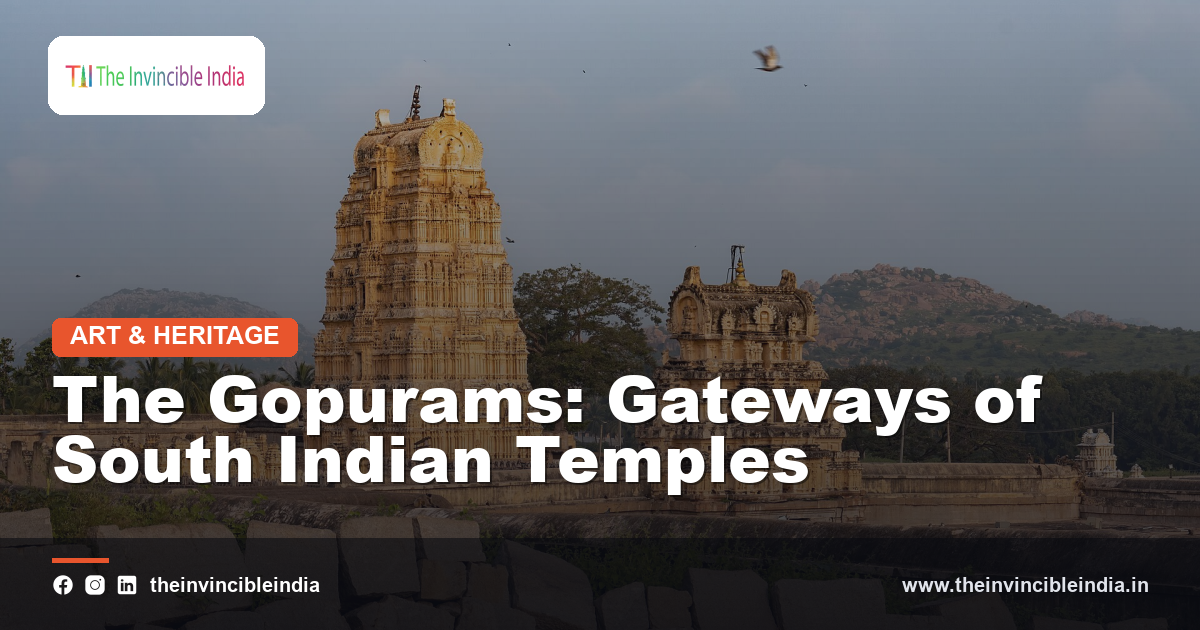
The gopuram is one of the most striking creations of South Indian temple architecture, a monumental gateway tower that rises above the entrance to a temple enclosure in a pyramid of diminishing storeys covered in sculpture. Found chiefly in the Dravidian temples of Tamil Nadu and neighbouring regions, the gopuram grew over the centuries from a modest gateway into a soaring structure that often dwarfs the shrine it leads to, becoming the most visible landmark of the temple town around it. Densely carved with figures of deities, guardians and mythological scenes and finished in vivid colour, the gopuram forms a fitting counterpart to the broader tradition of Indian temple architecture. This guide explores its structure, symbolism, famous examples and lasting heritage.
Quick Facts
| Detail | Information |
|---|---|
| Type | Monumental gateway tower of South Indian temples |
| Style | Dravidian temple architecture |
| Form | Tapering pyramidal tower above a temple entrance |
| Decoration | Dense sculpture of deities and mythological figures |
| Famous examples | The gopurams of the Meenakshi Temple, Madurai |
| Heritage | Iconic symbol of South Indian temple architecture |
The Towering Gateway
Rising high above the walls of a South Indian temple, the gopuram is unmistakable long before the shrine within comes into view, a tapering tower of stone and stucco that announces the sanctity of the ground it guards. Approached from the street or across the temple town, the gopuram often serves as the chief landmark by which a temple is known, its silhouette recognisable from a considerable distance. Pilgrims pass beneath its great arched entrance as their first physical encounter with the temple, so that the gateway sets the tone for everything that follows within. As the towering and unmistakable gateway of the South Indian temple, the gopuram introduces the visitor to a sacred precinct even before the sanctum itself is reached, and its scale and presence remain among the most memorable features of Dravidian temple architecture.
What Is a Gopuram
A gopuram is the monumental tower built over the gateway of a South Indian temple enclosure, distinct from the shrine tower that rises over the sanctum at the heart of the complex. While the sanctum tower, or vimana, is usually the oldest and most sacred structure of the temple, the gopuram belongs to the outer walls and grew, over time, to become the grandest and most visible structure of the entire complex. A large temple may have several gopurams set into successive enclosure walls, each one marking a stage in the approach to the sanctum. This distinction between the gopuram as gateway tower and the vimana as sanctum tower is fundamental to understanding South Indian temple planning, and it explains why the gopuram, though architecturally secondary to the sanctum, so often dominates the skyline of the temple town.
Origins in Dravidian Architecture
The gopuram belongs to the broader tradition of Dravidian temple architecture that developed across the southern regions of the subcontinent over many centuries, a tradition marked by its pyramidal towers, pillared halls and walled enclosures. Early temples in this tradition placed greater emphasis on the tower over the sanctum, with gateways that were comparatively modest in scale, but later dynasties progressively enlarged and embellished the entrance towers until they became a defining feature in their own right. This gradual shift in emphasis unfolded over a long span of building activity. This growth of the gopuram from a modest opening into a monumental tower charts one of the most significant developments within the wider story of Dravidian temple architecture, reflecting the changing priorities and ambitions of the dynasties who patronised temple building.
Structure and Form
In form, a gopuram is a rectangular gateway structure surmounted by a tall, tapering superstructure divided into a number of diminishing storeys, each marked by a cornice and a row of miniature roof forms. The base of the gopuram is typically built of solid stone and pierced by a large doorway through which pilgrims pass, while the storeys above rise in a profile that narrows gradually towards the summit, where a row of finials crowns the structure. This layered, tapering profile gives the gopuram its distinctive silhouette. This characteristic form of the gopuram, a stone base supporting a tall tapering tower of diminishing storeys, is immediately recognisable and forms one of the most consistent features of South Indian temple gateways across the region.
The Pyramidal Superstructure
Above the stone base, the body of the gopuram is generally constructed of brick and lime plaster, materials lighter than stone and better suited to the considerable height that the superstructure can reach. Each storey repeats the form of a miniature roofed pavilion, complete with its own cornice and corner ornaments, so that the whole tower reads as a stack of diminishing structures rising toward a single crowning element. This use of lighter materials at height was both a practical and an artistic solution. This pyramidal superstructure of the gopuram, built up in receding storeys of brick and plaster, allowed builders to achieve remarkable heights while keeping the structure sculptural and visually coherent from base to summit.
Sculptural Decoration
What most distinguishes the gopuram is the sheer density of its sculptural decoration, with every storey of the tower crowded with figures of deities, celestial beings, guardians and scenes drawn from mythology and temple legend. Modelled originally in stucco and traditionally finished in bright colour, these figures transform the tower into a vast open-air gallery of religious imagery, visible to every pilgrim who approaches the temple. The result is an overwhelming richness of detail rewarding close and repeated viewing. This dense sculptural programme covering the surface of the gopuram is one of its most celebrated features, turning a purely architectural gateway into an elaborate and instructive expression of religious narrative and belief.
Materials and Construction
The construction of a gopuram combined the skills of masons, sculptors and plasterers working over what could be a long period of building, given the scale and complexity of the finished tower. Stone was used for the massive base and doorway, where strength was paramount, while brick, mortar and lime plaster served for the towering superstructure above, allowing the sculptural forms to be modelled directly onto the structure rather than carved from solid stone. This division of materials reflected both structural sense and artistic practicality. This combination of stone base and plastered brick superstructure in the building of a gopuram allowed South Indian builders to raise towers of great height without sacrificing the intricacy of their surface decoration.
Multiple Gopurams and Temple Enclosures
Many of the great temples of South India are laid out as a series of concentric walled enclosures, each entered through its own gopuram, so that a pilgrim may pass through several such gateways before finally reaching the sanctum at the centre. As a temple grew in importance and wealth over the centuries, successive rulers and patrons often added new enclosure walls and ever grander gopurams around the original shrine, so that the outermost gateways came to be the tallest of all. This layered plan reflects centuries of accumulated devotion and patronage. This arrangement of multiple gopurams marking successive enclosures is characteristic of the greatest South Indian temple complexes and reflects the long and layered history of their construction and expansion.
Symbolism of the Gopuram
Beyond its architectural function, the gopuram carries deep symbolic meaning within the tradition of South Indian temple worship, marking the threshold between the ordinary world outside and the sacred precinct within. Passing beneath its towering form and beneath the gaze of the sculpted figures that cover it, the pilgrim is understood to begin a passage from the everyday to the divine, a transition given physical and visual expression by the sheer scale of the gateway. The gopuram thus prepares the mind as well as marking the entrance in stone. This symbolic role of the gopuram as a threshold between worldly and sacred space underlies much of its architectural ambition and helps explain why South Indian temples devoted such resources to their gateways.
The Meenakshi Temple Gopurams
Among the most celebrated examples of the form are the gopurams of the Meenakshi Temple in Madurai, a complex renowned for its multiple towering gateways covering nearly every surface with sculpted and painted figures. The temple’s several gopurams, rising over its various enclosures, are considered among the finest and most elaborate expressions of the form anywhere in South India, drawing pilgrims and visitors who come specifically to admire their scale and craftsmanship. Their painted surfaces make a vivid first impression on every visitor. These Meenakshi Temple gopurams, celebrated for their height, number and density of sculpture, are widely regarded as among the supreme achievements of gopuram architecture in the Dravidian tradition.
Gopurams Across Tamil Nadu
While the Meenakshi Temple is especially renowned, gopurams of great scale and beauty are found across the temple towns of Tamil Nadu, each shaped by the patronage and artistic preferences of the dynasties that built or expanded them over the centuries. Towns built around a major temple often grew with the gopuram as their visual and spiritual centre, their streets radiating outward from the gateway in a plan that placed the sacred structure at the heart of daily life. This close relationship between temple and town is a notable feature of the region. This widespread presence of monumental gopurams across the temple towns of Tamil Nadu reflects the enduring importance of temple worship and patronage throughout the region’s history.
Regional Variations in South India
Although most closely associated with Tamil Nadu, gopuram-like gateway towers, and structures influenced by the form, appear in temple architecture across other parts of South India as well, each adapted to local taste, material and building tradition. Variations can be seen in the proportion of the tower, the treatment of its storeys and the style of its sculptural decoration, even as the fundamental idea of a tall gateway tower marking the entrance to a sacred enclosure remains broadly consistent. This regional variety enriches the overall tradition considerably. This spread of the gopuram form, with its regional variations across South India, demonstrates the broad influence and adaptability of the Dravidian gateway tower tradition well beyond its principal heartland.
Painting and Colour
Traditionally, the sculpted figures covering a gopuram were finished in bright, contrasting colours, a practice that transformed the tower from a monochrome mass of stucco into a vivid and legible display of religious imagery visible from a distance. Periodic repainting has long been part of temple maintenance, refreshing the colours as they faded under sun and rain and keeping the gateway a vibrant focal point of the temple town. This attention to colour is as much a part of the tradition as the underlying sculpture. This practice of painting the gopuram in vivid colour, renewed through periodic repainting, is an integral part of its character and continues to shape how these gateways are experienced and maintained today.
Gopurams in Temple Ritual and Approach
The gopuram plays a practical as well as a symbolic role in the rituals and daily life of a South Indian temple, framing the principal approach used by pilgrims, processions and festival chariots that pass through its great doorway on important occasions. During major festivals, the area around the gopuram becomes a focal point of gathering and celebration, with the gateway itself sometimes illuminated or specially decorated for the occasion. Its scale allows it to accommodate large crowds and processions with ease. This central place of the gopuram within temple ritual and festival life underlines its importance well beyond pure architecture, as a structure woven into the living religious practice of the community it serves.
Conservation and Restoration
The stucco sculpture and painted surfaces of a gopuram require regular maintenance, since the plaster figures are vulnerable to weathering, cracking and the fading of colour under the South Indian climate over time. Temple authorities and heritage bodies periodically restore this decoration, employing traditional craftsmen trained in the specific techniques of stucco work to repair and repaint the figures in keeping with established practice. This ongoing cycle of renewal is treated as a normal part of temple upkeep rather than an exceptional undertaking. This continuous work of conservation and restoration is essential to preserving the gopuram’s sculptural richness and ensures that these towering gateways remain both structurally sound and visually striking for future generations of worshippers and visitors.
Gopurams Today
Today the gopuram remains one of the most recognisable and celebrated features of South Indian temple architecture, drawing pilgrims for worship and visitors from around the world for its sheer scale and artistry. From the many-towered complex of the Meenakshi Temple to the gateways of countless other temple towns across the south, the gopuram continues to define the skyline and the spiritual character of the communities that built and maintain it. Its silhouette remains an enduring symbol of the region’s religious and artistic heritage. As a towering, richly sculpted gateway uniting architecture, symbolism and craftsmanship, the gopuram stands among the most distinctive and admired contributions of Dravidian temple architecture to India’s cultural heritage.
Sources & Further Reading
- Archaeological Survey of India, on Dravidian temple architecture (asi.nic.in).
- Ministry of Culture, Government of India (indiaculture.gov.in).
Frequently Asked Questions
What is a gopuram?
A gopuram is the monumental gateway tower built over the entrance to a South Indian temple enclosure, typically rising in a series of diminishing, densely sculpted storeys above a solid stone base.
Why are gopurams covered in sculpture?
Gopurams are densely sculpted because their surfaces traditionally depict deities, guardian figures and scenes from mythology, transforming the gateway into an instructive and richly decorated expression of religious narrative visible to every approaching pilgrim.
What makes the Meenakshi Temple gopurams famous?
The Meenakshi Temple gopurams are famous for their great height, their number, and the exceptional density and colour of their sculpted figures, making them among the most admired examples of the form in South India.
Can a temple have more than one gopuram?
Yes, many of the largest South Indian temples are built with several concentric enclosure walls, each entered through its own gopuram, with the outermost gateways often being the tallest as the temple expanded over centuries.
Are gopurams only found in Tamil Nadu?
Gopurams are most closely associated with Tamil Nadu, but gateway towers influenced by the form, adapted to local taste and material, are also found in temple architecture across other parts of South India.


