

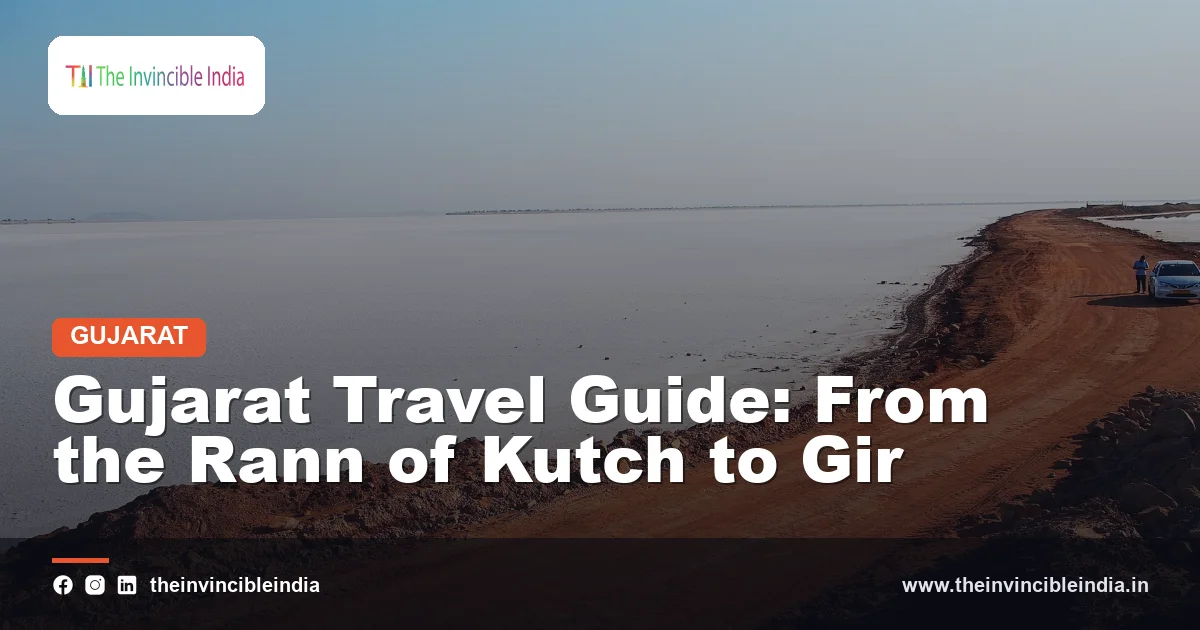
Gujarat, on India’s western coast, is a state of remarkable diversity and contrasts — from vast, dazzling white salt deserts to lion-filled forests, ancient temples, stepwells and the world’s tallest statue. The birthplace of Mahatma Gandhi and a historic hub of trade and enterprise, Gujarat offers a rich blend of nature, heritage, spirituality and culture. This detailed travel guide covers the best of Gujarat and how to plan your visit.
Quick Facts
| Capital | Gandhinagar |
| Largest city | Ahmedabad |
| Famous for | Rann of Kutch, Gir lions, Statue of Unity, temples |
| Best time to visit | November to February |
The Rann of Kutch
The Great Rann of Kutch is a vast, otherworldly white salt desert that stretches to the horizon, one of the largest salt marshes in the world. It comes spectacularly alive during the Rann Utsav, a months-long festival held roughly from November to February, featuring tented cities, folk music and dance, handicrafts, camel rides and unforgettable full-moon nights over the shimmering white sands. The region is also famous for its distinctive handicrafts and embroidery.
Gir National Park
Gir is the last natural home of the majestic Asiatic lion, whose population has steadily recovered from near extinction a century ago to several hundred today, thanks to sustained conservation. A safari through its dry deciduous forests offers the rare and thrilling chance to see these big cats in the wild, along with leopards, deer, crocodiles and abundant birdlife.
The Statue of Unity
Standing an astonishing 182 metres tall, the Statue of Unity near the Narmada Dam is the tallest statue in the world. It honours Sardar Vallabhbhai Patel, the “Iron Man of India” who unified the country after independence, and features a viewing gallery in the statue’s chest, a museum, gardens and a range of nearby attractions, making it a major destination in its own right.
Somnath and Dwarka
Gujarat is home to some of Hinduism’s holiest sites. Somnath Temple, set dramatically on the Arabian Sea coast, is the first of the twelve sacred Jyotirlinga shrines of Lord Shiva and has been rebuilt several times through a turbulent history. Dwarka, associated with Lord Krishna, is one of the four sacred Char Dham pilgrimage sites and one of the seven ancient holy cities of India.
Ahmedabad: India’s First Heritage City
Ahmedabad, the state’s largest city, was declared India’s first UNESCO World Heritage City in recognition of its rich historic core. Its walled old city is a maze of intricately carved wooden havelis, ornate mosques, temples and pols (traditional neighbourhoods). The city is also home to the Sabarmati Ashram, from where Mahatma Gandhi launched the famous Salt March in 1930, and to a thriving textile and culinary heritage.
Ancient Stepwells and Temples
Gujarat holds architectural treasures of global importance. Rani ki Vav in Patan is a magnificent 11th-century stepwell, a UNESCO World Heritage Site so beautiful it features on the 100-rupee note. The Sun Temple at Modhera, built in the 11th century, is a masterpiece of temple architecture with a stunning stepped tank. The fortified city of Champaner-Pavagadh is another UNESCO site rich in history.
Gujarati Cuisine
Gujarati cuisine is famous for its predominantly vegetarian thali, a masterful balance of sweet, salty, spicy and sour flavours. Signature dishes include dhokla, thepla, khandvi, undhiyu, fafda-jalebi and a variety of farsan (snacks). The state’s food culture, generous and flavourful, is an integral part of the travel experience.
Festivals of Gujarat
Gujarat is known for its vibrant festivals. Navratri is celebrated here on a grand scale with nights of energetic Garba and Dandiya Raas dancing; the International Kite Festival (Uttarayan) in January fills the skies of Ahmedabad with colourful kites; and the Rann Utsav showcases the culture of Kutch. These festivals offer a joyful window into the state’s rich traditions.
Best Time to Visit and How to Reach
November to February is the ideal time to visit Gujarat, with pleasant weather and the Rann Utsav in full swing. The state is well connected by air, with major airports at Ahmedabad and other cities, and by an extensive rail and road network, making it easy to explore its diverse attractions.
The Handicrafts and Villages of Kutch
The Kutch region is a living treasury of Indian handicrafts. Its villages are renowned for exquisite embroidery, mirror work (sheesha), bandhani tie-dye, Ajrakh block printing, Rogan art, leatherwork and pottery, each community with its own distinctive style. A visit to craft villages such as Bhujodi, Nirona and Ajrakhpur offers the chance to meet artisans, watch these traditions in practice and buy directly from the makers, and the Rann Utsav showcases this vibrant craft culture on a grand scale.
Saputara and the Hills
For a change of scenery, Saputara, Gujarat’s only hill station, sits amid the forested Dang district in the Western Ghats. With its lake, viewpoints, tribal culture, ropeway and cool climate, it is a pleasant retreat, especially during the monsoon and the Saputara Monsoon Festival, offering a green contrast to the deserts and coast for which Gujarat is better known.
Diu and the Coast
The former Portuguese enclave of Diu, a Union Territory just off Gujarat’s southern coast, offers a relaxed blend of beaches, colonial architecture, a historic fort and churches. Along with the temple town of Somnath and the beaches near it, Diu is a popular getaway, combining history, seaside relaxation and a distinctive Indo-Portuguese character.
Wildlife Beyond Gir
Gujarat’s wildlife extends well beyond the lions of Gir. The Blackbuck National Park at Velavadar is famous for its graceful blackbuck and vast grasslands, the Little Rann of Kutch is the last home of the wild ass (khur), and the wetlands of Nal Sarovar and the coast attract flamingos and countless migratory birds, making the state a rewarding destination for nature lovers.
Jain Temples and Sacred Sites
Gujarat is home to some of the holiest sites of Jainism. The sacred hill of Palitana (Shatrunjaya) is covered with over 800 intricately carved marble temples, reached by climbing thousands of steps, and is one of the most important Jain pilgrimage destinations in the world. Along with Girnar near Junagadh, these sites reflect the deep spiritual heritage and architectural achievement of the region.
How to Reach and Suggested Itinerary
Gujarat is well connected by air, rail and road, with major airports at Ahmedabad, Vadodara, Surat and Rajkot. A rewarding one- to two-week itinerary might combine Ahmedabad’s heritage, the Statue of Unity, the temples of Somnath and Dwarka, the lions of Gir, and the white desert and crafts of Kutch, ideally timed for the Rann Utsav between November and February. The state’s good roads and infrastructure make independent travel straightforward.
The Legacy of Mahatma Gandhi
Gujarat holds a special place in modern Indian history as the birthplace of Mahatma Gandhi, born in Porbandar in 1869. His ancestral home there, Kirti Mandir, and above all the Sabarmati Ashram in Ahmedabad, from where he launched the historic Salt March in 1930, are places of pilgrimage for those who wish to understand the freedom struggle and Gandhi’s philosophy of non-violence and simple living. Visiting these sites offers a moving connection to one of the most influential figures of the twentieth century.
Gujarat’s Enterprising Spirit
Gujarat has long been known for its enterprising, trading spirit, and its people, the Gujaratis, are famous as merchants and entrepreneurs across India and around the world. This spirit is reflected in the state’s bustling markets, thriving industries and events such as the Vibrant Gujarat summit. For the traveller, it translates into a warm, business-savvy and hospitable culture, and a network of good infrastructure that makes exploring the state comfortable and rewarding.
The Textiles of Gujarat
Gujarat is one of India’s greatest textile centres, with a heritage stretching back centuries. It is especially famous for the exquisite Patola silk of Patan, a double-ikat weave so intricate that a single sari can take months to make, as well as for bandhani tie-dye, Ajrakh block printing and the vibrant embroidery and mirror work of Kutch. These textiles are treasured across India and are among the most rewarding purchases a visitor can make.
Fairs, Festivals and Tribal Culture
Gujarat’s cultural calendar is rich and colourful. Beyond Navratri and the Kite Festival, the Tarnetar Fair is famous for its folk traditions and matchmaking, and the tribal regions of eastern Gujarat host their own vibrant fairs and celebrations. This diversity, from cosmopolitan cities to remote tribal villages, gives travellers a deep and varied insight into the many cultures that make up the state.
Why Visit Gujarat
Gujarat rewards the traveller with an extraordinary variety of experiences within a single state — the surreal white desert of Kutch, the lions of Gir, the world’s tallest statue, sacred temples, ancient stepwells, Gandhi’s legacy, vibrant crafts and delicious vegetarian food. Its excellent infrastructure, warm hospitality and relative lack of crowds compared to some other destinations make it one of India’s most underrated and rewarding states to explore.
Practical Travel Tips for Gujarat
A few practical points make travelling in Gujarat smoother. Note that Gujarat is a “dry” state, meaning alcohol is prohibited without a special permit, which tourists can usually obtain. The state’s roads and public transport are generally good, making self-drive and hired-car travel easy, and distances between major attractions can be long, so plan your itinerary carefully. Dress modestly at religious sites, carry sun protection for the desert and coast, and time your visit to coincide with the Rann Utsav or Navratri for a truly special experience.
A State of Endless Discovery
Gujarat is a state that continually surprises and delights. In a single trip you can walk through India’s first heritage city, stand before the tallest statue in the world, watch lions roam the last of their natural home, gaze across a shimmering white desert under a full moon, and buy exquisite crafts directly from the artisans who make them. With its rich history, diverse landscapes, deep spirituality and warm, enterprising people, Gujarat offers one of the most varied and rewarding journeys in all of India.
Begin Your Gujarat Adventure
From the white sands of the Rann to the roar of the Asiatic lion, from Gandhi’s ashram to the world’s tallest statue, Gujarat promises an adventure of remarkable variety and depth. With careful planning around the pleasant winter season and the region’s vibrant festivals, travellers can experience the very best of the state’s nature, heritage, spirituality and craft. Gujarat truly lives up to its tourism tagline as a place of endless discovery, waiting to surprise and delight all who visit.
Frequently Asked Questions
What is Gujarat famous for?
Gujarat is famous for the Rann of Kutch, the Gir lions, the Statue of Unity, Somnath and Dwarka temples, and its vegetarian cuisine.
How tall is the Statue of Unity?
The Statue of Unity is 182 metres tall, making it the tallest statue in the world.
Where can I see Asiatic lions?
Gir National Park in Gujarat is the only natural home of the Asiatic lion.
When is the Rann Utsav held?
The Rann Utsav is usually held from around November to February in the Rann of Kutch.
What is Ahmedabad famous for?
Ahmedabad is India’s first UNESCO World Heritage City, known for its old town, textiles and the Sabarmati Ashram.


