

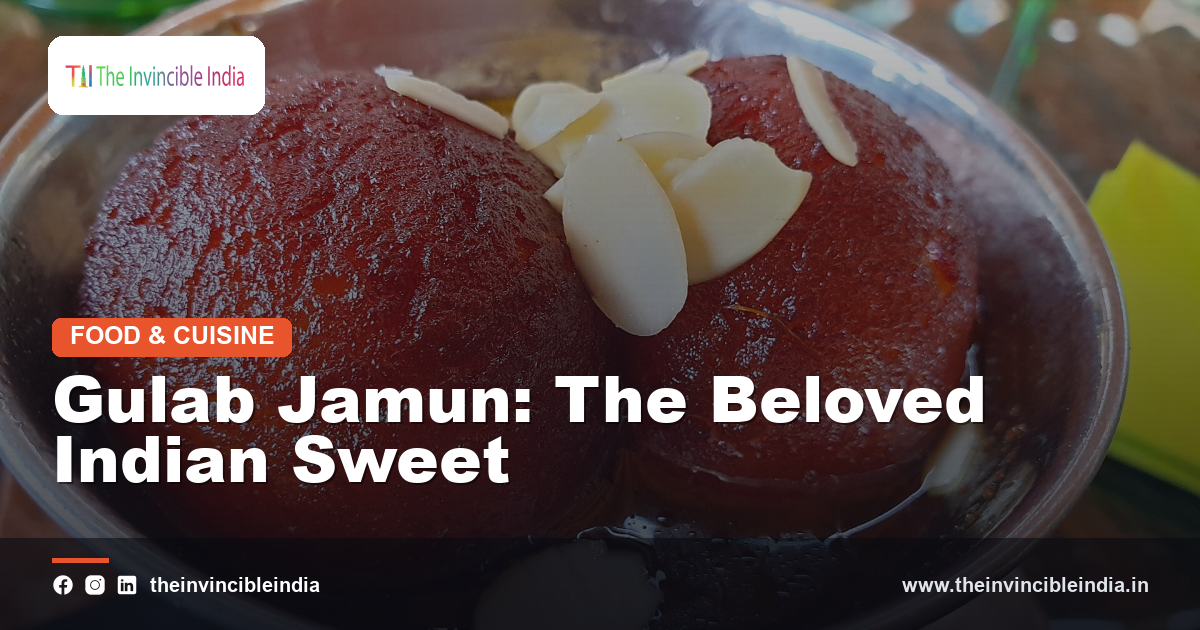
Gulab jamun is a soft, deep-fried sweet made primarily from milk solids, soaked in a fragrant sugar syrup flavoured with rose water or cardamom, and it ranks among the most widely recognised and beloved desserts across India. Its name combines the Persian word for rose, reflecting the rose-scented syrup traditionally used, with jamun, a reference to the dark, round fruit that the finished sweet resembles in shape and colour. Served warm or at room temperature at celebrations, festivals, and everyday gatherings, gulab jamun sits among the sweeter side of India’s regional cuisines of India, valued in households, restaurants, and sweet shops nationwide as one of the most universally loved desserts in the country.
Quick Facts
| Detail | Information |
|---|---|
| Main Ingredient | Khoya (milk solids) |
| Preparation Method | Deep-fried, then soaked in syrup |
| Flavouring | Rose water or cardamom |
| Texture | Soft, spongy, syrup-soaked |
| Serving Temperature | Warm or room temperature |
| Occasion | Festivals, weddings, everyday treats |
Origins and Meaning of the Name
Gulab jamun’s name draws from two distinct linguistic roots, with gulab referring to rose in Persian, a nod to the rose-scented syrup traditionally used to soak the sweet, and jamun referring to a dark purple Indian fruit that the finished dumplings visually resemble. This naming reflects a broader pattern in Indian sweets, where descriptive or evocative names often reference either an ingredient, a technique, or a visual resemblance to something familiar. The sweet’s precise historical origins are difficult to trace with certainty, though it is broadly understood to have developed through the influence of Persian and Central Asian sweet-making traditions on the Indian subcontinent, evolving over generations into the version most commonly recognised today.
Khoya: The Foundation of Gulab Jamun
Khoya, a solid form of milk made by slowly reducing and thickening milk until most of its moisture evaporates, forms the essential base of traditional gulab jamun, giving the sweet its characteristic dense yet soft texture. Preparing khoya from scratch requires prolonged simmering and constant attention to prevent scorching, a labour-intensive process that has traditionally been the mark of a well-made gulab jamun. In many modern kitchens, milk powder is used as a convenient substitute for fresh khoya, allowing for a quicker preparation while still aiming to replicate the rich, milky flavour and texture that fresh khoya provides. This ingredient forms the backbone of the sweet, distinguishing it from other fried Indian desserts that do not rely on milk solids as their primary base.
Shaping and Frying the Dumplings
Once the khoya dough is prepared, it is gently shaped into small, smooth balls, a step that requires care to avoid cracks, which can cause the dumplings to absorb syrup unevenly or break apart during frying. These shaped balls are then deep-fried slowly over low to medium heat, allowing them to cook through evenly and develop a deep golden-brown colour without burning on the outside before the inside is fully cooked. This slow frying process is considered one of the more technically demanding aspects of gulab jamun preparation, since rushing the heat can result in dumplings that are browned outside but undercooked within. Skilled preparation of this frying stage is often seen as a mark of an experienced sweet-maker.
The Rose-Scented Sugar Syrup
After frying, the warm dumplings are submerged in a sugar syrup infused with rose water, cardamom, or sometimes saffron, allowing them to absorb the fragrant liquid and soften further as they soak. The syrup is typically prepared to a specific consistency, thin enough to be readily absorbed by the fried dumplings but thick enough to coat them with a pleasant sweetness once soaked. This soaking period, which can range from a short rest to several hours, is essential to achieving the sweet’s signature moist, syrup-laden texture, and it is this step that transforms the dry fried dumpling into the soft, juicy dessert widely recognised as gulab jamun.
Texture and Sensory Appeal
A well-made gulab jamun is prized for a specific balance of textures, a slightly firm outer surface giving way to a soft, almost melting interior, all while being thoroughly saturated with syrup without becoming overly mushy or falling apart. Achieving this balance depends on multiple factors, including the consistency of the khoya dough, the frying temperature, and the timing of the syrup soak, making it a sweet that rewards careful technique over shortcuts. The combination of warm, spiced syrup and soft milk-based dumpling creates a distinctive sensory experience, often associated with comfort and celebration, that has helped sustain gulab jamun’s popularity across generations of Indian households.
Regional and Household Variations
While the essential preparation of gulab jamun remains broadly consistent across India, subtle variations exist from region to region and household to household, particularly in the exact ratio of khoya to flour used in the dough and the specific spices chosen for the syrup. Some versions incorporate a small amount of semolina for added texture, while others experiment with fillings such as chopped nuts placed at the centre of each dumpling before frying. These variations, while minor compared to the sweet’s overall recognisable form, reflect the way individual families and regional sweet-making traditions have adapted a shared basic recipe to their own preferences over time.
Gulab Jamun in Festivals and Celebrations
Gulab jamun holds a central place in Indian festive food culture, commonly prepared or purchased in large quantities during festivals such as Diwali, weddings, and other significant family occasions. Its rich, indulgent character makes it well suited to celebratory contexts, where sweets are traditionally shared among family, friends, and guests as a gesture of hospitality and goodwill. Sweet shops across India typically see a significant rise in gulab jamun sales during major festival seasons, reflecting its status as one of the default choices for festive gifting and celebration. This strong association with joyous occasions has helped cement gulab jamun’s place as one of India’s most emotionally resonant sweets.
Gulab Jamun as an Everyday Treat
Beyond its prominent role at festivals, gulab jamun is also widely enjoyed as an everyday dessert, available at sweet shops, restaurants, and increasingly in packaged and canned forms suitable for home storage. Its popularity as a restaurant dessert, often served warm with a scoop of ice cream in more contemporary presentations, demonstrates how a traditional sweet can be adapted to different dining contexts without losing its essential identity. This dual role, spanning both festive celebration and casual everyday indulgence, has helped gulab jamun maintain broad, continuous relevance rather than being confined to special occasions alone.
Dry Gulab Jamun and Other Variants
Alongside the classic syrup-soaked version, dry gulab jamun, coated in a layer of desiccated coconut or nuts rather than served swimming in syrup, offers a variation better suited to gifting or longer storage without becoming overly soft. Other variants include kala jamun, a darker, slightly firmer version fried for a longer period, and versions incorporating khoya blended with other ingredients such as paneer for a different texture. These variants demonstrate the flexibility of the basic gulab jamun format, allowing sweet-makers to adapt presentation and texture while retaining the essential milk-solid, syrup-based character that defines the sweet as a whole.
Comparisons With Other Indian Sweets
Gulab jamun is often discussed alongside other syrup-based Indian sweets, most notably jalebi and rasgulla, each of which shares the broad category of syrup-soaked desserts while differing significantly in base ingredient, texture, and preparation method. Unlike rasgulla, which uses fresh chhena rather than reduced khoya and is typically boiled rather than fried, gulab jamun’s frying process and denser milk-solid base give it a noticeably richer, heavier character. These comparisons highlight the diversity within India’s syrup-based sweet tradition, where a shared general concept, a dessert soaked in sugar syrup, can produce dramatically different textures and flavours depending on the base ingredient and cooking technique used.
Commercial Production and Packaged Gulab Jamun
Given its enduring popularity, gulab jamun is widely produced commercially, both by traditional sweet shops preparing it fresh daily and by larger food companies offering canned or packaged versions with a longer shelf life for retail sale. These packaged versions typically use milk powder-based mixes that can be reconstituted and fried at home, offering a convenient alternative for those without the time to prepare khoya from scratch. While such commercial products have made gulab jamun more accessible to a wider audience, including outside India, sweet shop connoisseurs often maintain a preference for freshly made versions prepared using traditional methods and fresh khoya.
Gulab Jamun in Indian Diaspora Communities
Gulab jamun has travelled well beyond India alongside the global Indian diaspora, remaining a staple dessert at cultural celebrations, religious festivals, and family gatherings held by Indian communities around the world. Its relative ease of preparation using packaged khoya or milk powder mixes has helped sustain this tradition even in places where fresh khoya is not readily available. Indian restaurants and sweet shops in cities with significant South Asian populations commonly feature gulab jamun on their dessert menus, introducing the sweet to a broader international audience unfamiliar with Indian desserts more generally, and reinforcing its status as one of India’s most recognisable culinary exports.
The Cultural Symbolism of Sweetness
In Indian culture, sharing something sweet is often associated with marking good news, celebration, or hospitality, and gulab jamun, as one of the most widely available and universally liked sweets, frequently serves this symbolic role in everyday social interactions. Offering gulab jamun to guests or sharing a box of it to mark an achievement or festive occasion reflects a broader cultural pattern in which sweets carry meaning well beyond their taste alone. This symbolic weight has helped ensure gulab jamun’s continued presence at a wide range of social and religious occasions, reinforcing its place not merely as a dessert but as a meaningful gesture within Indian social customs.
Preparing Gulab Jamun at Home
Making gulab jamun at home has become increasingly accessible with the widespread availability of instant gulab jamun mixes made from milk powder, allowing home cooks to prepare the dessert without the lengthy process of reducing fresh milk into khoya. The basic process, kneading a soft dough, shaping it into balls, frying gently, and soaking in warm syrup, remains largely the same whether using fresh khoya or a packaged mix, though experienced cooks often note subtle differences in flavour and texture between the two approaches. This accessibility has helped gulab jamun remain a popular homemade treat, particularly during festival seasons when families often prepare sweets together.
Serving Styles and Modern Presentations
While gulab jamun is traditionally served warm in a small bowl with syrup, contemporary presentations have expanded its serving styles considerably, including pairing it with vanilla ice cream, incorporating it into fusion desserts, or using it as a topping for other sweet dishes. Restaurants, particularly those aiming for a more modern take on Indian cuisine, have experimented with such reinterpretations, introducing the classic sweet to diners in new formats while retaining its essential flavour profile. These modern presentations exist alongside, rather than replacing, the traditional simple serving style, reflecting how a well-established sweet can continue to evolve without losing its core identity.
Gulab Jamun Today
Today, gulab jamun remains one of the most consistently popular sweets across India, prepared in homes, sold in sweet shops, served at restaurants, and shipped internationally in packaged form to reach Indian communities worldwide. Its universal appeal across regions, generations, and occasions has helped it maintain a level of popularity matched by few other Indian desserts, whether enjoyed at a grand wedding feast or as a simple after-dinner treat. As Indian cuisine continues to gain global recognition, gulab jamun stands as one of its most enduring ambassadors, admired for its comforting texture, fragrant syrup, and deep-rooted place within the country’s culinary and cultural traditions.
Sources & Further Reading
- Ministry of Food Processing Industries, Government of India (mofpi.gov.in).
- Ministry of Culture, Government of India (indiaculture.gov.in).
Frequently Asked Questions
What is gulab jamun made of?
Gulab jamun is traditionally made from khoya, or reduced milk solids, shaped into balls, deep-fried, and soaked in a rose or cardamom-scented sugar syrup.
Where does the name gulab jamun come from?
The name combines gulab, the Persian word for rose, referring to the rose-scented syrup, with jamun, a dark fruit the sweet resembles in shape and colour.
Is gulab jamun the same as rasgulla?
No. Gulab jamun uses reduced milk solids and is deep-fried, while rasgulla is made from fresh chhena and is boiled, giving the two sweets different textures.
Can gulab jamun be made without fresh khoya?
Yes, many home cooks use milk powder-based instant mixes to prepare gulab jamun without the lengthy process of making fresh khoya.
When is gulab jamun typically served?
Gulab jamun is served at festivals, weddings, and celebrations, as well as an everyday dessert at restaurants and sweet shops throughout the year.


