

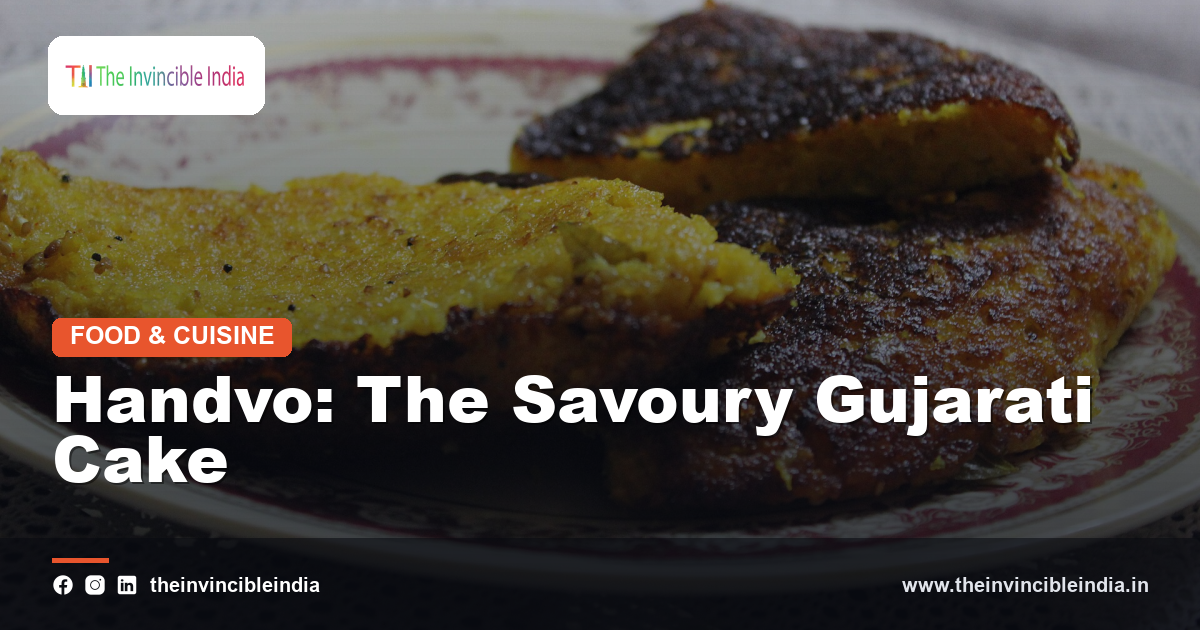
Handvo is the savoury cake of Gujarat, made from a fermented batter of rice and lentils mixed with grated vegetables, ginger, green chillies and spices, and baked or pan-cooked until golden with a crisp, sesame-flecked crust. Soft and moist within, firm and crunchy on the outside, it is one of the most satisfying members of Gujarati farsan. Like many dishes of Gujarati cuisine, it transforms humble pantry staples into a dish of surprising depth and comfort. This guide explores handvo, its history, ingredients, technique, variations and enduring place in the snack and meal traditions of Gujarat and beyond.
Quick Facts
| Detail | Information |
|---|---|
| Type | Savoury cake of fermented rice and lentil batter |
| Region | Gujarat |
| Key ingredients | Rice, lentils, bottle gourd, ginger and green chilli |
| Tempering | Mustard seeds, sesame seeds and curry leaves |
| Texture | Crisp crust with a soft, moist interior |
| Served with | Green chutney, tea or curd |
What Is Handvo?
Handvo is a traditional Gujarati savoury cake made from a thick, fermented batter of rice and a mixture of lentils, combined with grated vegetables and seasoned with ginger, green chillies and spices. The batter is poured into a pan or baking dish, topped with sesame seeds and a hot tempering, and cooked slowly until the base and top form a golden crust while the inside remains soft and moist. It is cut into wedges or squares and eaten hot. Hearty without being heavy, it can serve as a snack, a light meal or part of a festive farsan spread. Handvo is a wonderfully practical dish that shows the creativity of Gujarati home cooking.
Handvo in the Gujarati Kitchen
In Gujarati homes handvo is prized as a dish that is substantial enough to serve as a meal yet suitable for tea-time. It is a favourite on Sundays and during gatherings, when a freshly baked cake is cut and shared with the family. The dish belongs to the broad farsan tradition, which includes dhokla, khandvi and thepla, and shares with them a reliance on fermentation, gram and rice. Many households have their own treasured handvo recipes. This cherished position in the Gujarati kitchen, as both a comforting everyday dish and a mark of hospitality, helps explain why handvo is made so often and enjoyed so widely across the state.
Origins and Heritage of the Dish
The exact origins of handvo are not firmly documented, but the dish clearly arose from the fermented-batter traditions that run through much of India’s cooking. Rice and lentils, soaked and ground and then allowed to ferment, have long formed the basis of dosas, idlis and other preparations, and Gujarati cooks adapted the method to create a distinctive baked cake studded with vegetables. Resourceful households probably valued it as a way to use seasonal produce and store-cupboard grains. Over generations it became a settled part of the region’s repertoire. This practical, adaptive heritage lies at the root of handvo and is the reason it remains so familiar to Gujarati families.
The Rice and Lentil Base
The foundation of handvo is a blend of rice and lentils, which gives the cake both structure and flavour. Rice supplies lightness and body, while lentils such as chana dal, toor dal and urad dal add protein, nuttiness and a pleasant tooth. Some cooks use a ratio of rice to lentils that favours rice, and others add a spoonful of cracked wheat or semolina for texture. The grains are washed and soaked for several hours before being coarsely ground. Using a coarse grind rather than a fine one helps create the characteristic crumbly texture. This careful pairing of rice and lentils is what gives handvo its distinct body and nutritional richness.
Fermentation and Flavour
Fermentation is the secret behind handvo’s light texture and gentle tang. After the soaked rice and lentils are ground and mixed with sour yogurt or buttermilk, the batter is left in a warm place for several hours or overnight, during which natural microorganisms produce gas and mild acidity. This process lifts the batter and develops a subtle sourness that balances the sweetness of vegetables and the heat of chillies. In cold weather fermentation may take longer, and cooks have their own tricks for keeping the batter warm. This slow, natural fermentation, an old and widely used culinary technique, is essential to the flavour and softness of handvo.
Bottle Gourd and Other Vegetables
Grated vegetables are what make handvo moist and flavourful, and the most traditional choice is bottle gourd, known in Gujarati as dudhi. Its mild flavour and high water content keep the cake soft and tender. Other vegetables commonly added include carrot, cabbage, peas, spinach, fenugreek leaves and sometimes grated cucumber or pumpkin. These are folded into the batter along with fresh coriander, ginger and chopped green chillies. The vegetables add colour, sweetness and nutrition, and allow the dish to adapt to whatever is in season. This generous use of vegetables makes handvo both a practical way to use produce and a more wholesome and appealing dish.
Spices and Seasonings
Handvo is seasoned with a gentle but layered mix of spices that complements its soft, tangy character. Turmeric lends a warm yellow colour, while ginger and green chilli provide a clean heat. Coriander powder, cumin, a pinch of asafoetida and a spoonful of sugar, which is common in Gujarati savoury cooking, balance the flavours. A little oil is mixed into the batter, and a pinch of bicarbonate of soda or fruit salt is sometimes added just before cooking to lighten the texture. This restrained and thoughtful seasoning, typical of the Gujarati approach to flavour, allows the taste of lentils and vegetables to shine through.
The Tempering and Sesame Crust
The finishing tempering gives handvo much of its character and fragrance. Oil is heated in a pan and mustard seeds, sesame seeds, curry leaves and sometimes dried red chillies are added until they sizzle and pop. A portion of this mixture may be stirred into the batter, while the rest is spread over the surface before cooking. The sesame seeds, in particular, brown during baking and form a crunchy, nutty topping that contrasts with the soft interior. This distinctive crust, rich with aroma and flavour, is one of the hallmarks of handvo and plays a major role in the pleasure of the dish.
Baking and Pan-Cooking Methods
Traditionally, handvo was cooked slowly in a heavy pan or special handvo vessel over gentle heat, with coals placed on the lid to brown the top. The batter is poured into a greased container, topped with the tempering and cooked covered until the base turns golden brown and crisp. The cake is then flipped or the top is browned, depending on the method. Many cooks today bake handvo in an oven, while others use a pressure cooker without the weight or a modern appliance. Whatever method is used, the aim is the same, a crisp crust and tender interior. This flexibility of technique shows how the dish adapts to different kitchens.
Serving and Accompaniments
Handvo is best served hot, cut into squares or wedges so that each piece includes some of the crisp crust. It is commonly accompanied by green coriander chutney, tangy tamarind or date chutney, or a spicy garlic chutney. A cup of strong, sweet tea is the traditional partner for an afternoon snack, while a bowl of curd or buttermilk turns it into a more complete light meal. It can be reheated in a pan the next day. These simple accompaniments highlight the cake’s flavour and texture and reflect the relaxed, sociable way in which handvo is shared in Gujarati households.
Regional and Household Variations
Handvo varies widely across Gujarat and between households, reflecting local grains, tastes and customs. Cooks in different regions use different lentil combinations, adjust the sourness of the batter and choose their favourite vegetables. Some add a little jaggery for sweetness, others increase the heat with extra chillies, and some enrich the batter with a few spoonfuls of ghee or grated coconut. A few households prepare layered versions or stuff them with spiced fillings. The dish also appears in similar forms in neighbouring regions under other names. This diversity of local versions demonstrates the flexibility of handvo and the personal touch that each Gujarati cook brings to it.
Instant Handvo and Modern Adaptations
Modern kitchens have given rise to quicker versions of handvo that avoid long soaking and fermentation. Ready-mixed flour packets, semolina-based batters and instant versions made with soured yogurt and fruit salt allow the dish to be prepared in under an hour. Health-conscious cooks experiment with millets, oats, quinoa and added greens, while others bake it in muffin tins for convenient portions. Though purists prefer the traditional fermented batter for its depth of flavour, these adaptations have made handvo accessible to busy families and new audiences. This willingness to adapt without abandoning the dish’s identity is part of the reason handvo continues to find a place in contemporary kitchens.
Nutritional Character
Handvo is valued not only for its flavour but also for its wholesome character. The combination of rice and lentils provides a balanced mix of grains and pulses, while the vegetables add fibre, vitamins and moisture. Fermentation is widely believed to make such batters lighter and easier to digest. Because it is baked or pan-cooked with relatively little oil, it is often seen as a more balanced alternative to deep-fried snacks. A single wedge can be filling enough to serve as a light meal. This combination of nutrition, flavour and satisfaction has long made handvo a favourite choice in family kitchens across Gujarat.
Handvo in Festivals and Family Life
Handvo often appears at family gatherings, picnics and festivals, when large quantities can be prepared in advance and shared with guests. It is a popular choice for packed lunches and journeys because it keeps well and tastes good even when cool. During festivals such as Diwali and Uttarayan, households prepare a range of farsan and sweets, among which handvo has its dedicated admirers. Women often pass down the technique through family cooking sessions. This close association with togetherness, sharing and celebration shows that handvo is not simply a recipe but a part of the social fabric of Gujarati life.
Handvo Beyond Gujarat
Like many Gujarati foods, handvo has spread far beyond its homeland with migrating families, and it is now served in Gujarati restaurants, community kitchens and snack shops across India and overseas. Ready-to-cook mixes are sold in stores, and food writers and online cooks have introduced it to new audiences curious about regional Indian dishes. In diaspora communities it is often prepared for cultural gatherings and religious events as a taste of home. This widening reach shows how a modest regional dish can become a cherished symbol of community identity, carried across borders while remaining closely tied to its origins in Gujarat’s kitchens.
Handvo Today
Today handvo remains a firm favourite in Gujarat and among Gujarati communities worldwide. Home cooks continue to prepare it for family meals and gatherings, restaurants serve it as a regional speciality, and new versions made with grains such as millets reflect modern tastes. Its crisp crust, soft crumb and fragrant tempering continue to delight eaters of all ages. At the same time, growing interest in traditional fermented foods has brought renewed appreciation for the dish. This lasting popularity, built on simple ingredients, careful technique and generations of family tradition, ensures that handvo remains a vibrant and treasured part of India’s culinary heritage.
Sources & Further Reading
- Ministry of Culture, Government of India (indiaculture.gov.in).
- Gujarat Tourism (gujarattourism.com).
Frequently Asked Questions
What is handvo?
Handvo is a savoury Gujarati cake made from a fermented batter of rice and lentils with grated vegetables and spices. It is baked or pan-cooked until it has a crisp sesame crust and a soft interior.
What vegetable is traditionally used in handvo?
Bottle gourd, known as dudhi, is the most traditional vegetable because it keeps the cake moist and mild. Carrot, cabbage, peas and greens are also commonly added.
Is handvo fermented?
Traditional handvo uses a batter of soaked and ground rice and lentils that is fermented for several hours with yogurt or buttermilk. Instant versions skip the fermentation and use quick raising agents instead.
What is handvo served with?
It is usually served hot with green chutney, tamarind chutney, curd or tea. It can be a snack or a light meal depending on the accompaniments.
How is handvo different from dhokla?
Dhokla is a steamed, spongy cake made mainly from gram flour or rice and lentil batter, while handvo is a thicker, coarser cake with vegetables and a baked crisp crust. Both belong to Gujarati farsan.


