


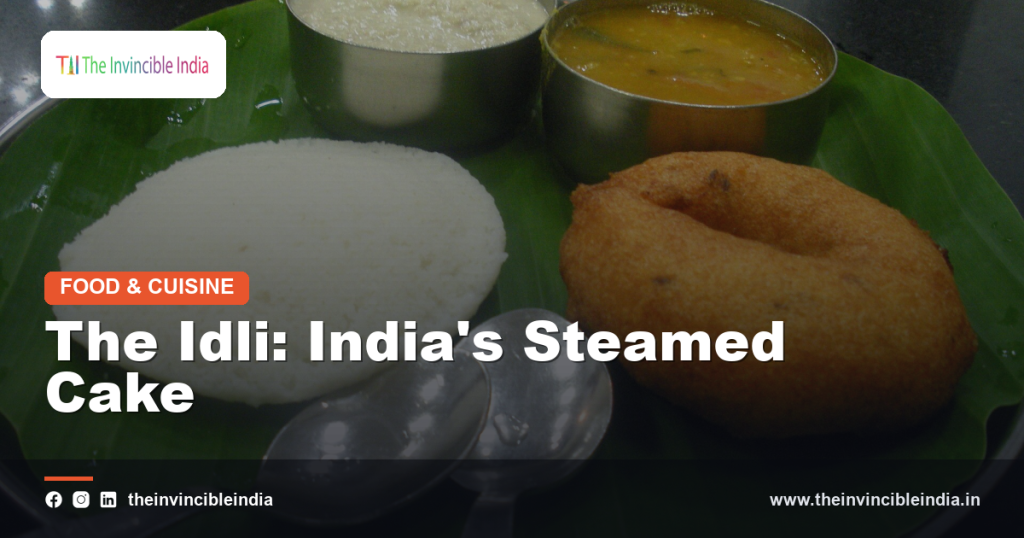
The idli is a soft, steamed cake made from a fermented batter of rice and urad dal, and it stands among the most recognisable dishes of South Indian cuisine, eaten daily across households, restaurants, and street stalls alike. Light, mildly tangy, and easy to digest, the idli owes its distinctive texture to a natural fermentation process that causes the batter to rise before steaming, a technique that sets it apart from most other Indian breads and cakes. As a cornerstone of South Indian breakfast traditions, the idli is typically served with sambar and coconut chutney, and its simplicity, affordability, and adaptability have helped it become one of the most widely eaten dishes across the length and breadth of India.
Quick Facts
| Detail | Information |
|---|---|
| Main Ingredients | Rice and urad dal (black gram) |
| Preparation Method | Fermentation followed by steaming |
| Region of Origin | South India |
| Typical Accompaniments | Sambar and coconut chutney |
| Texture | Soft, light, and spongy |
| Meal Role | Breakfast and light meals |
Origins of the Idli
The idli’s exact origins are difficult to trace with precision, but it is widely understood to be a long-established South Indian dish, with steamed rice and lentil cakes forming part of the region’s culinary repertoire for many generations. Over time, the dish spread from its South Indian base to become a familiar item across the rest of the country, aided by migration, trade, and the growth of South Indian restaurants in cities far from its home region. While specific historical details remain a matter of ongoing discussion among food historians, the idli’s long-standing presence in South Indian households is not in doubt, and it continues to be treated as one of the region’s most fundamental and enduring culinary contributions. Its gradual spread reflects the broader story of how regional Indian dishes can become part of a shared national food culture.
The Fermentation Process
Fermentation is the defining technique behind the idli, transforming a simple batter of soaked and ground rice and urad dal into a light, airy mixture ready for steaming. The batter is typically left to rest for several hours, often overnight, during which naturally occurring microorganisms cause it to rise and develop a mild tanginess. This process not only improves the texture of the finished idli, giving it its characteristic softness, but is also understood to make the dish easier to digest and to enhance its nutritional profile compared to unfermented batters. Achieving a well-fermented batter requires attention to proportions, soaking time, and ambient temperature, and experienced cooks often judge readiness by the batter’s appearance and aroma rather than a fixed schedule, reflecting the practical, experience-based knowledge that underpins good idli-making.
Rice and Urad Dal: The Core Ingredients
The classic idli batter relies on just two core ingredients, rice and urad dal, soaked separately and then ground into a smooth paste before being combined and left to ferment. The proportion between the two is important to the final texture, with urad dal contributing to the batter’s rise and lightness while rice provides body and structure. Some preparations also include a small amount of poha or cooked rice to further improve softness. This minimal ingredient list stands in contrast to many other Indian dishes that rely on numerous spices, highlighting how the idli achieves its appeal primarily through technique and fermentation rather than elaborate seasoning, a quality that has helped keep the dish accessible and affordable across generations.
Steaming and Traditional Idli Moulds
Once fermented, idli batter is poured into small, shallow, disc-shaped moulds and steamed until fully set, a gentle cooking method that preserves the batter’s soft texture without adding any oil. Traditional idli stands consist of stacked perforated plates that allow steam to circulate evenly around each mould, ensuring consistent cooking across a batch. This steaming method distinguishes the idli from many other South Indian dishes made from similar batters, such as dosa, which are instead cooked on a hot griddle. The absence of oil in the cooking process contributes to the idli’s reputation as a light, easily digestible food, suitable for eating frequently without feeling heavy, and this steaming technique remains largely unchanged even as idli-making equipment has modernised over time.
Sambar: The Classic Accompaniment
Sambar, a tangy lentil-based vegetable stew, is the most traditional and widely recognised accompaniment to idli, together forming a pairing so closely associated that the two are often mentioned in the same breath. The stew’s combination of toor dal, tamarind, vegetables, and a distinct spice blend provides a flavourful contrast to the mild, neutral taste of the idli itself, allowing the soft cake to absorb the sambar’s tang and warmth. This pairing is considered a foundational element of South Indian breakfast culture, served in homes and restaurants alike, and the balance between a well-made sambar and a properly steamed idli is often used as a benchmark for judging the quality of a South Indian meal.
Coconut Chutney and Other Condiments
Alongside sambar, coconut chutney is an essential accompaniment to idli, made by grinding fresh coconut with green chillies, ginger, and a tempering of mustard seeds and curry leaves into a smooth, mildly spiced paste. The chutney’s cool, slightly nutty flavour complements the idli’s softness, offering a different but equally important counterpoint to the dish compared to the heartier sambar. Variations of chutney using tomato, mint, or other ingredients also accompany idli in different households and regions, reflecting local taste preferences. Together, sambar and chutney form a complete flavour profile around the idli, and the combination remains largely consistent across South India even as specific recipes for each component vary from kitchen to kitchen.
Regional Varieties of Idli
While the classic steamed idli remains the most familiar version, several regional variations exist across South India, reflecting local ingredients and preferences. Thatte idli, associated with Karnataka, is a larger, flatter version served on a plate-like mould, while button idlis are smaller versions often served soaked in a spiced tempering as a distinct snack rather than a breakfast dish. Other variations incorporate additional ingredients such as vegetables or different grains into the base batter, offering subtle differences in texture and flavour. These regional adaptations demonstrate how a relatively simple core recipe can be reworked in numerous ways while retaining the fundamental steamed, fermented character that defines the idli across all its forms.
Rava Idli and Instant Variations
Rava idli, made using semolina rather than the traditional rice and urad dal batter, represents a popular instant variation that emerged as a quicker alternative requiring no fermentation. The semolina is typically mixed with yoghurt and a small amount of fruit salt or baking soda to help it rise before steaming, allowing the dish to be prepared within a much shorter timeframe than the classic version. While purists often regard rava idli as a distinct dish rather than a true idli, its convenience has made it a popular choice for quick breakfasts, particularly in households without the time to plan ahead for overnight fermentation. Its popularity illustrates how the broader idea of a steamed savoury cake has been adapted to suit changing lifestyles and time constraints.
Idli in South Indian Breakfast Culture
The idli occupies a central place in South Indian breakfast culture, eaten daily in countless households as a light, nourishing start to the day. Its mild flavour and soft texture make it suitable for people of all ages, including young children and elderly family members, and it is often one of the first solid foods introduced to infants in South Indian families. Restaurants specialising in South Indian food typically feature idli prominently on their breakfast menus, often serving it alongside other staples such as dosa and vada. This everyday, almost routine presence of idli in South Indian homes and eateries underscores its status as far more than an occasional treat, functioning instead as a genuine dietary staple across the region.
Idli as a Diet and Health Food
Because it is steamed rather than fried and made from a fermented batter, the idli is widely regarded as a light, easily digestible food, often recommended for people recovering from illness or seeking a low-oil dietary option. The fermentation process is also understood to improve the availability of certain nutrients within the batter compared to unfermented grains and lentils. This reputation has helped the idli maintain broad appeal across different dietary preferences and health considerations, appearing on menus aimed at health-conscious eaters as readily as on traditional breakfast tables. Its combination of simplicity, digestibility, and nutritional value continues to support its standing as one of India’s most consistently recommended everyday foods.
Idli's Spread Across India
Although firmly rooted in South Indian culinary tradition, the idli has travelled widely across India, carried by migration and the popularity of South Indian restaurants in cities throughout the country. Today it is a familiar breakfast and snack item far beyond its home region, served in homes, canteens, and eateries regardless of regional culinary background. This widespread adoption has, in some cases, led to adaptations suited to local tastes, though the essential form of the dish, a soft steamed cake served with sambar and chutney, has remained largely consistent. The idli’s journey across India reflects a broader pattern in which certain regional dishes transcend their origins to become part of a shared, pan-Indian food culture.
Idli Around the World
The idli has also found a place beyond India, particularly among the Indian diaspora in countries with significant South Indian communities, where it continues to be prepared using traditional methods despite differences in available ingredients and equipment. South Indian restaurants in cities across the world often feature idli on their menus, introducing the dish to a wider international audience unfamiliar with Indian regional cuisines. Packaged idli batter and instant idli mixes have further supported its availability outside India, making it easier for those without ready access to fresh urad dal and rice to prepare the dish at home. This global presence, while modest compared to some other Indian foods, reflects the idli’s practicality and broad appeal as a mild, comforting dish.
Equipment and Home Preparation
Making idli at home traditionally requires a stone or electric grinder for preparing the batter, along with a dedicated idli stand for steaming, though many modern households now rely on mixers and pressure cookers adapted for steaming in place of specialised equipment. The process of soaking, grinding, fermenting, and steaming requires some advance planning, typically spanning a full day between preparation and cooking. Despite this time investment, idli remains a popular dish for home cooking because a single batch of batter can yield multiple meals over several days, with the batter itself improving in tanginess as it continues to ferment slightly in the refrigerator. This practicality has helped sustain the idli’s popularity as a reliable, make-ahead breakfast option.
Idli in South Indian Festivals and Occasions
While idli is primarily an everyday food, it also appears in various festive and ceremonial contexts across South India, sometimes prepared in larger quantities for family gatherings or offered as part of religious observances. Certain occasions call for specific variations, such as idlis made with additional ingredients or served alongside a wider spread of accompaniments than the usual sambar and chutney. Its presence at such occasions, alongside its everyday role, reflects the dish’s flexibility, capable of serving as both a routine breakfast and a suitable offering for more significant meals. This dual role reinforces the idli’s position as a genuinely foundational dish within South Indian food culture, spanning both the ordinary and the special.
Nutritional Perception and Modern Appeal
In recent years, the idli has gained renewed attention as a naturally low-oil, fermented food that fits well within contemporary interest in gut-friendly and minimally processed eating. Its simple ingredient list and steaming method appeal to those seeking lighter alternatives to fried breakfast foods, while its long-standing use of fermentation aligns with a broader modern curiosity about fermented foods more generally. Restaurants and home cooks alike have experimented with adding vegetables, millets, or other grains to the traditional batter, seeking to enhance its nutritional profile further while retaining its essential soft, steamed character. This renewed interest demonstrates how a centuries-old regional dish can remain relevant within changing contemporary food trends.
Common Idli Serving Styles
Beyond the standard plate of plain idli with sambar and chutney, several other serving styles have developed, including podi idli, where steamed idlis are tossed in a dry spice and lentil powder along with ghee or oil, and idli fry, where leftover idlis are shallow-fried with tempering until lightly crisp. These variations often emerged as inventive ways to use leftover idlis, transforming a soft steamed cake into a dish with a different texture and flavour profile. Such adaptations highlight the idli’s versatility as a base ingredient, capable of being repurposed well beyond its original steamed form while still remaining clearly recognisable as part of the same culinary family.
The Idli Today
Today, the idli remains one of the most widely eaten dishes in India, prepared daily in homes, served in restaurants ranging from modest local eateries to upscale establishments, and increasingly available in packaged and instant forms for busy households. Its enduring popularity rests on a combination of simplicity, digestibility, and adaptability that few other dishes can match, allowing it to remain relevant across generations and geographic boundaries. As interest in fermented and minimally processed foods continues to grow, the idli’s traditional preparation method has only reinforced its reputation as a thoughtfully designed dish well ahead of its time. It continues to represent one of South India’s most significant and lasting contributions to the broader food culture of the country.
Sources & Further Reading
- Ministry of Tourism, Government of India (tourism.gov.in).
- Tamil Nadu Tourism Department (tamilnadutourism.tn.gov.in).
Frequently Asked Questions
What is idli made of?
Idli is made from a fermented batter of rice and urad dal, steamed in small moulds until it forms a soft, spongy cake.
Why is idli batter fermented?
Fermentation causes the batter to rise, giving idli its light, airy texture, while also making it easier to digest and enhancing its nutritional value.
What is traditionally served with idli?
Idli is classically served with sambar, a tangy lentil and vegetable stew, and coconut chutney, both of which complement its mild flavour.
Is rava idli the same as regular idli?
Rava idli is made with semolina instead of the traditional rice and urad dal batter and does not require fermentation, making it a quicker but different preparation.
Is idli a healthy food?
Idli is generally considered a light, low-oil food because it is steamed rather than fried, and its fermented batter is thought to aid digestion.