

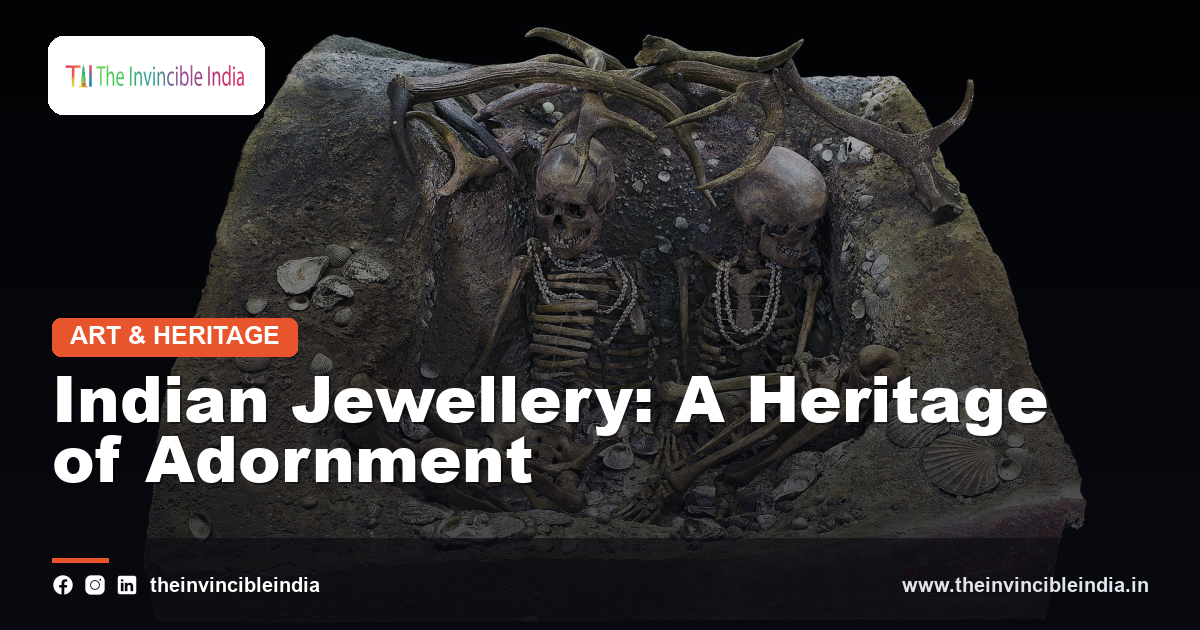
Indian jewellery is one of the richest and most ancient traditions of adornment in the world, a heritage of extraordinary beauty, craftsmanship and meaning that stretches back thousands of years. Celebrated for its exquisite workmanship, its use of gold, silver and precious stones, and its dazzling variety of styles and forms, Indian jewellery adorns every part of the body and marks every important occasion of life, above all weddings. From the royal splendour of kundan and jadau to the colourful beauty of meenakari and the sacred forms of temple jewellery, and in a wealth of regional styles, Indian jewellery is a glory of the country’s art and heritage. This guide explores the rich traditions, the styles, the materials, the meaning and the regional forms of Indian jewellery, one of the treasures of India’s heritage.
Quick Facts
| Detail | Information |
|---|---|
| Type | The rich heritage of Indian adornment |
| Antiquity | A tradition stretching back thousands of years |
| Materials | Gold, silver, precious and semi-precious stones |
| Famous styles | Kundan, jadau, meenakari and temple jewellery |
| Occasions | Worn for weddings, festivals and celebrations |
| Meaning | A symbol of beauty, auspiciousness and status |
A Rich Heritage of Adornment
Indian jewellery is one of the richest and most ancient traditions of adornment in the world, a heritage of extraordinary beauty, craftsmanship and meaning. For thousands of years, the people of India have adorned themselves with jewellery of exquisite workmanship and dazzling variety, and the art of the jeweller has flourished across the ages, producing a wealth of beautiful ornaments in gold, silver and precious stones. Jewellery holds a special and important place in Indian culture and life. As a rich and ancient heritage of adornment, celebrated for its beauty, craftsmanship and meaning, Indian jewellery holds a cherished place in the country’s art and culture and is one of the most beautiful and beloved of its traditions.
An Ancient Tradition
The tradition of jewellery in India is very ancient, reaching back thousands of years to the earliest civilisations of the subcontinent, whose people already wore ornaments of great skill. From these ancient beginnings, the art of the jeweller developed and flourished across the ages, and jewellery has been treasured and worn throughout the history of India, in the courts and among the people alike. This long and continuous tradition gives Indian jewellery a heritage of great depth. This ancient tradition of Indian jewellery, reaching back thousands of years to the earliest civilisations, is the foundation of a long and continuous heritage of adornment that developed and flourished across the ages, giving Indian jewellery a history of great antiquity and richness.
Gold, the Beloved Metal
Gold holds a special and beloved place in Indian jewellery, treasured for its beauty, its purity and its auspiciousness, and it is the most prized of the materials of the tradition. Gold jewellery is worn on every important occasion, above all weddings, and it is regarded as auspicious and as a store of value and security, so that gold has a deep cultural and economic as well as aesthetic importance in India. The love of gold is central to Indian jewellery. This special place of gold, the beloved and auspicious metal treasured for its beauty and worn on every important occasion, is central to Indian jewellery, and the deep cultural, economic and aesthetic importance of gold is one of the defining features of the tradition of adornment in India.
Precious Stones
Indian jewellery is renowned for its use of precious and semi-precious stones, which adorn its ornaments with colour and brilliance. Diamonds, rubies, emeralds, sapphires, pearls and many other gems have long been set in Indian jewellery, and India was famed in ancient and medieval times as a source of precious stones and a centre of the jewel trade. The use of these stones adds great richness and beauty to the jewellery. This use of precious and semi-precious stones, which adorn Indian jewellery with colour and brilliance, is one of the glories of the tradition, and the rich heritage of gems in India, both as a source and as a centre of the jewel trade, has contributed greatly to the splendour of its jewellery.
The Art of Kundan
One of the most magnificent styles of Indian jewellery is kundan, a royal and elaborate technique of setting gems in gold, celebrated for its splendour and refinement. In kundan work, precious stones are set in an elaborate framework of pure gold, creating jewellery of great richness and beauty, and this technique, associated with the royal courts, produced some of the most splendid jewellery in India. Kundan is a summit of the jeweller’s art. This art of kundan, the royal and elaborate technique of setting gems in gold, is one of the most magnificent styles of Indian jewellery, celebrated for its splendour and refinement, and it produced some of the most beautiful and elaborate jewellery in the history of the country, associated with the grandeur of the courts.
The Beauty of Meenakari
Another beautiful technique of Indian jewellery is meenakari, the art of decorating metal with colourful enamel, which adds vivid colour and beauty to the ornaments. In meenakari, brilliant coloured enamels are applied to gold or other metal to create beautiful and intricate designs, often on the reverse of kundan jewellery, so that the piece is beautiful on both sides. This colourful enamelwork is a glory of Indian jewellery. This art of meenakari, the beautiful technique of decorating metal with colourful enamel, adds vivid colour and beauty to Indian jewellery, and the brilliant enamelwork, often combined with kundan, is one of the glories of the tradition, producing ornaments of dazzling colour and intricate beauty.
Temple Jewellery
A distinctive and beautiful tradition of Indian jewellery is temple jewellery, originally created to adorn the images of the deities in temples and later worn by people, especially for dance and ceremony. This jewellery, often of gold and set with stones, features religious and traditional motifs and is associated with the temples, the deities, and the classical dances, for which it is the traditional adornment. Temple jewellery is a cherished and sacred form of the art. This tradition of temple jewellery, originally created to adorn the images of the deities and later worn especially for classical dance and ceremony, is a distinctive and beautiful form of Indian jewellery, sacred in its origins and cherished for its religious motifs and its association with the temples and the classical dances.
Jewellery for Every Part
One of the remarkable features of Indian jewellery is that there are ornaments for every part of the body, adorning the wearer from head to toe. There are ornaments for the head and hair, the ears, the nose, the neck, the arms and wrists, the fingers, the waist, the ankles and the toes, each with its own traditional forms and names, so that a fully adorned person, especially a bride, wears a rich array of jewellery. This wealth of ornaments is a distinctive feature of the tradition. This feature of Indian jewellery, with ornaments for every part of the body from head to toe, is a remarkable and distinctive aspect of the tradition, and the rich array of jewellery worn, especially by a bride, is a wonderful expression of the beauty and abundance of Indian adornment.
Bridal Jewellery
The most magnificent expression of Indian jewellery is the bridal jewellery, the rich and elaborate array of ornaments worn by a bride on her wedding day. The Indian bride is adorned from head to toe with beautiful jewellery, often of gold set with precious stones, including many traditional pieces, and the bridal jewellery is an important, auspicious and treasured part of the wedding, frequently passed down as an heirloom. The bridal jewellery is the crowning glory of the tradition. This bridal jewellery, the rich and elaborate array of ornaments worn by a bride on her wedding day, is the most magnificent expression of Indian jewellery, and the beautifully adorned bride, decked in gold and gems, is one of the most beautiful sights of the Indian wedding and a crowning glory of the tradition of adornment.
The Meaning of Jewellery
Indian jewellery is rich in meaning, valued not only for its beauty but as a symbol of auspiciousness, status, security and cultural and religious significance. Jewellery is worn on auspicious occasions and is regarded as auspicious in itself, it marks status and prosperity, it serves as a store of value and security, and certain ornaments carry religious or ceremonial significance, such as those marking the married state. This meaning gives jewellery importance beyond its beauty. This rich meaning of Indian jewellery, as a symbol of auspiciousness, status, security and cultural and religious significance, gives it an importance beyond its beauty, and the many meanings attached to jewellery are a large part of its deep place in the culture and life of India.
Regional Traditions
India’s many regions each have their own distinctive traditions of jewellery, with characteristic styles, forms, materials and craftsmanship, giving the tradition a wonderful diversity. Different regions are famous for particular styles and techniques of jewellery, from the kundan and meenakari of the north to the temple jewellery and gold work of the south and the distinctive ornaments of other regions, each reflecting local tastes, materials and traditions. This regional diversity enriches Indian jewellery. This rich diversity of regional traditions of Indian jewellery, in which each region has its own distinctive styles, forms and craftsmanship, enriches the tradition and reflects the wonderful variety of the country, so that Indian jewellery takes countless beautiful forms across the land.
The Skill of the Jewellers
The beauty of Indian jewellery is the work of highly skilled jewellers and craftspeople, whose mastery of their art has been passed down through generations. Creating fine jewellery, with its intricate designs, delicate settings, enamelwork and fine detail, demands great skill, patience and artistry, and the traditional jewellers of India, often working within families and communities, have developed and preserved this mastery across the ages. The skill of the jewellers is central to the tradition. This skill of the jewellers and craftspeople, whose mastery of the intricate techniques of the art has been passed down through generations, is central to the beauty of Indian jewellery, and the artistry and dedication of these traditional craftspeople are the foundation of the country’s rich heritage of adornment.
A Living Tradition
Indian jewellery is a vibrant living tradition, treasured and worn across the country and continually created by skilled jewellers, even as it adapts to modern tastes. Jewellery remains an important part of Indian life, worn on weddings, festivals and celebrations, treasured as adornment, investment and heirloom, and continually made in both traditional and contemporary designs. The tradition is passed down and continually renewed. This character of Indian jewellery as a vibrant living tradition, treasured and worn across the country and continually created in both traditional and modern forms, reflects the enduring importance of jewellery in Indian life and the continuing vitality of the country’s rich heritage of adornment.
A Treasured Heritage
The jewellery of India is a treasured heritage, its finest works preserved as masterpieces of the jeweller’s art and its traditions cherished as a precious part of the country’s culture. Magnificent historic jewellery is preserved in collections and museums, treasured as a heritage of great beauty and value, and the living traditions of the art are cherished and passed down. This heritage of jewellery is a great glory of India. This treasured heritage of Indian jewellery, with its finest works preserved as masterpieces and its traditions cherished as a precious part of the country’s culture, is a great glory of India, and the beauty and craftsmanship of its jewellery are admired across the world as treasures of the art of adornment.
Indian Jewellery Today
Today Indian jewellery remains one of the richest and most beautiful traditions of adornment in the world, treasured and worn across the country and among Indian communities everywhere, and admired internationally for its beauty and craftsmanship. The magnificent styles of kundan, meenakari and temple jewellery, the wealth of regional traditions, and the treasured bridal jewellery continue to be cherished and created, even as the tradition adapts to modern tastes with new designs. The skill of the traditional jewellers and the love of jewellery in Indian life keep the tradition vibrant. As a rich and ancient heritage of adornment, celebrated for its beauty, craftsmanship and meaning, Indian jewellery endures as one of the most beautiful and beloved of the country’s traditions.
Sources & Further Reading
- Ministry of Culture, Government of India, on the craft and adornment traditions of India (indiaculture.gov.in).
- National Museum and other institutions, on the jewellery heritage of India.
Frequently Asked Questions
What is special about Indian jewellery?
Indian jewellery is one of the richest and most ancient traditions of adornment in the world, celebrated for its exquisite craftsmanship, its use of gold and precious stones, and its dazzling variety of styles, from kundan and meenakari to temple jewellery, worn for weddings, festivals and every important occasion.
What is kundan jewellery?
Kundan is a magnificent and royal style of Indian jewellery, an elaborate technique of setting precious stones in a framework of pure gold, celebrated for its splendour and refinement and associated with the royal courts, producing some of the most beautiful jewellery in India.
What is meenakari?
Meenakari is the beautiful Indian art of decorating metal with colourful enamel, in which brilliant coloured enamels are applied to gold or other metal to create intricate designs, often on the reverse of kundan jewellery so the piece is beautiful on both sides.
What is temple jewellery?
Temple jewellery is a distinctive tradition of Indian jewellery originally created to adorn the images of the deities in temples and later worn by people, especially for classical dance and ceremony, featuring religious and traditional motifs, often in gold set with stones.
Why is jewellery important in Indian weddings?
Jewellery is central to Indian weddings, where the bride is adorned from head to toe with a rich and elaborate array of ornaments, often of gold set with precious stones. Bridal jewellery is an auspicious and treasured part of the wedding, frequently passed down as an heirloom.


