

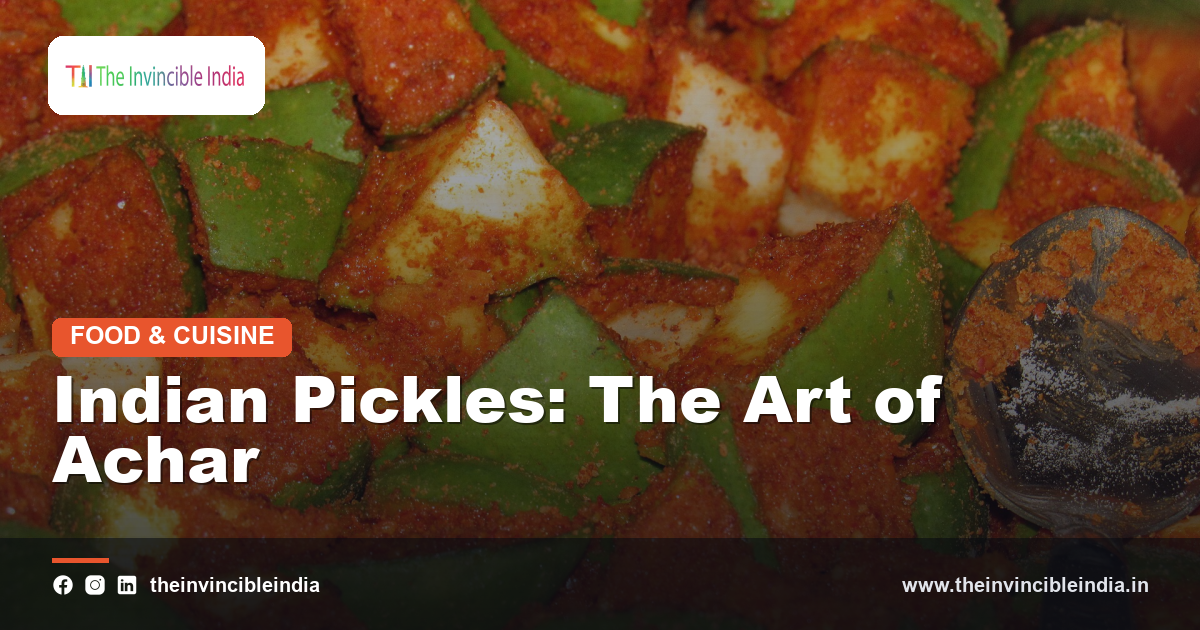
Indian pickles, known across the country as achar, are a beloved and time-honoured art of preserving fruits and vegetables in oil, salt and a rich blend of spices, creating a tangy, pungent and deeply flavourful condiment that graces meals in households throughout India. From the classic mango pickle to countless regional varieties made from lime, chilli, vegetables and more, achar adds a burst of intense flavour that enlivens even the simplest meal. Prepared with care and often preserved for months, Indian pickles are a cherished part of the country’s culinary heritage. This guide explores the art of achar, its making and its beloved place in India’s thali tradition.
Quick Facts
| Detail | Information |
|---|---|
| Type | Preserved fruits or vegetables in oil and spices |
| Known as | Achar |
| Common bases | Mango, lime, chilli and vegetables |
| Flavour | Tangy, spicy and pungent |
| Preservation | Oil, salt and sun-curing |
| Role | A beloved condiment accompanying meals |
The Art of Achar
Indian pickles, known as achar, represent a beloved and time-honoured culinary art, transforming fruits and vegetables into tangy, pungent and deeply flavourful condiments through preservation in oil, salt and spices. Prepared across households and regions with great care and often left to mature over weeks or months, achar brings intense and complex flavour to the simplest of meals, its tang and spice cutting through richness and adding a burst of excitement to every bite. This standing as a beloved culinary art is well earned. As the tangy, pungent and deeply flavourful condiment cherished across India, achar holds an honoured place in the country’s food heritage and continues to be celebrated as a true art of preservation and flavour.
The Purpose of Pickling
Pickling has long served the practical purpose of preserving seasonal fruits and vegetables, allowing their flavour to be enjoyed long after the harvest season has passed. By preserving ingredients such as mango, lime and chilli in oil, salt and spices, households across India have traditionally ensured a supply of flavourful condiments throughout the year, turning an abundance of seasonal produce into a long-lasting and delicious pantry staple. This practical purpose remains at the heart of pickling. This practical purpose of pickling, preserving seasonal fruits and vegetables so their flavour can be enjoyed long after harvest, remains at the heart of the tradition, and this ingenuity in preservation is a testament to the resourcefulness of Indian culinary practice.
The Classic Mango Pickle
Among the most beloved of all Indian pickles is the mango pickle, made from raw, unripe mangoes preserved in oil with a generous blend of spices and salt. The tart, firm raw mango is cut into pieces, mixed with mustard, chilli and other spices, and cured in oil until it develops its characteristic tangy, spicy and intensely flavourful character, making mango pickle one of the most cherished and widely enjoyed condiments across the country. This classic mango pickle remains a favourite of favourites. This beloved status of mango pickle, made from tart raw mango preserved in a generous blend of spices and oil, remains a favourite of favourites, and it is often considered the quintessential Indian pickle above all others.
Lime and Citrus Pickles
Alongside mango, lime is another beloved base for Indian pickle, offering its own distinctively sharp and tangy character when preserved with salt and spices. Whole or cut limes are salted and left to cure, sometimes with added spices and chilli, developing a deeply tangy and complex flavour over time that many consider especially good for stimulating the appetite and complementing rich meals. This lime pickle is cherished for its distinctive tang. This cherishing of lime pickle for its distinctively sharp and tangy character, developed through curing with salt and spices, adds to the wonderful variety of Indian achar, and lime pickle remains a favourite accompaniment across many regional cuisines.
The Fiery Chilli Pickle
For those who love intense heat, chilli pickle is a beloved variety made from whole or chopped chillies preserved in oil, mustard and other spices to create an especially fiery condiment. The chillies are prepared with a bold blend of spices and cured in oil, resulting in a pickle that delivers a powerful punch of heat alongside its tangy and savoury notes, making it a favourite for those who enjoy particularly spicy food. This fiery chilli pickle is beloved by spice enthusiasts. This creation of chilli pickle from whole or chopped chillies preserved with bold spices is beloved by spice enthusiasts, and this fiery condiment remains an essential accompaniment for those who delight in intense heat.
Vegetable Pickles
Beyond fruits, a wide range of vegetables are also preserved as achar across India, including carrots, cauliflower, turnips and mixed vegetable combinations, each bringing its own texture and flavour. These vegetable pickles are prepared with similar methods of salting, spicing and curing in oil, resulting in crunchy, tangy and flavourful condiments that add variety to the pickle tradition and offer an alternative to the more common fruit-based pickles. This variety of vegetable pickles enriches the achar tradition. This preservation of a wide range of vegetables as achar across India, each bringing its own texture and flavour, enriches the tradition, and these crunchy, tangy vegetable pickles add welcome variety to the pickle table.
The Role of Spices
Spices are the soul of Indian pickle, providing not only flavour but also aiding in preservation, with mustard, fenugreek, fennel, chilli and turmeric among the most commonly used. The careful blending of these spices, often roasted and ground fresh, gives each pickle its distinctive character and helps to preserve the fruit or vegetable over time, so that the art of spicing is central to both the flavour and the longevity of achar. This central role of spices defines the pickle’s character. This central role of spices in Indian pickle, providing both flavour and aid to preservation, defines the character of achar, and the skilful blending of spices is what distinguishes one pickle from another across the country.
The Role of Oil
Oil plays an essential preserving role in Indian pickle, coating the fruit or vegetable pieces and helping to keep out air and moisture that would otherwise cause spoilage. Mustard oil is especially favoured in many regions for its pungent flavour and preserving qualities, though other oils are also used, and a generous covering of oil is considered essential for a pickle to keep well and develop its full flavour over time. This essential role of oil is fundamental to pickling. This essential preserving role of oil in Indian pickle, coating the ingredients and helping to keep out air and moisture, is fundamental to the tradition, and a generous covering of good oil remains a hallmark of a well-made achar.
Sun-Curing and Maturation
A traditional and cherished step in pickle making is sun-curing, in which jars of pickle are placed in the sun over days or weeks to mature and develop their full flavour. The warmth of the sun helps to blend the spices, oil and fruit or vegetable together, deepening the flavour and aiding preservation, and this patient process of maturation is considered essential to achieving a truly excellent achar with well-developed, complex flavour. This sun-curing tradition is central to authentic pickle making. This traditional and cherished step of sun-curing pickle jars to mature and develop full flavour is central to authentic pickle making, and this patient process remains a hallmark of homemade achar prepared with care.
Homemade Achar Traditions
In many Indian households, making pickle at home remains a cherished seasonal tradition, often undertaken by families together when raw mangoes or other ingredients are in season. The process of selecting, cutting, spicing and curing the ingredients, often following recipes passed down through generations, brings families together and results in a pickle considered far superior to any bought elsewhere, treasured as a taste of home and tradition. This homemade tradition is deeply cherished across the country. This cherished seasonal tradition of making pickle at home, often following recipes passed down through generations, is deeply valued, and homemade achar remains treasured as an expression of family heritage and culinary care.
A Condiment for Every Meal
Achar holds a beloved place as a condiment accompanying nearly every Indian meal, served in small quantities alongside rice, bread, dal and other dishes to add a burst of tangy, spicy flavour. Even a small spoonful of pickle can transform a simple meal, cutting through richness and adding excitement to the plate, so that achar is considered an essential part of a complete and satisfying Indian meal. This role as an everyday condiment is central to its importance. This beloved place of achar as a condiment accompanying nearly every Indian meal, adding tangy, spicy flavour in small quantities, is central to its importance, and no Indian thali is considered truly complete without a touch of pickle.
Regional Varieties Across India
Every region of India boasts its own distinctive pickle traditions, using local fruits, vegetables and spice blends to create achar that reflects the flavours of the land. From the fiery pickles of the south to the mustard-oil pickles of the north and the many other regional specialities across the country, the variety of Indian pickle traditions is a testament to the country’s rich and diverse culinary heritage. This regional diversity enriches the achar tradition. This distinctive regional pickle traditions found across India, using local ingredients and spice blends to create achar reflecting the flavours of the land, enrich the tradition, and this diversity is one of the great delights of India’s pickle heritage.
Pickle and Preservation Wisdom
The making of Indian pickle embodies generations of accumulated wisdom about preservation, using natural methods of salt, oil, spice and sun to keep food safely edible for extended periods without refrigeration. This traditional knowledge, developed and refined over centuries, reflects a deep understanding of how to balance flavour with safe preservation, and it remains a valuable part of India’s culinary heritage even in an age of modern refrigeration. This accumulated wisdom is a treasure of the tradition. This embodiment of generations of preservation wisdom in the making of Indian pickle is a treasure of the tradition, and this traditional knowledge continues to be honoured and practised in households across the country.
Achar Beyond India
Indian pickle has travelled with Indian communities to countries across the world, finding a place on tables far from its origins wherever Indian food is enjoyed. Jars of mango pickle, lime pickle and other varieties are cherished by Indian families abroad as a taste of home, and Indian achar has also found admirers among food lovers exploring the bold, complex flavours of Indian condiments. This global presence reflects achar’s enduring appeal. This travelling of Indian pickle with communities across the world, cherished as a taste of home, reflects its enduring appeal, and achar continues to introduce the bold flavours of Indian preservation to food lovers everywhere.
Buying and Storing Pickle
Alongside homemade traditions, commercially prepared pickles are also widely available across India, offering convenient access to a wide variety of achar for those without the time to make their own. Properly made and stored pickle, kept covered in oil and away from moisture, can last for a long time, its flavour often deepening further with age, making it a practical and long-lasting addition to any kitchen pantry. This practicality adds to the enduring popularity of pickle. This wide availability of commercially prepared pickle alongside homemade traditions adds to the enduring popularity of achar, and properly stored pickle remains a practical, long-lasting and delicious staple of Indian kitchens.
Indian Pickles Today
Today Indian pickle continues to be celebrated as a beloved and essential condiment, gracing meals in households across the country and among Indian communities around the world. The classic mango pickle, the tangy lime pickle, the fiery chilli pickle and countless regional vegetable varieties continue to be made with care, cured in oil and spices, and enjoyed as an inseparable accompaniment to Indian meals. The art of achar continues to be passed down through generations. As the tangy, pungent and deeply flavourful condiment cherished across India, achar endures as a beloved art of preservation and one of the great treasures of the country’s culinary heritage.
Sources & Further Reading
- Ministry of Tourism, Government of India, on the cuisines of India (tourism.gov.in).
- Culinary references on Indian preservation and condiment traditions.
Frequently Asked Questions
What is Indian pickle called?
Indian pickle is known as achar, a condiment made by preserving fruits or vegetables such as mango, lime or chilli in oil, salt and a blend of spices. It is a tangy, pungent accompaniment enjoyed with meals across the country.
What is the most popular Indian pickle?
Mango pickle, made from tart raw mangoes preserved in oil with mustard, chilli and other spices, is widely regarded as one of the most beloved and popular of all Indian pickles, often considered the quintessential achar.
How is Indian pickle preserved without refrigeration?
Indian pickle is traditionally preserved using salt, oil and spices, which help keep out moisture and air that cause spoilage. Sun-curing the pickle over days or weeks further helps the flavours blend and aids in long-term preservation.
What spices are used in Indian pickle?
Common spices used in Indian pickle include mustard, fenugreek, fennel, chilli and turmeric, often roasted and ground fresh. These spices provide both distinctive flavour and help preserve the fruit or vegetable base of the pickle.
Why is mustard oil often used in pickles?
Mustard oil is favoured in many Indian pickle traditions for its pungent flavour and its effective preserving qualities. A generous covering of oil, often mustard oil, helps keep the pickle fresh and full of flavour over an extended period.


