

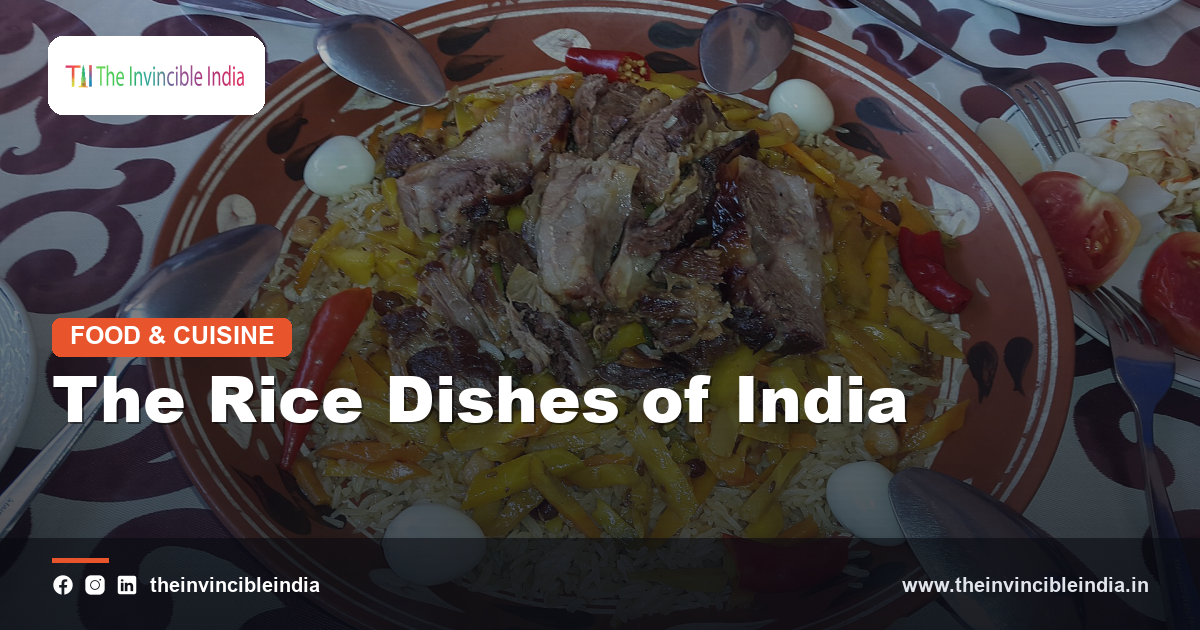
Rice stands alongside wheat as one of the two great staples of Indian food, and across the country it is transformed into a remarkable variety of dishes, from the festive grandeur of biryani to the simple comfort of a bowl of curd rice. In regions where rice is the everyday grain, it forms the very foundation of the meal, cooked plain to accompany other dishes or elevated with spices, vegetables, meat or fish into a dish in its own right. Every part of India has its own beloved rice preparations, shaped by local ingredients, festivals and tastes, so that rice tells a story of the country’s culinary diversity as much as any other food. This guide explores the many rice dishes of India, their character and their cherished place at the table.
Quick Facts
| Detail | Information |
|---|---|
| Staple grain | Rice, especially in eastern and southern India |
| Famous dish | Biryani |
| Everyday dishes | Pulao, khichdi and curd rice |
| Character | Comforting, versatile and regionally diverse |
| Occasions | Everyday meals and festive feasts |
| Fame | A foundation of Indian cuisine |
The Rice Dishes of India
India offers a remarkable and varied array of rice dishes, reflecting the country’s status as one of the great rice-growing and rice-eating nations of the world. From the simplest bowl of plain steamed rice served alongside a curry to elaborate festive preparations layered with meat, vegetables and fragrant spices, rice takes on countless forms across the country’s kitchens, and no single dish can capture the full range of what Indian cooks do with this humble grain. Its versatility is extraordinary. This wide array of rice dishes found across India, from the simplest everyday bowl to the most elaborate festive preparation, reflects the extraordinary versatility of the grain, and the many rice dishes of the country together form one of the richest and most cherished threads of Indian cuisine.
Rice, the Staple of India
Rice is the staple grain across much of India, especially in the east and south, where it forms the base of nearly every meal, plain or lightly seasoned, to be eaten alongside curries, dals and vegetables. In these regions, a meal without rice is scarcely imaginable, and the grain is treated with a reverence befitting its central role in sustaining the household day after day. This staple status shapes daily life. This central status of rice as the staple grain across much of India, forming the base of nearly every meal in the east and south, shapes daily life profoundly, and the humble, everyday bowl of rice remains, for many Indians, the true heart of the meal.
Regional Diversity
The rice dishes of India vary enormously from region to region, shaped by local ingredients, spices and traditions, so that a rice dish from the south may bear little resemblance to one from the north or east. This diversity reflects the vastness and variety of India itself, with each region developing its own beloved preparations suited to its climate, produce and palate, from tangy rice dishes of the south to the festive rice of the north. This regional diversity is a hallmark of Indian rice cooking. This enormous variation of rice dishes from region to region across India is a hallmark of the country’s rice cooking, and the sheer diversity of preparations found from state to state is one of the great pleasures of exploring Indian cuisine.
Biryani
Perhaps the most famous of all Indian rice dishes is biryani, a fragrant, layered preparation of rice cooked with meat, vegetables and a rich blend of aromatic spices, often finished by slow-cooking the layers together so the flavours meld. Biryani exists in countless regional versions, each city and community claiming its own beloved style, and the dish is treasured for festive occasions, gatherings and celebrations across the country. Its fame extends well beyond India. This biryani, the most famous of all Indian rice dishes with its fragrant layers of rice, meat and spices, is treasured across the country for celebrations and gatherings, and its fame has carried this iconic dish well beyond India to become one of the most recognised rice preparations in the world.
Pulao
Pulao, a lighter cousin of biryani, is a fragrant rice dish in which rice is cooked together with vegetables, meat or simply whole spices, absorbing their flavour as it cooks rather than being layered afterward. Simpler to prepare than biryani, pulao is a beloved everyday dish as well as a festive one, appearing on family tables and at celebrations alike, valued for its fragrant simplicity and its comforting, satisfying character. Its accessibility makes it widely loved. This pulao, a fragrant and comparatively simple rice dish cooked together with vegetables, meat or spices, is widely loved for its accessible, comforting character, and its presence on both everyday and festive tables across India speaks to its enduring popularity.
Khichdi
Khichdi, a soft, comforting dish of rice cooked together with lentils, is one of the simplest and most cherished of all Indian rice preparations, valued for its gentle, easily digestible character. Often turned to when a light, soothing meal is needed, khichdi is considered wholesome and nourishing, and in many households it holds a special place as the food given to the very young, the elderly, or anyone in need of gentle, comforting sustenance. Its comforting reputation is well earned. This khichdi, a soft and comforting dish of rice and lentils cooked together, has a comforting reputation that is well earned, and its enduring place as a dish of gentle nourishment makes it one of the most cherished simple foods in all of India.
Curd Rice
Curd rice, especially beloved in South India, is a cooling dish of rice mixed with yogurt and often tempered with mustard seeds, curry leaves and other seasonings, prized for its refreshing, soothing quality. Frequently served at the end of a meal to balance out spicier dishes, curd rice is treasured in the heat of the southern climate for its cooling effect, and it remains one of the most comforting and universally loved rice preparations across the region. Its cooling appeal is treasured. This curd rice, especially beloved in South India for its cooling and soothing character, is treasured in the region’s warm climate, and the refreshing simplicity of yogurt and rice together makes it one of the most comforting dishes in southern Indian cuisine.
Lemon and Tamarind Rice
Lemon rice and tamarind rice, both beloved South Indian preparations, transform plain rice with the tangy brightness of citrus or tamarind, tempered with mustard seeds, lentils and curry leaves for a burst of flavour and texture. These tangy rice dishes are popular as a quick meal, a travel food, or an offering at temples and festivals, valued for how easily they turn simple rice into something vibrant and satisfying. Their tangy character is much loved. These lemon rice and tamarind rice dishes, transforming plain rice with tangy citrus or tamarind and a tempering of spices, are much loved across South India, and their vibrant, tangy character makes them some of the most popular and versatile rice preparations in the region.
Jeera Rice
Jeera rice, rice gently flavoured with roasted cumin seeds, is a simple yet beloved preparation valued for its fragrant, warming aroma and its ability to complement richer curries without competing with them. Often served alongside dal or a spiced gravy, jeera rice strikes a balance between plain rice and a more elaborate pulao, offering fragrance and flavour with minimal fuss. Its balance is widely appreciated. This jeera rice, gently flavoured with roasted cumin and valued for its fragrant simplicity, is widely appreciated as a companion to richer dishes, and its balance of ease and flavour explains why it remains such a popular choice on Indian family tables.
Rice and Dal Together
Across much of India, rice is inseparable from dal, the two eaten together as one of the most fundamental and beloved combinations in the whole of Indian cuisine. Whether ladled together in a simple home meal or served as separate accompaniments on a thali, rice and dal together provide the comforting, nourishing foundation on which countless Indian meals are built, a pairing so common that it is almost synonymous with home cooking itself. This pairing is central to Indian dining. This inseparable pairing of rice and dal across much of India, a foundation of countless Indian meals, is central to the country’s home cooking, and the comfort of rice and dal together remains one of the most cherished and enduring combinations in Indian food.
Festive Rice Dishes
Beyond the everyday, rice takes on special festive forms across India, prepared with extra richness, sweetness or ceremony to mark celebrations, festivals and important occasions. Sweetened rice dishes, richly spiced pulaos, and elaborate biryanis are brought out for weddings, religious festivals and family gatherings, elevating the humble grain into a centrepiece worthy of celebration. This festive elevation of rice is widespread. This festive elevation of rice across India, prepared with extra richness or sweetness for weddings, festivals and gatherings, is widespread throughout the country, and these special rice dishes show how a simple staple can be transformed into a fitting centrepiece for the most joyous of occasions.
Rice in South India
In South India, rice reaches perhaps its fullest expression, forming the base not only of meals but of breakfast foods, snacks and offerings, ground into batters and cooked in countless tangy, spiced and tempered preparations. The region’s love of rice runs deep, shaping its cuisine from morning to night, and the variety of rice-based dishes found across the south, from curd rice to tangy specialities, reflects this profound and enduring connection. This deep connection defines the region’s cuisine. This deep and enduring connection between South India and rice, shaping the region’s cuisine from breakfast to dinner, defines much of what makes southern Indian food so distinctive, and rice remains the true heart of the southern Indian table.
Rice in the East
In eastern India, particularly in Bengal and Odisha, rice is likewise the staple grain, central to daily meals and paired especially with the region’s beloved fish dishes. Rice here is often served simply, allowing the flavours of fish curries and vegetable preparations to take centre stage, and the pairing of rice with fish is so fundamental to eastern Indian identity that it is often spoken of as the region’s defining culinary combination. This pairing runs deep in the east. This central role of rice in eastern India, paired especially with the region’s beloved fish dishes, runs deep in the culinary identity of Bengal and Odisha, and the simple, comforting presence of rice on the eastern Indian table remains as essential today as ever.
Rice as Comfort Food
Across the whole of India, rice carries an association with comfort and home that few other foods can match, a simple, familiar dish turned to in times of both celebration and need. Whether it is a bowl of khichdi offered to someone unwell or a plate of curd rice enjoyed at the end of a long day, rice dishes carry an emotional warmth that goes beyond nourishment, tying the grain to memories of family and home. This emotional resonance is deeply felt. This association of rice with comfort and home across India, felt in both celebration and times of need, is deeply woven into the country’s culinary culture, and this emotional resonance is part of why rice remains so beloved across every generation.
Rice Dishes in Restaurants
Rice dishes occupy a prominent place on restaurant menus across India, from the grand biryanis of specialist eateries to the fragrant pulaos and simple steamed rice served alongside curries in everyday establishments. Restaurants often take great pride in their rice preparations, particularly biryani, with entire establishments built around a single beloved recipe passed down through generations, showing how central rice remains to the country’s dining culture both at home and away from it. This restaurant prominence reflects rice’s importance. This prominent place of rice dishes on Indian restaurant menus, from grand biryanis to everyday steamed rice, reflects the enduring importance of rice to the country’s dining culture, both within the home and in its most celebrated eating establishments.
Indian Rice Dishes Today
Today the rice dishes of India continue to be cherished in all their remarkable variety, from the festive grandeur of biryani to the everyday comfort of curd rice and khichdi. Across every region, rice remains a staple transformed by local ingredients, spices and traditions into dishes that are at once deeply rooted in place and universally loved across the country. Its central place in Indian food endures. As one of the two great staples of Indian cuisine, cherished in forms ranging from the simplest bowl to the most elaborate feast, rice endures as a foundation of the country’s food culture and a source of some of its most beloved and enduring dishes.
Sources & Further Reading
- Ministry of Agriculture and Farmers Welfare, Government of India, on rice cultivation (agriculture.gov.in).
- Culinary references on the regional food traditions of India.
Frequently Asked Questions
What are the most popular Indian rice dishes?
The most popular Indian rice dishes include biryani, a fragrant layered dish of rice, meat and spices; pulao, a simpler cousin cooked with vegetables or spices; khichdi, a comforting rice and lentil dish; and South Indian favourites such as curd rice, lemon rice and tamarind rice.
Why is rice such an important staple in India?
Rice is an important staple in India, especially in the east and south, because it forms the base of nearly every meal in these regions, eaten alongside curries, dals and vegetables. Its versatility and ease of cultivation in these climates have made it central to daily life and cuisine.
What is the difference between biryani and pulao?
Biryani is typically a more elaborate, layered dish in which rice and meat or vegetables are cooked separately with spices and then combined and slow-cooked together, while pulao is generally simpler, with rice cooked together with its flavourings in one pot from the start.
What is khichdi and why is it considered comforting?
Khichdi is a soft, easily digestible dish of rice cooked together with lentils. It is considered comforting and nourishing, often given to the very young, the elderly, or anyone in need of gentle sustenance, making it one of the most cherished simple foods in India.
Why is rice so central to South Indian cuisine?
Rice is central to South Indian cuisine because it forms the base not only of meals but of breakfast foods, snacks and offerings across the region. This deep connection shapes the region’s cuisine from morning to night, seen in dishes such as curd rice and tamarind rice.


