


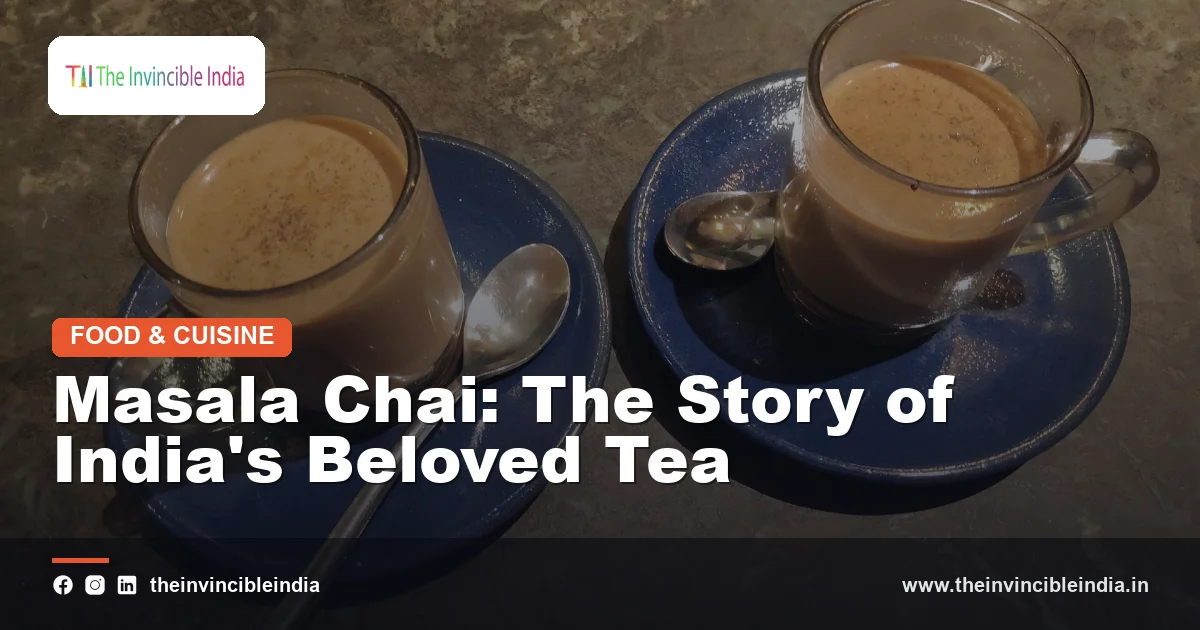
Few things are as quintessentially Indian as a steaming cup of masala chai. This fragrant, spiced milk tea is far more than a drink; it is a daily ritual, a gesture of hospitality, and a thread woven deeply into the fabric of Indian life. From roadside stalls to family kitchens, from railway platforms to office breaks, chai brings people together across every region and walk of life. Rich with the warmth of spices and the comfort of tradition, masala chai is India’s beloved national beverage. This guide explores its history, ingredients, preparation and the vibrant culture that surrounds it.
Quick Facts: Masala Chai
| Detail | Information |
|---|---|
| What it is | Spiced Indian milk tea |
| Base | Black tea, milk, sugar |
| Key spices | Cardamom, ginger, cinnamon, cloves, black pepper |
| Meaning | “Masala” = spice mix; “chai” = tea |
| Served | Hot, often in small glasses or clay cups (kulhad) |
| Role | India’s most popular everyday beverage |
The History of Tea in India
Although tea is now synonymous with India, its history as a popular drink here is surprisingly recent. While a form of tea may have been used medicinally in ancient times, large-scale tea cultivation began only in the 19th century, when the British established vast plantations in Assam and Darjeeling, having discovered tea plants growing wild in Assam. For many years, tea was produced mainly for export, and it was through determined promotion in the early 20th century that tea drinking spread among ordinary Indians. It was the common people who, by adding milk, sugar and spices, transformed plain tea into the rich and beloved masala chai known today.
What Makes Masala Chai
Masala chai is defined by its harmonious blend of strong black tea, milk, sugar and a fragrant mixture of spices. The word “chai” simply means tea, while “masala” refers to the spice blend that gives the drink its distinctive character. A robust black tea, often a strong Assam variety, forms the base, brewed together with milk and sweetened generously with sugar. It is the addition of aromatic spices, however, that transforms the drink into masala chai, lending it warmth, fragrance and depth, and making every cup a comforting and flavourful experience.
The Spices of Chai
The spices used in masala chai vary from household to household and region to region, but several are especially common. Green cardamom is perhaps the most essential, lending its sweet, floral aroma; fresh ginger adds warmth and a pleasant bite; and cinnamon contributes a gentle sweetness. Cloves and black pepper bring depth and a subtle heat, while some recipes include fennel, star anise or nutmeg. The precise balance of spices is often a matter of family tradition and personal taste, and part of the charm of masala chai is that no two versions are ever quite the same.
How Masala Chai Is Made
Making masala chai is a simple but cherished ritual. Typically, water is brought to a boil with the tea leaves and the crushed or ground spices, allowing their flavours to infuse, before milk and sugar are added and the mixture is simmered together until rich and fragrant. The chai is often boiled vigorously and sometimes strained from a height to blend it well, before being poured, piping hot, into cups or glasses. The exact method varies, but the result is a strong, sweet, spiced and milky tea, prepared fresh and enjoyed at its comforting best.
The Chai Culture of India
Chai is woven into the very rhythm of daily life in India, and its culture is as rich as the drink itself. Ubiquitous roadside tea stalls, run by chaiwallahs, are social hubs where people gather to chat, debate and take a break, and a cup of chai is an almost universal gesture of welcome and hospitality in homes and offices. The famous “cutting chai”, a small half-glass serving popular in cities like Mumbai, and the earthy kulhad chai served in disposable clay cups, are beloved traditions. Whatever the setting, the shared enjoyment of chai brings a moment of warmth and connection to the day.
Regional Variations
Across India, masala chai takes on many regional forms, each with its own character. In Kashmir, the pink, salty noon chai and the aromatic kahwa offer quite different traditions, while in some regions chai is flavoured with lemongrass or mint. The strength, sweetness and spice of the tea vary widely, from the strong, sweet cups of the north to lighter or differently spiced versions elsewhere. Some areas favour more ginger, others more cardamom, and countless families have their own treasured recipes, making the world of Indian chai wonderfully diverse and endlessly interesting to explore.
Chai Around the World
In recent decades, masala chai has travelled far beyond India’s borders to become popular around the world. Cafes across the globe now offer “chai lattes” and other interpretations of the spiced tea, and its warm, aromatic flavour has won admirers everywhere, though these international versions often differ considerably from the authentic Indian original. This global popularity is a testament to the universal appeal of masala chai, and for many people around the world, a cup of spiced Indian tea has become a beloved comfort and a small taste of India’s rich culinary heritage.
Chai and the Indian Railways
Perhaps nowhere is the culture of chai more vividly experienced than on the Indian Railways, where the cry of “chai, chai, garam chai” echoing down station platforms and through train carriages is one of the most familiar sounds of a journey across India. Vendors move through the trains and platforms carrying kettles and cups, serving hot chai to travellers at all hours, and for countless passengers a cup of railway chai is an essential part of the experience of Indian train travel. In recent years, the return of the traditional earthen kulhad cup on many stations has added a touch of nostalgia and eco-friendliness to this beloved ritual.
Chai as a Gesture of Hospitality
In Indian culture, offering a cup of chai is one of the warmest and most common gestures of hospitality and welcome. When guests arrive at a home, the offer of chai is almost automatic, a way of showing care, respect and friendship. Business meetings, family gatherings, casual visits and important discussions alike are often accompanied by chai, which helps to create an atmosphere of warmth and ease. This role of chai as a social lubricant and a symbol of hospitality is deeply ingrained, and to share a cup of chai is to share a moment of connection, making the drink far more than a simple beverage.
The Health Aspects of Chai
Beyond its comforting taste, masala chai is often valued for the properties of its ingredients, many of which have long been used in traditional Indian medicine. The spices commonly found in chai, such as ginger, cardamom, cinnamon, cloves and black pepper, are traditionally believed to aid digestion, soothe colds, warm the body and provide comfort, which is one reason a warm cup of spiced chai is so cherished, especially in cold or rainy weather. While chai is typically sweetened and made with milk, the aromatic spices at its heart give the drink a wholesome, warming character that has been appreciated for generations.
Making Masala Chai at Home
One of the joys of masala chai is how easily it can be made at home, allowing anyone to enjoy this comforting drink and to tailor it to their own taste. The basic method involves simmering water with tea leaves and crushed spices such as cardamom, ginger, cinnamon and cloves, then adding milk and sugar and bringing it all to a rich, fragrant boil before straining. The beauty of homemade chai lies in its flexibility: the strength of the tea, the amount of sugar, the choice and quantity of spices, and the ratio of milk to water can all be adjusted, so that every cup can be made exactly to one’s liking.
The Enduring Love for Chai
Through changing times and tastes, the love of chai in India endures as strong as ever, a constant thread in the daily life of the nation. From the humblest roadside stall to the grandest home, from bustling cities to quiet villages, the ritual of preparing and sharing chai continues to bring comfort, warmth and connection to millions every single day. More than just a drink, masala chai is a cherished part of India’s cultural identity, a small daily pleasure that unites people across every divide, and a warming symbol of the hospitality, tradition and everyday joy that define life in India.
A Cup That Unites a Nation
In its simplicity and its universality, masala chai captures something essential about India itself. Rich or poor, north or south, young or old, people across the country share in the daily pleasure of a hot, spiced cup of tea, making chai a great social leveller and a symbol of unity in a land of immense diversity. It is there in moments of celebration and comfort, in bustling markets and quiet homes, marking the rhythm of the day and bringing people together. To drink chai in India is to partake in a beloved ritual that connects millions, and in every fragrant, steaming cup lies a small but perfect expression of the warmth and hospitality of the nation.
More Than Just a Drink
Ultimately, masala chai is far more than a simple beverage; it is a small daily ritual that carries within it the warmth, hospitality and togetherness at the heart of Indian life. In every fragrant cup lies a story of history and culture, of spices and tradition, of shared moments and human connection. Whether savoured at a busy railway platform, offered to a welcome guest, or brewed lovingly at home, chai continues to bring comfort and joy to millions each day, a beloved and enduring symbol of India that is treasured across the country and, increasingly, around the world.
The Spirit of Chai
In the simple act of brewing and sharing a cup of masala chai lies the very spirit of India, its warmth, its diversity, its love of flavour and its deep sense of hospitality. It is a drink that comforts, connects and delights, cherished by millions in every corner of the country and carried by them wherever they go, keeping alive a beloved tradition that continues to warm hearts and bring people together, one fragrant cup at a time.
Frequently Asked Questions
What is masala chai?
Masala chai is a traditional Indian spiced milk tea made from strong black tea, milk, sugar and a blend of aromatic spices such as cardamom, ginger, cinnamon, cloves and black pepper.
What spices are used in masala chai?
Common spices include green cardamom, ginger, cinnamon, cloves and black pepper, with some recipes adding fennel, star anise or nutmeg. The blend varies by region and family.
Is masala chai the same as a chai latte?
Not exactly. A chai latte is a Western cafe interpretation of masala chai and often differs in strength, sweetness and spicing from the authentic Indian original.
Why is chai so important in India?
Chai is a daily ritual and a gesture of hospitality woven into every aspect of Indian life, enjoyed at homes, workplaces and countless roadside stalls that serve as social gathering points.