

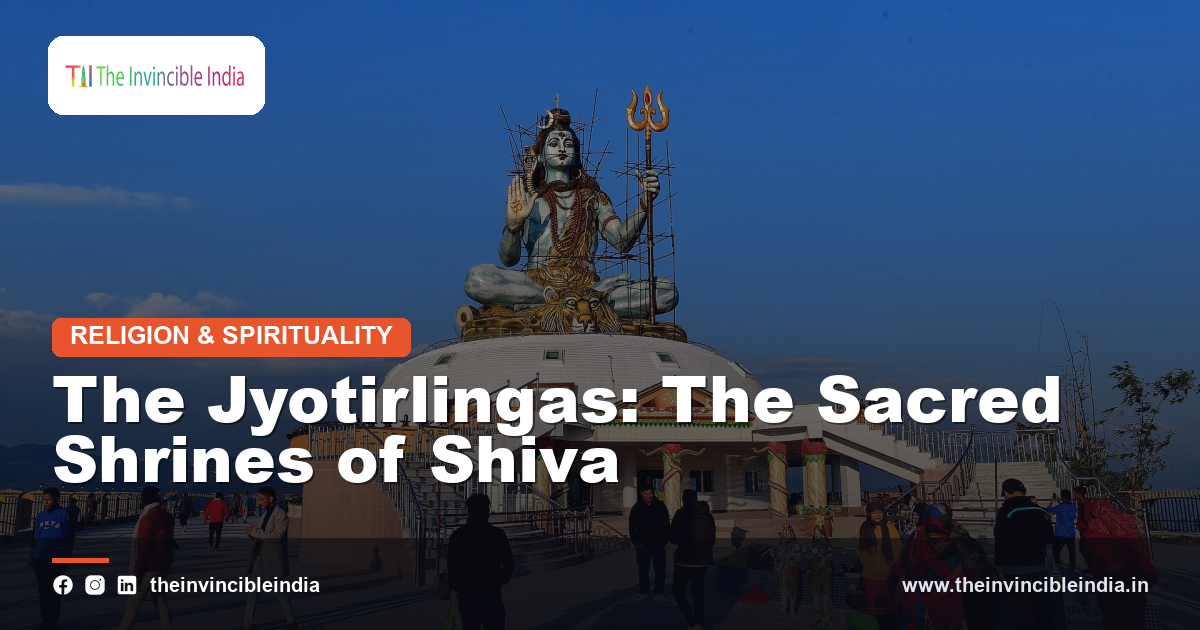
The Jyotirlingas are the twelve most sacred shrines of Lord Shiva, spread across the length and breadth of India, and among the holiest pilgrimage sites in Hinduism. At these shrines, Shiva is worshipped in the form of the jyotirlinga, meaning a pillar or column of radiant light, representing the infinite and formless nature of the divine. Each of the twelve is a great and ancient temple, sacred to Shiva and rich in legend and devotion, and together they form a great pilgrimage circuit revered by devotees of Shiva across the country. To visit the Jyotirlingas is regarded as one of the most meritorious of pilgrimages. This guide explores the Jyotirlingas, their meaning, their significance, the pilgrimage and the great temples, a central part of the worship of Shiva and of India’s pilgrimage tradition.
Quick Facts
| Detail | Information |
|---|---|
| Number | Twelve most sacred shrines of Shiva |
| Meaning | Jyotirlinga means a pillar or column of light |
| Deity | Lord Shiva, worshipped as radiant light |
| Location | Spread across India, from north to south |
| Significance | Among the holiest pilgrimage sites of Hinduism |
| Pilgrimage | A great circuit revered by devotees of Shiva |
The Holiest Shrines of Shiva
The Jyotirlingas are the holiest and most sacred shrines of Lord Shiva, twelve great temples spread across India that are among the most revered pilgrimage destinations in Hinduism. At these shrines, Shiva is worshipped in a special and most sacred form, and the temples are believed to be places where the divine presence of Shiva is especially powerful. Each of the twelve is a great centre of devotion to Shiva, drawing pilgrims from across the country, and together they form a great sacred circuit revered by the devotees of Shiva. As the twelve holiest shrines of one of the supreme deities of Hinduism, the Jyotirlingas hold a place of the deepest reverence and are cherished goals of pilgrimage for the devotees of Shiva.
The Meaning of Jyotirlinga
The word jyotirlinga combines the words for light, or radiance, and linga, the form in which Shiva is worshipped, so that a jyotirlinga means a linga of light, a radiant pillar or column of the divine. In these shrines, Shiva is worshipped in the form of the linga, an aniconic symbol representing the formless and infinite nature of the divine, and the concept of the jyotirlinga presents this as a pillar of radiant light, symbolising the infinite, self-manifest divine presence of Shiva. This beautiful and profound concept, of the divine as an infinite column of light beyond form, is central to the meaning of the Jyotirlingas and to the way Shiva is worshipped at these most sacred shrines.
The Legend of the Pillar of Light
The concept of the jyotirlinga is connected to a beautiful legend in which Shiva manifested himself as an infinite, blazing pillar of light without beginning or end, demonstrating his supremacy and his infinite, formless nature. According to the legend, when other gods disputed over supremacy, Shiva appeared as an endless column of light whose beginning and end could not be found, revealing himself as the infinite divine beyond all limits. It is at the places connected to this manifestation of the divine as a pillar of light that the Jyotirlingas are said to be found. This legend of the infinite pillar of light gives the Jyotirlingas their deep meaning, expressing the infinite and supreme nature of Shiva as the boundless divine.
The Linga as a Symbol
At the Jyotirlingas, as in the worship of Shiva generally, the deity is worshipped in the form of the linga, an aniconic symbol rather than an image in human form. The linga represents the formless, infinite and transcendent nature of the divine, beyond all shape and image, and it is the central object of worship in Shiva temples. Far from being a mere physical object, the linga is a profound symbol of the divine that cannot be captured in any human form, expressing the transcendence of Shiva. Understanding the linga as a symbol of the formless divine is important to appreciating the worship of the Jyotirlingas and of Shiva, in which the deity is revered not as a human-like figure but as the infinite and formless supreme reality.
Spread Across India
The twelve Jyotirlingas are spread across the length and breadth of India, from the far north to the deep south and from the west to the east, so that they form a sacred network embracing the whole land. This distribution of the holiest shrines of Shiva across the country means that the pilgrimage to all twelve is a journey across the whole of India, and it expresses a vision of the land as sanctified by the presence of Shiva at these sacred sites. The spread of the Jyotirlingas across the country is an important aspect of their significance, uniting the land through the worship of Shiva and making the pilgrimage to them a great sacred journey across the diverse regions of India.
Ancient and Sacred Temples
Each of the Jyotirlingas is a great and ancient temple, sacred to Shiva and rich in history, legend and devotion, and among the most important centres of worship in its region. These temples, some of great antiquity and architectural splendour, have been places of worship for centuries, drawing countless pilgrims and devotees, and each has its own sacred stories and traditions. Some are famous for their grandeur, some for their dramatic settings, and all for their deep sanctity as shrines of Shiva. These ancient and sacred temples, each a great centre of devotion, are the physical homes of the Jyotirlingas, and they are treasured both as holy places of worship and as monuments of India’s religious and architectural heritage.
The Northern Shrines
Among the Jyotirlingas are sacred shrines in the northern regions of India, including holy temples in the Himalayas and the northern plains, revered as powerful abodes of Shiva. One of the most famous is a great Himalayan shrine, set high in the mountains and reached by a challenging pilgrimage, which is among the most sacred and revered of all the shrines of Shiva. Another is a great temple in the holy city of Varanasi, one of the most sacred cities in India, where Shiva is worshipped as the lord of the city. These northern Jyotirlingas, set in sacred mountains and holy cities, are among the most revered and visited of the twelve, drawing pilgrims to worship Shiva in these places of great sanctity.
The Western Shrines
The western regions of India are home to several of the Jyotirlingas, including some of the most famous and revered shrines of Shiva. Among them is a great and celebrated temple by the western sea, renowned for its splendour and its history, which has been a place of worship and pilgrimage of the greatest importance. Another is a famous shrine in a holy city, revered as a powerful abode of Shiva and a great centre of devotion. These western Jyotirlingas, with their magnificent temples and their deep sanctity, are among the most important of the twelve, drawing great numbers of pilgrims to worship Shiva at these sacred and historic shrines in the western part of the country.
The Southern Shrines
The southern regions of India also hold sacred Jyotirlingas, revered shrines of Shiva that are among the holiest sites of the south. One of the most famous is a great temple on a sacred island near the southern tip of India, deeply revered and connected in tradition to the epic of Rama, which is one of the most important pilgrimage sites in the south. These southern Jyotirlingas, with their magnificent temples and their deep sanctity, are cherished shrines of Shiva that draw pilgrims from across the country. The presence of Jyotirlingas in the south, as in the north and west, reflects the spread of these holiest shrines of Shiva across the whole of India and their importance to devotees in every region.
The Central Shrines
The central regions of India are home to important Jyotirlingas, including famous and revered shrines of Shiva. Among them is a celebrated temple in an ancient and holy city, renowned as a great abode of Shiva and famous for its worship and its sacred rituals, which is one of the most revered of the Jyotirlingas. These central Jyotirlingas, with their historic temples and their deep sanctity, are important centres of the worship of Shiva and draw many pilgrims. Together with the shrines of the north, west and south, they complete the sacred network of the twelve Jyotirlingas, so that the holiest shrines of Shiva embrace the central heartland of India as well as its farther regions.
The Jyotirlinga Pilgrimage
To visit the Jyotirlingas is one of the great aspirations of the devotees of Shiva, and the pilgrimage to these twelve holiest shrines is regarded as deeply meritorious and spiritually powerful. Devotees undertake journeys to the Jyotirlingas, some visiting particular shrines and some aspiring to visit all twelve across the country, in acts of devotion believed to bring blessing, purification and spiritual benefit. The pilgrimage to all twelve, spread across the length and breadth of India, is a great undertaking and a cherished goal. This pilgrimage to the Jyotirlingas is an important part of the devotional life of the followers of Shiva and one of the great pilgrimage traditions of Hinduism, expressing deep devotion to the lord Shiva.
The Worship of Shiva
The Jyotirlingas are the supreme shrines of the worship of Shiva, one of the great deities of Hinduism, revered as the destroyer and transformer and worshipped as the supreme reality by a great tradition of devotees. At these shrines, Shiva is worshipped with deep devotion through the honouring of the linga, the offering of prayers, water, flowers and sacred substances, and the celebration of his festivals. The worship of Shiva at the Jyotirlingas, and at temples across India, is one of the great streams of Hindu devotion. These holiest shrines are the great centres of this worship, where the devotees of Shiva come to honour their lord in the most sacred of his abodes and to seek his blessing and grace.
The Festival of Maha Shivaratri
The great festival of Shiva, Maha Shivaratri, meaning the great night of Shiva, is celebrated with special devotion at the Jyotirlingas and at Shiva temples across India. On this sacred night, devotees keep vigil, fast, and worship Shiva through the night, honouring the linga and offering prayers, in one of the most important festivals of the worship of Shiva. The Jyotirlingas draw especially great crowds of devotees on this occasion, as pilgrims gather to worship Shiva at his most sacred shrines on his great night. The celebration of Maha Shivaratri at the Jyotirlingas is a highlight of the devotional year for the followers of Shiva and expresses the deep devotion to the lord at his holiest abodes.
A Sacred Heritage
The Jyotirlingas are not only holy shrines but a precious part of the religious and cultural heritage of India, their ancient temples treasured as monuments of devotion, history and architecture. Some are among the most magnificent and historic temples in the country, and all are repositories of centuries of worship, legend and devotion, bound up with the culture and history of their regions. The Jyotirlingas thus represent both a living tradition of worship and a great heritage of the past. This dual character, as living centres of devotion and as treasured monuments of religious and cultural heritage, makes the Jyotirlingas doubly precious, and they are cherished both as holy places and as part of the great heritage of India.
The Jyotirlingas Today
Today the Jyotirlingas remain among the holiest and most revered shrines of Hinduism, drawing great numbers of pilgrims and devotees of Shiva from across India and the world. The twelve great temples continue to be centres of living worship, their sanctity undiminished, and the pilgrimage to them remains a cherished aspiration for the followers of Shiva. The shrines are also treasured as part of the religious and cultural heritage of India. As the twelve holiest shrines of Shiva, where the divine is worshipped as a pillar of infinite light, and as goals of one of the great pilgrimages of Hinduism, the Jyotirlingas endure as a profound and living expression of the worship of Shiva and the devotion of his followers.
Sources & Further Reading
- Ministry of Culture, Government of India, on the temples and pilgrimage traditions of India (indiaculture.gov.in).
- Archaeological Survey of India, on the temples of Shiva (asi.nic.in).
Frequently Asked Questions
What are the Jyotirlingas?
The Jyotirlingas are the twelve most sacred shrines of Lord Shiva, spread across India, where he is worshipped in the form of the jyotirlinga, a radiant pillar of light representing the infinite and formless divine. They are among the holiest pilgrimage sites of Hinduism.
What does jyotirlinga mean?
The word jyotirlinga combines the words for light or radiance and linga, the form in which Shiva is worshipped, so it means a linga of light, a radiant pillar of the divine, symbolising the infinite, self-manifest and formless presence of Shiva.
How many Jyotirlingas are there?
There are twelve Jyotirlingas, the holiest shrines of Shiva, spread across the length and breadth of India from the far north to the deep south, together forming a great sacred pilgrimage circuit revered by the devotees of Shiva.
Why is the linga worshipped at the Jyotirlingas?
At the Jyotirlingas, Shiva is worshipped in the form of the linga, an aniconic symbol representing the formless, infinite and transcendent nature of the divine, beyond all shape and image, expressing the transcendence of Shiva as the supreme reality.
What is the significance of visiting the Jyotirlingas?
Visiting the Jyotirlingas is regarded as one of the most meritorious of pilgrimages for the devotees of Shiva, believed to bring blessing, purification and spiritual benefit. Visiting all twelve across India is a great undertaking and a cherished aspiration.


