


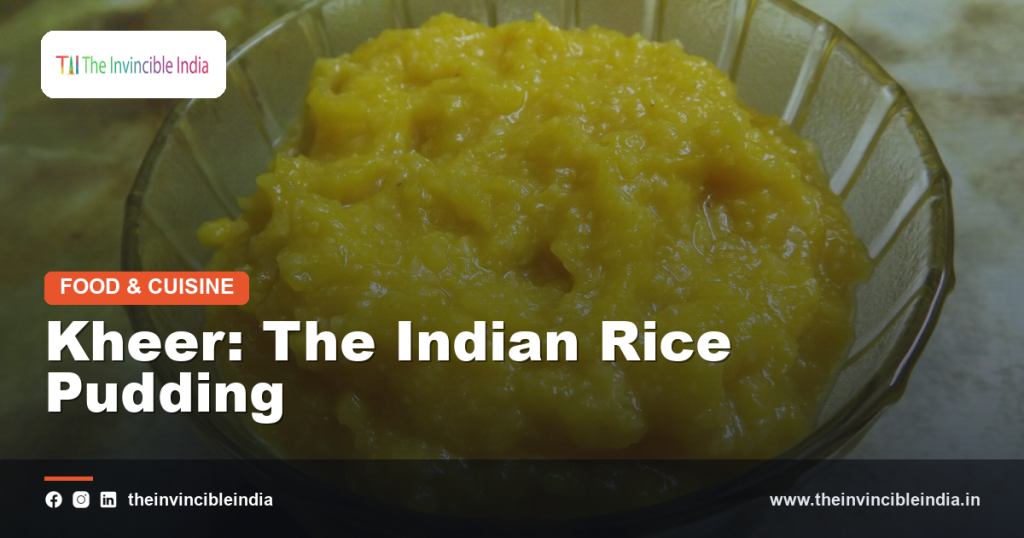
Kheer is India’s beloved rice pudding, a slow-cooked dessert of rice simmered gently in milk until thick and creamy, sweetened with sugar and perfumed with cardamom, saffron and a scattering of nuts. Prepared in almost every region of the country under different names, from payasam in the south to kheer in the north, this dessert is one of the most universally recognised sweets in Indian food culture, served at festivals, weddings and family celebrations alike. Much like the wider array found within the Indian thali, kheer often appears as the final, comforting note to a festive meal. This guide explores kheer, its history, its varieties and its enduring popularity across India.
Quick Facts
| Detail | Information |
|---|---|
| Type | A slow-cooked milk and rice pudding |
| Rooted in | Ancient Indian sweet-making tradition |
| Famous for | Its creamy texture and festive presence |
| Key ingredients | Rice, milk, sugar, cardamom and nuts |
| Known regionally as | Payasam, phirni and other local names |
| Character | Creamy, mildly sweet and fragrant |
India's Classic Rice Pudding
Kheer is India’s classic rice pudding, a dessert made by slowly simmering rice in milk until the grains soften and the liquid thickens into a smooth, creamy consistency, sweetened gently with sugar and flavoured with cardamom. Its preparation, though simple in concept, rewards patience, as the long, slow cooking over gentle heat is what gives kheer its characteristic richness and depth. Nearly every Indian household has its own preferred method. As India’s classic rice pudding, present in some form across the entire country, kheer holds a place in Indian dessert culture that is rivalled by very few other single dishes.
Rice and Milk: The Essential Base
The foundation of kheer lies in the slow simmering of rice in milk, a process that allows the starch released from the rice to thicken the milk naturally into a smooth, velvety texture without the need for any additional thickening agent. Full-fat milk is generally preferred for the richness it lends to the finished dessert, and the rice is typically simmered on low heat for a considerable time to achieve the right consistency. Frequent stirring prevents the milk from catching at the bottom. This essential base of rice and milk, patiently reduced together, is what gives kheer its defining texture and remains unchanged across its many regional forms.
Sweetening and Flavouring Kheer
Once the rice and milk have thickened sufficiently, kheer is sweetened with sugar and flavoured with cardamom, and often further enriched with a few strands of saffron that lend both colour and a delicate fragrance to the finished dessert. These flavourings are typically added toward the end of cooking, preserving their aroma rather than allowing it to cook away over a long simmer. A dash of rosewater is sometimes used instead of saffron. This careful sweetening and flavouring of kheer, added at just the right stage, gives the pudding its warm, fragrant character without overwhelming the natural richness of the milk and rice.
Nuts and Garnishes
Kheer is traditionally garnished with a generous scattering of chopped nuts such as almonds, cashews and pistachios, often lightly toasted in ghee beforehand to bring out their flavour before being sprinkled over the finished dessert. Raisins are also a common addition, adding small bursts of sweetness throughout the pudding. These garnishes are added just before serving to retain their crunch. This use of nuts and garnishes not only adds visual appeal to kheer but also introduces a welcome textural contrast to its otherwise smooth, creamy consistency.
Payasam: The Southern Counterpart
In South India, kheer is known as payasam, a closely related dessert prepared with rice or vermicelli simmered in milk or coconut milk, often sweetened with jaggery rather than refined sugar and flavoured with cardamom in much the same manner. Payasam holds particular importance in Kerala and Tamil Nadu, where it is prepared for temple offerings and festive occasions with great care. Some versions use moong dal instead of rice. This southern counterpart of payasam, sharing kheer’s essential structure while introducing its own regional touches, shows how widely the basic idea of milk-based rice pudding has spread across India.
Regional Names and Variations
Beyond kheer and payasam, India’s milk-based rice pudding appears under a number of other regional names and forms, including phirni, a similar dessert made with coarsely ground rice and set in shallow earthen bowls, particularly popular in North India. Each regional version introduces its own subtle differences in texture, sweetener or garnish while remaining recognisably part of the same broader family of dessert. Some coastal versions incorporate coconut milk instead of dairy. This wide range of regional names and variations reflects just how deeply the idea of a milk and rice-based sweet has been embraced across the country.
Vermicelli Kheer
A popular variation of the classic dessert replaces rice with fine vermicelli noodles, creating a lighter, quicker-cooking version often referred to as sevaiyan or vermicelli kheer, particularly favoured during festive occasions when a faster preparation is welcome. The vermicelli is typically lightly toasted in ghee before being simmered in milk, giving it a subtle nutty flavour distinct from the plainer taste of rice. This version cooks considerably faster than rice-based kheer. This vermicelli kheer, quicker to prepare yet just as comforting, offers a convenient alternative to the traditional rice version without sacrificing the dessert’s essential character.
Kheer in Religious Offerings
Kheer holds an important place in religious offerings across India, prepared as prasadam in temples and offered during pujas and festivals as a sweet believed to be pleasing to the deities being worshipped. Its preparation for such occasions is often carried out with particular ritual care, using specific ingredients or proportions considered auspicious. Large batches are sometimes cooked in temple kitchens for distribution. This role of kheer in religious offerings reflects the deep spiritual significance the dessert carries in addition to its everyday role as a comforting sweet.
Kheer at Weddings and Festivals
Kheer is a near-constant presence at Indian weddings and festivals, served as part of elaborate festive meals or prepared specifically to mark auspicious occasions within the household calendar, from harvest festivals to religious celebrations throughout the year. Its universal appeal and relatively simple ingredients make it practical to prepare in the large quantities required for such gatherings. Many families consider a meal incomplete without it. This constant presence of kheer at weddings and festivals across India underlines its status as one of the country’s most essential and universally accepted celebratory sweets.
Slow Cooking and Technique
The technique behind a truly good kheer lies almost entirely in patience, as the milk must be simmered slowly and stirred frequently over a long period to reduce it properly and develop the rich, slightly caramelised undertones that distinguish an excellent kheer from a merely adequate one. Rushing the process with high heat risks scorching the milk or leaving the rice undercooked. Heavy-bottomed pans help distribute heat evenly during the long simmer. This emphasis on slow cooking and careful technique is what separates a truly memorable kheer from an ordinary one, rewarding the cook’s patience with genuine depth of flavour.
Choosing the Right Rice
The choice of rice used in kheer has a noticeable effect on the final texture, with many cooks preferring a short or medium-grain variety that releases more starch during cooking, helping to thicken the milk naturally into a smoother, creamier consistency. Some regional recipes call for a particular local rice variety valued for its fragrance or texture when cooked slowly in milk. Basmati rice is used in some households for its aroma. This careful choice of rice for kheer, suited to slow cooking in milk, plays a quiet but important role in determining the final texture and quality of the dessert.
Kheer Served Hot or Cold
Kheer is enjoyed both hot and cold depending on personal preference and regional custom, with some households serving it warm straight from the pot on cooler evenings, while others prefer to chill it thoroughly before serving, particularly during warmer months or festive meals. Both approaches highlight different qualities of the dessert, the warmth emphasising its comforting richness and the chill bringing out a cleaner, more refreshing sweetness. Refrigeration also allows the pudding to thicken further. This flexibility in serving kheer hot or cold adds to its everyday versatility, suiting it to almost any season or occasion.
Kheer Across Indian Households
Nearly every Indian household, regardless of region or community, has its own version of kheer or a closely related dessert, prepared according to family tradition and often reserved for special occasions rather than everyday eating. This near-universal presence across households, each with slight variations in technique or garnish, reflects how deeply the basic idea of a milk and rice pudding has embedded itself in Indian food culture. Recipes are often passed down through generations without being written down. This widespread presence of kheer across Indian households shows just how thoroughly this dessert has become part of the country’s shared culinary identity.
Modern and Fusion Kheer
In recent years, modern and fusion versions of kheer have appeared on restaurant menus and in home kitchens, incorporating ingredients such as dried fruit, condensed milk or even chocolate alongside the traditional rice, milk and cardamom base. These contemporary versions aim to appeal to changing tastes while still evoking the comforting character of the original dessert. Some chefs serve kheer in individual glasses for a modern presentation. These modern and fusion approaches to kheer demonstrate the dessert’s continued relevance, showing that even a very old sweet can be reimagined without losing its essential comfort.
Kheer and Harvest Festivals
Kheer holds a special place at harvest festivals across India, when freshly gathered rice and milk are brought together into the dessert as a way of marking the season’s bounty and giving thanks for a successful crop. In several regional harvest celebrations, a version of kheer or a closely related sweet made from the new season’s rice is prepared as one of the first dishes of the festival, often before being offered to deities and ancestors. Families frequently gather to prepare it together on these occasions. This connection between kheer and harvest festivals reflects the dessert’s deep ties to agricultural life and its long-standing role as a fitting way to celebrate abundance and renewal.
Kheer Today
Today kheer remains one of India’s most beloved and widely prepared desserts, served at festivals, weddings and family gatherings across the country in its many regional forms, from northern kheer and phirni to southern payasam. Its combination of creamy milk, tender rice and fragrant cardamom continues to provide a comforting, familiar close to festive meals of every kind. Sweet shops and restaurants alike continue to serve it with pride. As India’s classic rice pudding, patient in its preparation and universally cherished, kheer remains a dessert that unites households across the length and breadth of the country.
Sources & Further Reading
- Ministry of Culture, Government of India, on India’s culinary heritage (indiaculture.gov.in).
- Culinary references on Indian festival and dessert traditions.
Frequently Asked Questions
What is kheer made of?
Kheer is made by slowly simmering rice in milk until thick and creamy, then sweetening it with sugar and flavouring it with cardamom, saffron and a garnish of nuts and raisins.
What is the difference between kheer and payasam?
Kheer and payasam are essentially the same type of milk-based rice pudding, with kheer being the term used mainly in North India and payasam the term used in South India, sometimes made with coconut milk or jaggery instead.
Why does kheer take so long to cook?
Kheer requires slow simmering so that the milk can reduce and thicken naturally as it absorbs starch from the rice, a process that also develops the rich, slightly caramelised flavour valued in a well-made kheer.
Is kheer served hot or cold?
Kheer can be served either hot or cold depending on preference and occasion, with warm kheer favoured on cooler days and chilled kheer often preferred during festive meals or warmer weather.
Is kheer only made with rice?
While rice is the most traditional base for kheer, popular variations include vermicelli kheer, made with fine noodles instead of rice, offering a lighter and quicker-cooking alternative to the classic version.