

The Kumbh Mela is the greatest pilgrimage of Hinduism and the largest peaceful gathering of human beings on earth, an event of staggering scale and profound spiritual significance. Held periodically at sacred sites on the banks of holy rivers, it draws tens of millions of pilgrims who come to bathe in the sacred waters, an act believed to cleanse the soul of sins and bring liberation. The Mela is a vast confluence of devotion, drawing ordinary pilgrims, holy men, ascetics and seekers from across India and the world, and it is one of the most extraordinary religious spectacles on the planet. Recognised as a treasure of the intangible heritage of humanity, the Kumbh Mela is a wonder of faith. This guide explores its origins, its sacred sites, the holy bath, the sadhus and akharas, and its heritage, a supreme expression of India’s pilgrimage tradition.
Quick Facts
| Detail | Information |
|---|---|
| Type | The greatest pilgrimage of Hinduism |
| Scale | The largest peaceful gathering of people on earth |
| Sacred act | Bathing in the holy rivers |
| Sites | Held in rotation at four sacred river locations |
| Participants | Millions of pilgrims, along with sadhus and ascetics |
| Heritage | Recognised by UNESCO as intangible cultural heritage |
The Greatest of Pilgrimages
The Kumbh Mela is the greatest and most spectacular pilgrimage in Hinduism, and indeed the largest gathering of human beings anywhere on earth, an event of almost unimaginable scale. When the Mela is held, tens of millions of pilgrims converge on the sacred site over the course of the festival, coming to bathe in the holy waters and to share in the extraordinary spiritual atmosphere. No other religious gathering in the world approaches its scale. This vast confluence of humanity, drawn together by faith to the banks of the sacred rivers, is one of the wonders of the world, a spectacle of devotion on a scale found nowhere else, and the supreme expression of the Hindu tradition of pilgrimage.
The Largest Human Gathering
The Kumbh Mela holds the distinction of being the largest peaceful gathering of people on earth, an assembly of humanity on a scale that is difficult to comprehend. Over the days of the greatest Melas, tens of millions of people gather, with enormous crowds bathing on the most auspicious days, all drawn together by faith and devotion in remarkable order and harmony. The organisation of such a vast gathering, providing for the needs of so many, is itself an extraordinary undertaking. That so many millions can come together peacefully, in devotion, is a striking testament to the power of faith and the depth of the pilgrimage tradition. The sheer scale of the Kumbh Mela makes it one of the most remarkable human events on the planet.
The Legend of the Nectar
The origins of the Kumbh Mela are connected in tradition to a great myth, the story of the churning of the cosmic ocean, in which the gods and demons churned the sea to obtain the nectar of immortality. According to legend, in the struggle over the pot, or kumbh, of nectar, drops fell at certain sacred places on earth, and it is at these places that the Kumbh Mela is held, their waters believed to be blessed with the sacred power of the nectar. This beautiful myth gives the Mela its name and its deep significance, connecting the sacred bathing to the nectar of immortality. The legend of the churning of the ocean and the falling of the nectar is central to the meaning and tradition of the Kumbh Mela.
The Four Sacred Sites
The Kumbh Mela is held at four sacred sites on the banks of holy rivers, the places where, according to legend, the drops of the nectar of immortality fell. These sites, sacred confluences and river banks in different parts of northern and central India, take turns in hosting the Mela according to a traditional cycle. Each of these four holy places is a major centre of pilgrimage in its own right, sanctified by the sacred rivers and by the legend of the nectar. The rotation of the great festival among these four sacred sites is central to the tradition of the Kumbh Mela, and each site in turn becomes, when the Mela is held there, the focus of the devotion of millions.
The Sacred Timing
The timing of the Kumbh Mela is determined by tradition according to the positions of the heavenly bodies, following an ancient astrological reckoning that fixes when and where the Mela is to be held. The great festival occurs at each site according to this cycle, with the most auspicious bathing days calculated for the times believed to be most sacred and spiritually powerful. This astrological determination of the timing gives the Kumbh Mela its rhythm across the years and sites and marks out the most auspicious moments for the sacred bath. The careful reckoning of the sacred timing, according to the movements of the heavens, is an important part of the tradition and reflects the deep connection in Indian tradition between the cosmos and sacred occasions.
The Holy Bath
The central act of the Kumbh Mela is the holy bath, the ritual bathing in the sacred waters of the rivers, believed to cleanse the pilgrim of sins and to bring spiritual purification, blessing and progress towards liberation. On the most auspicious days, vast numbers of pilgrims immerse themselves in the holy waters at the sacred hours, in an act of profound devotion. To bathe in the sacred rivers during the Kumbh Mela, at the most auspicious times, is believed to bring the greatest spiritual benefit, and it is for this sacred bath above all that the millions come. The holy bath in the sacred waters is the heart of the Kumbh Mela and the supreme act of devotion that draws the pilgrims to the great festival.
The Sacred Rivers
The Kumbh Mela is inseparable from the sacred rivers of India, above all the holy Ganga, whose waters are revered as divine and purifying. In Hindu tradition, the great rivers are held to be sacred, embodiments of the divine, and bathing in their waters is an act of purification and devotion. The Mela is held at the banks and confluences of these holy rivers, and it is their sacred waters that the pilgrims come to bathe in. The most auspicious of the sites is a sacred confluence where holy rivers meet. This deep reverence for the sacred rivers, and the belief in the purifying power of their waters, is fundamental to the Kumbh Mela and to the wider religious life of India.
The Sadhus and Ascetics
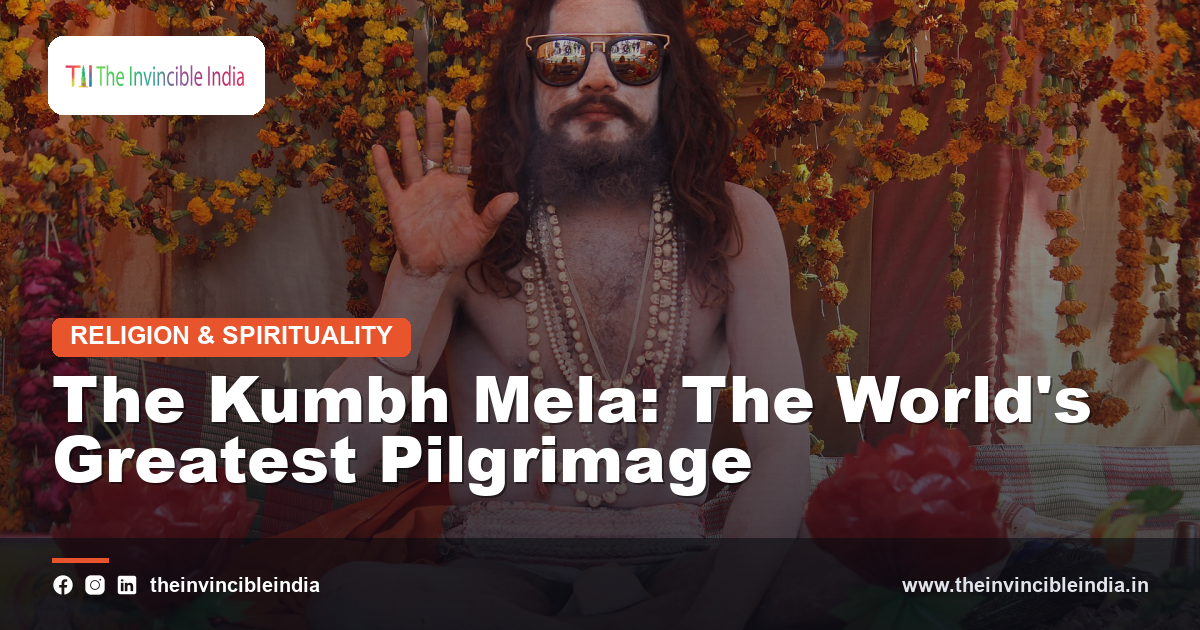
Among the most striking participants in the Kumbh Mela are the sadhus and ascetics, the holy men and renunciants who gather in great numbers at the festival, adding to its extraordinary spiritual atmosphere and spectacle. These include ascetics of many kinds, some living lives of extreme renunciation and austerity, who come to the Mela to bathe, to gather and to share their spiritual presence. The most famous are the striking naga ascetics, renunciants who have given up all worldly attachments. The gathering of these holy men and ascetics, from their retreats and wanderings across the land, is one of the most remarkable features of the Kumbh Mela, giving it much of its unique character and spiritual power.
The Akharas
The ascetics who gather at the Kumbh Mela are organised into akharas, the traditional orders or monastic organisations of the ascetics, which play an important role in the festival. These akharas, ancient institutions of the ascetic communities, have their own traditions, leaders and identities, and they take a prominent part in the Mela, especially in the processions to the sacred bath. The akharas lead the way in the great bathing on the most auspicious days, processing to the river with much ceremony and spectacle. The presence and processions of the akharas are among the most colourful and important features of the Kumbh Mela, reflecting the ancient organisation of the ascetic traditions and their central place in the great festival.
The Royal Bath
A highlight of the Kumbh Mela is the great processional bathing of the akharas on the most auspicious days, an event of remarkable ceremony and spectacle sometimes called the royal bath. On these days, the akharas process to the sacred river in grand array, with their leaders, ascetics and followers, to take the holy bath first, in an atmosphere of great excitement and devotion. These processions, with their display of the ascetic orders in all their variety and colour, are among the most dramatic and famous scenes of the Kumbh Mela, watched by the vast assembled crowds. The great processional baths of the akharas are a central spectacle of the festival and one of its most extraordinary and cherished traditions.
A Confluence of Faith
The Kumbh Mela is a vast confluence not only of people but of faith, drawing together pilgrims and seekers of every kind, from simple villagers to learned holy men, from across India and beyond. For the days of the Mela, a whole temporary city of faith arises on the banks of the sacred river, filled with pilgrims, ascetics, teachers and devotees, alive with worship, teaching, discussion and devotion. The Mela is an occasion for spiritual gathering, for the meeting of teachers and seekers, and for the sharing of the spiritual traditions of India. This great confluence of faith, bringing together the diverse currents of Indian spirituality in one vast gathering, is one of the most profound aspects of the Kumbh Mela.
An Extraordinary Undertaking
Hosting the Kumbh Mela, with its tens of millions of pilgrims, is an extraordinary undertaking, requiring the creation of vast temporary arrangements to provide for the needs of the enormous crowds. A great temporary city is built to accommodate the pilgrims, with facilities for shelter, sanitation, health, safety and the management of the immense gathering, an enormous feat of organisation. The successful management of such a colossal event, ensuring the safety and welfare of so many, is a remarkable achievement. This extraordinary undertaking, providing for the largest human gathering on earth, is itself a marvel, and the ability to host the Kumbh Mela peacefully and in order is a testament to careful planning and to the discipline and devotion of the pilgrims.
A UNESCO Heritage
In recognition of its extraordinary cultural and spiritual significance, the Kumbh Mela has been inscribed by UNESCO on its Representative List of the Intangible Cultural Heritage of Humanity. This recognition honours the Mela as a living tradition of immense importance, the greatest peaceful gathering of people on earth and a profound expression of faith, and it acknowledges its value not only to India but to the heritage of all humanity. The UNESCO recognition affirms the global significance of the Kumbh Mela and the importance of preserving this remarkable tradition. This honour underlines the standing of the Kumbh Mela as one of the great cultural and spiritual phenomena of the world and a treasure of human heritage.
A Wonder of Faith
The Kumbh Mela is, above all, a wonder of faith, a demonstration of the extraordinary power of devotion to draw together tens of millions of people in a single act of pilgrimage and worship. That so vast a multitude should gather, peacefully and in devotion, to bathe in the sacred waters, is a phenomenon without equal in the world and a striking testimony to the depth and vitality of the religious life of India. For the pilgrims, the Mela is a profound spiritual experience, an occasion of purification, blessing and devotion. As a wonder of faith on a scale found nowhere else, the Kumbh Mela stands as one of the most remarkable expressions of human spirituality anywhere on earth.
The Kumbh Mela Today
Today the Kumbh Mela remains the greatest pilgrimage of Hinduism and the largest peaceful gathering of people on earth, drawing ever greater numbers of pilgrims and attracting attention and visitors from around the world. It continues to be held at its sacred sites according to the ancient cycle, its holy baths, its gatherings of sadhus and its processions of the akharas continuing as they have for ages, now recognised as a treasure of world heritage. The Mela remains a profound expression of the faith, devotion and pilgrimage tradition at the heart of Indian spirituality. As a wonder of faith and the greatest gathering on earth, the Kumbh Mela endures as one of the most extraordinary religious phenomena in the world.
Sources & Further Reading
- UNESCO, Representative List of the Intangible Cultural Heritage of Humanity, on the Kumbh Mela (ich.unesco.org).
- Ministry of Culture, Government of India, on the Kumbh Mela and pilgrimage traditions (indiaculture.gov.in).
Frequently Asked Questions
What is the Kumbh Mela?
The Kumbh Mela is the greatest pilgrimage of Hinduism and the largest peaceful gathering of people on earth, held periodically at sacred sites on the banks of holy rivers, when tens of millions of pilgrims come to bathe in the sacred waters to cleanse the soul.
Where is the Kumbh Mela held?
The Kumbh Mela is held at four sacred sites on the banks of holy rivers in northern and central India, the places where, according to legend, drops of the nectar of immortality fell. These four sites take turns in hosting the Mela according to a traditional cycle.
Why do people bathe at the Kumbh Mela?
The central act of the Kumbh Mela is the holy bath in the sacred waters of the rivers, which is believed to cleanse the pilgrim of sins and bring spiritual purification, blessing and progress towards liberation. It is for this sacred bath above all that the millions come.
Who are the sadhus at the Kumbh Mela?
The sadhus are the holy men, ascetics and renunciants who gather in great numbers at the Kumbh Mela, including the striking naga ascetics who have given up all worldly attachments. They are organised into akharas and lead the great processional baths on the most auspicious days.
Is the Kumbh Mela recognised by UNESCO?
Yes. The Kumbh Mela has been inscribed by UNESCO on its Representative List of the Intangible Cultural Heritage of Humanity, recognising it as a living tradition of immense importance and a profound expression of faith valuable to all humanity.


